Hyundai i20 R5
Brand
Produced from
Portal
Vehicle category
Model line
Model generation
Predecessor
Sucessor
About this submodel
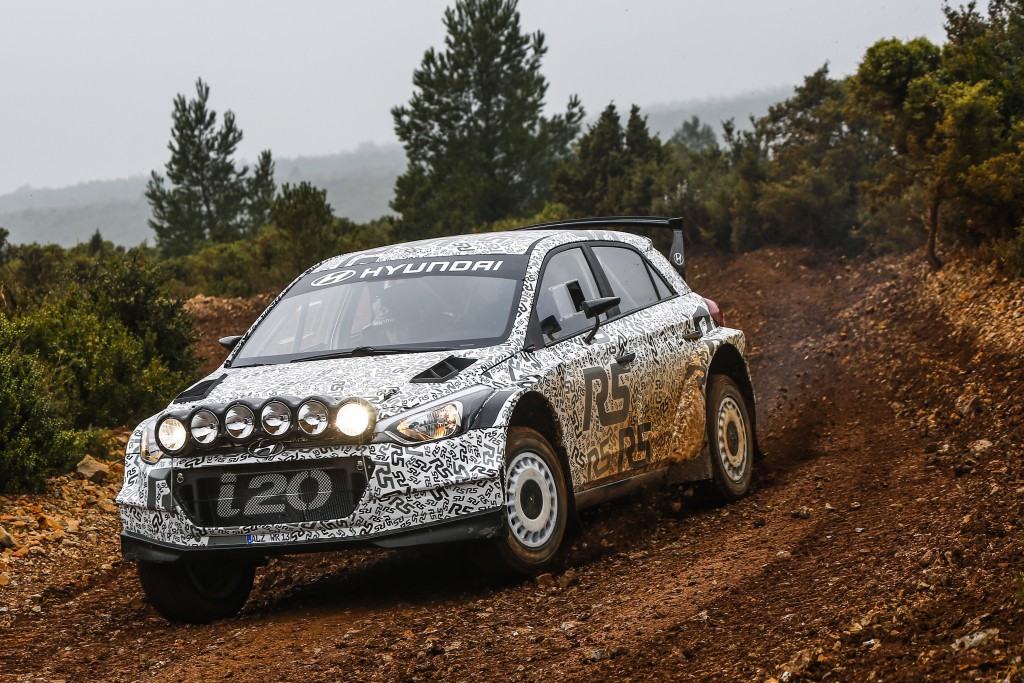
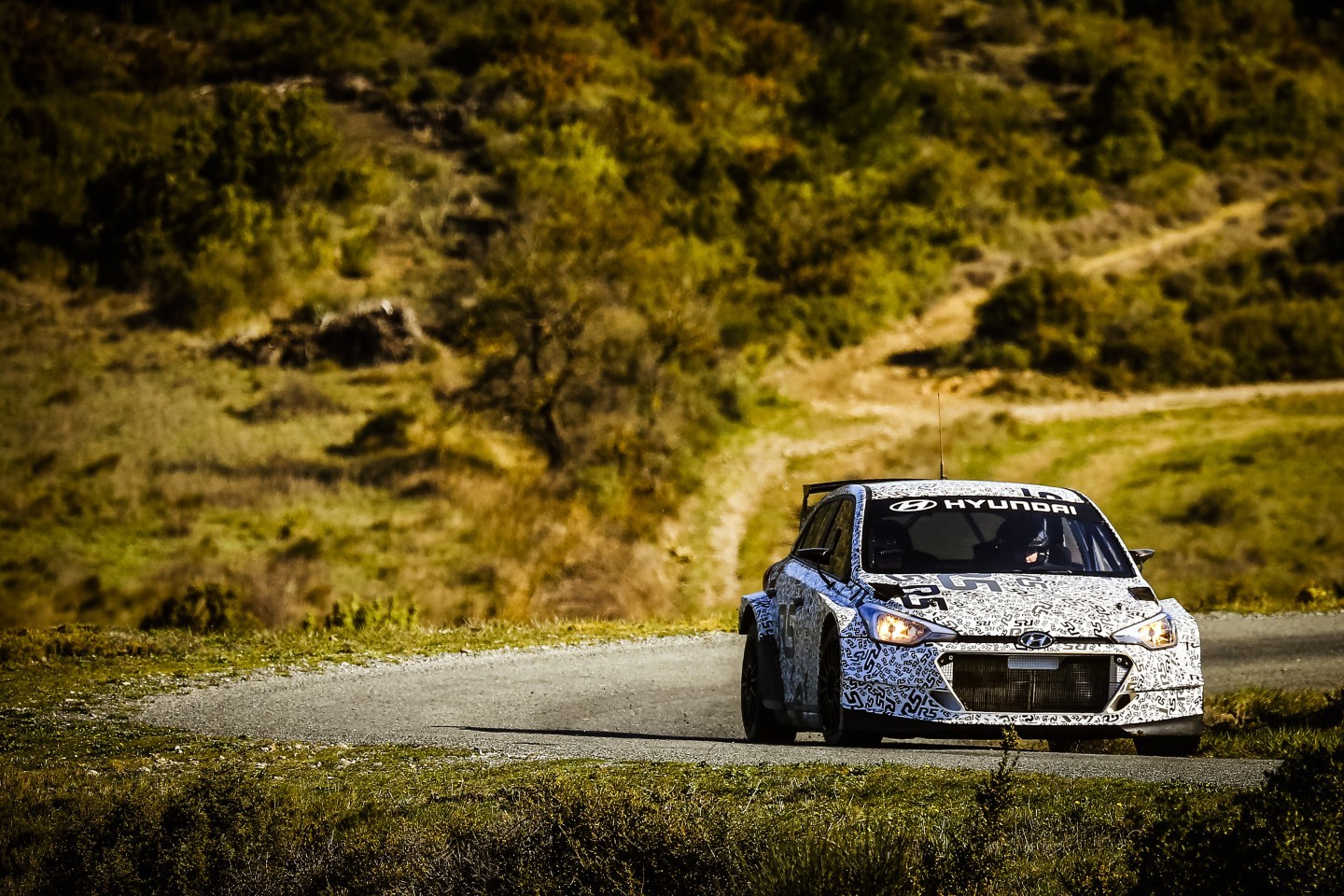
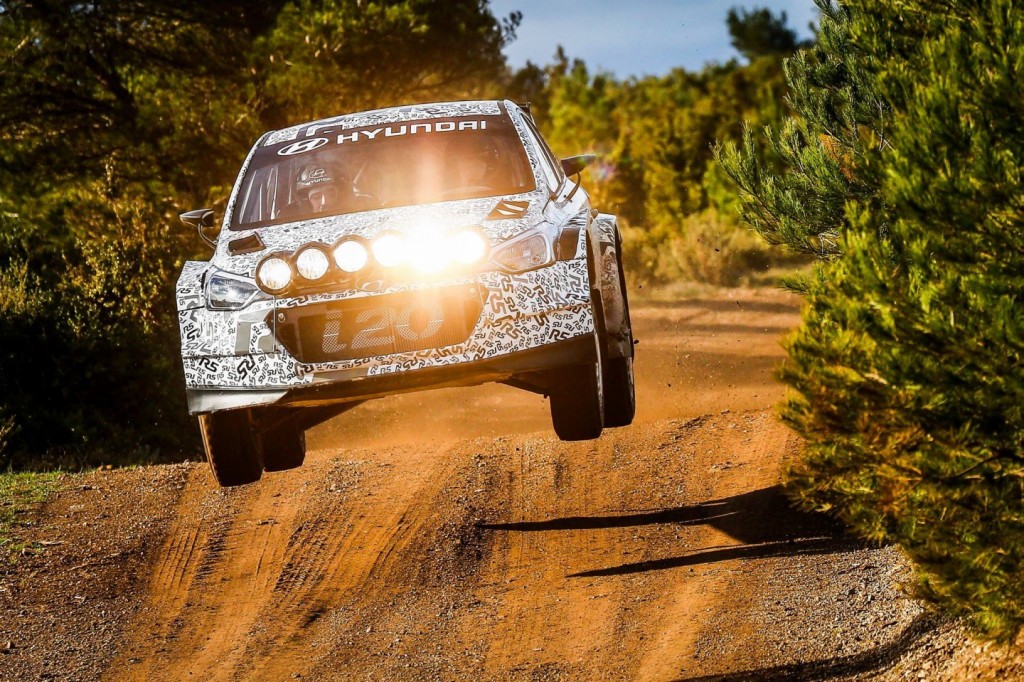
The arrival of the 2016 Hyundai i20 R5 was a defining moment not just for a model line, but for the entire corporate philosophy of Hyundai Motorsport. Until that juncture, the operation based in Alzenau, Germany, had been a focused spearhead, solely dedicated to the elite, money-no-object pursuit of the World Rally Championship title with the WRC car. However, the motorsport landscape was shifting. The FIA’s R5 category (now Rally2) had exploded into a lucrative commercial battlefield, dominated by the M-Sport Ford Fiesta and the Skoda Fabia. These cars were the bread and butter of the rally world, filling the grids from the WRC2 support category down to regional national championships. Hyundai realized that to be taken seriously as a global motorsport power—and to balance the books—they needed to stop just spending money and start selling speed. The i20 R5 was their first commercial offering, a machine designed to take the fight to the established Europeans and prove that Korean engineering could survive the rigors of privateer ownership.
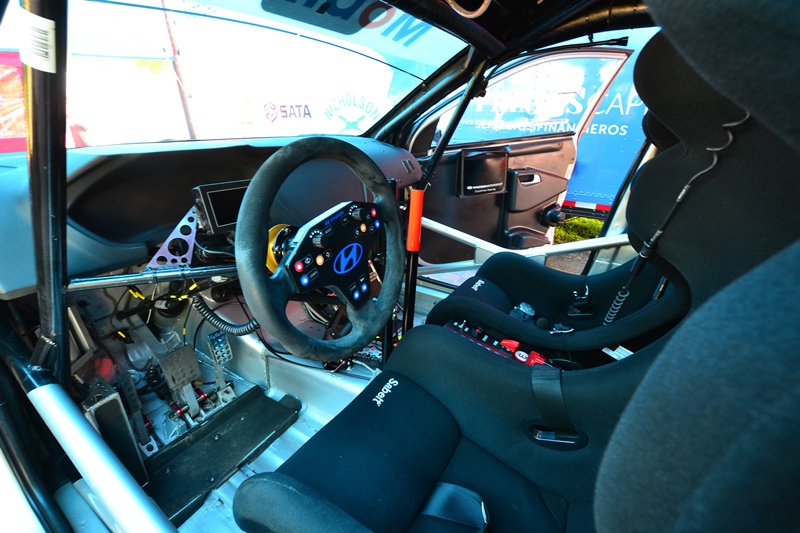
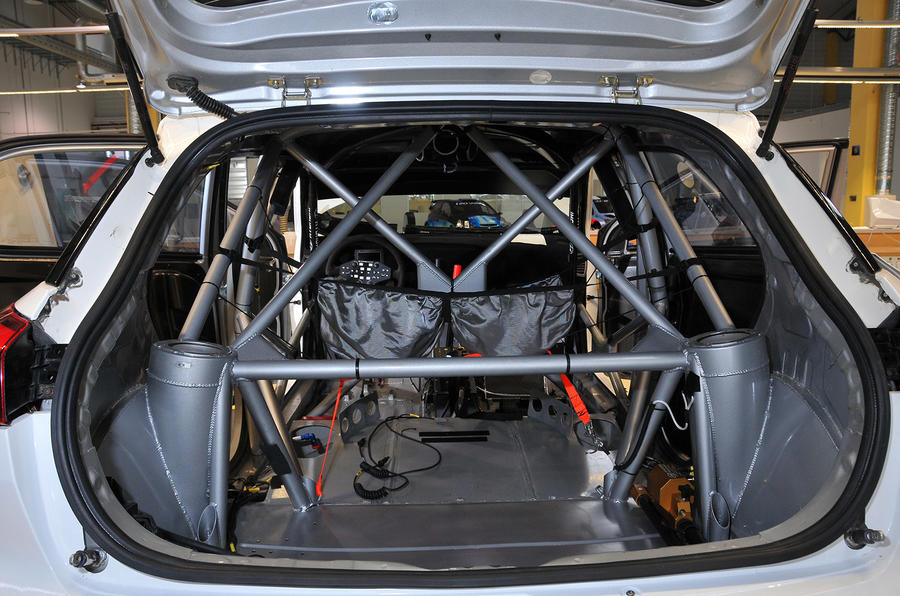
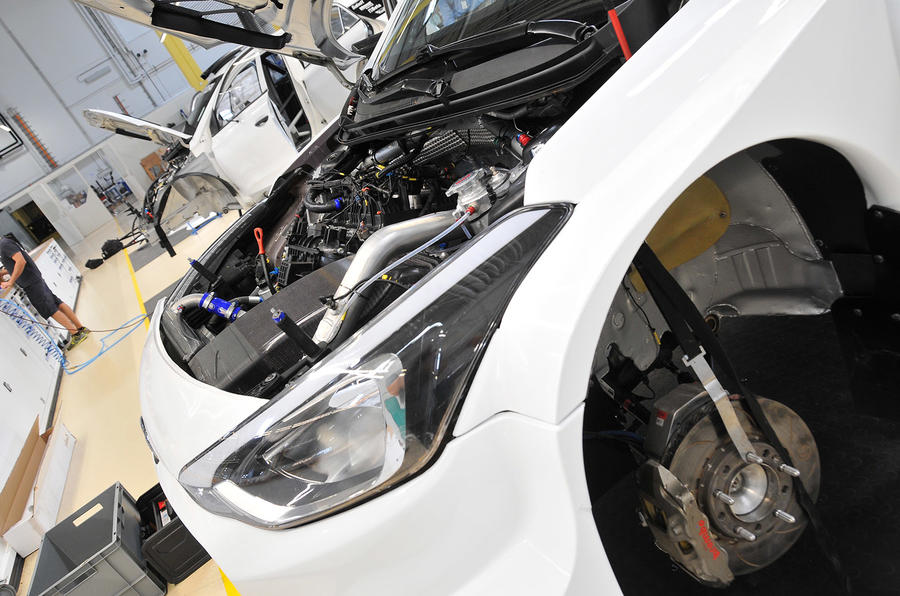
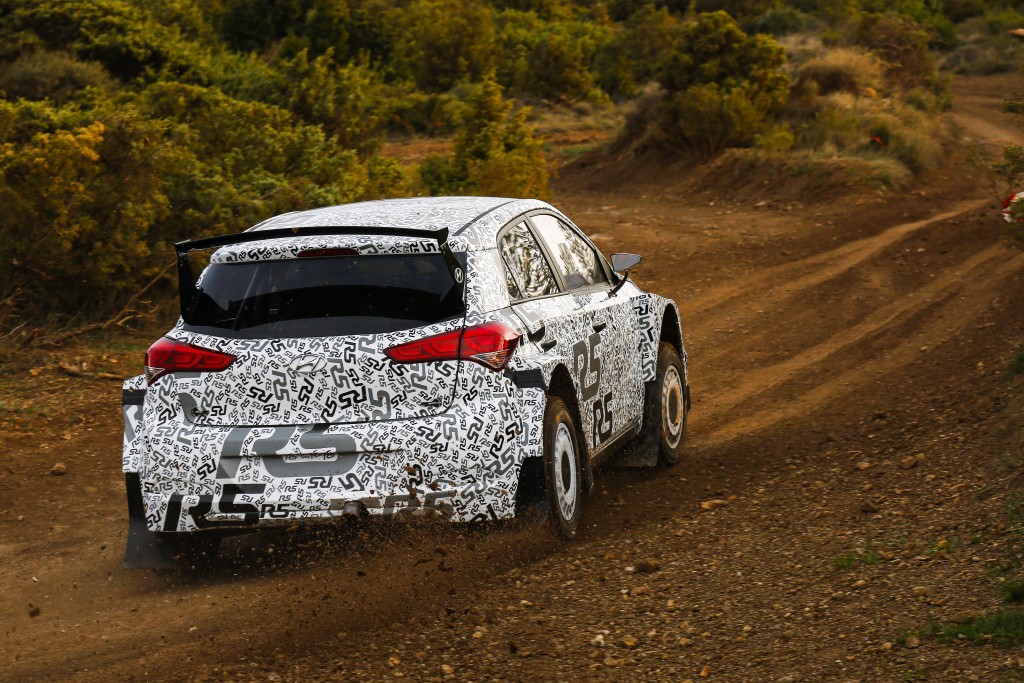
Technically, the i20 R5 was a clean-sheet design, developed in parallel with, but entirely distinct from, the 2017 WRC car. Based on the five-door bodyshell of the second-generation i20 (GB), it was a masterclass in regulation-constrained engineering. The regulations for the class were strict: a price cap, a minimum weight of 1,230kg, and the prohibition of exotic materials like titanium. Under the bonnet lay a 1.6-litre turbocharged four-cylinder engine, utilizing direct injection and throttled by the mandatory 32mm air restrictor. It produced roughly 280 bhp and 450 Nm of torque, figures that placed it squarely in the ring with the Fabia. Power was transmitted to all four wheels via a five-speed sequential gearbox from Ricardo and mechanical differentials front and rear—electronic active differentials were banned to keep costs down. The suspension utilized MacPherson struts at all corners, offering the tunability required to switch from the smooth asphalt of the Canary Islands to the rutted gravel of Portugal. Visually, it was aggressive yet functional; the wide arches, roof scoop, and rear wing gave it the requisite menace, but the bodywork was designed to be relatively easy to repair—a crucial consideration for private teams operating on tight budgets.
The competitive impact of the i20 R5 was fascinating because it faced a baptism of fire. Unlike the WRC team, which could develop in a vacuum, the R5 had to be immediately competitive against the highly refined Fiesta and the dominant Skoda. Making its international debut at the 2016 Tour de Corse in the hands of development driver Kevin Abbring, the car showed immediate pace on tarmac, a surface that would become its forte. While it perhaps lacked the ultimate bulletproof, go-anywhere compliance of the Skoda on rough gravel in its early years, it became a lethal weapon on asphalt. It found immense success in national championships, becoming the car of choice for tarmac specialists in Spain, Italy, and France. In the Spanish Tarmac Rally Championship (CERA), drivers like Ivan Ares used the i20 R5 to secure titles, breaking the stranglehold of the older Porsche GTs and rival R5s.
However, the car’s history was also one of rapid evolution. Early customers reported issues with power delivery and suspension travel, prompting Hyundai’s nascent Customer Racing department to release successive “Evo” jokers—updates to the engine mapping, dampers, and suspension geometry. This responsiveness helped cement Hyundai’s reputation as a manufacturer that listened. In the WRC2 category, the car claimed podiums and stage wins, though it often struggled to displace the Skoda factory team over a full season. Yet, its significance lay in its ubiquity; suddenly, the service parks of the European Rally Championship (ERC) and the Tour European Rally (TER) were peppered with the Hyundai “N” logo. It proved that the brand could support dozens of cars across the globe simultaneously, a logistical feat far more complex than running three cars for a factory team.
The legacy of the 2016 Hyundai i20 R5 is that of the foundation stone. It built the infrastructure of Hyundai’s Customer Racing division, which has since expanded to include TCR circuit cars and the succeeding i20 N Rally2. It transformed Hyundai from a mere participant in the WRC into a pillar of the global rally community. While it may not have achieved the sheer statistical dominance of the Skoda Fabia R5, it was a commercially successful, fast, and charismatic challenger that legitimized the i20 as a platform for speed. It paved the way for the high-performance “N” road cars, creating a tangible link between the stage times of a privateer hero in Italy and the showroom floor in Seoul. The i20 R5 showed that Hyundai was no longer an interloper in the sport; they were part of the establishment, ready to sell you a race car that could win on Sunday, provided you had the talent to tame it.
Brand
Produced from
Portal
Vehicle category
Model line
Model generation
Predecessor
Sucessor
Brand
Produced from
Portal
Vehicle category
Model line
Model generation
Predecessor
Sucessor
About this submodel
The arrival of the 2016 Hyundai i20 R5 was a defining moment not just for a model line, but for the entire corporate philosophy of Hyundai Motorsport. Until that juncture, the operation based in Alzenau, Germany, had been a focused spearhead, solely dedicated to the elite, money-no-object pursuit of the World Rally Championship title with the WRC car. However, the motorsport landscape was shifting. The FIA’s R5 category (now Rally2) had exploded into a lucrative commercial battlefield, dominated by the M-Sport Ford Fiesta and the Skoda Fabia. These cars were the bread and butter of the rally world, filling the grids from the WRC2 support category down to regional national championships. Hyundai realized that to be taken seriously as a global motorsport power—and to balance the books—they needed to stop just spending money and start selling speed. The i20 R5 was their first commercial offering, a machine designed to take the fight to the established Europeans and prove that Korean engineering could survive the rigors of privateer ownership.
Technically, the i20 R5 was a clean-sheet design, developed in parallel with, but entirely distinct from, the 2017 WRC car. Based on the five-door bodyshell of the second-generation i20 (GB), it was a masterclass in regulation-constrained engineering. The regulations for the class were strict: a price cap, a minimum weight of 1,230kg, and the prohibition of exotic materials like titanium. Under the bonnet lay a 1.6-litre turbocharged four-cylinder engine, utilizing direct injection and throttled by the mandatory 32mm air restrictor. It produced roughly 280 bhp and 450 Nm of torque, figures that placed it squarely in the ring with the Fabia. Power was transmitted to all four wheels via a five-speed sequential gearbox from Ricardo and mechanical differentials front and rear—electronic active differentials were banned to keep costs down. The suspension utilized MacPherson struts at all corners, offering the tunability required to switch from the smooth asphalt of the Canary Islands to the rutted gravel of Portugal. Visually, it was aggressive yet functional; the wide arches, roof scoop, and rear wing gave it the requisite menace, but the bodywork was designed to be relatively easy to repair—a crucial consideration for private teams operating on tight budgets.
The competitive impact of the i20 R5 was fascinating because it faced a baptism of fire. Unlike the WRC team, which could develop in a vacuum, the R5 had to be immediately competitive against the highly refined Fiesta and the dominant Skoda. Making its international debut at the 2016 Tour de Corse in the hands of development driver Kevin Abbring, the car showed immediate pace on tarmac, a surface that would become its forte. While it perhaps lacked the ultimate bulletproof, go-anywhere compliance of the Skoda on rough gravel in its early years, it became a lethal weapon on asphalt. It found immense success in national championships, becoming the car of choice for tarmac specialists in Spain, Italy, and France. In the Spanish Tarmac Rally Championship (CERA), drivers like Ivan Ares used the i20 R5 to secure titles, breaking the stranglehold of the older Porsche GTs and rival R5s.
However, the car’s history was also one of rapid evolution. Early customers reported issues with power delivery and suspension travel, prompting Hyundai’s nascent Customer Racing department to release successive “Evo” jokers—updates to the engine mapping, dampers, and suspension geometry. This responsiveness helped cement Hyundai’s reputation as a manufacturer that listened. In the WRC2 category, the car claimed podiums and stage wins, though it often struggled to displace the Skoda factory team over a full season. Yet, its significance lay in its ubiquity; suddenly, the service parks of the European Rally Championship (ERC) and the Tour European Rally (TER) were peppered with the Hyundai “N” logo. It proved that the brand could support dozens of cars across the globe simultaneously, a logistical feat far more complex than running three cars for a factory team.
The legacy of the 2016 Hyundai i20 R5 is that of the foundation stone. It built the infrastructure of Hyundai’s Customer Racing division, which has since expanded to include TCR circuit cars and the succeeding i20 N Rally2. It transformed Hyundai from a mere participant in the WRC into a pillar of the global rally community. While it may not have achieved the sheer statistical dominance of the Skoda Fabia R5, it was a commercially successful, fast, and charismatic challenger that legitimized the i20 as a platform for speed. It paved the way for the high-performance “N” road cars, creating a tangible link between the stage times of a privateer hero in Italy and the showroom floor in Seoul. The i20 R5 showed that Hyundai was no longer an interloper in the sport; they were part of the establishment, ready to sell you a race car that could win on Sunday, provided you had the talent to tame it.
Tech Specs
Discover the technical specifications
Tech Specs
Discover the technical specifications
Engine
01
03
Internal combustion engine
Configuration
Hyundai Motorsport 1.6 T-GDI, Inline-4
Location
Front, transversely mounted
Construction
Aluminium alloy block and head
Displacement (cc)
1,600 cc
Displacement (cu in)
97.6 cu in
Compression
11.0:1 (Approx. - R5 regulated)
Bore x Stroke
83.0 mm x 73.9 mm (Typical R5 dimensions mandated by regulations for 1.6L)
Valvetrain
4 valves per cylinder, DOHC
Fuel feed
Direct Fuel Injection (Magneti Marelli SRG ECU)
Lubrication
Dry sump
Aspiration
Turbocharged (Garrett turbocharger with 32mm FIA restrictor)
Output
Power (hp)
280 hp
Power (kW)
209 kW
Max power at
5,500 RPM
Torque (Nm)
420 Nm
Torque (ft lbs)
310 ft lbs
Max torque at
4,000 RPM
Drivetrain
02
03
Chassis
Type
Monocoque with FIA-spec roll cage
Material
Steel
Body
Material
Steel with composite bumpers and fenders
Transmission
Gearbox
Ricardo, 5-speed sequential (Manual lever)
Drive
All Wheel Drive (Mechanical front and rear differentials, drive disconnection unit for handbrake)
Suspension
Front
Independent, MacPherson struts, adjustable dampers, anti-roll bar
Rear
Independent, MacPherson struts, adjustable dampers, anti-roll bar
Steering
Type
Rack and pinion, hydraulic power assisted
Brakes
Front
Ventilated discs Ø300 mm (Gravel) or Ø355 mm (Tarmac), 4-piston calipers (Brembo)
Rear
Ventilated discs Ø300 mm (Gravel) or Ø355 mm (Tarmac), 4-piston calipers (Brembo)
Wheels
Front
7" x 15" (Gravel) or 8" x 18" (Tarmac)
Rear
7" x 15" (Gravel) or 8" x 18" (Tarmac)
Tires
Front
-
Rear
-
Dimensions and performance
03
03
Dimensions
Lenght (mm)
4,035 mm
Lenght (in)
158.9 in
Width (mm)
1,820 mm
Width (in)
71.7 in
Height (mm)
1,480 mm
Height (in)
58.3 in
Wheelbase (mm)
2,570 mm
Wheelbase (in)
101.2 in
Weight (kg)
1,230 kg
Weight (lbs)
2,711 lbs
Performance
Power to weight
~0.23 hp/kg
Top speed (km/h)
~200 km/h
Top speed (mph)
~124 mph
0-100 km/h (0-60 mph)
~3.8 s
Submodels
Other variants of this model
Submodels