
Lotus Elan Type 26R (S2)
Brand
Produced from
Portal
Vehicle category
Model line
Model generation
Predecessor
Successor
Submodel Overview
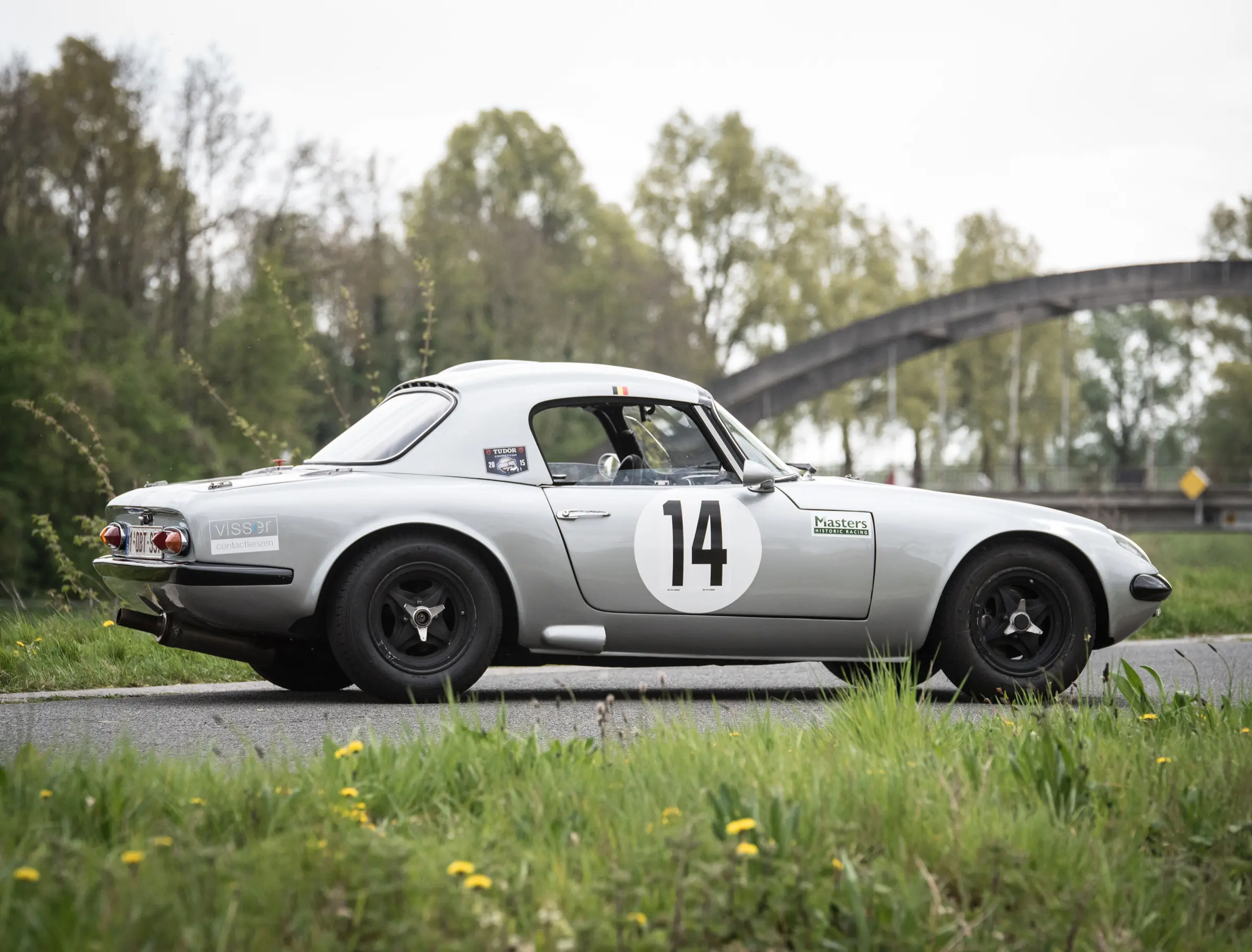
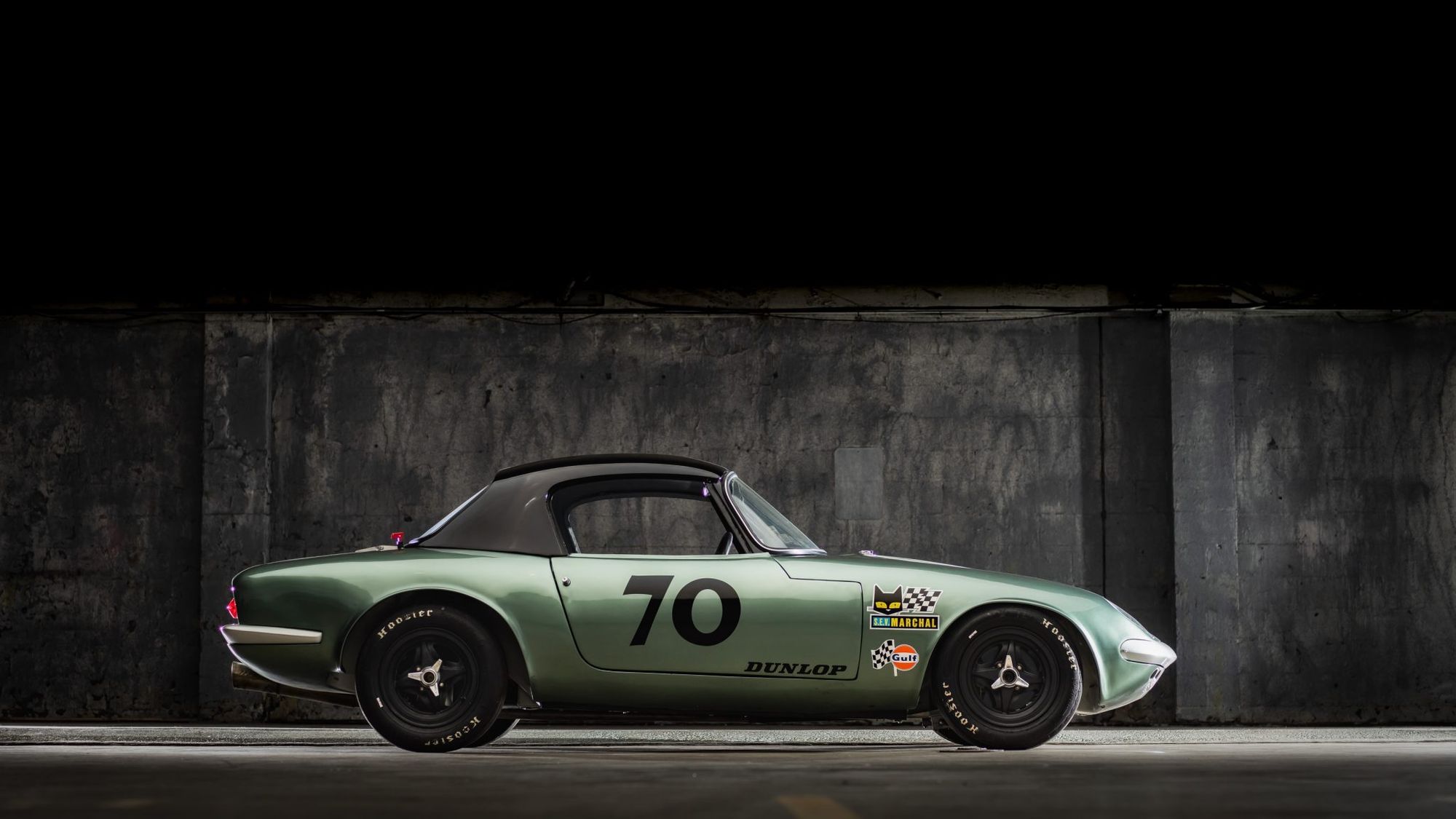
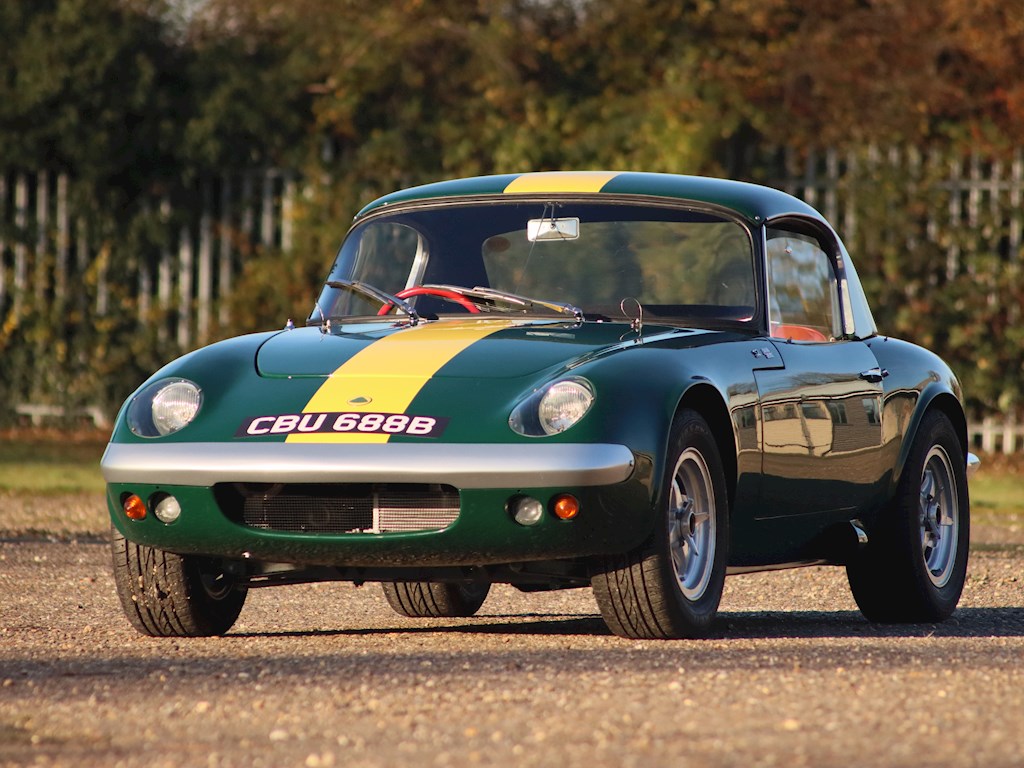
In the pantheon of “Giant Killers”, few machines cast a shadow as long—or as terrifyingly fast—as the 1965 Lotus Elan 26R Series 2. By the mid-1960s, the standard Lotus Elan had already redefined the parameters of handling for road cars, making the stiff-lipped British roadsters of the previous decade feel like agricultural implements. However, for Colin Chapman, a man whose engineering philosophy bordered on the pathological pursuit of lightness, the road-going Elan was merely a starting point. The 26R was his answer to the privateer racer’s plea for a turn-key weapon capable of dismantling the established hierarchy of GT racing. It arrived in a paddock dominated by the brute force of the AC Cobra and the exotic V12 symphony of the Ferrari 250 GTO, yet on the tight, twisting circuits of the UK and Europe, this diminutive fiberglass scalpel proved that physics favors the light. The Series 2, introduced in 1965, was the ultimate evolution of this philosophy, a homologation special that took the delicate brilliance of the Series 1 and injected it with a dose of steroids, resulting in wider hips, stickier rubber, and a reputation for humbling machinery with three times the displacement.
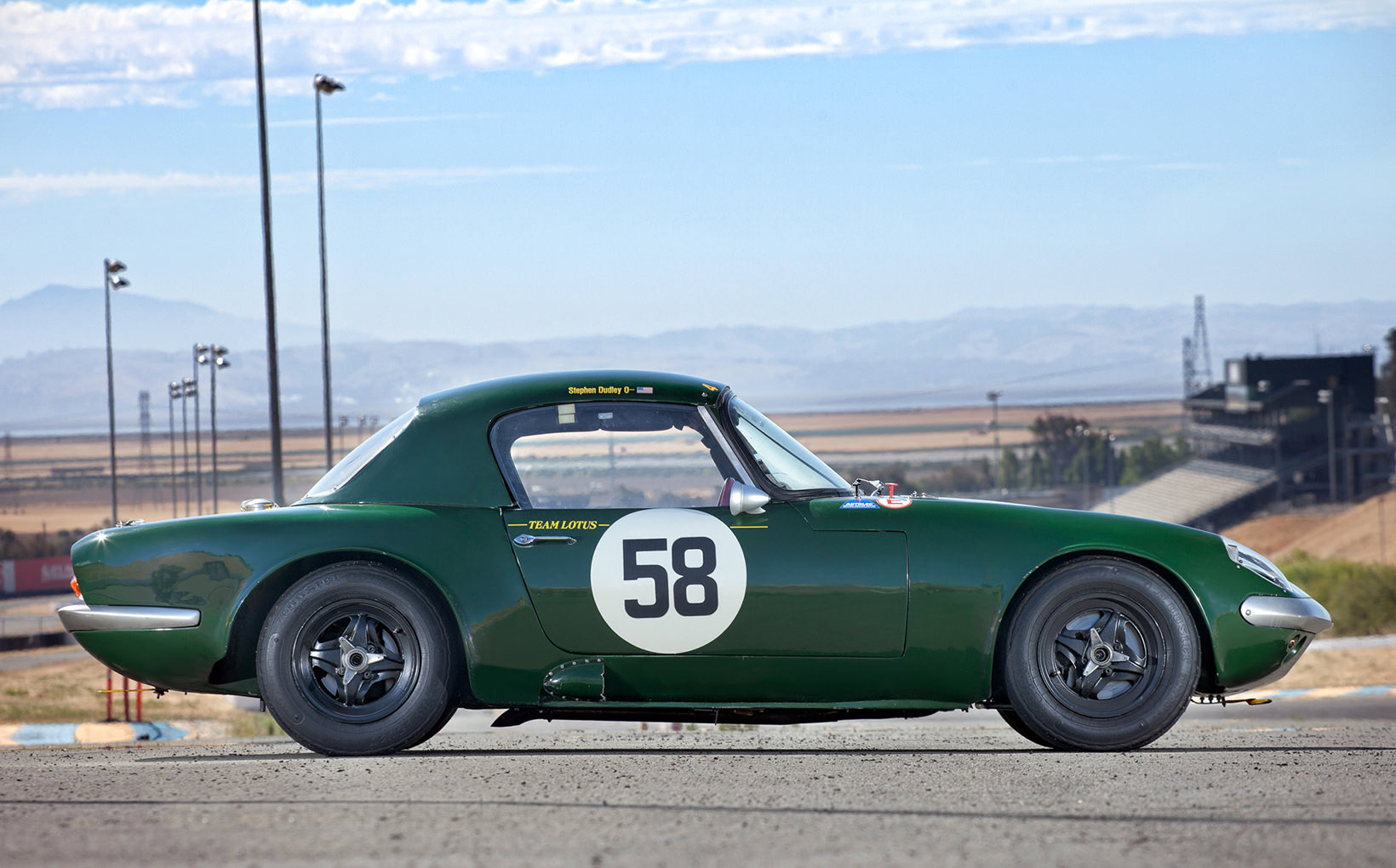
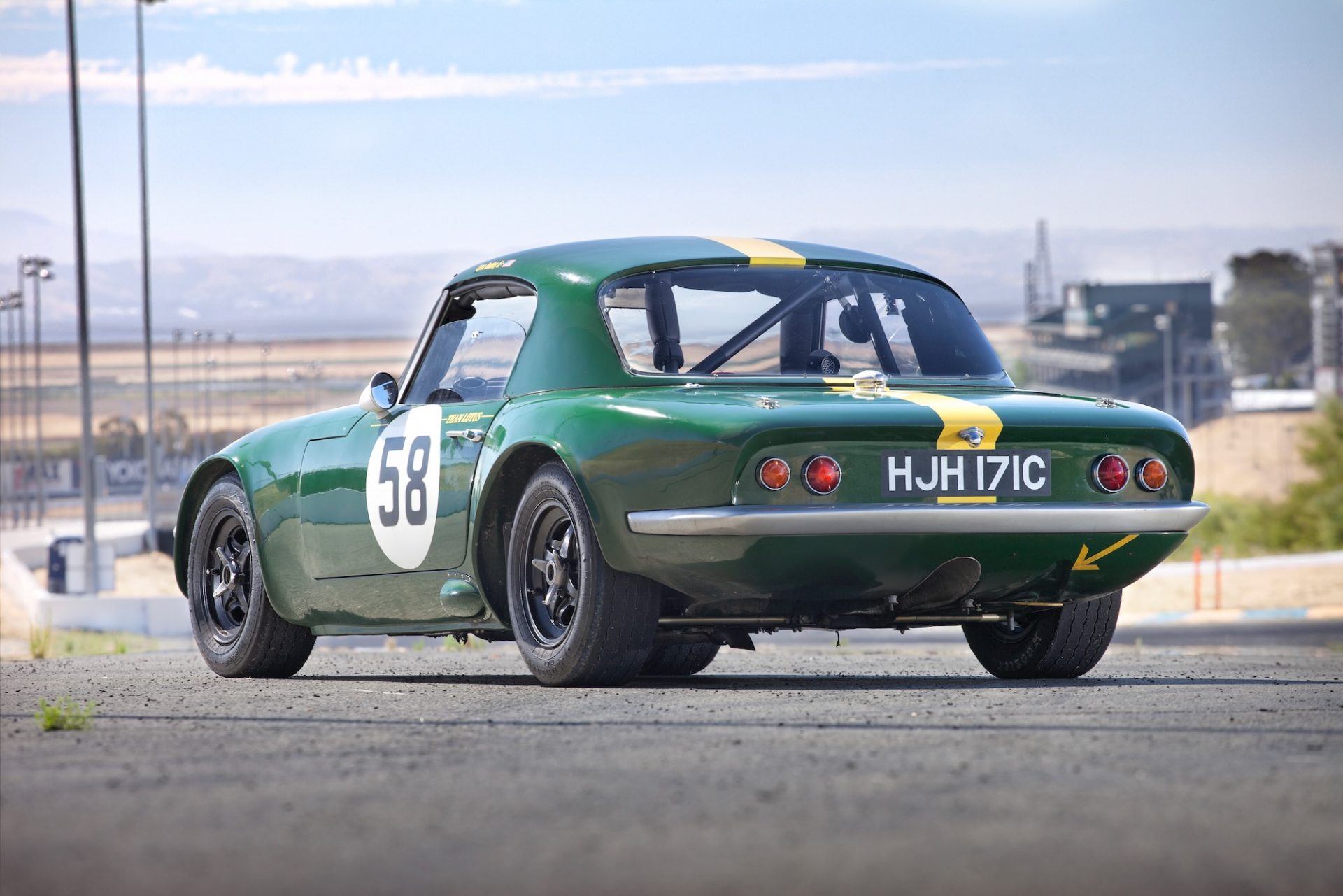
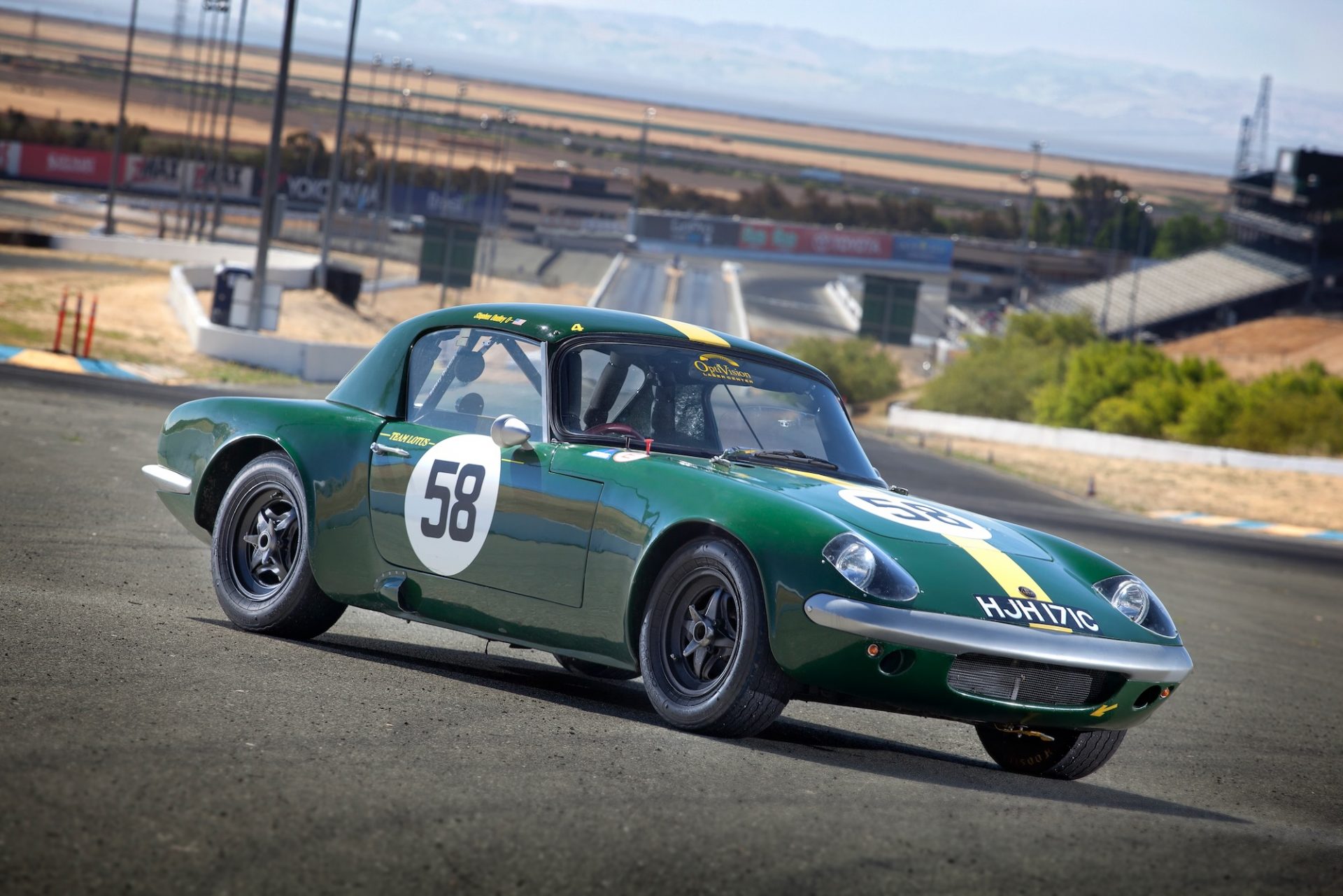
From a technical standpoint, the 26R Series 2 was a masterclass in reductive engineering. While it shared the basic silhouette of the road car, almost every component was optimized for the violence of competition. The backbone chassis, already famous for its rigidity, was reinforced at critical stress points to handle the increased cornering loads. The most visually distinct feature of the Series 2 was its flared wheel arches. Unlike the narrow-bodied Series 1, the S2 required these muscular extensions to shroud the wider magnesium alloy “wobbly-web” wheels and the emerging generation of Dunlop racing tires. These flares gave the car a pugnacious, crouching stance, distinguishing it immediately from its polite road-going siblings.
Under the fiberglass skin, the engineering was pure Chapman. The suspension geometry was revised, but the most crucial mechanical upgrade was the elimination of the road car’s rubber “Rotoflex” couplings in the drivetrain. These were replaced with robust sliding spline driveshafts, a modification that eliminated wind-up and allowed for instantaneous throttle response—vital for a car that was steered as much with the right pedal as with the steering wheel. The engine was the legendary Lotus-Ford Twin Cam, but for the 26R, it was massaged by Cosworth or BRM to produce anywhere from 160 to 175 brake horsepower. In a car weighing barely 600 kilograms (approx. 1,300 lbs), this bestowed the 26R with a power-to-weight ratio that threatened contemporary Formula 1 cars. The braking system was upgraded with larger Girling calipers and discs, essential for a car that generated its lap time by braking later than anything else on the grid.
The impact of the 26R Series 2 on the 1965 racing season was nothing short of sensational. In the hands of factory-supported teams like Ian Walker Racing, The Chequered Flag, and Team Lotus itself, the 26R terrorized the under-2.0-litre class and frequently embarrassed the overall contenders. Drivers like Jim Clark, Jackie Stewart, and John Miles piloted these cars with a flamboyant style that has become iconic: inside front wheel lifted high in the air, the car visibly dancing on the limit of adhesion, drifting through corners with a grace that belied the speed. On technical circuits like Crystal Palace, Brands Hatch, and the Nürburgring, a well-driven 26R could simply drive around the outside of a sliding Cobra. It wasn’t just a class winner; it was an ego destroyer. The car’s fragility was its only real Achilles’ heel; the pursuit of lightness meant that wishbones and chassis sections were stressed to their absolute limit, and accidents in a paper-thin fiberglass shell were best avoided.
The S2 also pioneered aerodynamic tweaks that would become standard. Many 26Rs replaced the heavy pop-up headlight mechanisms with fixed lights covered by aerodynamic Perspex cowls, smoothing the airflow over the nose and shaving precious ounces from the front overhang. This “Shapecraft” style nose became a signature look for the serious racers.
The legacy of the 1965 Lotus Elan 26R Series 2 is profound. It represents the absolute zenith of the “add lightness” era, a time before downforce and slick tires completely altered the driving equation. It proved that a small-displacement engine, when packaged in a chassis of supreme balance, could defeat brute horsepower. Today, genuine 26R S2s are among the most coveted historic racing cars in the world, commanding values that dwarf the standard Elan. They remain the benchmark for historic GT racing; if you want to win at the Goodwood Revival in the Kinrara Trophy, the 26R is still the weapon of choice. It is a machine that demands a delicate touch but rewards the driver with a purity of feedback that has arguably never been surpassed. It stands in the pantheon not just as a successful race car, but as the physical embodiment of the idea that in motorsport, agility is the ultimate power.
Brand
Produced from
Portal
Vehicle category
Model line
Model generation
Predecessor
Sucessor
Brand
Produced from
Portal
Vehicle category
Model line
Model generation
Predecessor
Sucessor
Submodel Overview
In the pantheon of “Giant Killers”, few machines cast a shadow as long—or as terrifyingly fast—as the 1965 Lotus Elan 26R Series 2. By the mid-1960s, the standard Lotus Elan had already redefined the parameters of handling for road cars, making the stiff-lipped British roadsters of the previous decade feel like agricultural implements. However, for Colin Chapman, a man whose engineering philosophy bordered on the pathological pursuit of lightness, the road-going Elan was merely a starting point. The 26R was his answer to the privateer racer’s plea for a turn-key weapon capable of dismantling the established hierarchy of GT racing. It arrived in a paddock dominated by the brute force of the AC Cobra and the exotic V12 symphony of the Ferrari 250 GTO, yet on the tight, twisting circuits of the UK and Europe, this diminutive fiberglass scalpel proved that physics favors the light. The Series 2, introduced in 1965, was the ultimate evolution of this philosophy, a homologation special that took the delicate brilliance of the Series 1 and injected it with a dose of steroids, resulting in wider hips, stickier rubber, and a reputation for humbling machinery with three times the displacement.
From a technical standpoint, the 26R Series 2 was a masterclass in reductive engineering. While it shared the basic silhouette of the road car, almost every component was optimized for the violence of competition. The backbone chassis, already famous for its rigidity, was reinforced at critical stress points to handle the increased cornering loads. The most visually distinct feature of the Series 2 was its flared wheel arches. Unlike the narrow-bodied Series 1, the S2 required these muscular extensions to shroud the wider magnesium alloy “wobbly-web” wheels and the emerging generation of Dunlop racing tires. These flares gave the car a pugnacious, crouching stance, distinguishing it immediately from its polite road-going siblings.
Under the fiberglass skin, the engineering was pure Chapman. The suspension geometry was revised, but the most crucial mechanical upgrade was the elimination of the road car’s rubber “Rotoflex” couplings in the drivetrain. These were replaced with robust sliding spline driveshafts, a modification that eliminated wind-up and allowed for instantaneous throttle response—vital for a car that was steered as much with the right pedal as with the steering wheel. The engine was the legendary Lotus-Ford Twin Cam, but for the 26R, it was massaged by Cosworth or BRM to produce anywhere from 160 to 175 brake horsepower. In a car weighing barely 600 kilograms (approx. 1,300 lbs), this bestowed the 26R with a power-to-weight ratio that threatened contemporary Formula 1 cars. The braking system was upgraded with larger Girling calipers and discs, essential for a car that generated its lap time by braking later than anything else on the grid.
The impact of the 26R Series 2 on the 1965 racing season was nothing short of sensational. In the hands of factory-supported teams like Ian Walker Racing, The Chequered Flag, and Team Lotus itself, the 26R terrorized the under-2.0-litre class and frequently embarrassed the overall contenders. Drivers like Jim Clark, Jackie Stewart, and John Miles piloted these cars with a flamboyant style that has become iconic: inside front wheel lifted high in the air, the car visibly dancing on the limit of adhesion, drifting through corners with a grace that belied the speed. On technical circuits like Crystal Palace, Brands Hatch, and the Nürburgring, a well-driven 26R could simply drive around the outside of a sliding Cobra. It wasn’t just a class winner; it was an ego destroyer. The car’s fragility was its only real Achilles’ heel; the pursuit of lightness meant that wishbones and chassis sections were stressed to their absolute limit, and accidents in a paper-thin fiberglass shell were best avoided.
The S2 also pioneered aerodynamic tweaks that would become standard. Many 26Rs replaced the heavy pop-up headlight mechanisms with fixed lights covered by aerodynamic Perspex cowls, smoothing the airflow over the nose and shaving precious ounces from the front overhang. This “Shapecraft” style nose became a signature look for the serious racers.
The legacy of the 1965 Lotus Elan 26R Series 2 is profound. It represents the absolute zenith of the “add lightness” era, a time before downforce and slick tires completely altered the driving equation. It proved that a small-displacement engine, when packaged in a chassis of supreme balance, could defeat brute horsepower. Today, genuine 26R S2s are among the most coveted historic racing cars in the world, commanding values that dwarf the standard Elan. They remain the benchmark for historic GT racing; if you want to win at the Goodwood Revival in the Kinrara Trophy, the 26R is still the weapon of choice. It is a machine that demands a delicate touch but rewards the driver with a purity of feedback that has arguably never been surpassed. It stands in the pantheon not just as a successful race car, but as the physical embodiment of the idea that in motorsport, agility is the ultimate power.
Tech Specs
Technical Specifications
Tech Specs
Technical Specifications
Engine
01
03
Internal combustion engine
Configuration
Lotus Twin Cam (Ford Kent-based), Inline-4
Location
Front, longitudinally mounted
Construction
Cast iron block, Aluminium alloy head
Displacement (cc)
1,558 cc
Displacement (cu in)
95.1 cu in
Compression
11.0:1
Bore x Stroke
82.5 mm x 72.8 mm
Valvetrain
4 valves per cylinder, DOHC
Fuel feed
2 x Weber 45 DCOE carburetors
Lubrication
Dry sump
Aspiration
Naturally aspirated
Output
Power (hp)
~160 hp
Power (kW)
~119 kW
Max power at
7,000 RPM
Torque (Nm)
160 Nm
Torque (ft lbs)
118 ft lbs
Max torque at
5,500 RPM
Drivetrain
02
03
Chassis
Type
Central backbone box-section (Reinforced 26R spec)
Material
Steel
Body
Material
Lightweight Fibreglass (GRP)
Transmission
Gearbox
Ford/Lotus "Bullet" close-ratio, 4-speed manual
Drive
Rear Wheel Drive (Salisbury Limited Slip Differential)
Suspension
Front
Independent, unequal length double wishbones, coil springs over telescopic dampers, adjustable anti-roll bar
Rear
Independent, Chapman struts, lower wishbones, coil springs over telescopic dampers
Steering
Type
Rack and pinion
Brakes
Front
Girling solid discs Ø241 mm
Rear
Girling solid discs Ø254 mm
Wheels
Front
6" x 13" (Magnesium alloy, 6-peg knock-off)
Rear
6" x 13" (Magnesium alloy, 6-peg knock-off)
Tires
Front
5.50-13
Rear
5.50-13
Dimensions and performance
03
03
Dimensions
Length (mm)
3,683 mm
Length (in)
145.0 in
Width (mm)
1,422 mm
Width (in)
56.0 in
Height (mm)
1,080 mm
Height (in)
42.5 in
Wheelbase (mm)
2,134 mm
Wheelbase (in)
84.0 in
Weight (kg)
~600 kg
Weight (lbs)
~1,323 lbs
Performance
Power to weight
~0.26 hp/kg
Top speed (km/h)
~220 km/h
Top speed (mph)
~137 mph
0-100 km/h (0-60 mph)
~5.0 s