
Porsche 934
Brand
Produced from
Portal
Vehicle category
Model line
Model generation
Predecessor
Successor
Submodel Overview
In the mid-1970s, the golden era of naturally aspirated endurance racing reached a violent, forced-induction crossroads. The shrieking, 3.0-liter Carrera RSR had taken the 911 platform as far as atmospheric physics would allow, and the FIA was aggressively rewriting the international rulebook. For the 1976 season, the World Championship for Makes was divided into two fiercely contested categories: the highly modified Group 5 Silhouette class, and the stricter, production-based Group 4 Grand Touring class. Armed with the recently launched, impact-bumpered 930 Turbo road car, Zuffenhausen saw an opportunity to absolutely conquer both. While the radical 935 was birthed to dominate Group 5, Porsche developed the 1976 Porsche 934 as the ultimate turnkey weapon for customer teams in Group 4. It was designed to replace the RSR and wage war against the muscular BMW E9 3.5 CSLs, the aging but potent V8 De Tomaso Panteras, and the heavy Ferrari Daytonas. The 934 marked the dawn of the turbocharged era for customer GT racing, bringing an unprecedented, terrifying level of explosive power to the hands of privateer racers worldwide.
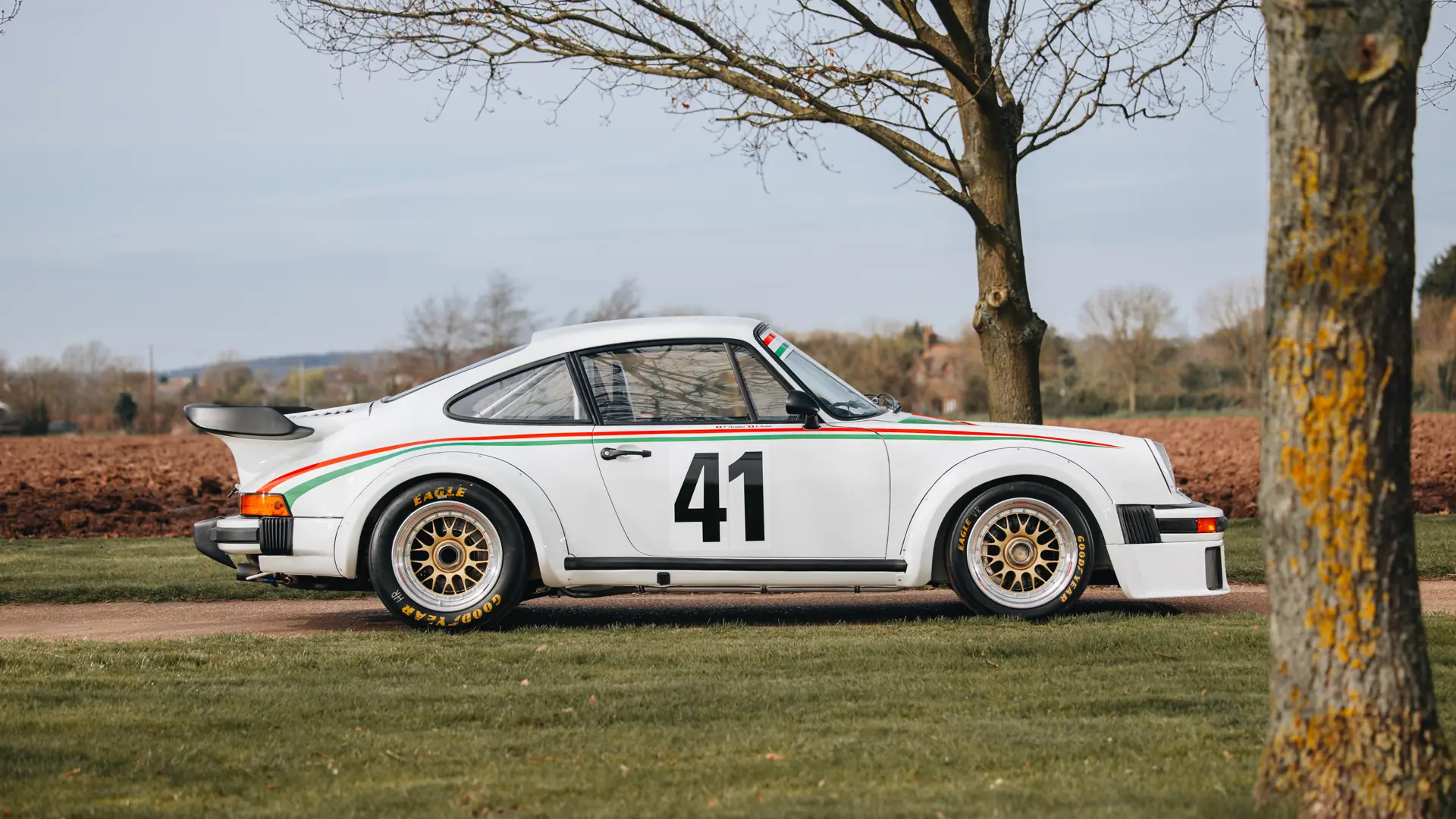
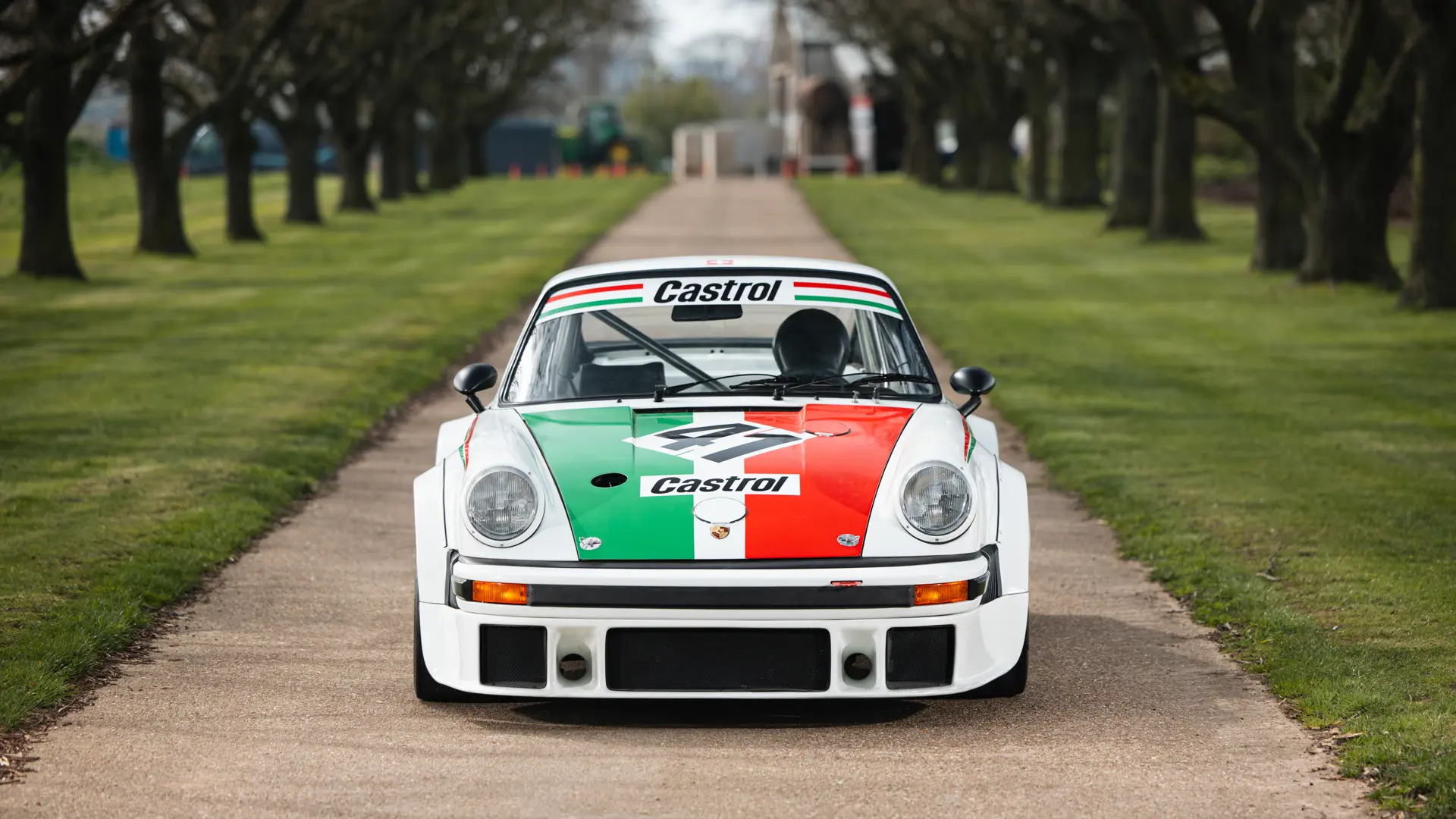
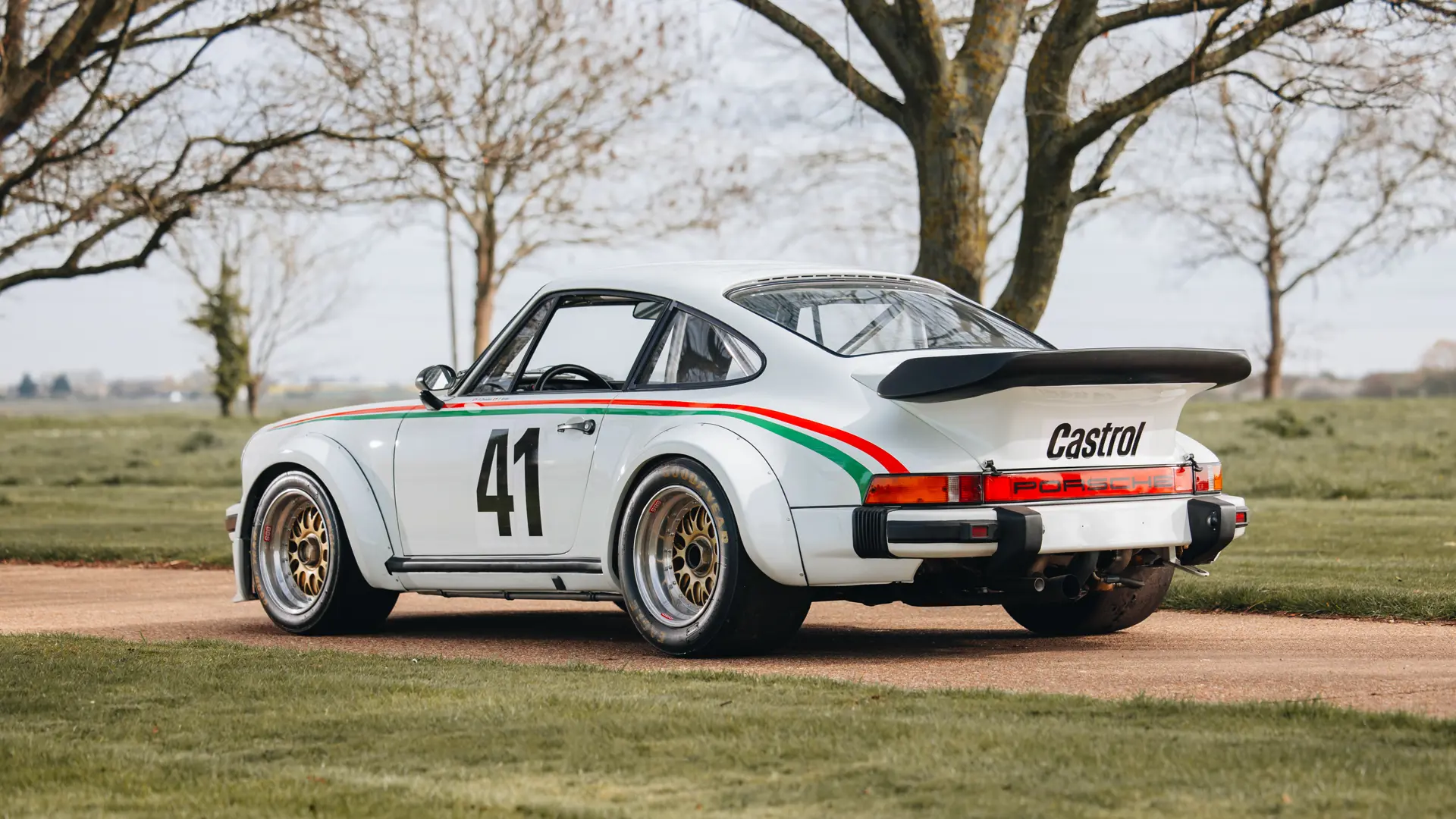
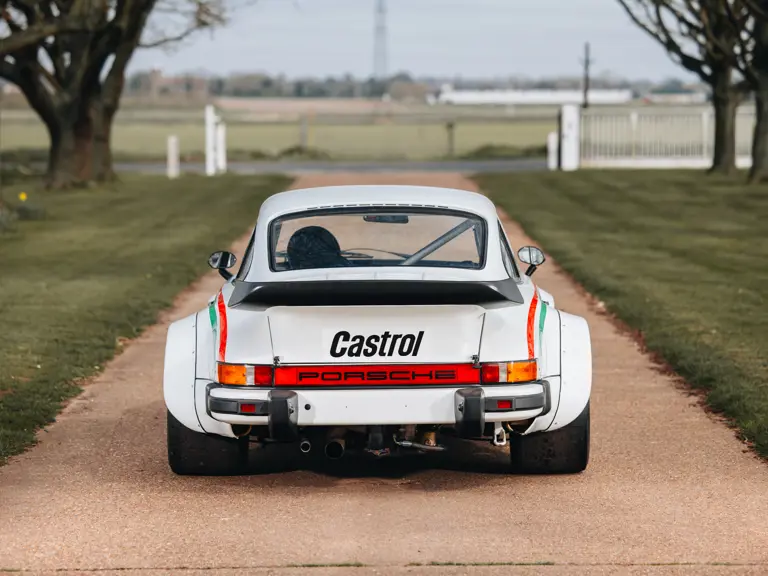
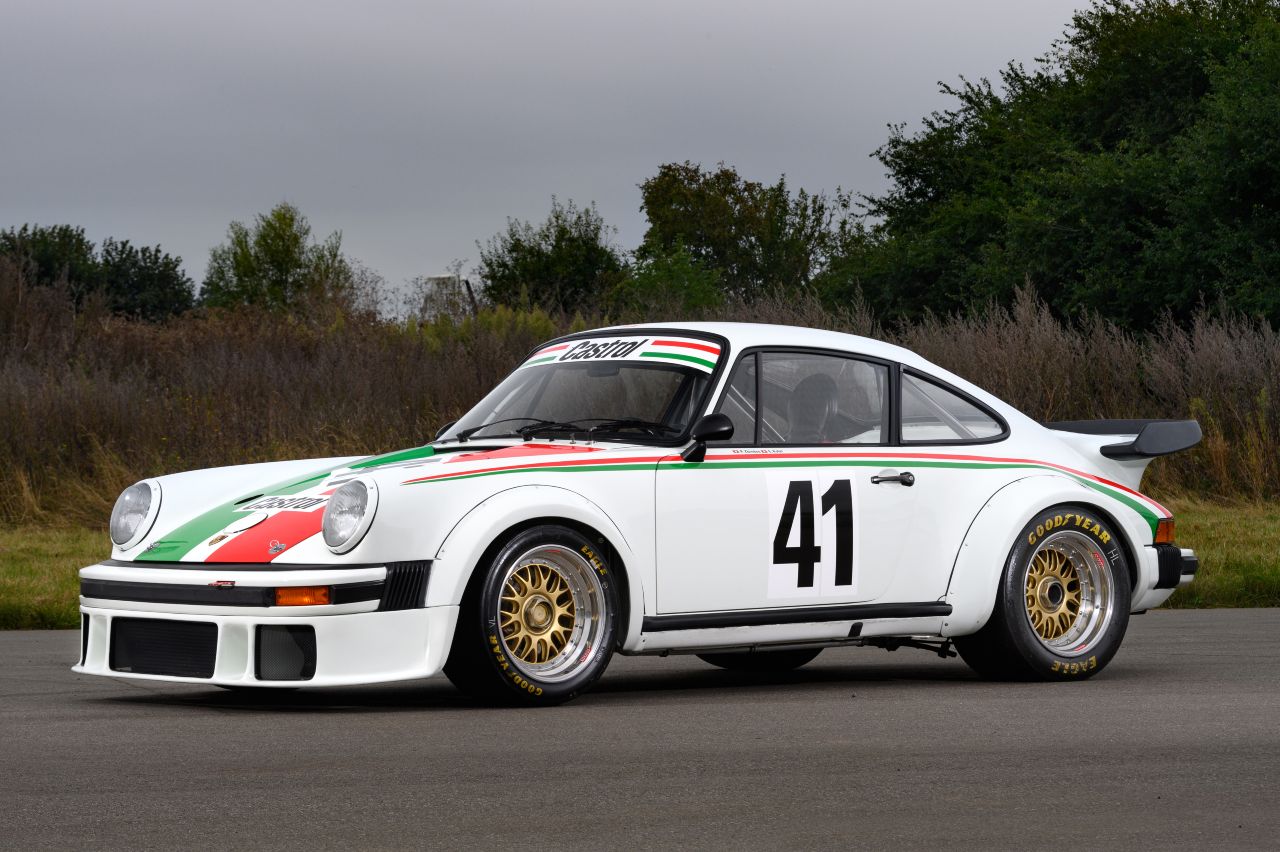
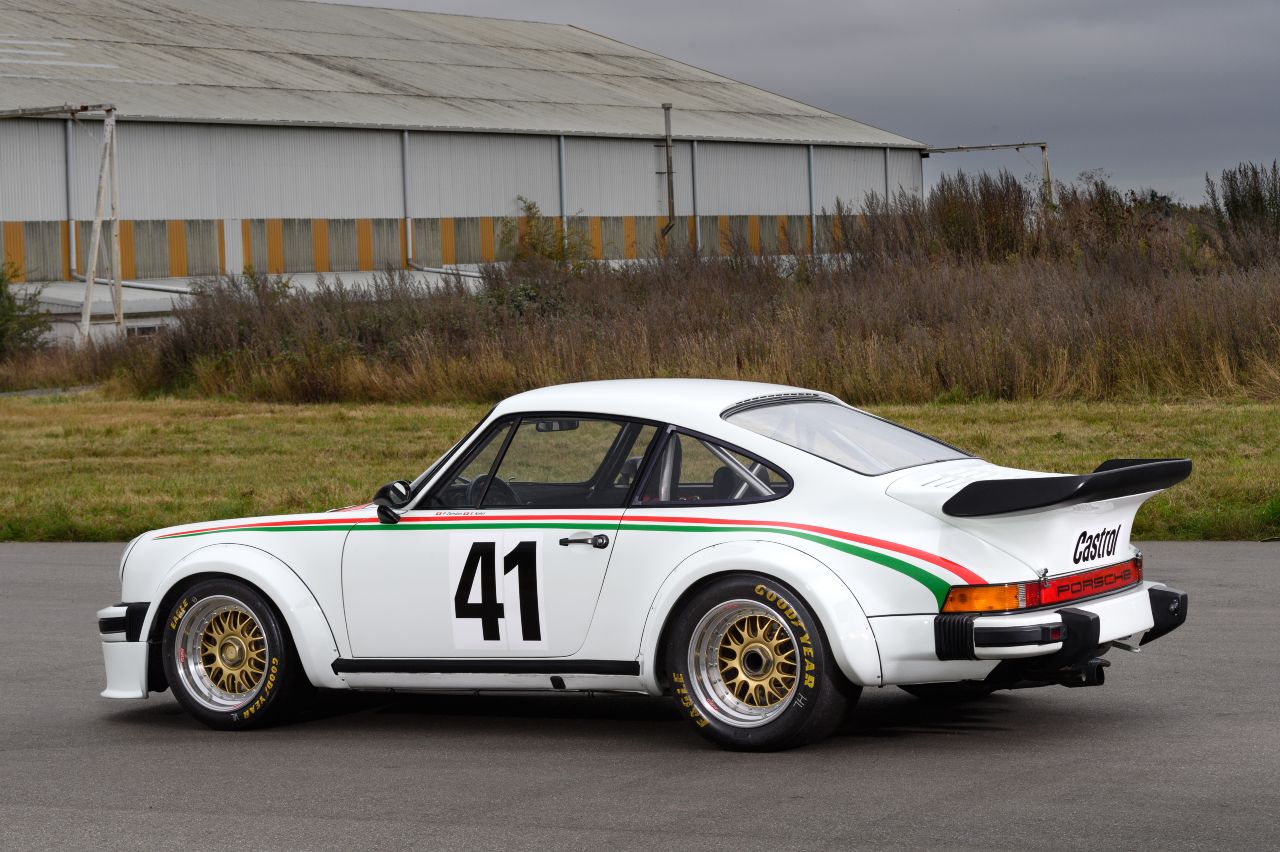
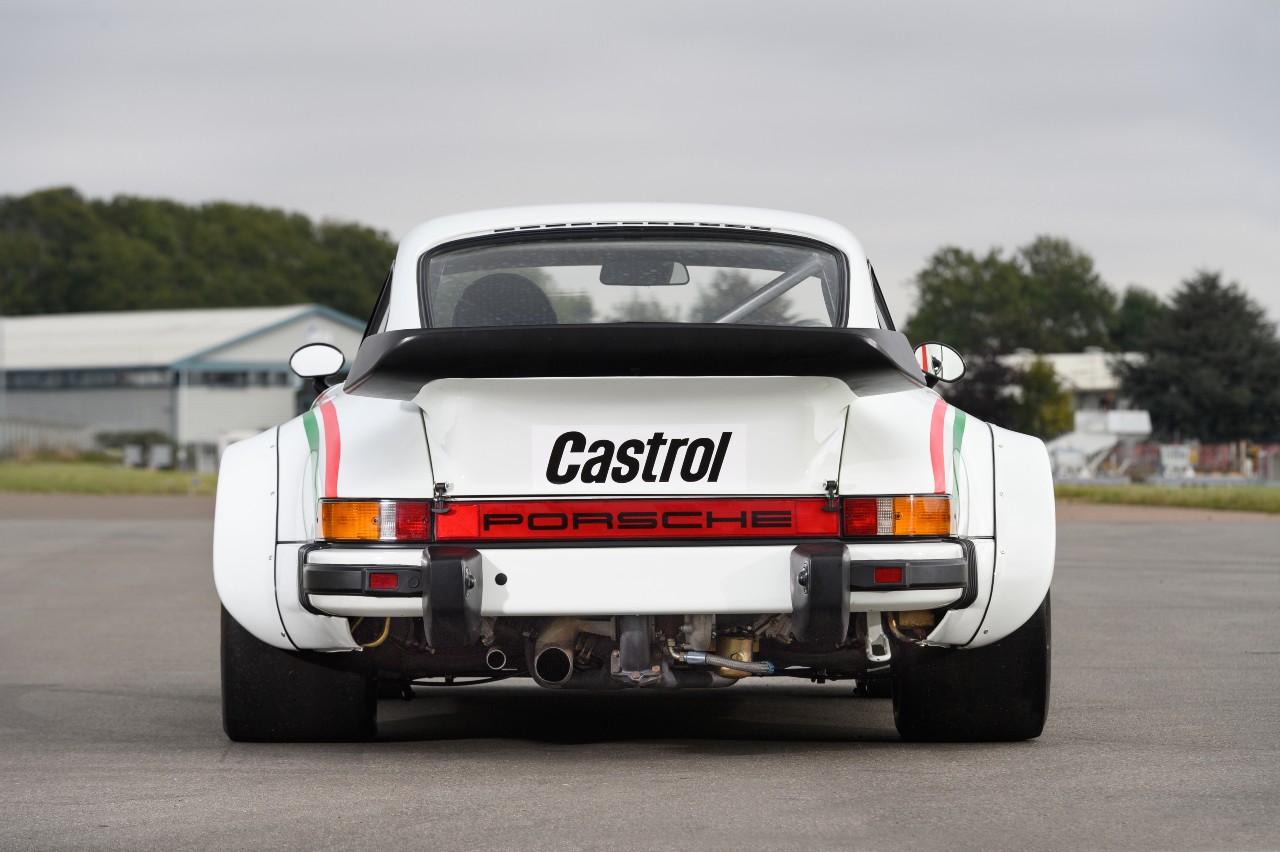
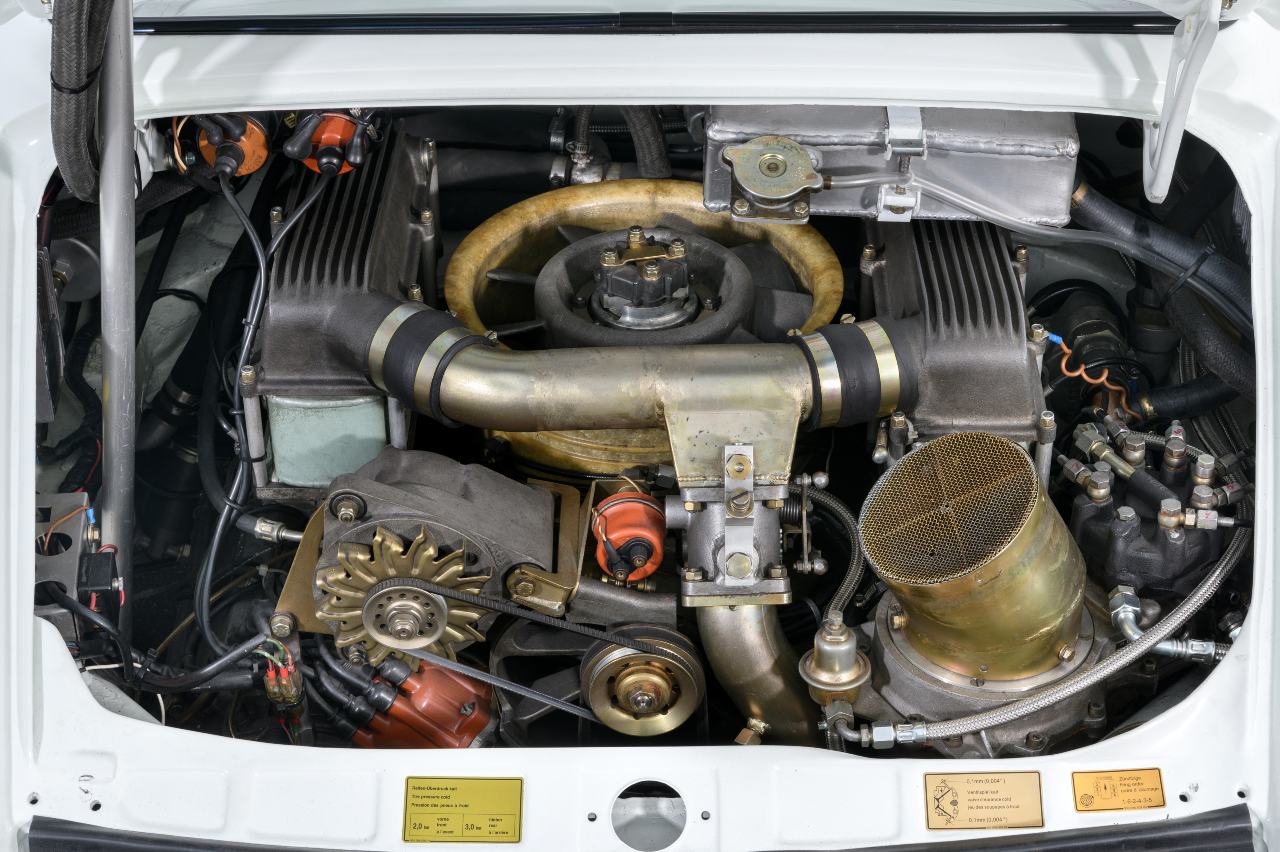
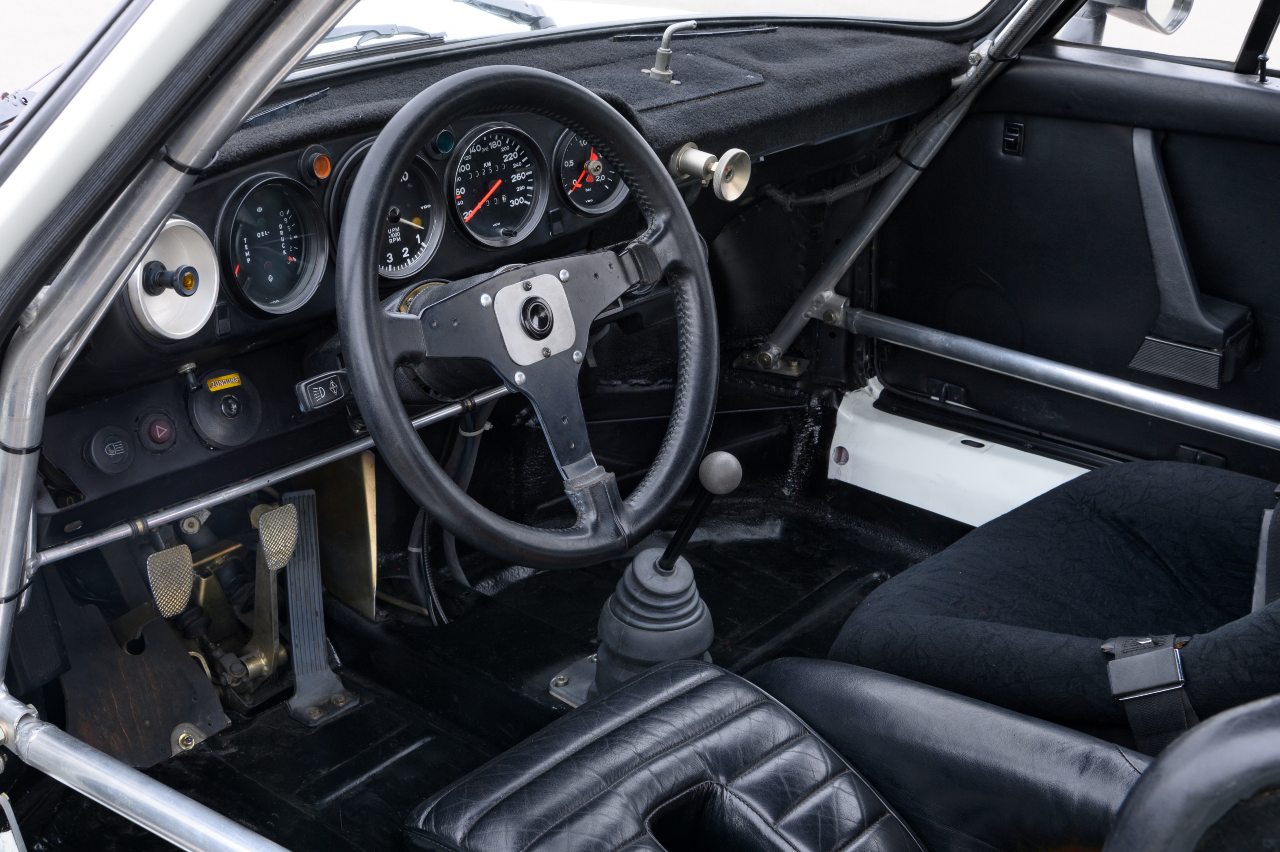
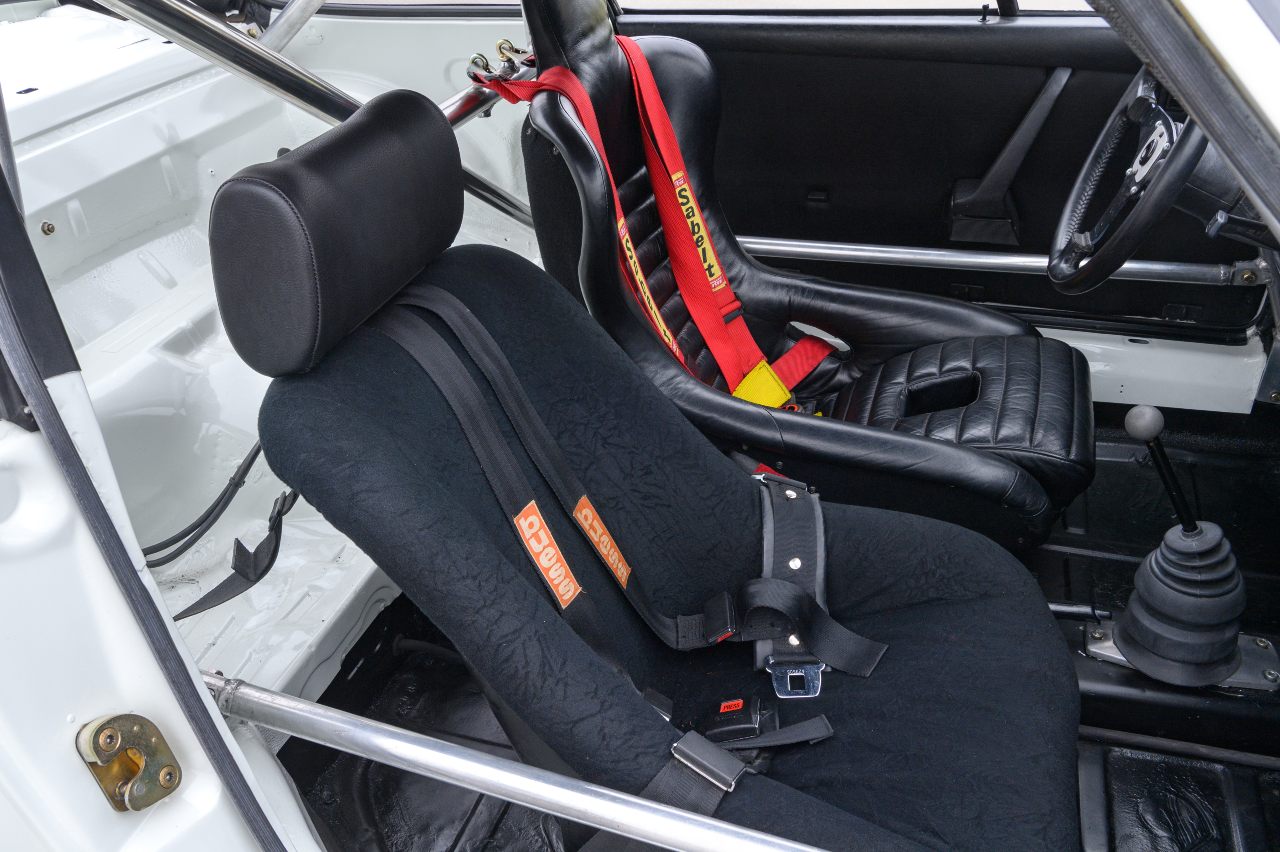
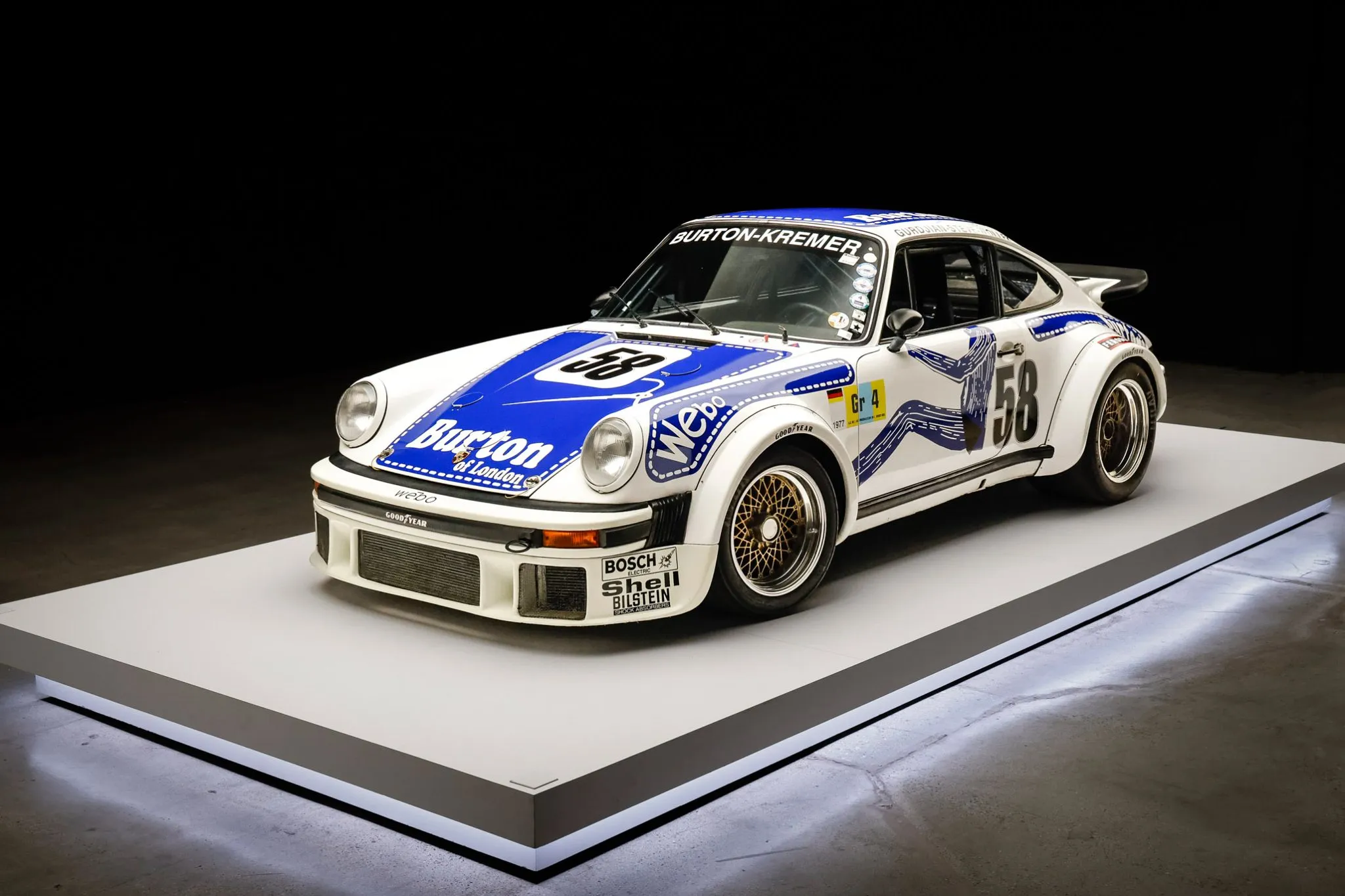
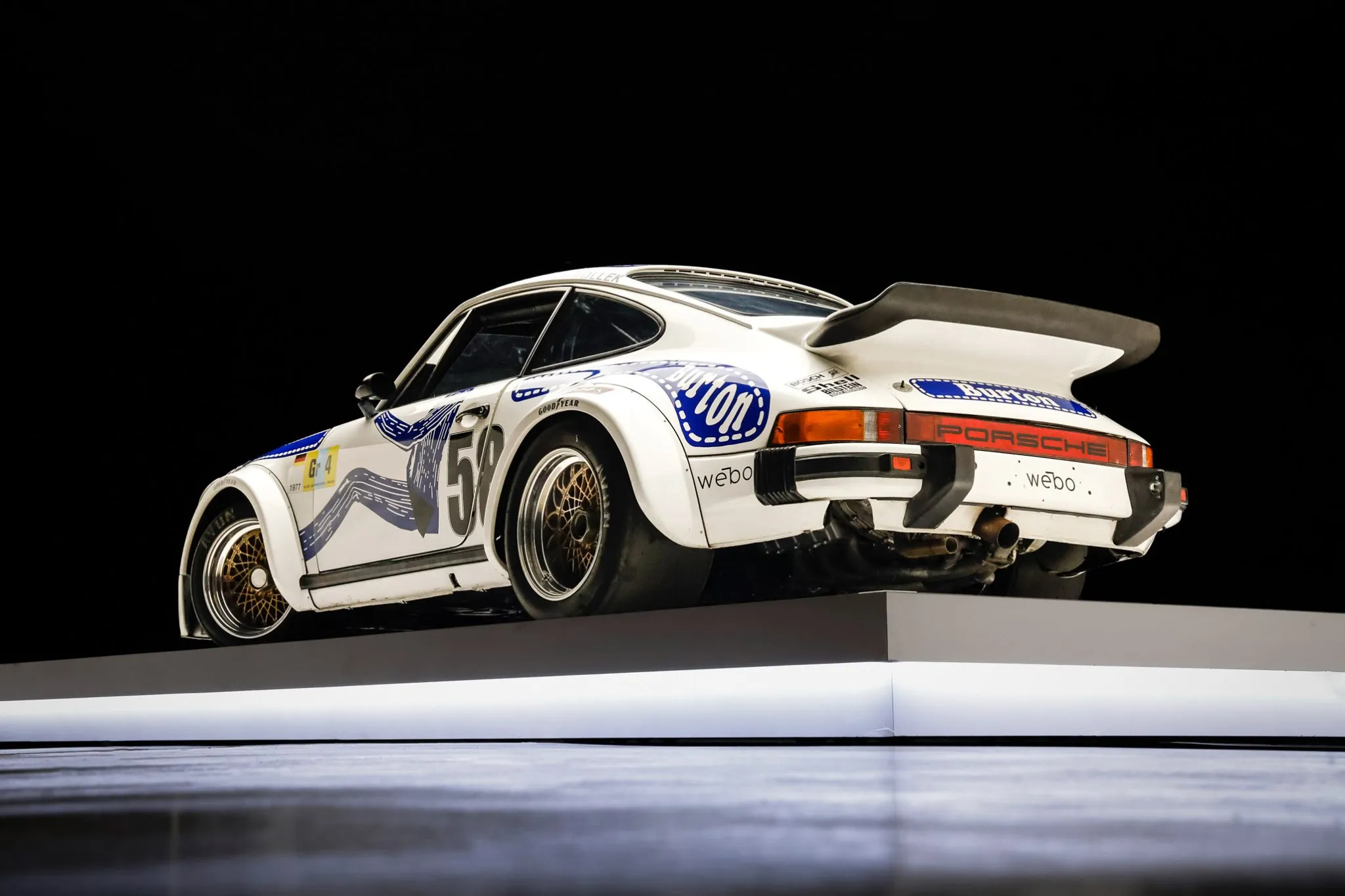
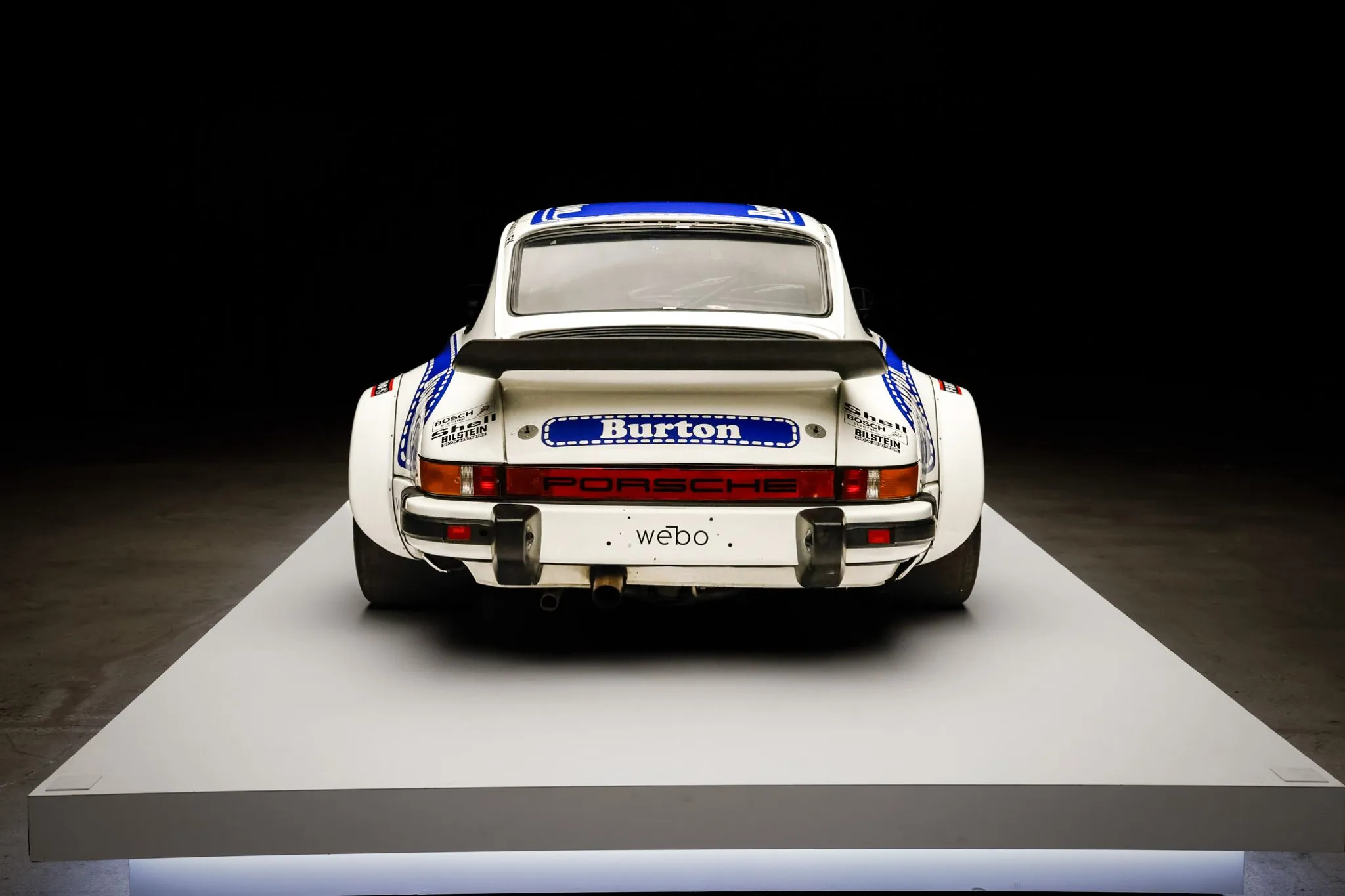
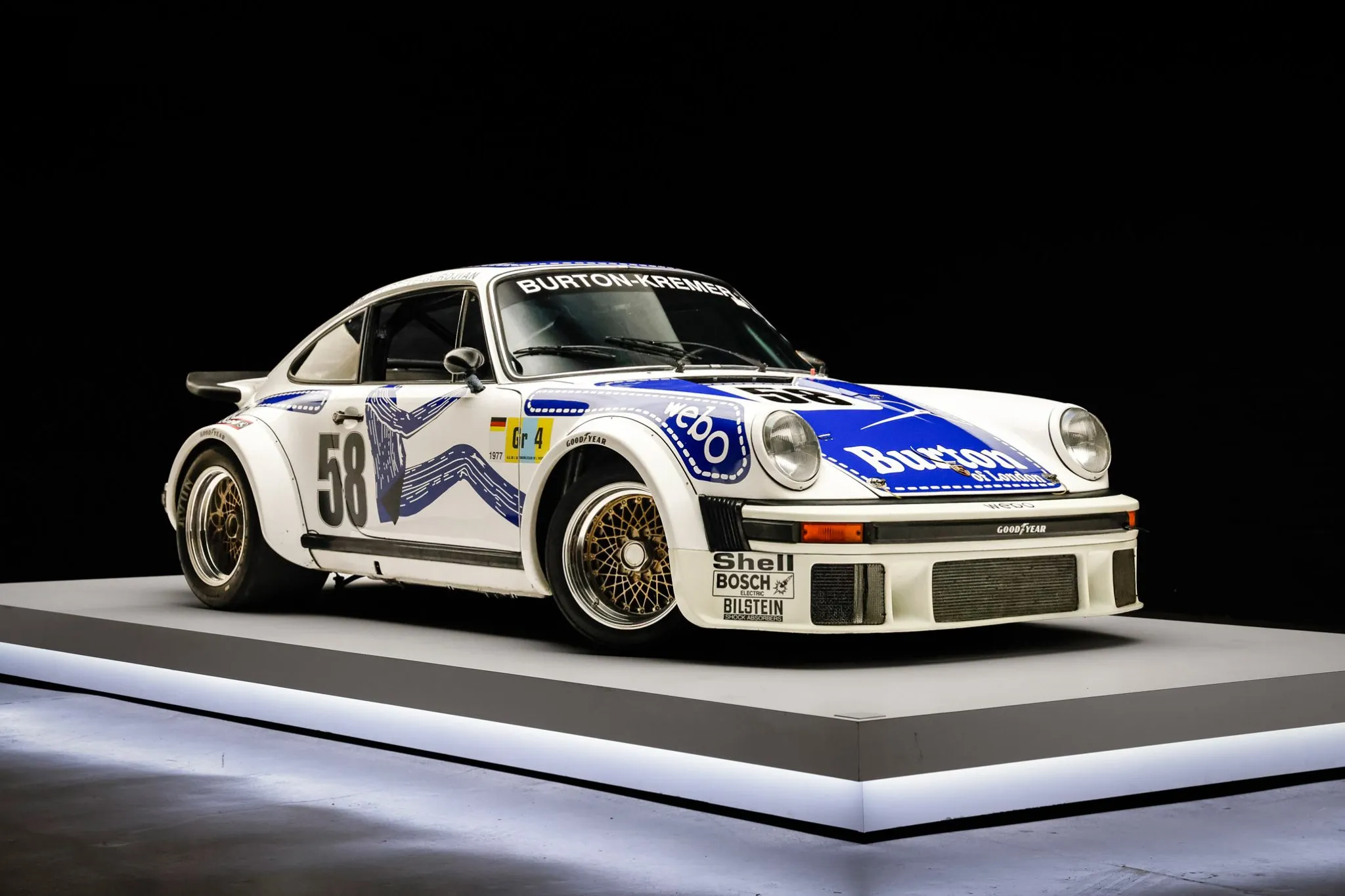
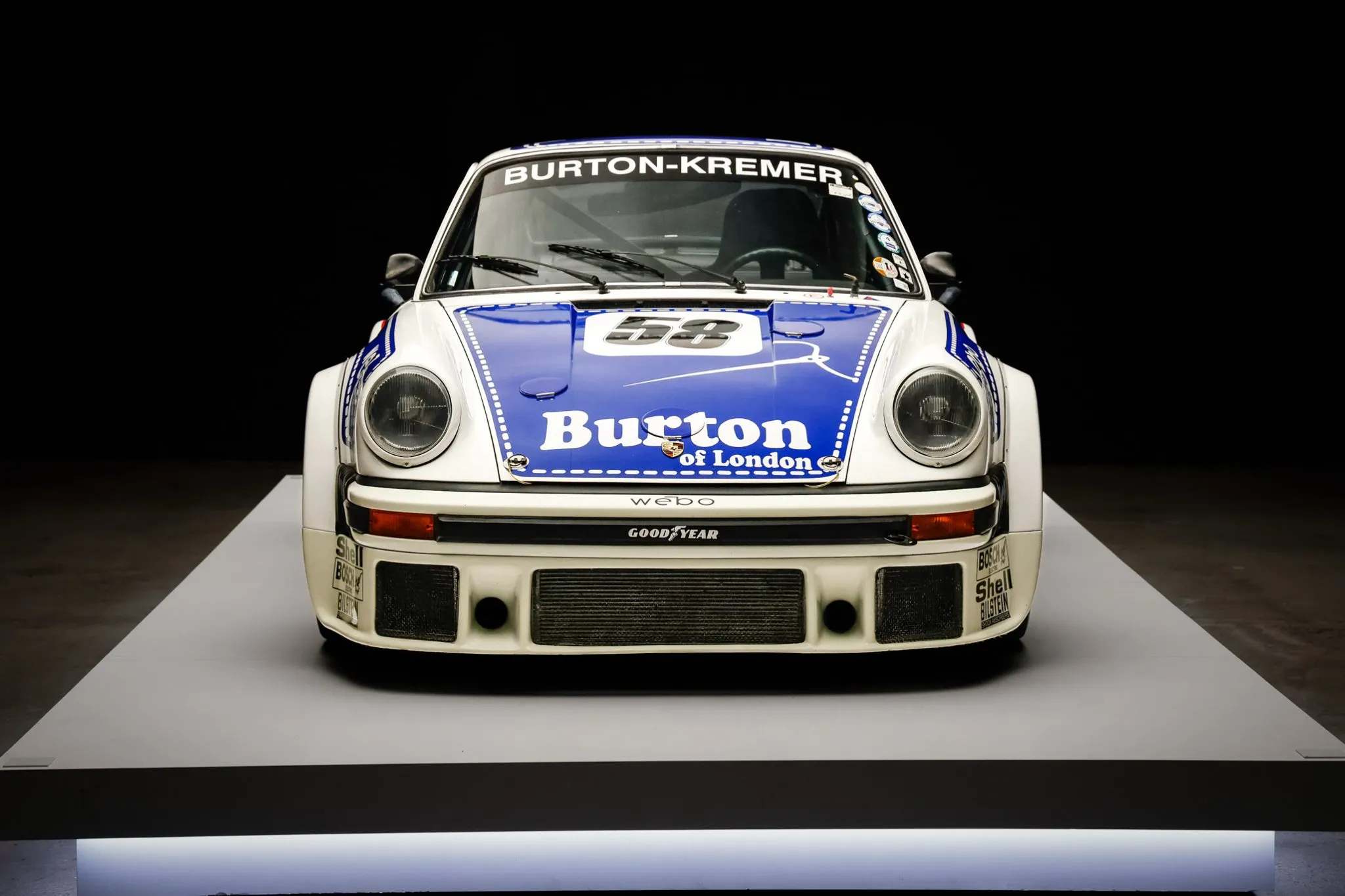
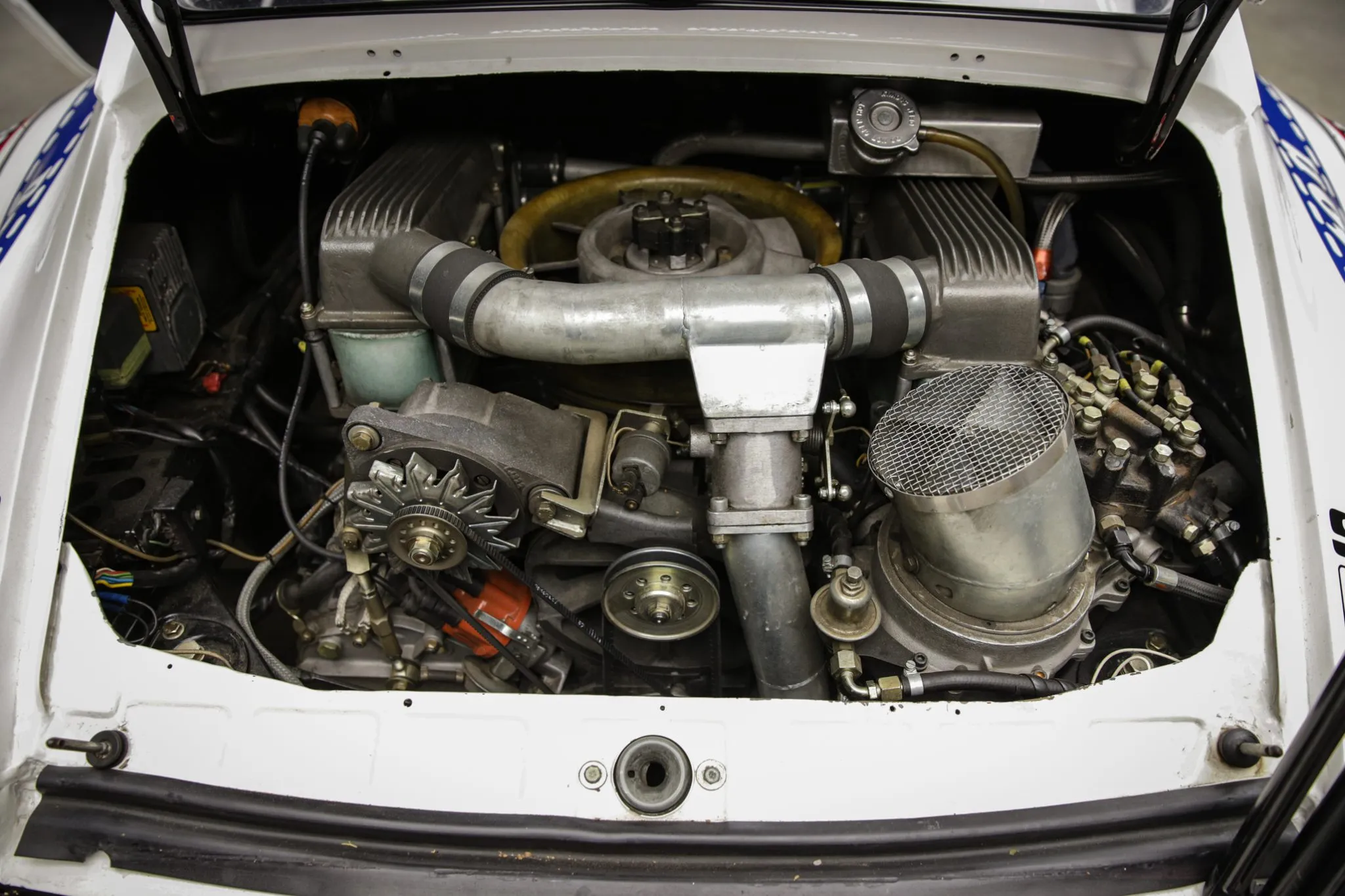
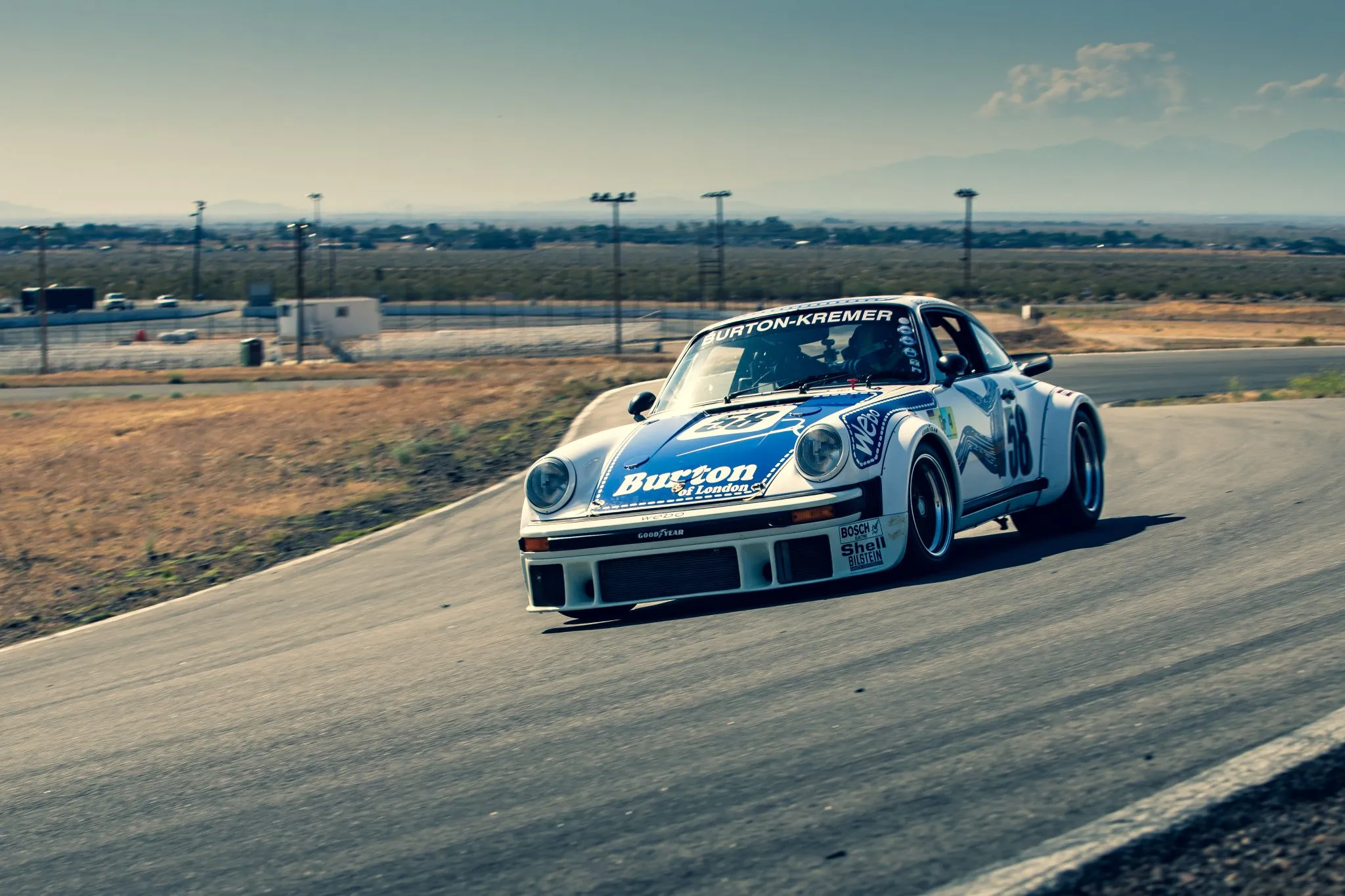
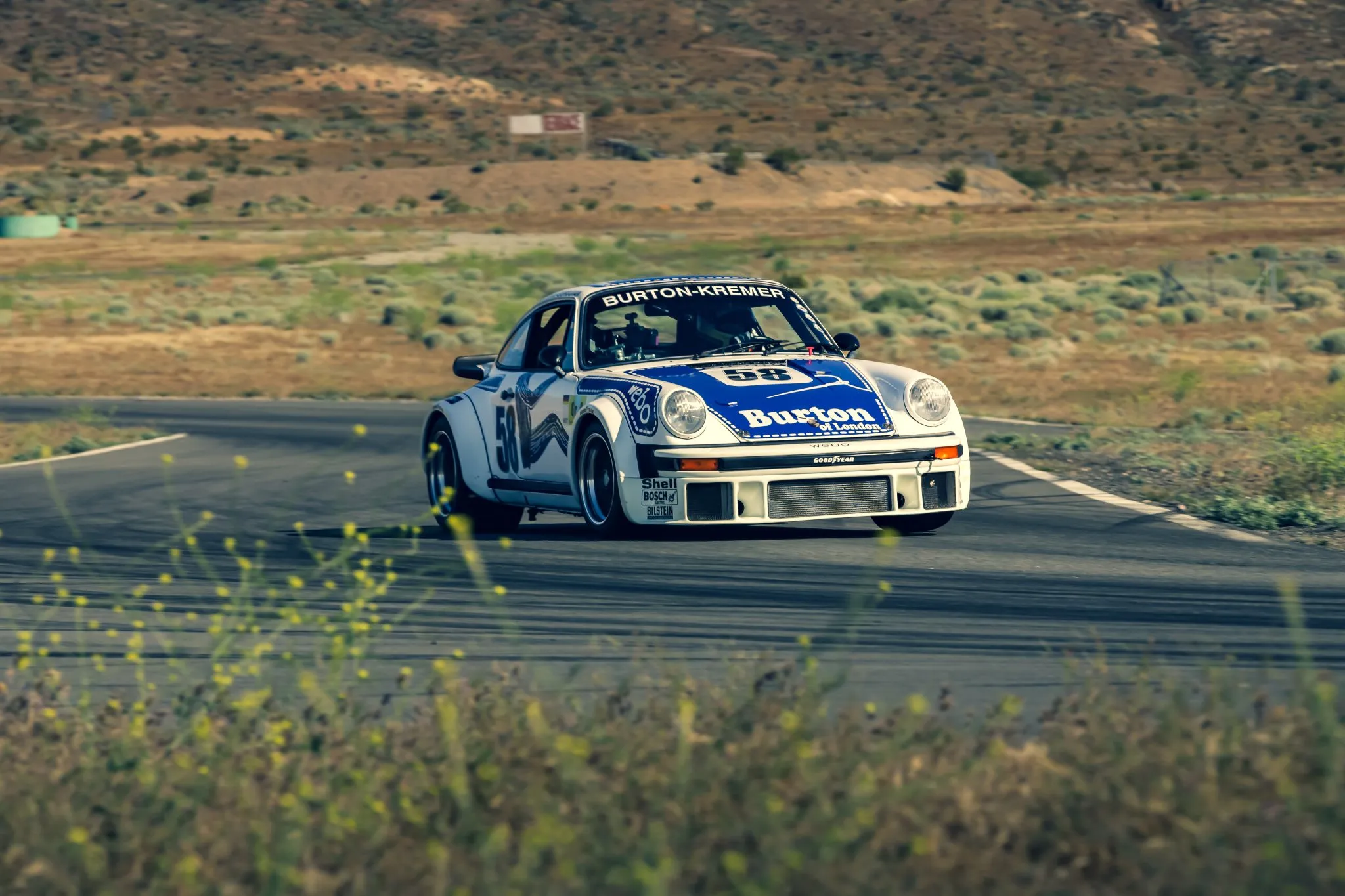
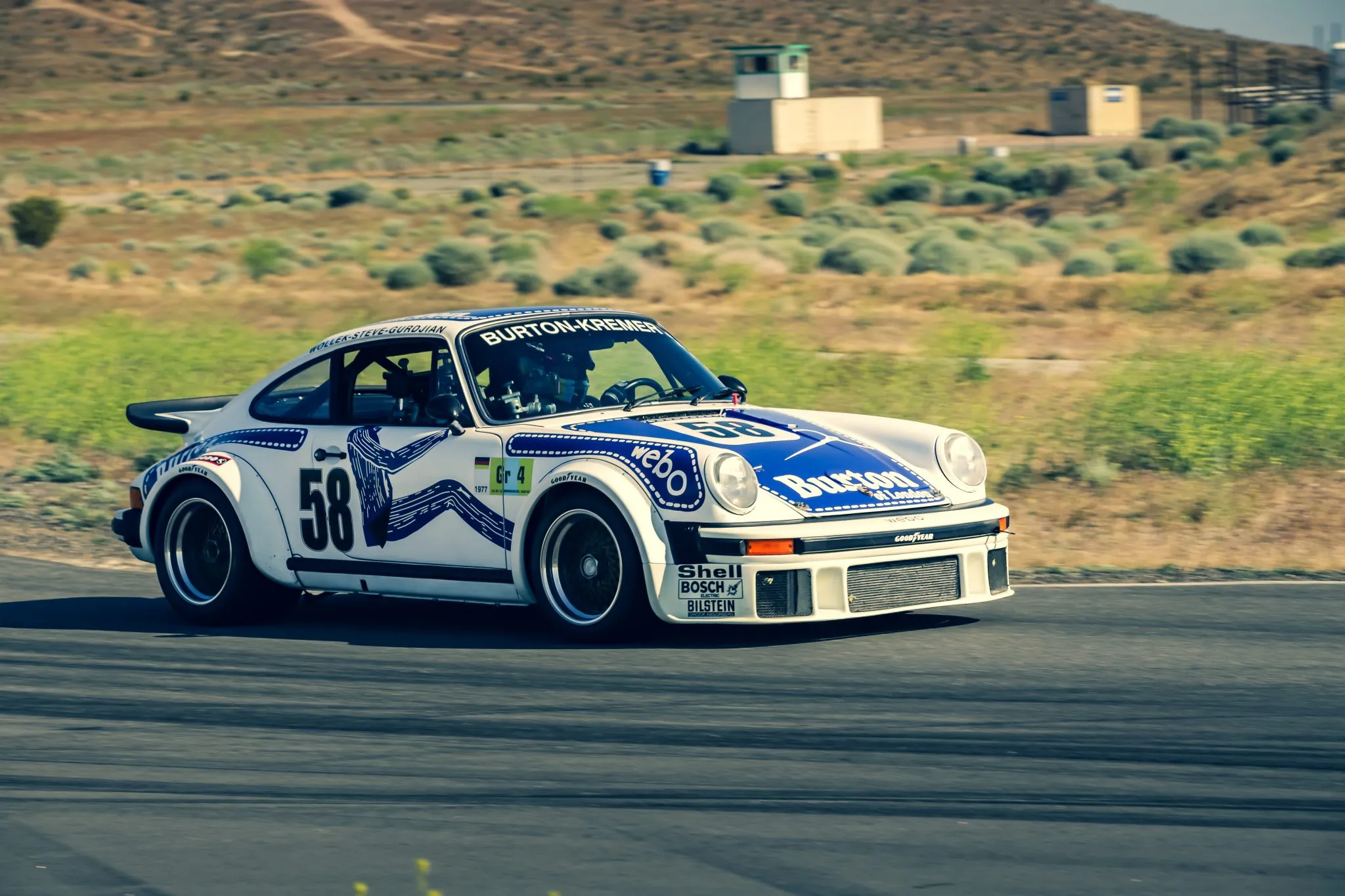
To comply with the stringent Group 4 regulations, the 934 had to retain a strong mechanical and structural relationship with the production 930 Turbo, resulting in a fascinating engineering paradox. Visually, it was a masterpiece of aggressive pragmatism. The steel bodywork remained largely stock, but it was punctuated by aggressive, riveted-on fiberglass wheel arch extensions required to shroud massive, center-lock BBS alloy wheels. At the front, a deep fiberglass air dam housed two large circular intakes. These were not for brake cooling, but to feed the highly innovative water-to-air intercoolers—a bespoke necessity because the factory’s air-to-air unit simply did not fit beneath the homologated, road-legal “whale tail” rear spoiler. Lifting that spoiler revealed a heavily fortified 3.0-liter flat-six equipped with a massive, single KKK turbocharger. Operating with Bosch K-Jetronic fuel injection, this engine initially produced a brutal 480 brake horsepower, eventually rising to nearly 580 horsepower in later iterations. This massive torque was channeled through a beefy four-speed manual transaxle. To haul this heavy, turbocharged missile down from 290 km/h (180 mph), Porsche utilized the massive, cross-drilled and ventilated disc brakes lifted directly from the legendary 917 prototype. The most bizarre quirk of the 934, however, resided in its cabin. Because Group 4 mandated a hefty minimum weight of 1,120 kilograms, Porsche stripped out the sound deadening and installed an aluminum roll cage and racing bucket seat, but famously left the factory door panels, armrests, and even the electric power windows completely intact to meet the homologation weight target.
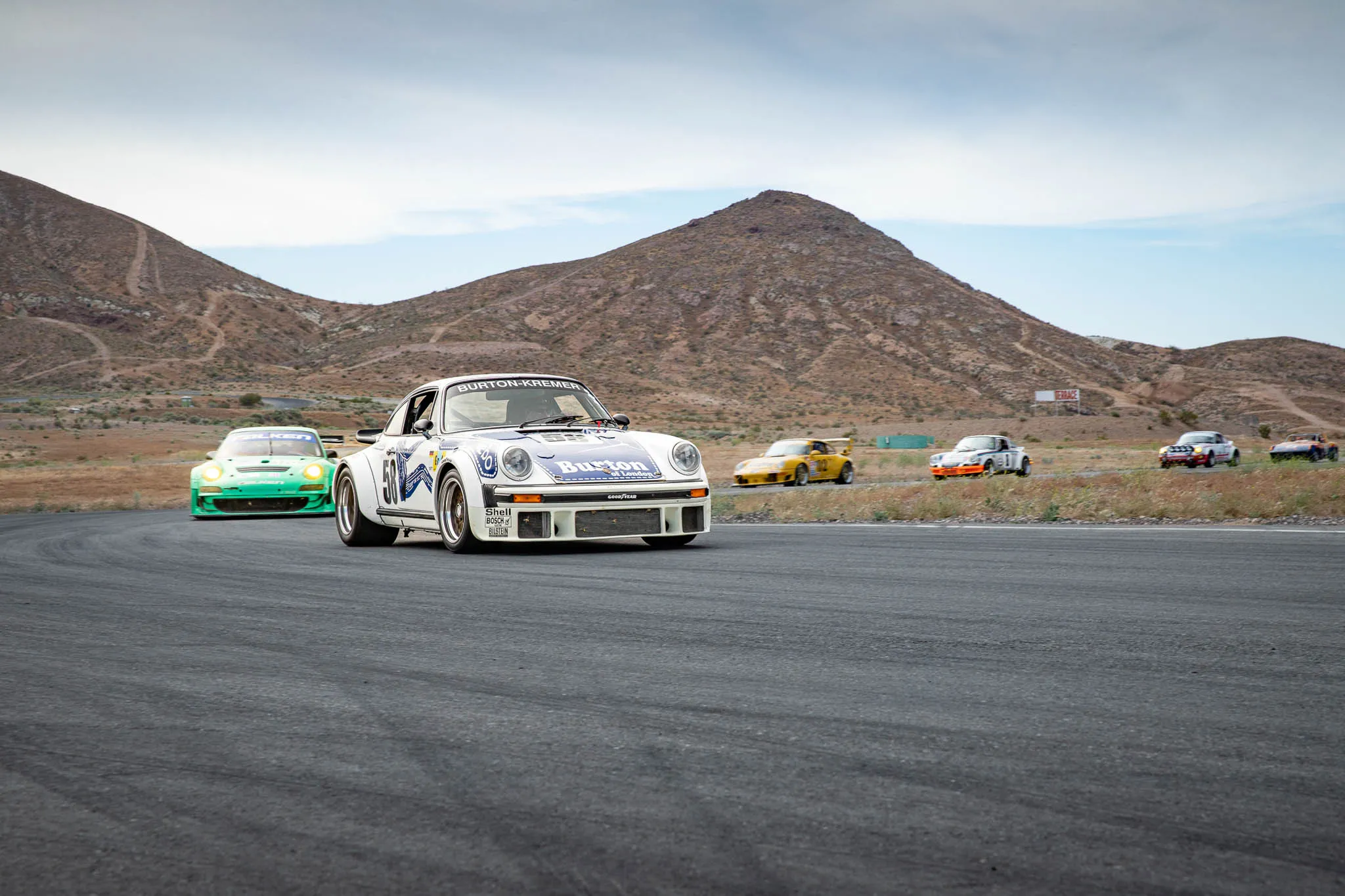
On the track, the 934 was an absolute beast that demanded tremendous physical strength and mental fortitude to tame. It possessed an ocean of mid-1970s turbo lag; drivers had to employ left-foot braking to keep the KKK turbocharger spooled, applying the throttle well before the apex to anticipate the explosive surge of boost that would arrive moments later. If timed incorrectly, the sudden wave of torque would instantly break the massive rear slicks loose, sending the heavy, rear-engined car into a violent spin. Despite its highly demanding nature, the 934 was a devastatingly effective weapon in the hands of elite privateer outfits like Kremer Racing, Gelo Racing, and Max Moritz. Cloaked in iconic, vibrant liveries—most notably the bright orange Jägermeister and the striking light-green Vaillant schemes—the 934 conquered circuits across the globe. It secured the European GT Championship with Toine Hezemans and dominated the American Trans-Am Series, where George Follmer piloted his Vasek Polak-entered 934 to the 1976 title. At the 24 Hours of Le Mans, the 934 proved its unburstable endurance, capturing consecutive Group 4 class victories and establishing Porsche’s forced-induction reliability on the world’s most grueling stage.
The legacy of the 1976 Porsche 934 is occasionally, and unfairly, overshadowed by its wildly exaggerated Group 5 sibling, the 935 ‘Moby Dick’. Yet, for the true motorsport aficionado, the 934 is arguably the more romantic machine. It was the ultimate, unfiltered bridge between the road-going 911 Turbo and the racetrack—a car that still looked like a 911, right down to its power windows. With only 31 original examples built, it is a blue-chip holy grail for collectors today. It proved that turbocharging was not just a fragile factory experiment, but a robust, race-winning philosophy that could be handed directly to customer teams. The 934 stands as a glorious, wide-hipped monument to the 1970s: an era when you could buy a 500-horsepower factory race car, bolt on a set of riveted fender flares, and spray champagne on the greatest podiums of the world.
Brand
Produced from
Portal
Vehicle category
Model line
Model generation
Predecessor
Sucessor
Brand
Produced from
Portal
Vehicle category
Model line
Model generation
Predecessor
Sucessor
Submodel Overview
In the mid-1970s, the golden era of naturally aspirated endurance racing reached a violent, forced-induction crossroads. The shrieking, 3.0-liter Carrera RSR had taken the 911 platform as far as atmospheric physics would allow, and the FIA was aggressively rewriting the international rulebook. For the 1976 season, the World Championship for Makes was divided into two fiercely contested categories: the highly modified Group 5 Silhouette class, and the stricter, production-based Group 4 Grand Touring class. Armed with the recently launched, impact-bumpered 930 Turbo road car, Zuffenhausen saw an opportunity to absolutely conquer both. While the radical 935 was birthed to dominate Group 5, Porsche developed the 1976 Porsche 934 as the ultimate turnkey weapon for customer teams in Group 4. It was designed to replace the RSR and wage war against the muscular BMW E9 3.5 CSLs, the aging but potent V8 De Tomaso Panteras, and the heavy Ferrari Daytonas. The 934 marked the dawn of the turbocharged era for customer GT racing, bringing an unprecedented, terrifying level of explosive power to the hands of privateer racers worldwide.
To comply with the stringent Group 4 regulations, the 934 had to retain a strong mechanical and structural relationship with the production 930 Turbo, resulting in a fascinating engineering paradox. Visually, it was a masterpiece of aggressive pragmatism. The steel bodywork remained largely stock, but it was punctuated by aggressive, riveted-on fiberglass wheel arch extensions required to shroud massive, center-lock BBS alloy wheels. At the front, a deep fiberglass air dam housed two large circular intakes. These were not for brake cooling, but to feed the highly innovative water-to-air intercoolers—a bespoke necessity because the factory’s air-to-air unit simply did not fit beneath the homologated, road-legal “whale tail” rear spoiler. Lifting that spoiler revealed a heavily fortified 3.0-liter flat-six equipped with a massive, single KKK turbocharger. Operating with Bosch K-Jetronic fuel injection, this engine initially produced a brutal 480 brake horsepower, eventually rising to nearly 580 horsepower in later iterations. This massive torque was channeled through a beefy four-speed manual transaxle. To haul this heavy, turbocharged missile down from 290 km/h (180 mph), Porsche utilized the massive, cross-drilled and ventilated disc brakes lifted directly from the legendary 917 prototype. The most bizarre quirk of the 934, however, resided in its cabin. Because Group 4 mandated a hefty minimum weight of 1,120 kilograms, Porsche stripped out the sound deadening and installed an aluminum roll cage and racing bucket seat, but famously left the factory door panels, armrests, and even the electric power windows completely intact to meet the homologation weight target.
On the track, the 934 was an absolute beast that demanded tremendous physical strength and mental fortitude to tame. It possessed an ocean of mid-1970s turbo lag; drivers had to employ left-foot braking to keep the KKK turbocharger spooled, applying the throttle well before the apex to anticipate the explosive surge of boost that would arrive moments later. If timed incorrectly, the sudden wave of torque would instantly break the massive rear slicks loose, sending the heavy, rear-engined car into a violent spin. Despite its highly demanding nature, the 934 was a devastatingly effective weapon in the hands of elite privateer outfits like Kremer Racing, Gelo Racing, and Max Moritz. Cloaked in iconic, vibrant liveries—most notably the bright orange Jägermeister and the striking light-green Vaillant schemes—the 934 conquered circuits across the globe. It secured the European GT Championship with Toine Hezemans and dominated the American Trans-Am Series, where George Follmer piloted his Vasek Polak-entered 934 to the 1976 title. At the 24 Hours of Le Mans, the 934 proved its unburstable endurance, capturing consecutive Group 4 class victories and establishing Porsche’s forced-induction reliability on the world’s most grueling stage.
The legacy of the 1976 Porsche 934 is occasionally, and unfairly, overshadowed by its wildly exaggerated Group 5 sibling, the 935 ‘Moby Dick’. Yet, for the true motorsport aficionado, the 934 is arguably the more romantic machine. It was the ultimate, unfiltered bridge between the road-going 911 Turbo and the racetrack—a car that still looked like a 911, right down to its power windows. With only 31 original examples built, it is a blue-chip holy grail for collectors today. It proved that turbocharging was not just a fragile factory experiment, but a robust, race-winning philosophy that could be handed directly to customer teams. The 934 stands as a glorious, wide-hipped monument to the 1970s: an era when you could buy a 500-horsepower factory race car, bolt on a set of riveted fender flares, and spray champagne on the greatest podiums of the world.
Tech Specs
Technical Specifications
Tech Specs
Technical Specifications
Engine
01
03
Internal combustion engine
Configuration
Porsche Type 930/71, Flat-6 (Boxer) - Air-cooled
Location
Rear, longitudinally mounted
Construction
Aluminium alloy block and heads
Displacement (cc)
2,994 cc
Displacement (cu in)
182.7 cu in
Compression
6.5:1
Bore x Stroke
95.0 mm x 70.4 mm
Valvetrain
2 valves per cylinder, SOHC
Fuel feed
Bosch K-Jetronic fuel injection
Lubrication
Dry sump
Aspiration
Turbocharged (Single KKK turbocharger with dual water-to-air intercoolers)
Output
Power (hp)
485 hp
Power (kW)
362 kW
Max power at
7,000 RPM
Torque (Nm)
588 Nm
Torque (ft lbs)
434 ft lbs
Max torque at
5,400 RPM
Drivetrain
02
03
Chassis
Type
Monocoque unibody (930 shell with integrated roll cage)
Material
Steel
Body
Material
Steel with Fibreglass (GRP) flared fenders, front air dam, and engine lid
Transmission
Gearbox
Porsche Type 930, 4-speed manual (with external oil cooler)
Drive
Rear Wheel Drive (Limited Slip Differential)
Suspension
Front
Independent, McPherson struts, coil springs over telescopic dampers, adjustable anti-roll bar (replacing standard torsion bars)
Rear
Independent, semi-trailing arms, coil springs over telescopic dampers, adjustable anti-roll bar
Steering
Type
Rack and pinion, unassisted
Brakes
Front
Ventilated and cross-drilled steel discs (Porsche 917 derived), 4-piston finned aluminium calipers
Rear
Ventilated and cross-drilled steel discs (Porsche 917 derived), 4-piston finned aluminium calipers
Wheels
Front
10.5" x 16" (Center-lock BBS/Mahle multi-piece alloy)
Rear
12.5" x 16" (Center-lock BBS/Mahle multi-piece alloy)
Tires
Front
275/600-16
Rear
325/625-16
Dimensions and performance
03
03
Dimensions
Length (mm)
4,291 mm
Length (in)
168.9 in
Width (mm)
1,875 mm
Width (in)
73.8 in
Height (mm)
1,304 mm
Height (in)
51.3 in
Wheelbase (mm)
2,271 mm
Wheelbase (in)
89.4 in
Weight (kg)
1,120 kg
Weight (lbs)
2,469 lbs
Performance
Power to weight
0.43 hp/kg
Top speed (km/h)
~300 km/h
Top speed (mph)
~186 mph
0-100 km/h (0-60 mph)
~3.9 s