
Tiga GC288 3.3 Ford Cosworth DFL
Brand
Produced from
Portal
Vehicle category
Model line
Predecessor
Successor
Submodel Overview
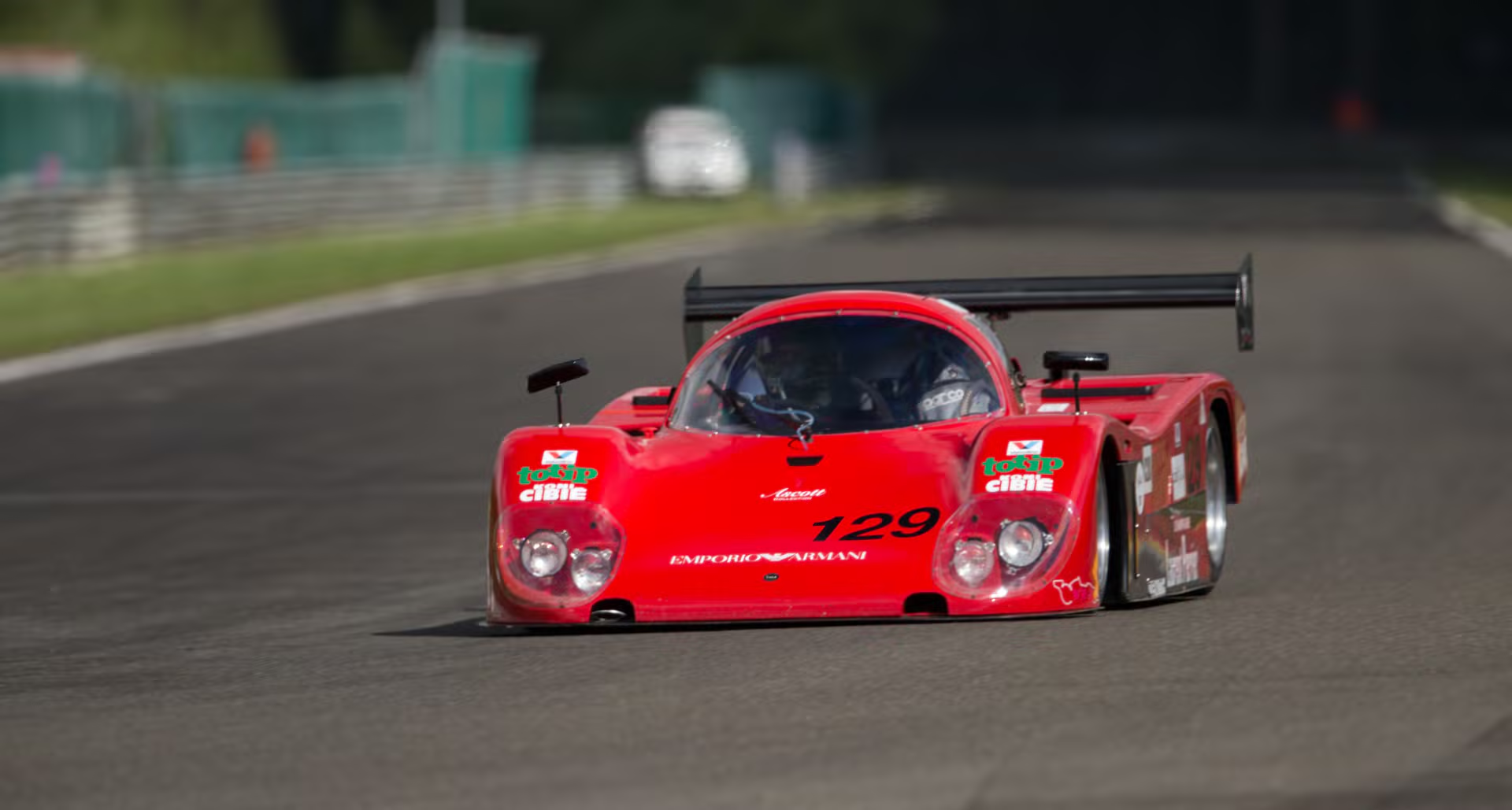
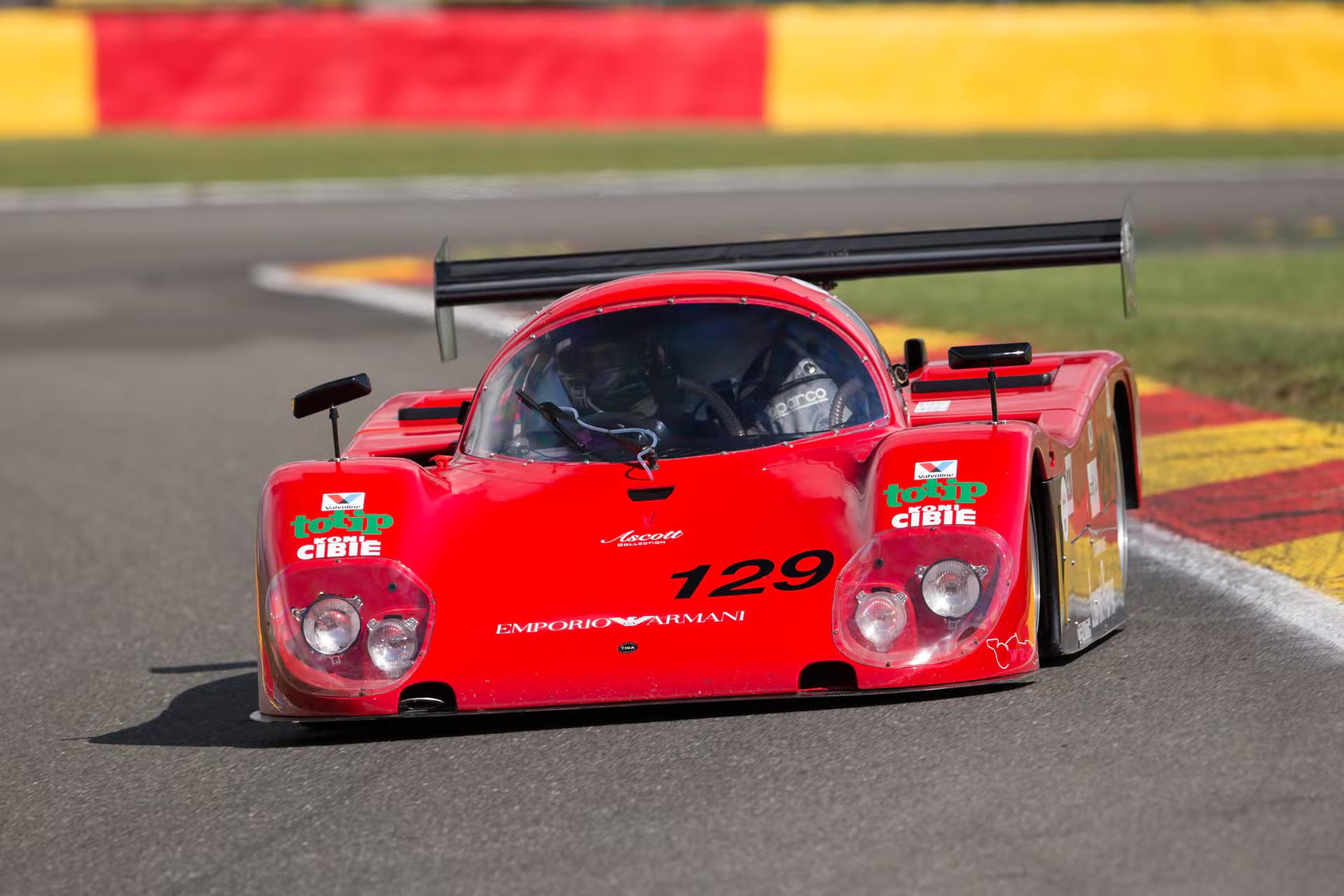
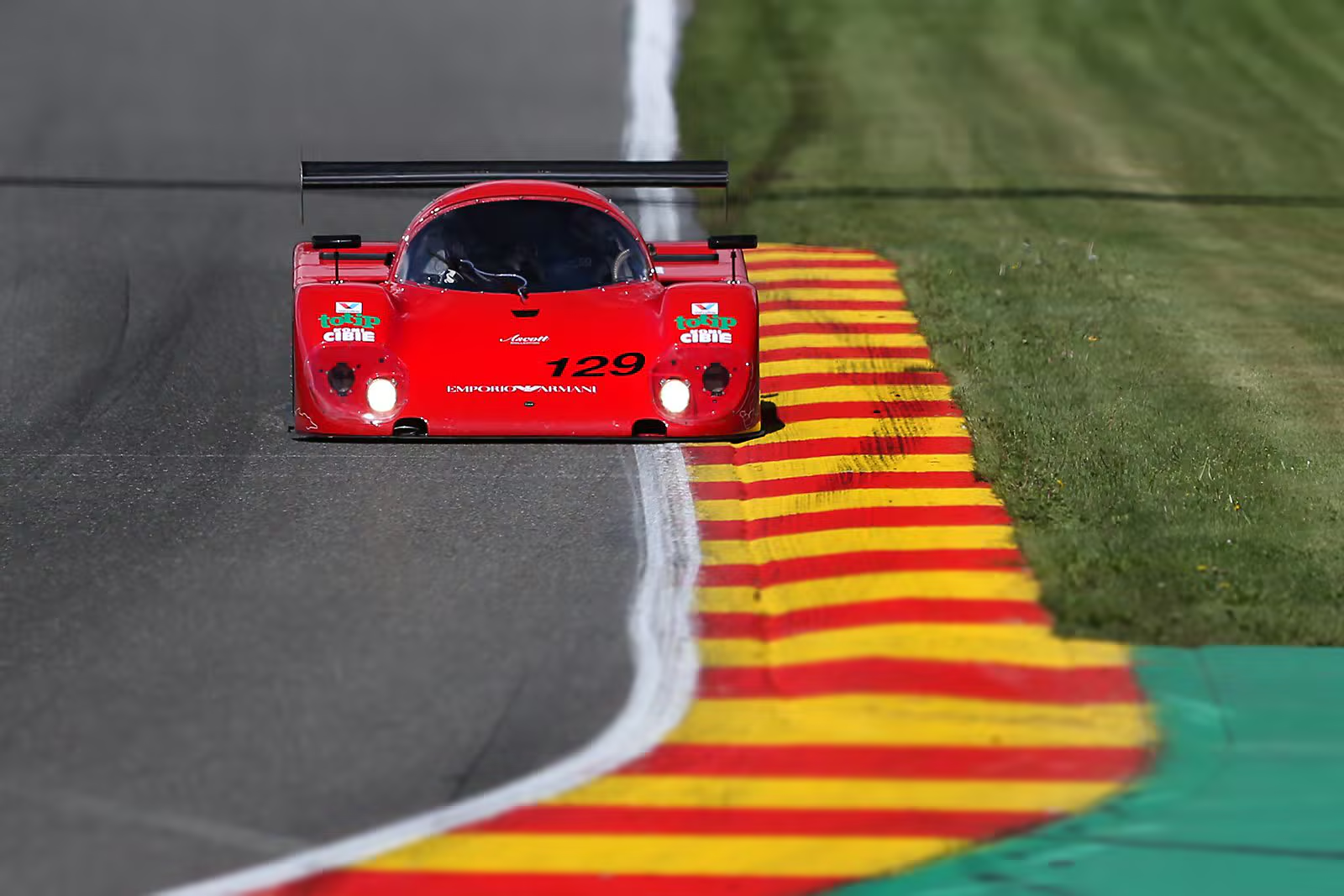
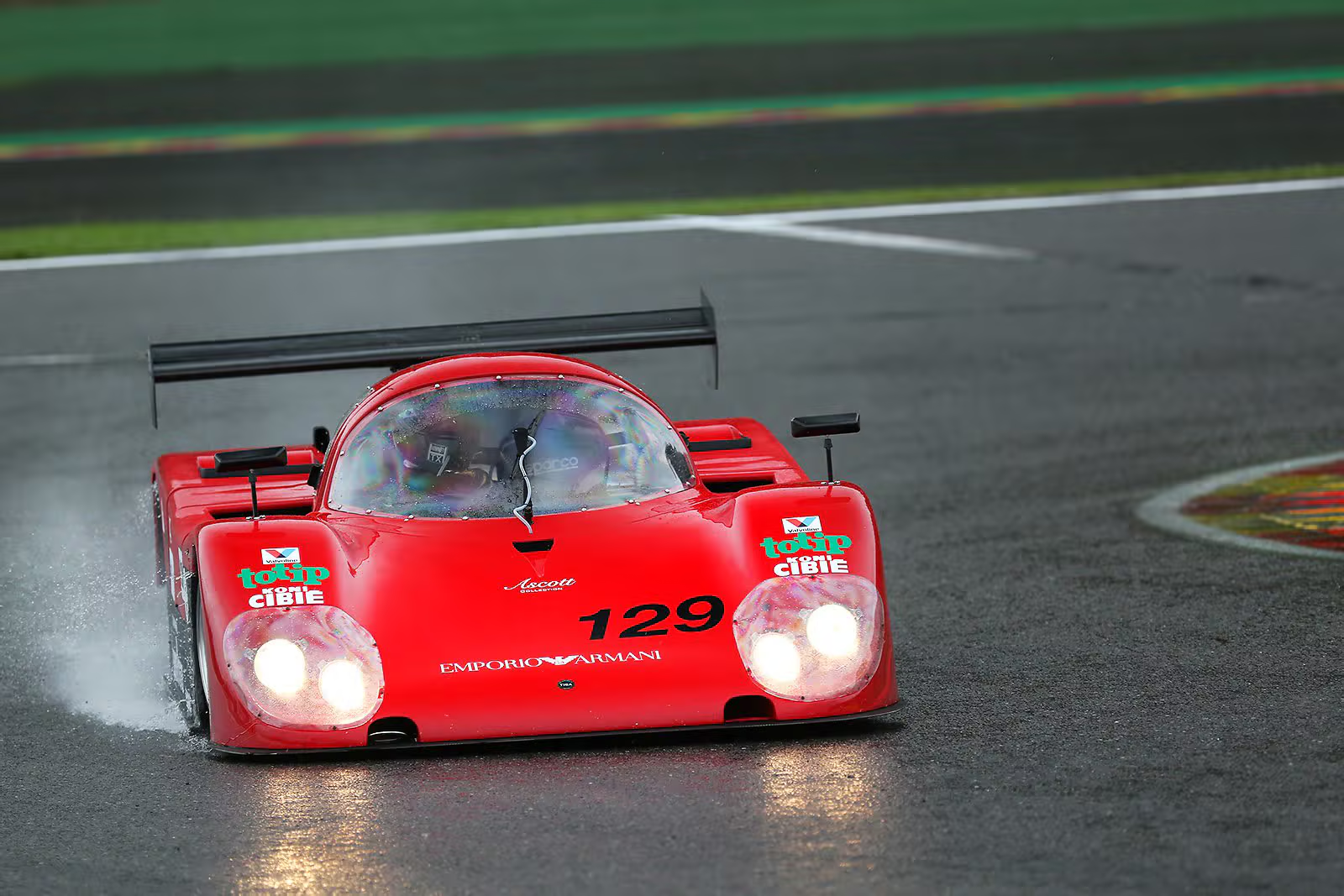
By the time the 1988 World Sports Prototype Championship season ignited, the Group C hierarchy was undergoing a fascinating fracture. While the “Big Three”—Porsche, Jaguar, and the emerging Sauber-Mercedes—spent millions of marks and pounds in the premier C1 class, the junior C2 category had become a frantic, high-speed chess match for the world’s most ambitious privateers. For years, the grids had been a duopoly between two British firms: Spice Engineering and Tiga Race Cars. Founded by former Formula 1 drivers Tim Schenken and Howden Ganley, Tiga had already tasted glory with their earlier GC286 and GC287 models. However, to combat the increasingly dominant Spice SE88, the firm from High Wycombe unleashed the Tiga GC288 3.3 Ford Cosworth DFL. It was a machine built for the “underdog” who refused to play the victim, designed to take on the sleekest rivals from Spice and the exotic Ecurie Ecosse entries. The GC288 was the final, highly evolved expression of Tiga’s traditional design philosophy before the manufacturer was swept away by the changing tides of the 1990s.
To peer beneath the sleek, low-drag fiberglass and Kevlar bodywork of the GC288 is to witness a masterclass in pragmatic racing engineering. While the factory titans were pioneering molded carbon-fiber tubs, Howden Ganley remained a staunch advocate for the folded aluminium honeycomb monocoque. This chassis was the privateer’s best friend: immensely stiff and capable of managing the massive downforce generated by its deep underbody venturi tunnels, yet easily repairable in a standard workshop with a rivet gun and a steady hand. The heart of this specific submodel was the legendary 3.3-liter Ford Cosworth DFL. This naturally aspirated V8 was the endurance-spec evolution of the immortal DFV; it was a high-revving, nervous thoroughbred that produced roughly 500 brake horsepower while emitting a raw, metallic shriek that could be heard from the next county. Mated to a robust five-speed Hewland DGB manual transaxle, the DFL provided the metronomic reliability required to survive twenty-four hours of flat-out abuse. The car sat on massive racing slicks, brought to a halt by equally impressive AP Racing ventilated disc brakes, while the suspension utilized a sophisticated double-wishbone setup optimized for mechanical grip on technical circuits. The cockpit was a spartan, aluminum-lined cocoon, placing the driver on the right-hand side for optimal weight distribution on European tracks.
The competitive life of the Tiga GC288 3.3 Ford Cosworth DFL was defined by its role as a relentless giant-killer. While it rarely had the budget to out-qualify the works-backed Spice entries on pure pace, its reliability and agility made it a permanent fixture at the sharp end of the C2 grid. In the hands of privateer outfits like Kelmar Racing or Charles Ivey Racing, the GC288 was a formidable point-scorer. Its most significant impact was felt at the 24 Hours of Le Mans, where the unburstable nature of the aluminium honeycomb tub and the Cosworth DFL allowed it to march up the leaderboard as faster, more fragile prototypes disintegrated under the strain of the Mulsanne Straight. A curious footnote in its history is its dual life; while the GC288 campaigned in Europe, its identical brother, the GT288, was terrorizing the IMSA Camel Lights category in North America, often with thundering Buick V6 power. This cross-continental versatility proved that Tiga had created one of the most adaptable and user-friendly prototype platforms of the entire Group C era.
The Tiga GC288 3.3 Ford Cosworth DFL represents the absolute zenith of the true independent garagiste era before the FIA’s move to the 3.5-liter Formula 1 engine regulations effectively bankrupted the privateer market. When Tiga eventually closed its doors in 1989, the GC288 remained as their finest hour—a beautifully balanced, aerodynamic warrior that gave independent teams the tools to dream of Le Mans glory.
Brand
Produced from
Portal
Vehicle category
Model line
Predecessor
Sucessor
Brand
Produced from
Portal
Vehicle category
Model line
Model generation
Predecessor
Sucessor
Submodel Overview
By the time the 1988 World Sports Prototype Championship season ignited, the Group C hierarchy was undergoing a fascinating fracture. While the “Big Three”—Porsche, Jaguar, and the emerging Sauber-Mercedes—spent millions of marks and pounds in the premier C1 class, the junior C2 category had become a frantic, high-speed chess match for the world’s most ambitious privateers. For years, the grids had been a duopoly between two British firms: Spice Engineering and Tiga Race Cars. Founded by former Formula 1 drivers Tim Schenken and Howden Ganley, Tiga had already tasted glory with their earlier GC286 and GC287 models. However, to combat the increasingly dominant Spice SE88, the firm from High Wycombe unleashed the Tiga GC288 3.3 Ford Cosworth DFL. It was a machine built for the “underdog” who refused to play the victim, designed to take on the sleekest rivals from Spice and the exotic Ecurie Ecosse entries. The GC288 was the final, highly evolved expression of Tiga’s traditional design philosophy before the manufacturer was swept away by the changing tides of the 1990s.
To peer beneath the sleek, low-drag fiberglass and Kevlar bodywork of the GC288 is to witness a masterclass in pragmatic racing engineering. While the factory titans were pioneering molded carbon-fiber tubs, Howden Ganley remained a staunch advocate for the folded aluminium honeycomb monocoque. This chassis was the privateer’s best friend: immensely stiff and capable of managing the massive downforce generated by its deep underbody venturi tunnels, yet easily repairable in a standard workshop with a rivet gun and a steady hand. The heart of this specific submodel was the legendary 3.3-liter Ford Cosworth DFL. This naturally aspirated V8 was the endurance-spec evolution of the immortal DFV; it was a high-revving, nervous thoroughbred that produced roughly 500 brake horsepower while emitting a raw, metallic shriek that could be heard from the next county. Mated to a robust five-speed Hewland DGB manual transaxle, the DFL provided the metronomic reliability required to survive twenty-four hours of flat-out abuse. The car sat on massive racing slicks, brought to a halt by equally impressive AP Racing ventilated disc brakes, while the suspension utilized a sophisticated double-wishbone setup optimized for mechanical grip on technical circuits. The cockpit was a spartan, aluminum-lined cocoon, placing the driver on the right-hand side for optimal weight distribution on European tracks.
The competitive life of the Tiga GC288 3.3 Ford Cosworth DFL was defined by its role as a relentless giant-killer. While it rarely had the budget to out-qualify the works-backed Spice entries on pure pace, its reliability and agility made it a permanent fixture at the sharp end of the C2 grid. In the hands of privateer outfits like Kelmar Racing or Charles Ivey Racing, the GC288 was a formidable point-scorer. Its most significant impact was felt at the 24 Hours of Le Mans, where the unburstable nature of the aluminium honeycomb tub and the Cosworth DFL allowed it to march up the leaderboard as faster, more fragile prototypes disintegrated under the strain of the Mulsanne Straight. A curious footnote in its history is its dual life; while the GC288 campaigned in Europe, its identical brother, the GT288, was terrorizing the IMSA Camel Lights category in North America, often with thundering Buick V6 power. This cross-continental versatility proved that Tiga had created one of the most adaptable and user-friendly prototype platforms of the entire Group C era.
The Tiga GC288 3.3 Ford Cosworth DFL represents the absolute zenith of the true independent garagiste era before the FIA’s move to the 3.5-liter Formula 1 engine regulations effectively bankrupted the privateer market. When Tiga eventually closed its doors in 1989, the GC288 remained as their finest hour—a beautifully balanced, aerodynamic warrior that gave independent teams the tools to dream of Le Mans glory.
Tech Specs
Technical Specifications
Tech Specs
Technical Specifications
Engine
01
03
Internal combustion engine
Configuration
Ford Cosworth DFL, V8 - 90º
Location
Mid, longitudinally mounted
Construction
Aluminium alloy block and heads
Displacement (cc)
3,298 cc
Displacement (cu in)
201.3 cu in
Compression
12.5:1
Bore x Stroke
90.0 mm x 64.8 mm
Valvetrain
4 valves per cylinder, DOHC
Fuel feed
Lucas mechanical fuel injection
Lubrication
Dry sump
Aspiration
Naturally aspirated
Output
Power (hp)
~465 hp
Power (kW)
~347 kW
Max power at
9,500 RPM
Torque (Nm)
~420 Nm
Torque (ft lbs)
~310 ft lbs
Max torque at
7,500 RPM
Drivetrain
02
03
Chassis
Type
Monocoque
Material
Aluminium honeycomb
Body
Material
Carbon-fibre composite and Kevlar
Transmission
Gearbox
Hewland 5-speed manual transaxle
Drive
Rear Wheel Drive (Limited Slip Differential)
Suspension
Front
Independent, double wishbones, pull-rod actuated coil springs and shock absorbers, anti-roll bar
Rear
Independent, lower wishbones, top rockers actuating in-board mounted coil springs over shock absorbers, anti-roll bar
Steering
Type
Rack and pinion, unassisted
Brakes
Front
Ventilated steel discs, 4-piston calipers
Rear
Ventilated steel discs, 4-piston calipers
Wheels
Front
11" x 16" (Cast alloy)
Rear
14" x 16" (Cast alloy)
Tires
Front
-
Rear
-
Dimensions and performance
03
03
Dimensions
Length (mm)
4,410 mm
Length (in)
173.6 in
Width (mm)
1,790 mm
Width (in)
70.5 in
Height (mm)
1,000 mm
Height (in)
39.4 in
Wheelbase (mm)
2,550 mm
Wheelbase (in)
100.4 in
Weight (kg)
~850 kg
Weight (lbs)
~1,874 lbs
Performance
Power to weight
~0.55 hp/kg
Top speed (km/h)
~325 km/h
Top speed (mph)
~202 mph
0-100 km/h (0-60 mph)
~3.4 s