Tiga GC288/GT288
Brand
Produced from
Vehicle category
Portal
Model line
Model generation
Predecessor
Sucessor
Model Overview
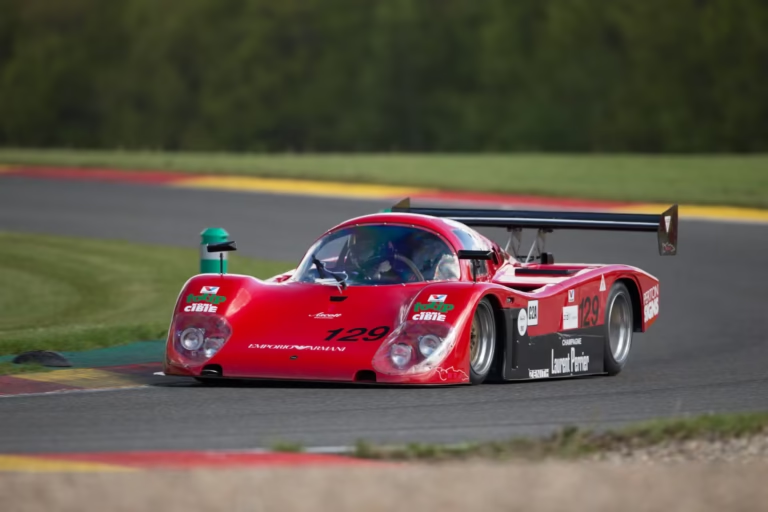
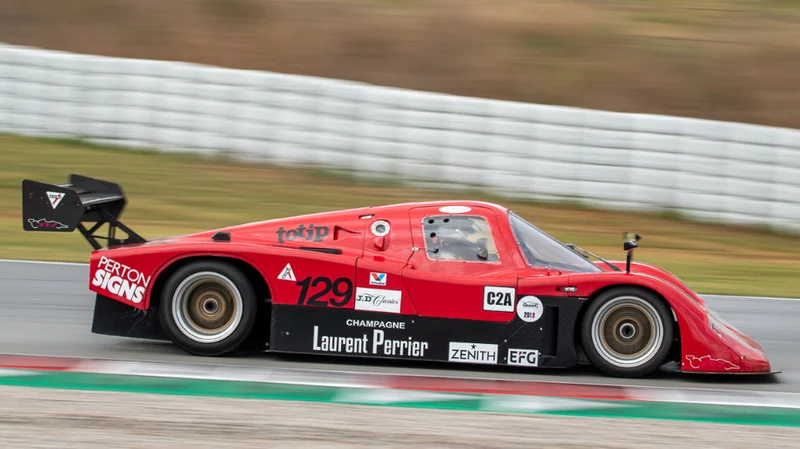
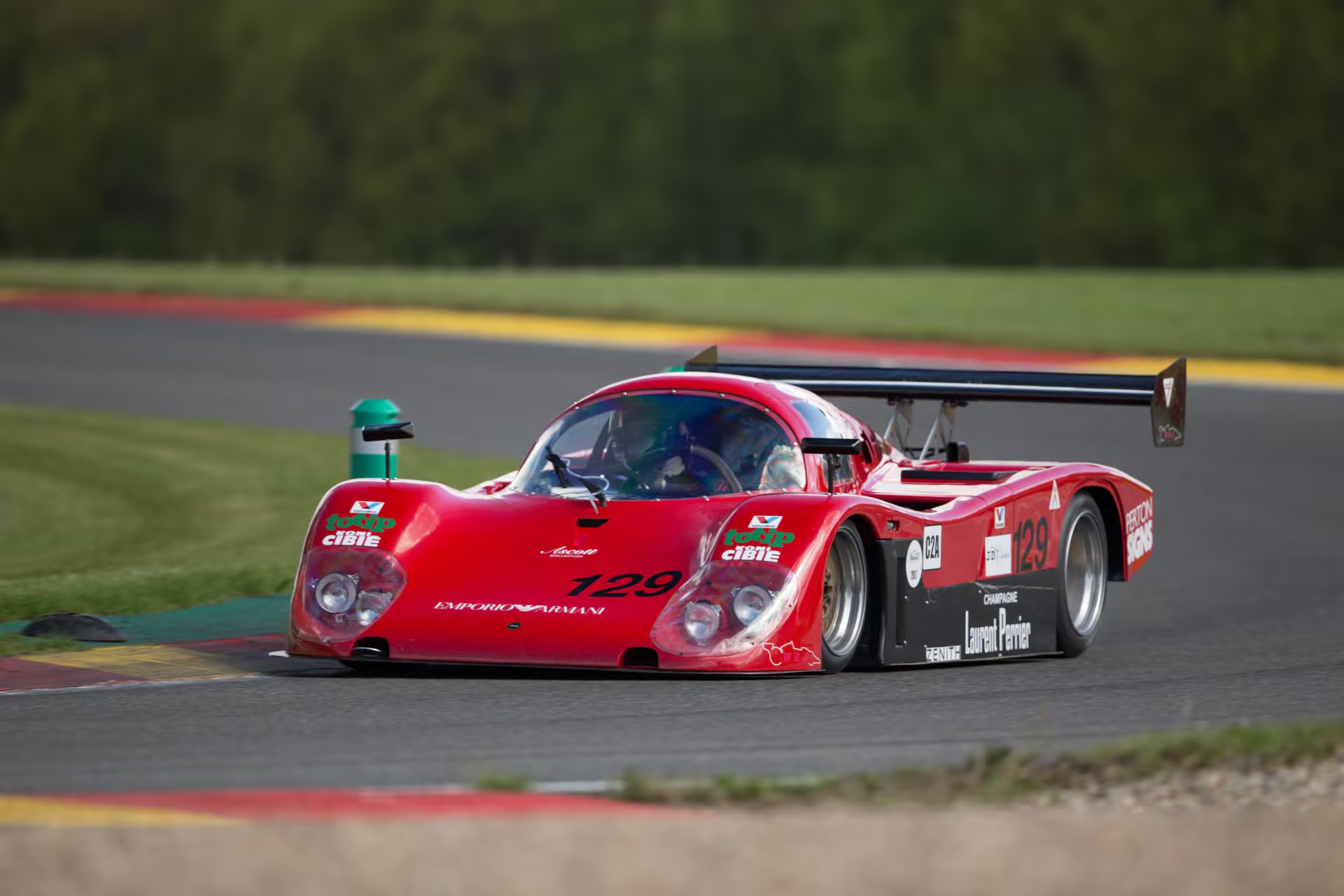
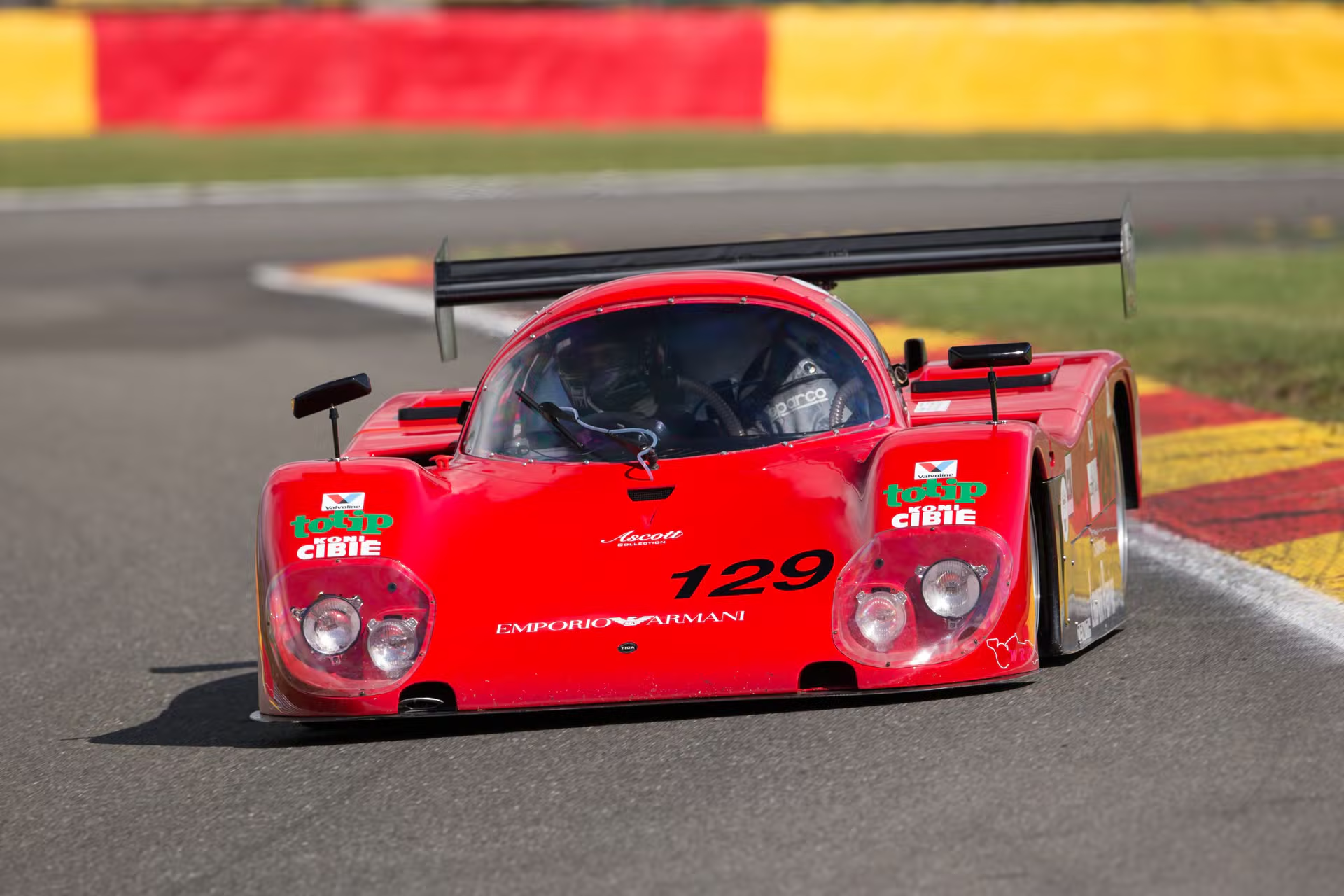
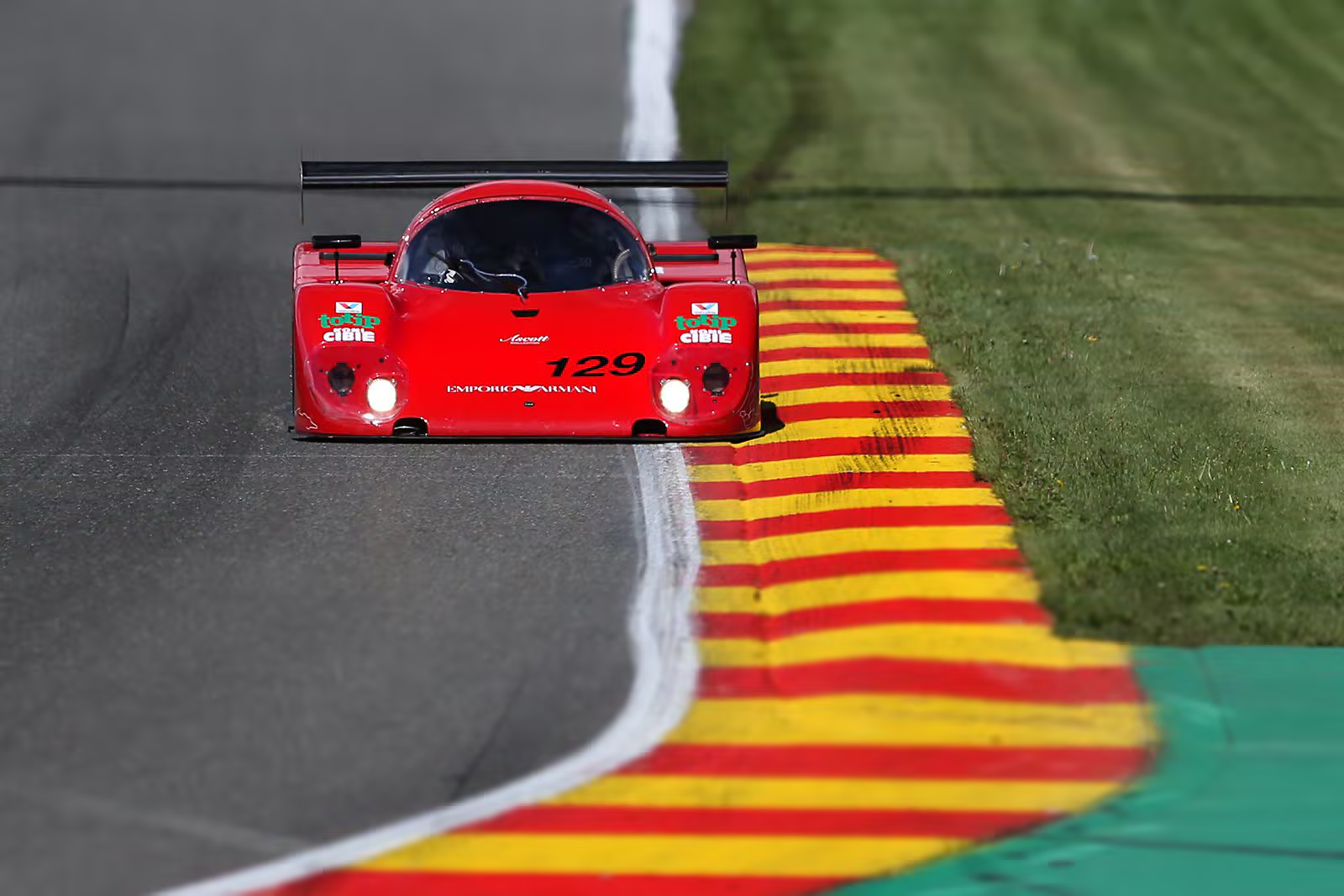
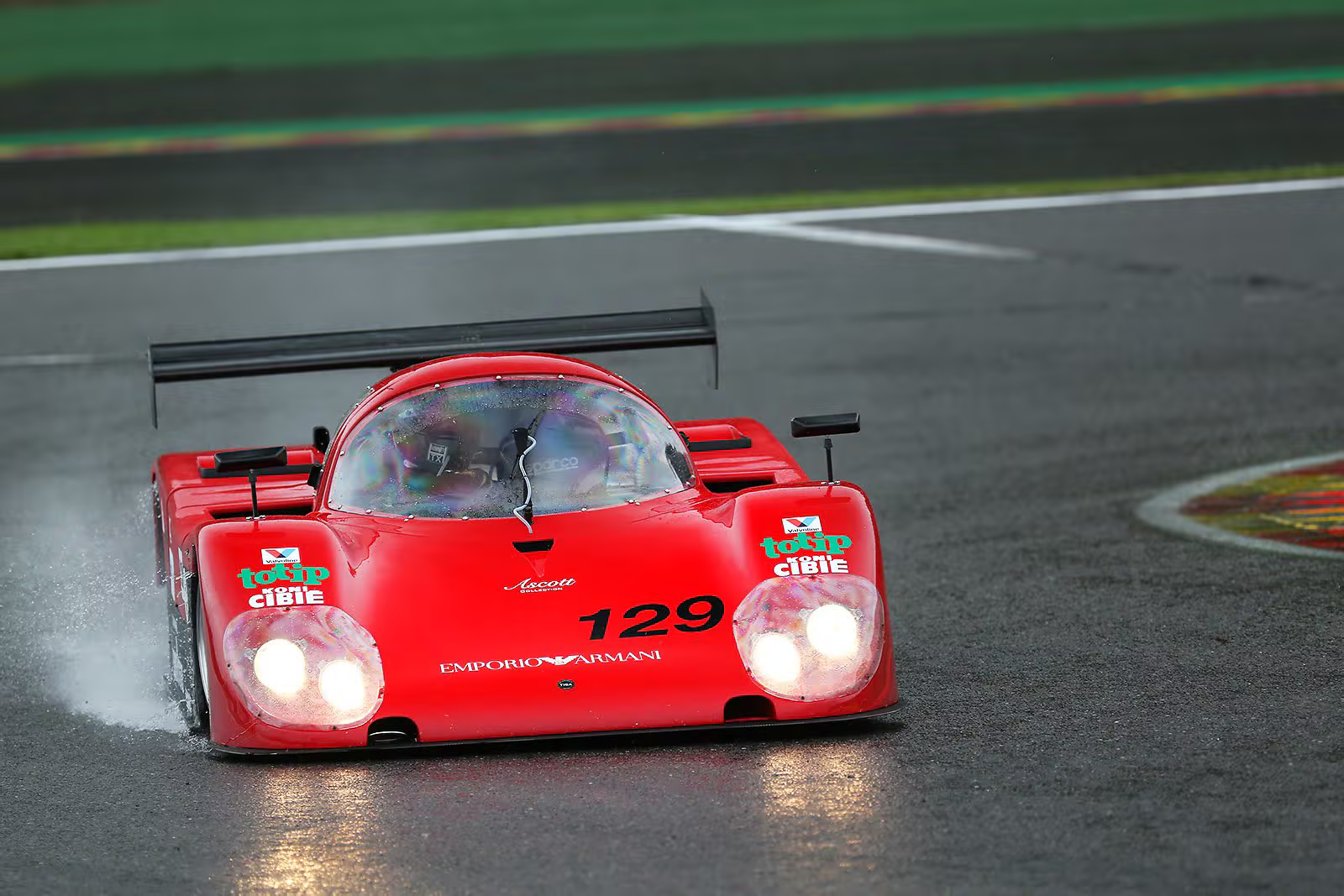
In the intoxicating, high-octane atmosphere of international endurance racing in the late 1980s, a fascinating parallel universe existed entirely within the shadow of the monolithic factory programs. While Porsche, Jaguar, and Sauber-Mercedes waged a multimillion-dollar technological war in the premier Group C1 and IMSA GTP classes, a fiercely competitive, fiercely proud grid of independent garagistes battled for supremacy in the junior Group C2 and IMSA Camel Lights categories. These privateers needed a chassis that was relatively affordable, exceptionally reliable, and capable of generating immense ground-effect downforce. For years, the market had been dominated by two bitter British rivals: Spice Engineering and Tiga Race Cars. Founded by former Formula 1 drivers Tim Schenken and Howden Ganley (whose combined names formed TI-GA), the constructor had achieved massive success with their earlier GC286 and GC287 models, winning World Championships and securing class victories at Le Mans. However, by 1988, Gordon Spice’s highly evolved SE88 chassis was threatening to completely monopolize the global grids. Refusing to surrender their hard-won territory, Schenken and Ganley unleashed their ultimate riposte: the Tiga GC288 and its North American sibling, the GT288. This model line was a brilliant, highly adaptable evolution of the customer prototype, designed with the explicit intent to reclaim the junior endurance throne and remind the world that Tiga was still a powerhouse of privateer engineering.
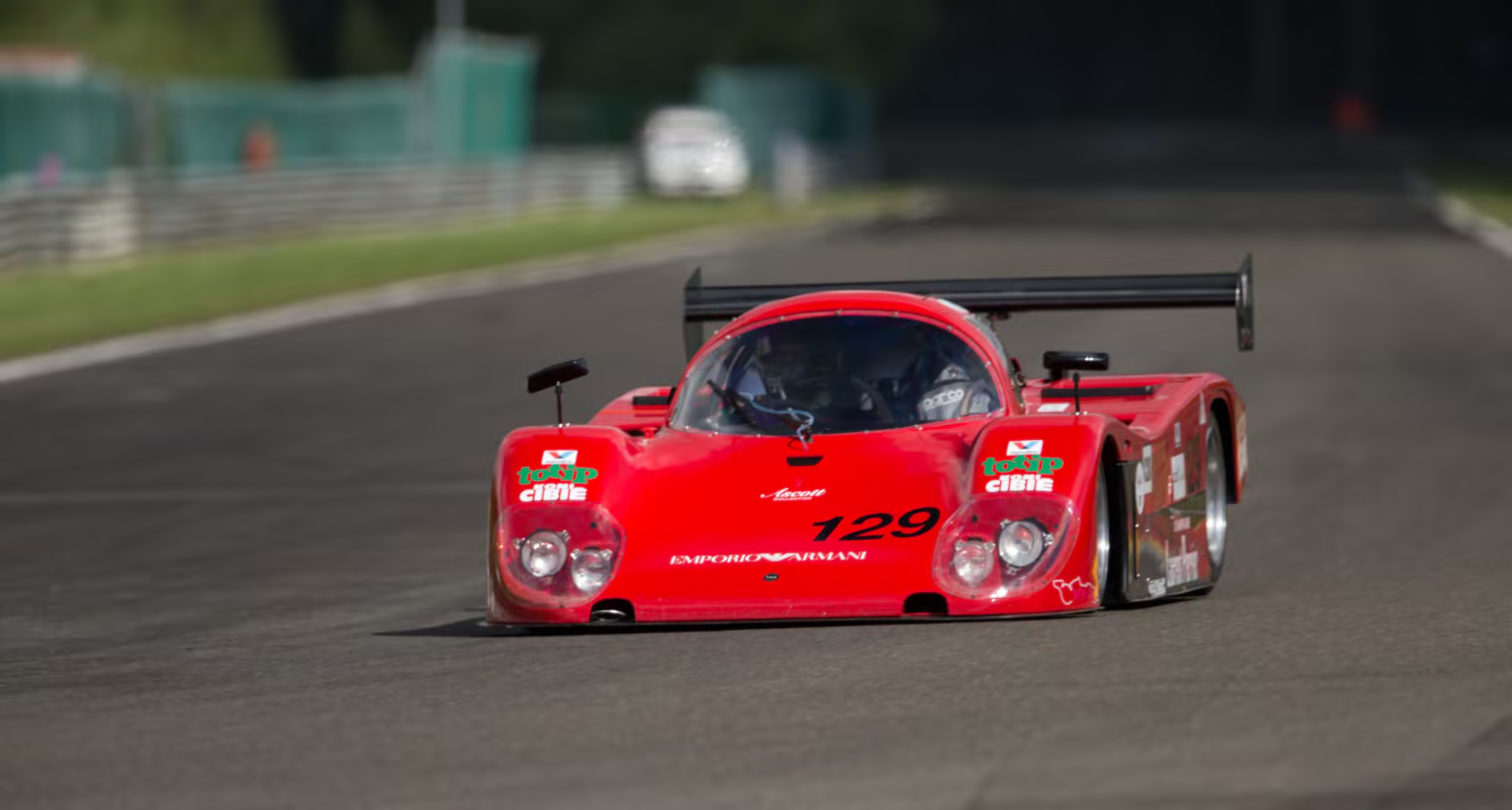
To strip away the sleek, wind-tunnel-sculpted fiberglass and Kevlar bodywork of the 1988 Tiga is to witness a masterclass in pragmatic, modular race car construction. Recognizing that their clientele could not afford the astronomically expensive molded carbon-fiber monocoques utilized by the top-tier factory teams, Tiga’s designers relied on an incredibly rigid, folded and riveted aluminium honeycomb tub. This construction method was the absolute lifeblood of the independent racer; it provided the immense torsional stiffness required to harness modern aerodynamic loads, yet it could be repaired with traditional tools in a humble workshop after a weekend shunt. Aerodynamically, the 1988 model was a significant leap forward. The nose was reprofiled to be lower and more penetrating, channeling air efficiently over the cockpit and, more importantly, feeding the massive, heavily sculpted underbody venturi tunnels that literally sucked the car to the tarmac. But the true genius of the Tiga GC288/GT288 was its cavernous, universal engine bay. The chassis was designed from its inception as a chameleon, built to accept a wildly diverse array of powerplants depending on the championship regulations and the specific desires of the purchasing team.
This modularity effectively split the model line into distinct, fascinating submodels. In Europe, competing in the FIA World Sports Prototype Championship, the definitive configuration was the Tiga GC288 powered by the legendary 3.3-liter Ford Cosworth DFL. This naturally aspirated, endurance-focused derivative of the immortal DFV Formula 1 engine was a high-strung, nervous thoroughbred that produced roughly 500 brake horsepower, emitting a raw, ear-shattering mechanical shriek as it tore through the Ardennes forest at Spa or down the Mulsanne Straight. However, across the Atlantic, the IMSA-destined GT288 submodels embraced a beautifully chaotic variety of engines. American privateers often favored homegrown torque, stuffing the Tiga engine bay with massive, naturally aspirated 3.0-liter Buick V6s or even Chevrolet V8s. These pushrod engines entirely altered the car’s dynamic character, replacing the whistling European symphony with a guttural, earth-shaking rumble that provided the instant low-end grunt necessary to blast out of the tight corners of American street circuits. Furthermore, the GT288 became a popular chassis for rotary engine enthusiasts, frequently housing screaming, twin-rotor Mazda 13B engines that added a completely different, high-pitched wail to the IMSA Camel Lights grid. Regardless of the continent or the engine, power was managed through heavy-duty Hewland DGB manual transaxles, and stopping power relied on massive, ventilated disc brakes capable of hauling the featherweight prototype down from blinding speeds. Inside the right-hand-drive aluminum tub, the driver was subjected to an uncompromised, analog reality, gripping a small Momo steering wheel and monitoring vital temperatures through a purposeful array of Smiths gauges, completely devoid of electronic driver aids.
When unleashed upon the global circuits in 1988, the Tiga GC288 and GT288 orchestrated a magnificent, if arduous, campaign against the Spice juggernaut. In the World Sports Prototype Championship, privateer outfits like Kelmar Racing and Charles Ivey Racing wielded the Cosworth-powered GC288s with immense grit. The Tiga proved to be exceptionally agile, its refined ground-effect aerodynamics allowing drivers to carry immense speed through sweeping corners. At the grueling 24 Hours of Le Mans, the reliability of the Tiga chassis was paramount, offering privateers a genuine chance at finishing the grueling French marathon while faster, more fragile prototypes disintegrated around them. In North America, the GT288 was a staple of the IMSA Camel Lights championship. Campaigned by fiercely dedicated privateers, the Buick- and Mazda-powered Tigas frequently battled door-to-door against the Spice SE88Ps and Argo JM19s. Because of its excellent mechanical grip and predictable handling, the Tiga was a beloved weapon on treacherous street courses like Miami and Long Beach, where its robust aluminum tub could shrug off minor kisses with the concrete barriers. Furthermore, the inherent brilliance of the GT288 chassis meant that heavily modified, turbocharged variants occasionally stepped up into the premier GTP class, where ambitious privateers attempted to use the lightweight Tiga platform to harass the million-dollar Porsche 962s and Nissan GTP ZX-Turbos.
Tragically, the legacy of the 1988 Tiga GC288/GT288 is inextricably linked to the collapse of the era that birthed it. Despite the brilliance of the chassis, Tiga Race Cars began to suffer severe financial difficulties as the 1980s drew to a close. The fatal blow to the entire customer prototype industry was delivered by the FIA, which mandated astronomically expensive 3.5-liter Formula 1-style engines for sports car racing in the early 1990s. This draconian rule change effectively bankrupted the privateer class, rendering the affordable, modular chassis obsolete and forcing Tiga to ultimately close its doors in 1989.
Portal
Model line
Brand
Produced from
Vehicle category
Model Overview
In the intoxicating, high-octane atmosphere of international endurance racing in the late 1980s, a fascinating parallel universe existed entirely within the shadow of the monolithic factory programs. While Porsche, Jaguar, and Sauber-Mercedes waged a multimillion-dollar technological war in the premier Group C1 and IMSA GTP classes, a fiercely competitive, fiercely proud grid of independent garagistes battled for supremacy in the junior Group C2 and IMSA Camel Lights categories. These privateers needed a chassis that was relatively affordable, exceptionally reliable, and capable of generating immense ground-effect downforce. For years, the market had been dominated by two bitter British rivals: Spice Engineering and Tiga Race Cars. Founded by former Formula 1 drivers Tim Schenken and Howden Ganley (whose combined names formed TI-GA), the constructor had achieved massive success with their earlier GC286 and GC287 models, winning World Championships and securing class victories at Le Mans. However, by 1988, Gordon Spice’s highly evolved SE88 chassis was threatening to completely monopolize the global grids. Refusing to surrender their hard-won territory, Schenken and Ganley unleashed their ultimate riposte: the Tiga GC288 and its North American sibling, the GT288. This model line was a brilliant, highly adaptable evolution of the customer prototype, designed with the explicit intent to reclaim the junior endurance throne and remind the world that Tiga was still a powerhouse of privateer engineering.
To strip away the sleek, wind-tunnel-sculpted fiberglass and Kevlar bodywork of the 1988 Tiga is to witness a masterclass in pragmatic, modular race car construction. Recognizing that their clientele could not afford the astronomically expensive molded carbon-fiber monocoques utilized by the top-tier factory teams, Tiga’s designers relied on an incredibly rigid, folded and riveted aluminium honeycomb tub. This construction method was the absolute lifeblood of the independent racer; it provided the immense torsional stiffness required to harness modern aerodynamic loads, yet it could be repaired with traditional tools in a humble workshop after a weekend shunt. Aerodynamically, the 1988 model was a significant leap forward. The nose was reprofiled to be lower and more penetrating, channeling air efficiently over the cockpit and, more importantly, feeding the massive, heavily sculpted underbody venturi tunnels that literally sucked the car to the tarmac. But the true genius of the Tiga GC288/GT288 was its cavernous, universal engine bay. The chassis was designed from its inception as a chameleon, built to accept a wildly diverse array of powerplants depending on the championship regulations and the specific desires of the purchasing team.
This modularity effectively split the model line into distinct, fascinating submodels. In Europe, competing in the FIA World Sports Prototype Championship, the definitive configuration was the Tiga GC288 powered by the legendary 3.3-liter Ford Cosworth DFL. This naturally aspirated, endurance-focused derivative of the immortal DFV Formula 1 engine was a high-strung, nervous thoroughbred that produced roughly 500 brake horsepower, emitting a raw, ear-shattering mechanical shriek as it tore through the Ardennes forest at Spa or down the Mulsanne Straight. However, across the Atlantic, the IMSA-destined GT288 submodels embraced a beautifully chaotic variety of engines. American privateers often favored homegrown torque, stuffing the Tiga engine bay with massive, naturally aspirated 3.0-liter Buick V6s or even Chevrolet V8s. These pushrod engines entirely altered the car’s dynamic character, replacing the whistling European symphony with a guttural, earth-shaking rumble that provided the instant low-end grunt necessary to blast out of the tight corners of American street circuits. Furthermore, the GT288 became a popular chassis for rotary engine enthusiasts, frequently housing screaming, twin-rotor Mazda 13B engines that added a completely different, high-pitched wail to the IMSA Camel Lights grid. Regardless of the continent or the engine, power was managed through heavy-duty Hewland DGB manual transaxles, and stopping power relied on massive, ventilated disc brakes capable of hauling the featherweight prototype down from blinding speeds. Inside the right-hand-drive aluminum tub, the driver was subjected to an uncompromised, analog reality, gripping a small Momo steering wheel and monitoring vital temperatures through a purposeful array of Smiths gauges, completely devoid of electronic driver aids.
When unleashed upon the global circuits in 1988, the Tiga GC288 and GT288 orchestrated a magnificent, if arduous, campaign against the Spice juggernaut. In the World Sports Prototype Championship, privateer outfits like Kelmar Racing and Charles Ivey Racing wielded the Cosworth-powered GC288s with immense grit. The Tiga proved to be exceptionally agile, its refined ground-effect aerodynamics allowing drivers to carry immense speed through sweeping corners. At the grueling 24 Hours of Le Mans, the reliability of the Tiga chassis was paramount, offering privateers a genuine chance at finishing the grueling French marathon while faster, more fragile prototypes disintegrated around them. In North America, the GT288 was a staple of the IMSA Camel Lights championship. Campaigned by fiercely dedicated privateers, the Buick- and Mazda-powered Tigas frequently battled door-to-door against the Spice SE88Ps and Argo JM19s. Because of its excellent mechanical grip and predictable handling, the Tiga was a beloved weapon on treacherous street courses like Miami and Long Beach, where its robust aluminum tub could shrug off minor kisses with the concrete barriers. Furthermore, the inherent brilliance of the GT288 chassis meant that heavily modified, turbocharged variants occasionally stepped up into the premier GTP class, where ambitious privateers attempted to use the lightweight Tiga platform to harass the million-dollar Porsche 962s and Nissan GTP ZX-Turbos.
Tragically, the legacy of the 1988 Tiga GC288/GT288 is inextricably linked to the collapse of the era that birthed it. Despite the brilliance of the chassis, Tiga Race Cars began to suffer severe financial difficulties as the 1980s drew to a close. The fatal blow to the entire customer prototype industry was delivered by the FIA, which mandated astronomically expensive 3.5-liter Formula 1-style engines for sports car racing in the early 1990s. This draconian rule change effectively bankrupted the privateer class, rendering the affordable, modular chassis obsolete and forcing Tiga to ultimately close its doors in 1989.
Submodels