
TVR Griffith 200 Competition
Brand
Produced from
Portal
Vehicle category
Model line
Model generation
Predecessor
Successor
Submodel Overview
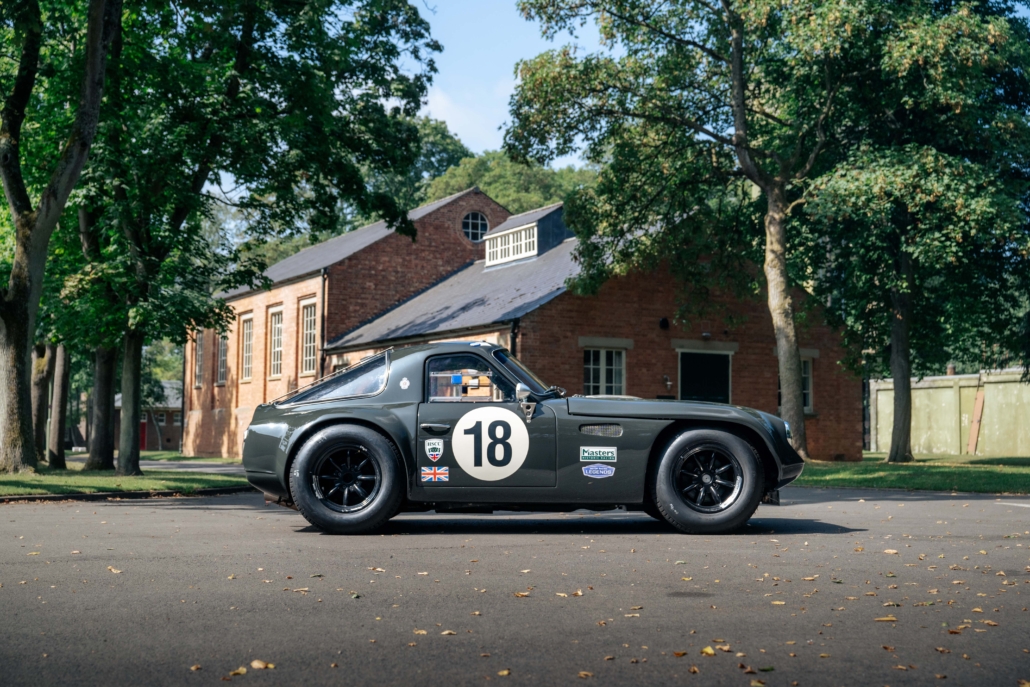
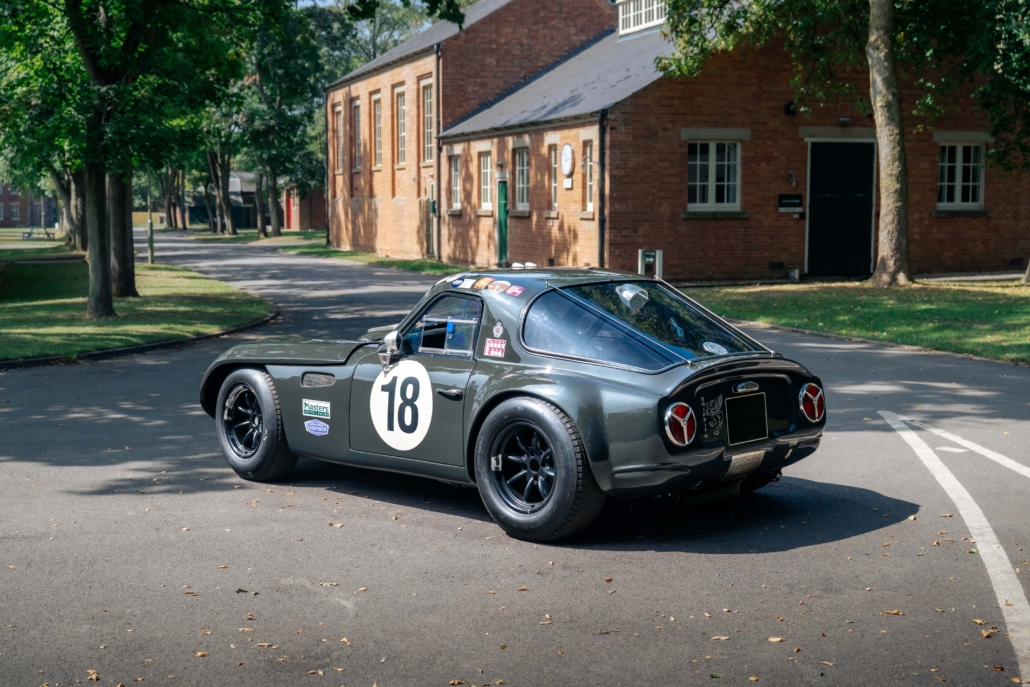
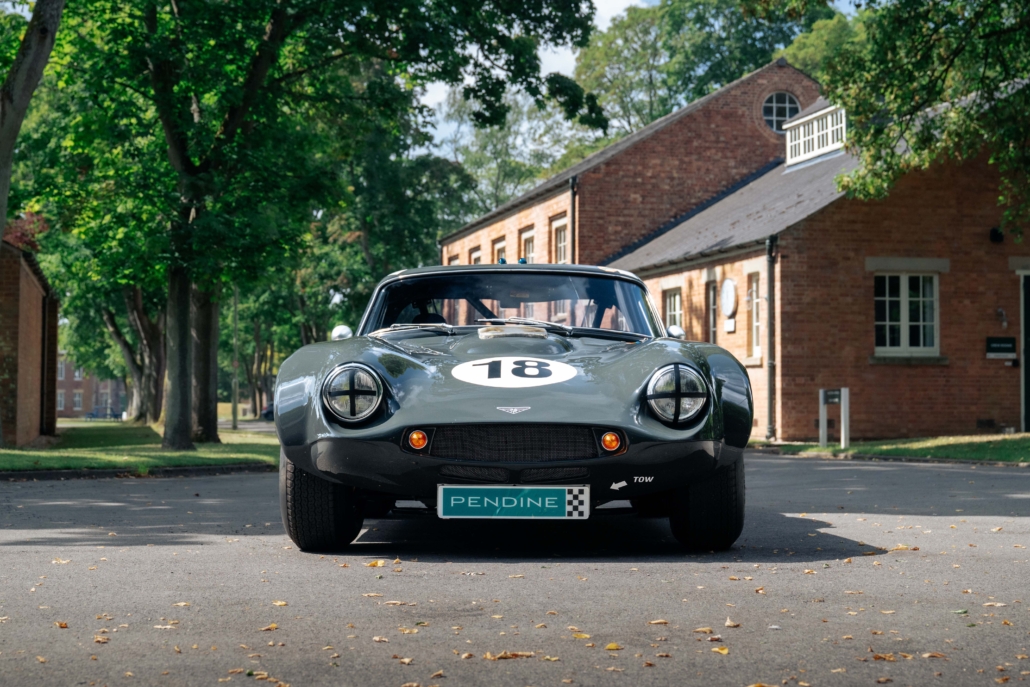
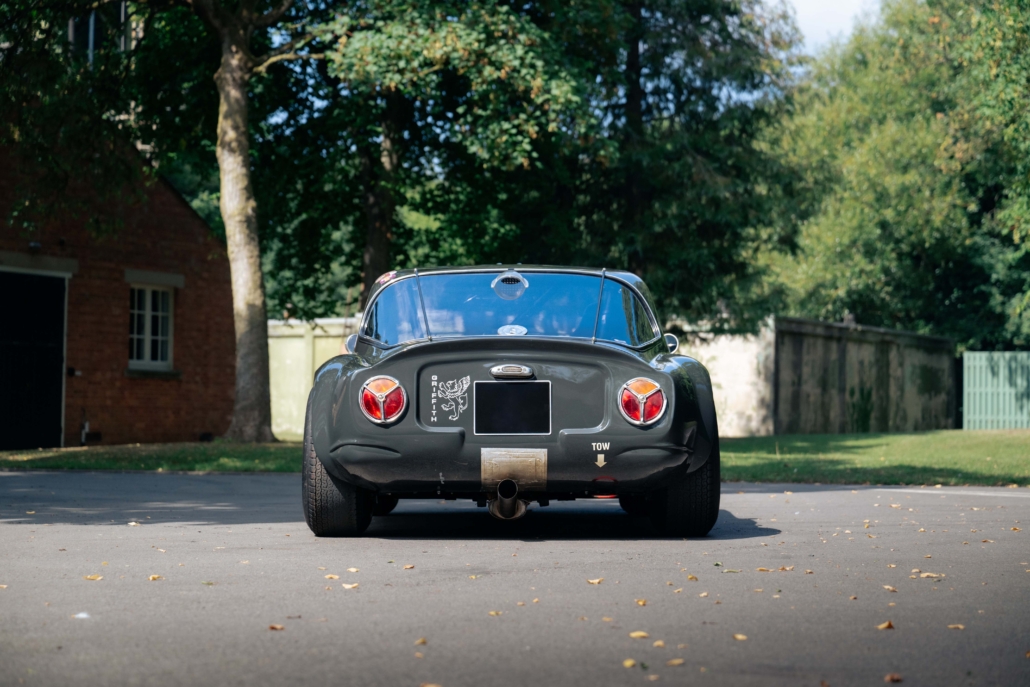
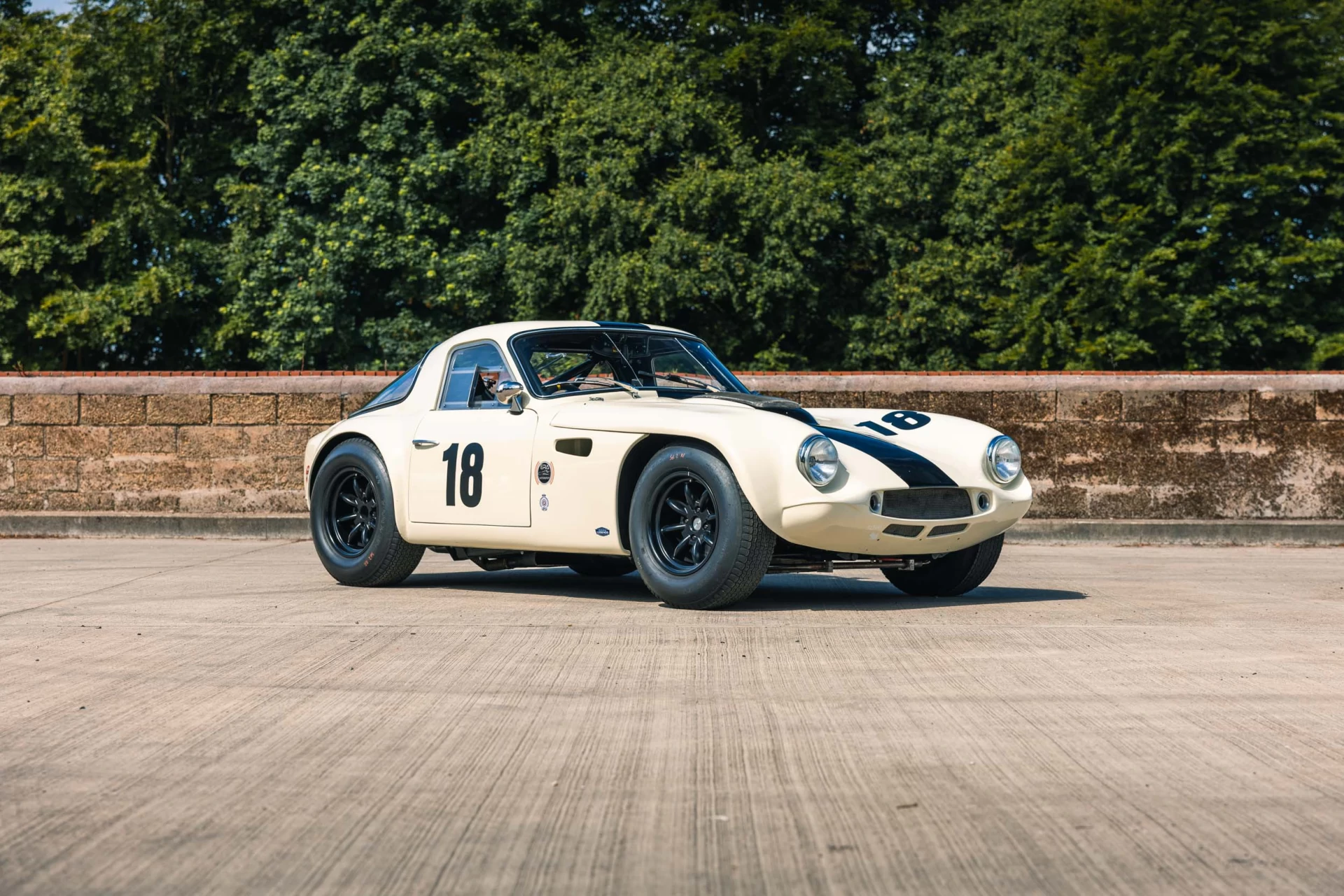
The unmistakable, violent staccato of an unsilenced Ford 289 V8 echoing through the paddock of an SCCA race in 1965 usually heralded the arrival of a Shelby Cobra. But occasionally, that thunderous soundtrack emanated from a machine that looked roughly half the size. The TVR Griffith 200 Competition was the manifestation of a uniquely American hot-rodding fever dream imposed upon a delicate British chassis. Jack Griffith, a Long Island Ford dealer, had looked at the short-wheelbase TVR Grantura and decided its polite four-cylinder engine was an insult to physics. He wanted a Cobra killer. While the standard road-going Griffith 200 was already a borderline psychotic proposition, the factory-prepared Competition variants were stripped-down, unapologetic track weapons. They were engineered with a single, brutal purpose: to line up against the heavy Chevrolet Corvette Sting Rays and the dominant Cobras, drop the clutch, and humiliate them into the first corner.
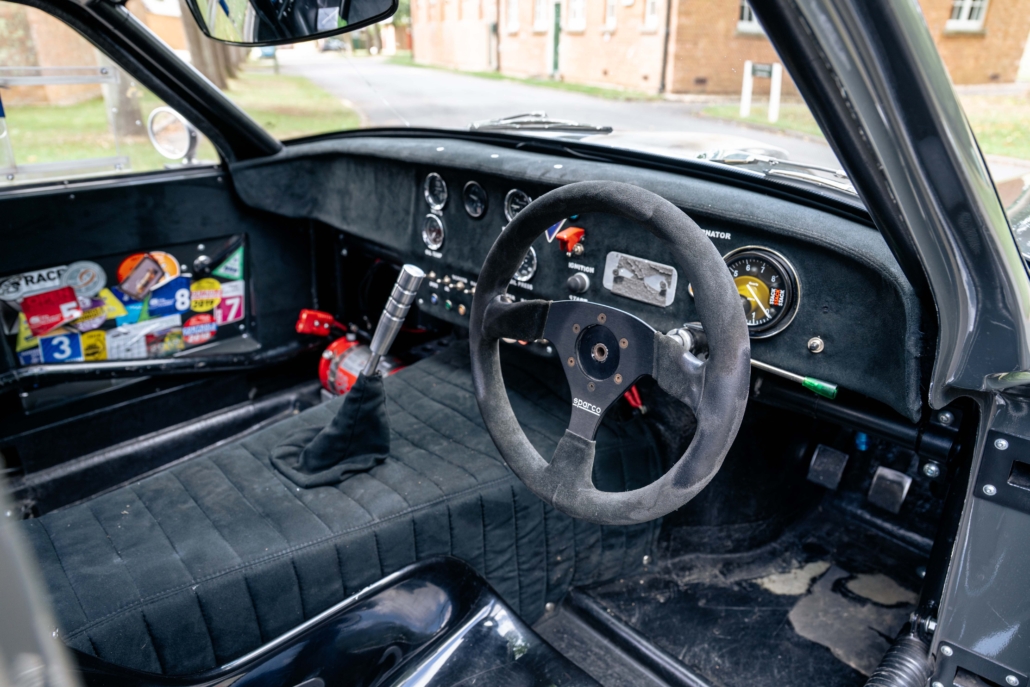
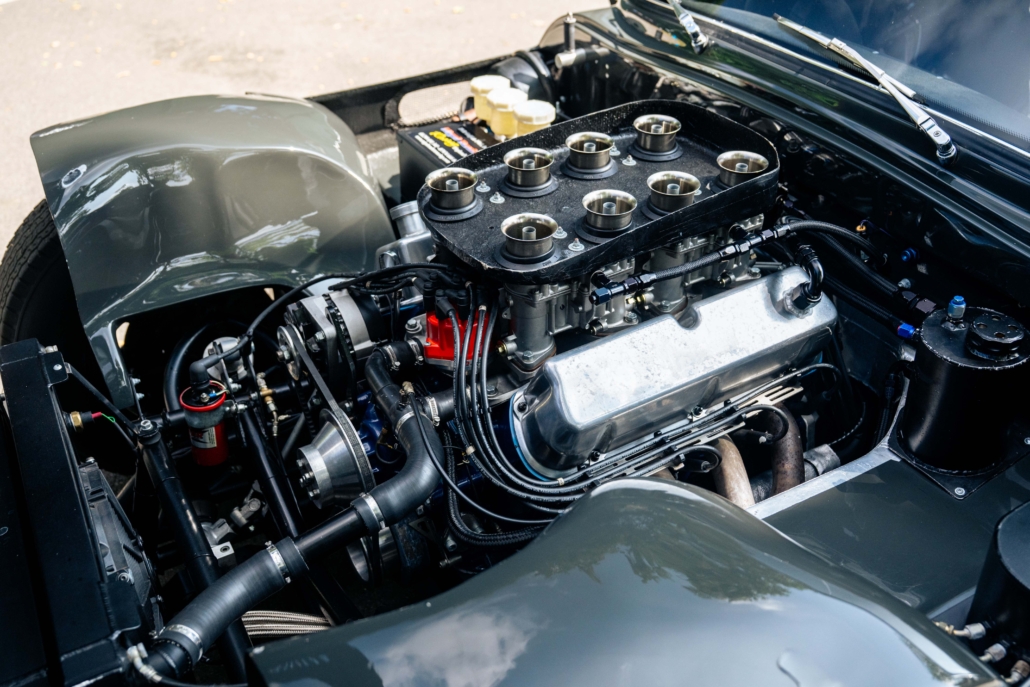
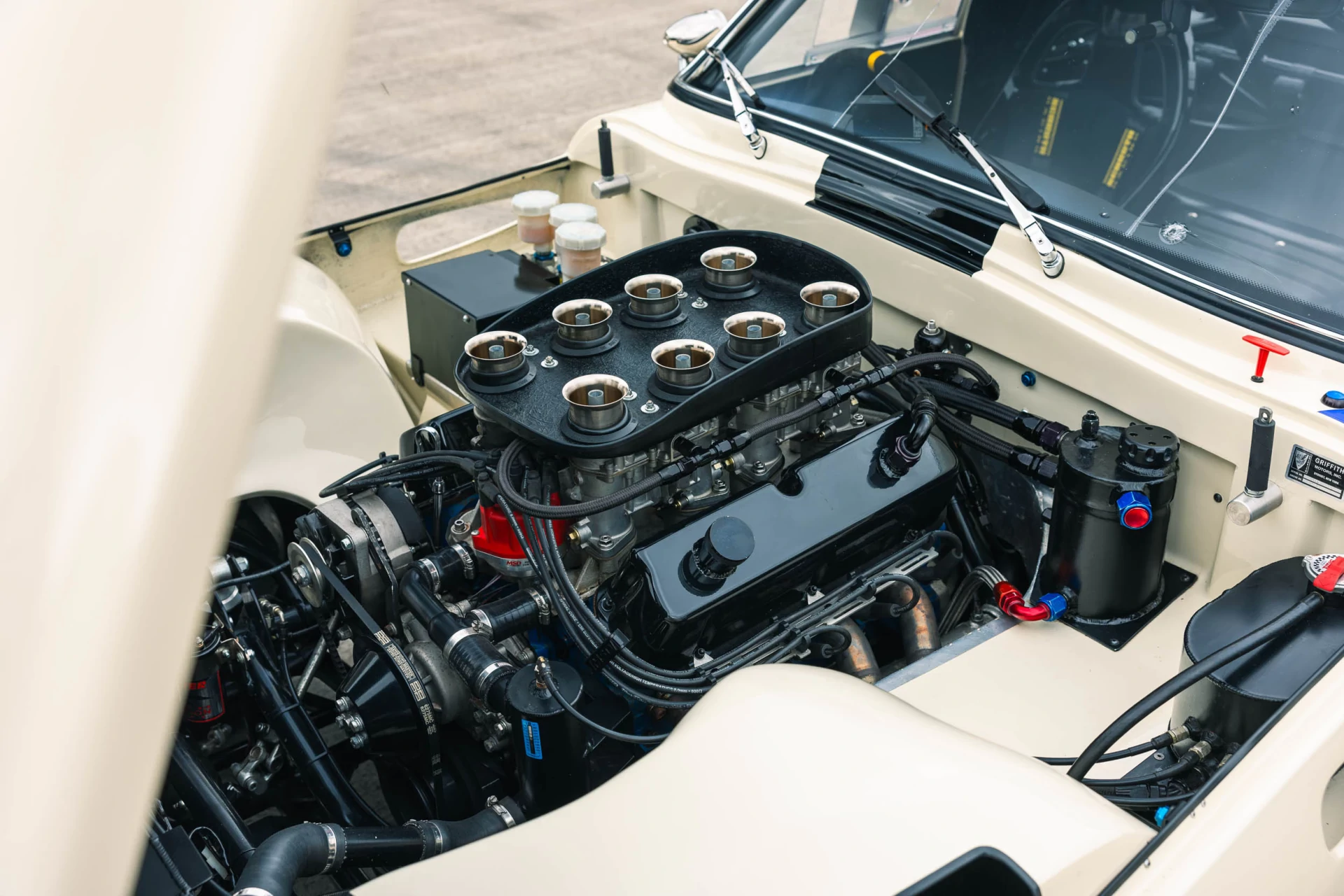
Beneath the impossibly tight, hand-laid fiberglass coachwork, the Griffith 200 Competition was an exercise in packaging miracles and structural defiance. The foundation was the TVR Grantura Mk III multi-tubular backbone chassis, spanning a comically short 85.5-inch wheelbase. Into this tiny architecture, Griffith’s mechanics in Syosset, New York, wedged the legendary 289 cubic-inch (4.7-liter) Ford Windsor V8. In Competition tune, breathing through massive Weber carburetors and exhaling through straight side-pipes, this iron-block leviathan produced well north of 300 brake horsepower. Mated to a heavy-duty Borg-Warner T-10 four-speed manual transmission, the drivetrain was virtually indestructible, but the chassis around it was frequently overwhelmed. Taming the 200 Competition required the reflexes of a fighter pilot. The suspension utilized unequal-length wishbones at the front, but the rear relied on a setup that notoriously induced severe snap-oversteer when the immense torque hit the tarmac. To cope with the rigors of racing, the Competition models featured reinforced mounting points, heavily uprated coil springs, and stiffer shock absorbers to minimize body roll. Braking fell to Girling discs up front and drums at the rear, though the sheer velocity the V8 could generate often made the braking zones a terrifying, white-knuckle affair. The cockpit was stripped of its already minimal grand-touring pretenses; a roll hoop, a bare aluminum bucket seat, a wood-rimmed steering wheel, and vital Stewart-Warner telemetry replaced any notion of comfort.
When the Griffith 200 Competition was unleashed on the American club racing scene, it left a trail of blown minds and shredded tires. In the highly competitive SCCA A and B-Production classes, it proved to be an absolute rocket ship in a straight line. The power-to-weight ratio was astonishing, allowing the featherweight TVR to simply out-drag the heavier Corvettes and even the Cobras on the long straights of Watkins Glen or Lime Rock. A young, incredibly talented engineer-driver named Mark Donohue famously wrestled the Griffith 200 in its early days, noting that while the car was undeniably fast, it was dynamically vicious and plagued by differential failures and overheating issues. The sheer rotational force of the Ford V8 routinely sheared the bespoke half-shafts, making endurance races a gamble. Yet, when it held together, the Griffith was a spectacular giant-killer. It earned a reputation as the ultimate “widowmaker”, a car that demanded absolute respect and rewarded only the bravest of pilots. Its commercial and racing life was cut drastically short by the infamous 1965 East Coast dock strike, which severed the supply of chassis from Blackpool to New York, killing the Griffith operation just as the heavily revised 400 series was coming online.
The TVR Griffith 200 Competition represents the most unhinged, unfiltered expression of the 1960s Anglo-American hybrid philosophy. It was a flawed, spectacular brawler that proved a tiny British sports car could be transformed into a world-class domestic terror with the simple application of American V8 brute force. Though its contemporary racing career was brief and beset by mechanical fragility, it forced the establishment to take notice. The dynamic lessons learned in trying to tame the 200 Competition’s chassis directly led to the vastly improved Griffith 400 and, eventually, the TVR Tuscan V8.
Brand
Produced from
Portal
Vehicle category
Model line
Model generation
Predecessor
Sucessor
Brand
Produced from
Portal
Vehicle category
Model line
Model generation
Predecessor
Sucessor
Submodel Overview
The unmistakable, violent staccato of an unsilenced Ford 289 V8 echoing through the paddock of an SCCA race in 1965 usually heralded the arrival of a Shelby Cobra. But occasionally, that thunderous soundtrack emanated from a machine that looked roughly half the size. The TVR Griffith 200 Competition was the manifestation of a uniquely American hot-rodding fever dream imposed upon a delicate British chassis. Jack Griffith, a Long Island Ford dealer, had looked at the short-wheelbase TVR Grantura and decided its polite four-cylinder engine was an insult to physics. He wanted a Cobra killer. While the standard road-going Griffith 200 was already a borderline psychotic proposition, the factory-prepared Competition variants were stripped-down, unapologetic track weapons. They were engineered with a single, brutal purpose: to line up against the heavy Chevrolet Corvette Sting Rays and the dominant Cobras, drop the clutch, and humiliate them into the first corner.
Beneath the impossibly tight, hand-laid fiberglass coachwork, the Griffith 200 Competition was an exercise in packaging miracles and structural defiance. The foundation was the TVR Grantura Mk III multi-tubular backbone chassis, spanning a comically short 85.5-inch wheelbase. Into this tiny architecture, Griffith’s mechanics in Syosset, New York, wedged the legendary 289 cubic-inch (4.7-liter) Ford Windsor V8. In Competition tune, breathing through massive Weber carburetors and exhaling through straight side-pipes, this iron-block leviathan produced well north of 300 brake horsepower. Mated to a heavy-duty Borg-Warner T-10 four-speed manual transmission, the drivetrain was virtually indestructible, but the chassis around it was frequently overwhelmed. Taming the 200 Competition required the reflexes of a fighter pilot. The suspension utilized unequal-length wishbones at the front, but the rear relied on a setup that notoriously induced severe snap-oversteer when the immense torque hit the tarmac. To cope with the rigors of racing, the Competition models featured reinforced mounting points, heavily uprated coil springs, and stiffer shock absorbers to minimize body roll. Braking fell to Girling discs up front and drums at the rear, though the sheer velocity the V8 could generate often made the braking zones a terrifying, white-knuckle affair. The cockpit was stripped of its already minimal grand-touring pretenses; a roll hoop, a bare aluminum bucket seat, a wood-rimmed steering wheel, and vital Stewart-Warner telemetry replaced any notion of comfort.
When the Griffith 200 Competition was unleashed on the American club racing scene, it left a trail of blown minds and shredded tires. In the highly competitive SCCA A and B-Production classes, it proved to be an absolute rocket ship in a straight line. The power-to-weight ratio was astonishing, allowing the featherweight TVR to simply out-drag the heavier Corvettes and even the Cobras on the long straights of Watkins Glen or Lime Rock. A young, incredibly talented engineer-driver named Mark Donohue famously wrestled the Griffith 200 in its early days, noting that while the car was undeniably fast, it was dynamically vicious and plagued by differential failures and overheating issues. The sheer rotational force of the Ford V8 routinely sheared the bespoke half-shafts, making endurance races a gamble. Yet, when it held together, the Griffith was a spectacular giant-killer. It earned a reputation as the ultimate “widowmaker”, a car that demanded absolute respect and rewarded only the bravest of pilots. Its commercial and racing life was cut drastically short by the infamous 1965 East Coast dock strike, which severed the supply of chassis from Blackpool to New York, killing the Griffith operation just as the heavily revised 400 series was coming online.
The TVR Griffith 200 Competition represents the most unhinged, unfiltered expression of the 1960s Anglo-American hybrid philosophy. It was a flawed, spectacular brawler that proved a tiny British sports car could be transformed into a world-class domestic terror with the simple application of American V8 brute force. Though its contemporary racing career was brief and beset by mechanical fragility, it forced the establishment to take notice. The dynamic lessons learned in trying to tame the 200 Competition’s chassis directly led to the vastly improved Griffith 400 and, eventually, the TVR Tuscan V8.
Tech Specs
Technical Specifications
Tech Specs
Technical Specifications
Engine
01
03
Internal combustion engine
Configuration
Ford Windsor 289, V8 - 90º
Location
Front-mid, longitudinally mounted
Construction
Cast iron block and heads
Displacement (cc)
4,736 cc
Displacement (cu in)
289.0 cu in
Compression
10.5:1
Bore x Stroke
101.6 mm x 72.9 mm
Valvetrain
2 valves per cylinder, OHV
Fuel feed
4 x Weber 48 IDA downdraft carburettors
Lubrication
Wet sump
Aspiration
Naturally aspirated
Output
Power (hp)
~350 hp
Power (kW)
~261 kW
Max power at
6,500 RPM
Torque (Nm)
~450 Nm
Torque (ft lbs)
~332 ft lbs
Max torque at
4,500 RPM
Drivetrain
02
03
Chassis
Type
Multi-tubular spaceframe
Material
Steel
Body
Material
Fibreglass (GRP)
Transmission
Gearbox
Borg-Warner T-10, 4-speed manual
Drive
Rear Wheel Drive (Salisbury Limited Slip Differential)
Suspension
Front
Independent, unequal length double wishbones, coil springs over telescopic dampers, anti-roll bar
Rear
Independent, unequal length double wishbones, coil springs over telescopic dampers
Steering
Type
Rack and pinion, unassisted
Brakes
Front
Solid steel discs Ø280 mm (11 in), Girling hydraulic calipers
Rear
Drum brakes Ø229 mm (9 in) or inboard Salisbury disc brakes
Wheels
Front
6.0" x 15"
Rear
6.0" x 15"
Tires
Front
6.00-15
Rear
6.00-15
Dimensions and performance
03
03
Dimensions
Length (mm)
3,467 mm
Length (in)
136.5 in
Width (mm)
1,600 mm
Width (in)
63.0 in
Height (mm)
1,206 mm
Height (in)
47.5 in
Wheelbase (mm)
2,172 mm
Wheelbase (in)
85.5 in
Weight (kg)
~850 kg
Weight (lbs)
~1,874 lbs
Performance
Power to weight
~0.41 hp/kg
Top speed (km/h)
~250 km/h
Top speed (mph)
~155 mph
0-100 km/h (0-60 mph)
~4.0 s