Alfa Romeo Giulia

Brand
Produced from
Vehicle category
Portal
Model line
Model generation
Predecessor
Sucessor
About this model
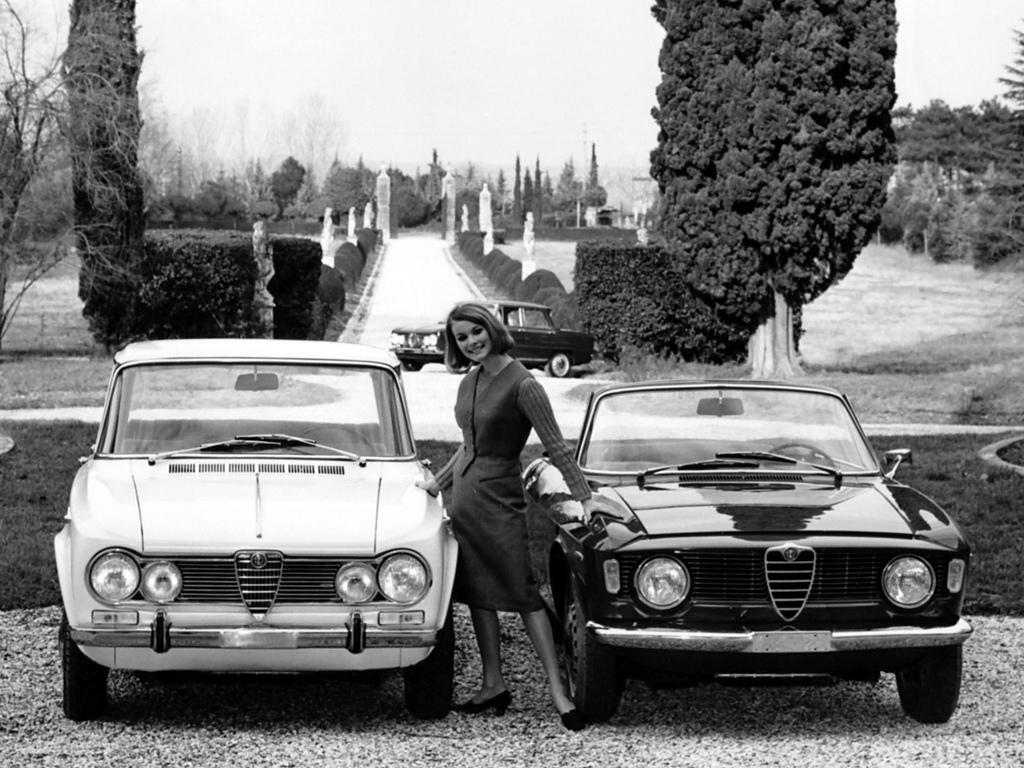
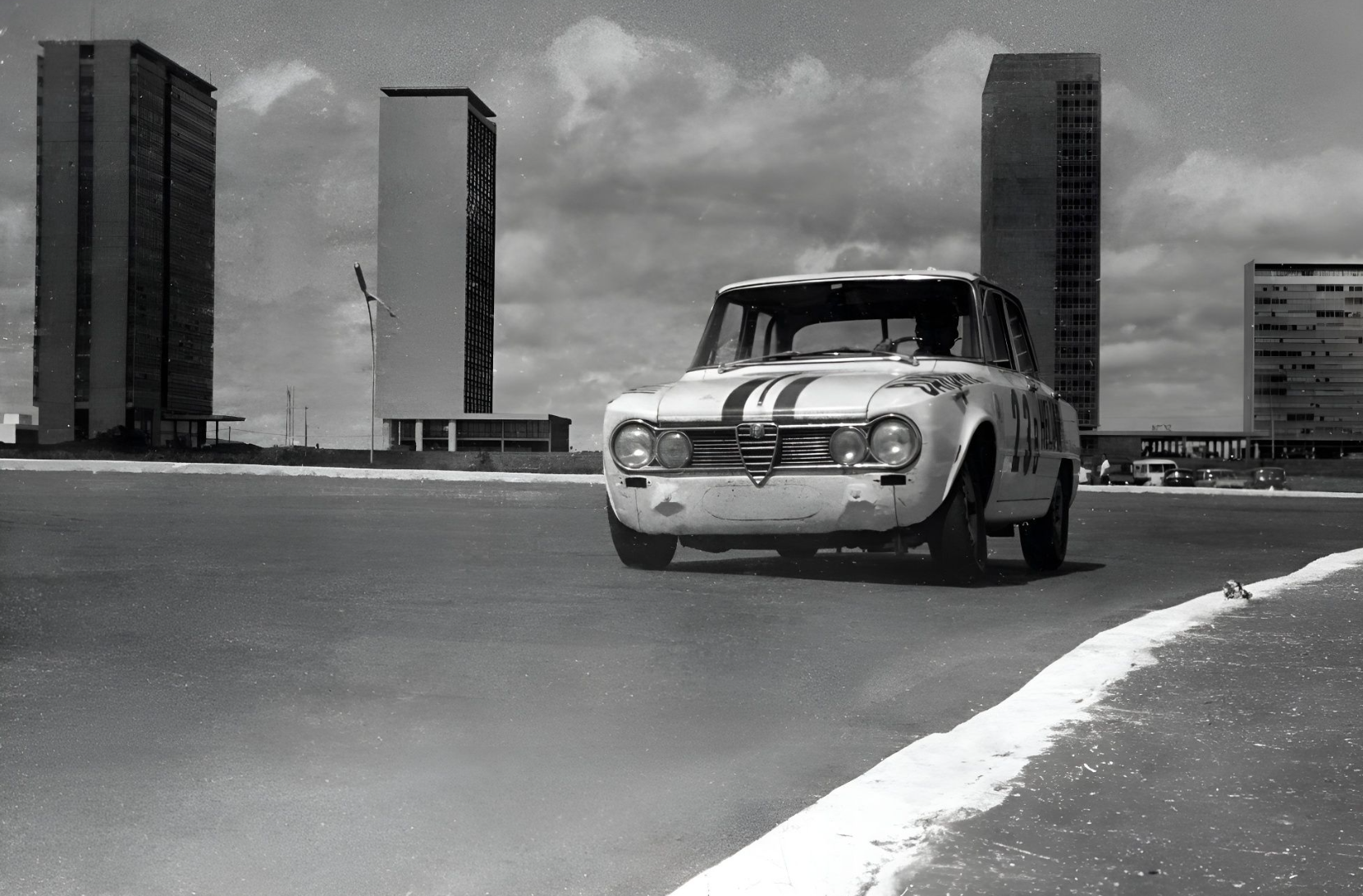
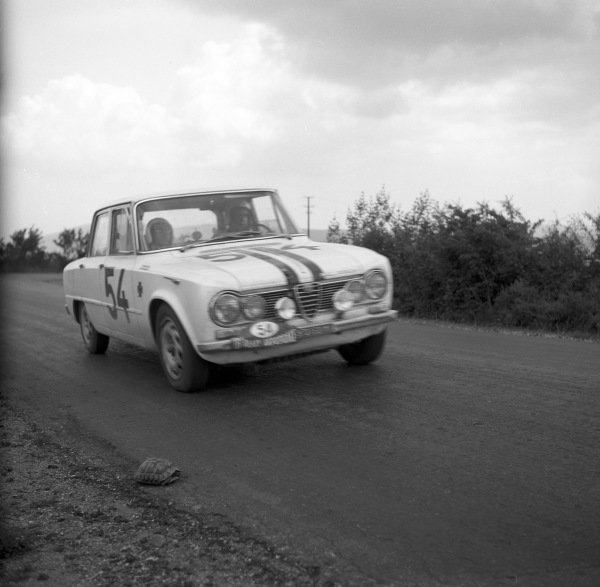
In the annals of automotive history, few cars have so perfectly defined a genre as the Alfa Romeo Giulia. It was not the first fast saloon, but it was the first to so comprehensively democratise thoroughbred racing technology for the road-going family man. When it was unveiled to the world’s press at the Monza Autodrome in 1962, it represented a monumental task for Alfa Romeo: replacing the universally adored Giulietta. The Giulietta had been the car that saved post-war Alfa, a delicate, charming, and sprightly machine that captured the hearts of a generation. Its successor needed to be all that, but also bigger, more modern, safer, and faster, all while carrying the weight of Italy’s il boom—the economic miracle that saw families demanding more capable, aspirational transport. The Giulia Saloon, the Berlina, was the answer. It was a car of profound contradictions: a boxy, upright family saloon that was more aerodynamic than a Porsche of its day; a practical four-door that housed the heart of a racing car; a humble workhorse for the Carabinieri that could simultaneously win a championship on Sunday. It was, in short, the genesis of the modern sports saloon, and it threw down a gauntlet that rivals like BMW’s “Neue Klasse” and Lancia’s sophisticated Flavia would spend the next decade scrambling to pick up.
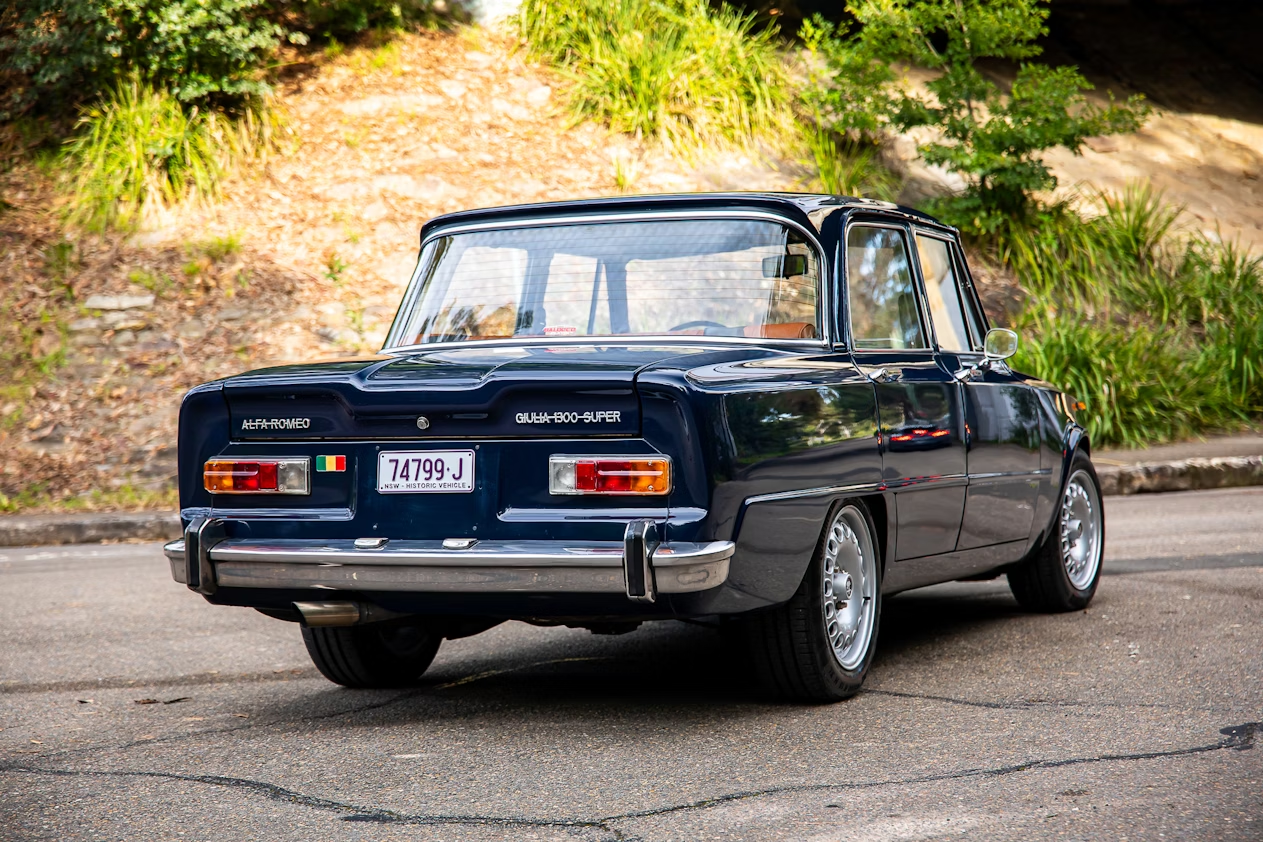
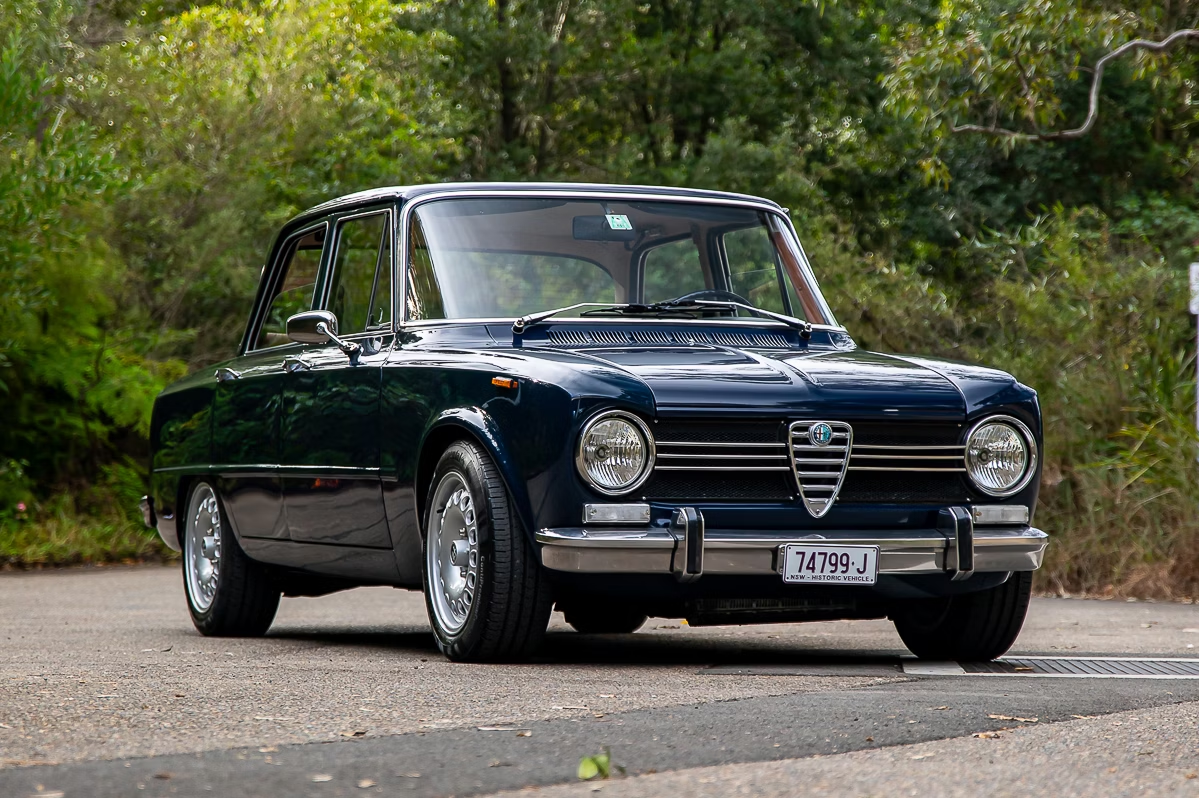
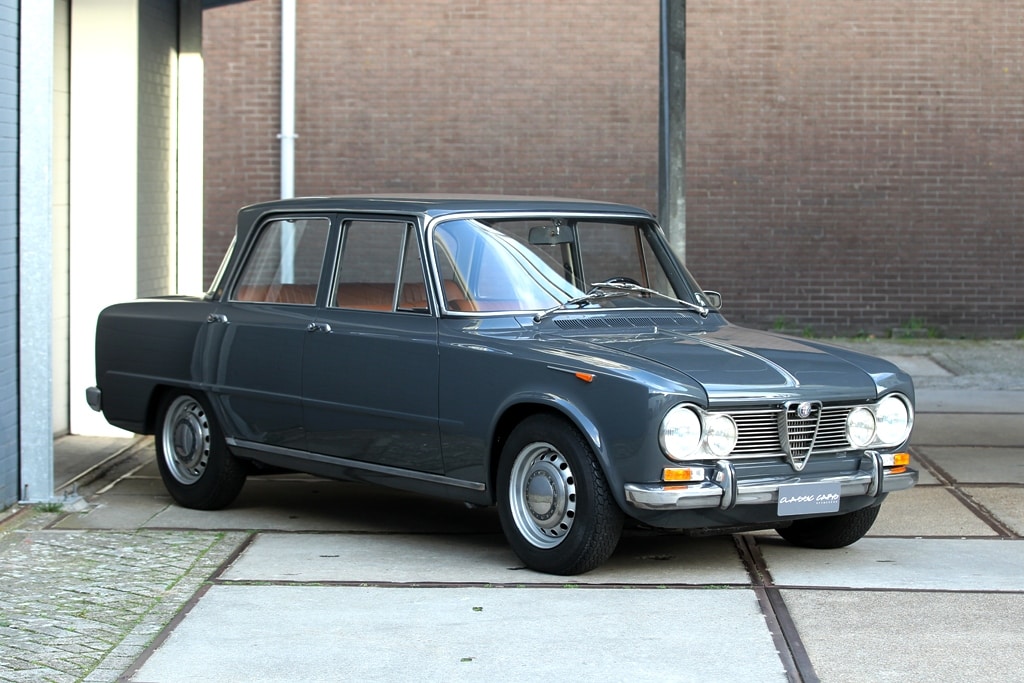
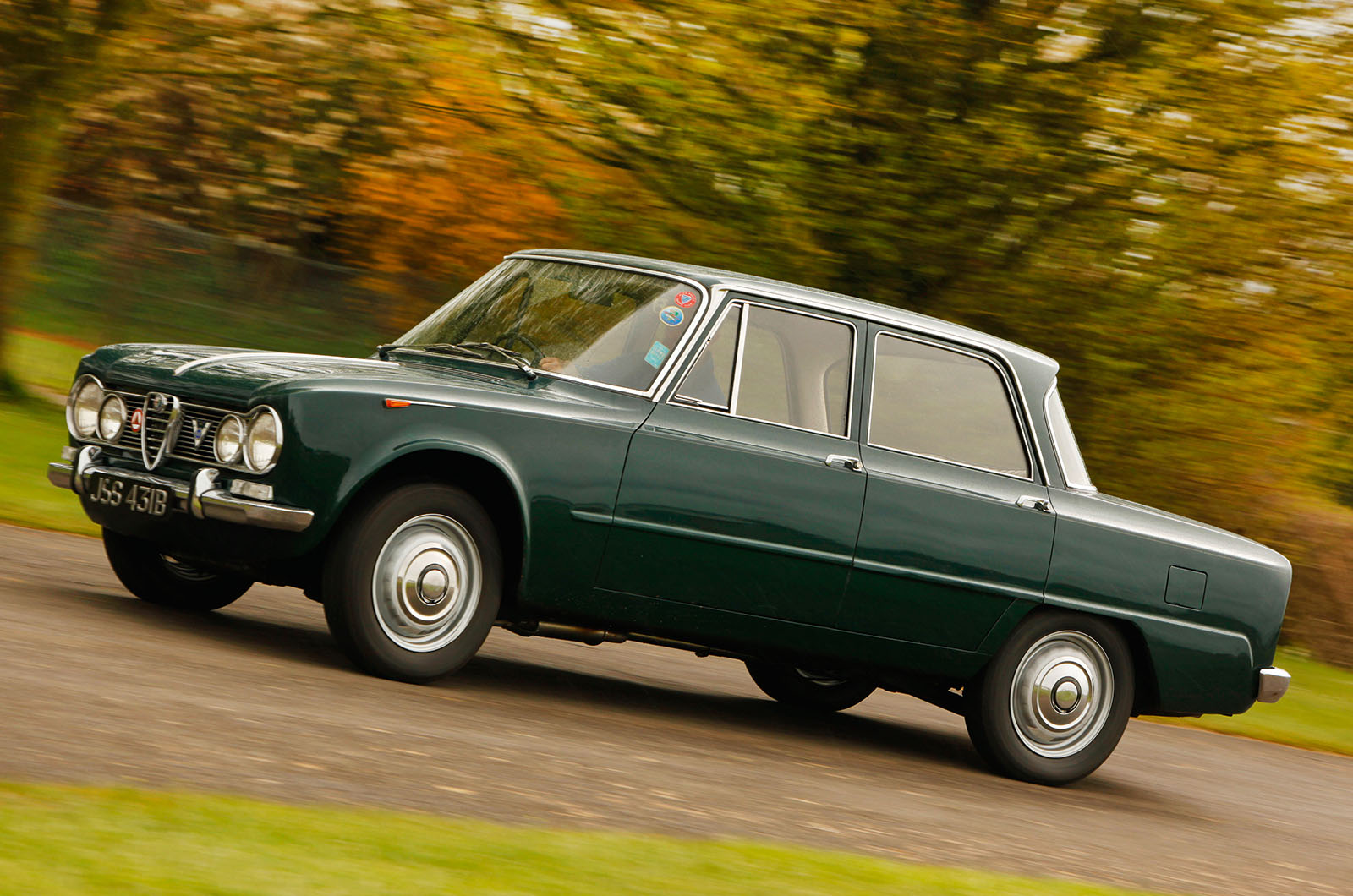
The Giulia’s styling was, and remains, a masterclass in functionalism. In an era of swooping curves and Jet Age fins, the Giulia was penned in-house by Giuseppe Scarnati and his team, who prioritized science over fleeting fashion. Unlike its impossibly beautiful Bertone-designed coupé sibling, the Berlina was tall, angular, and almost severe. It was immediately controversial. Critics and the public, accustomed to the flowing lines of the Giulietta, were perplexed. But the design was a triumph of the wind tunnel. The low, sloping nose, the subtly curved windscreen, and the high, sharp-cut vertical “Coda Tronca” (or Kamm tail) were all pure aerodynamic theory. This shape managed the airflow with incredible efficiency, terminating it cleanly rather than letting it drag. The result was a drag coefficient of just 0.34, a figure that was genuinely world-class and, famously, lower than that of the contemporary Porsche 911. This was a family saloon that sliced through the air with less resistance than most dedicated sports cars, a testament to Alfa Romeo’s engineering-first philosophy.
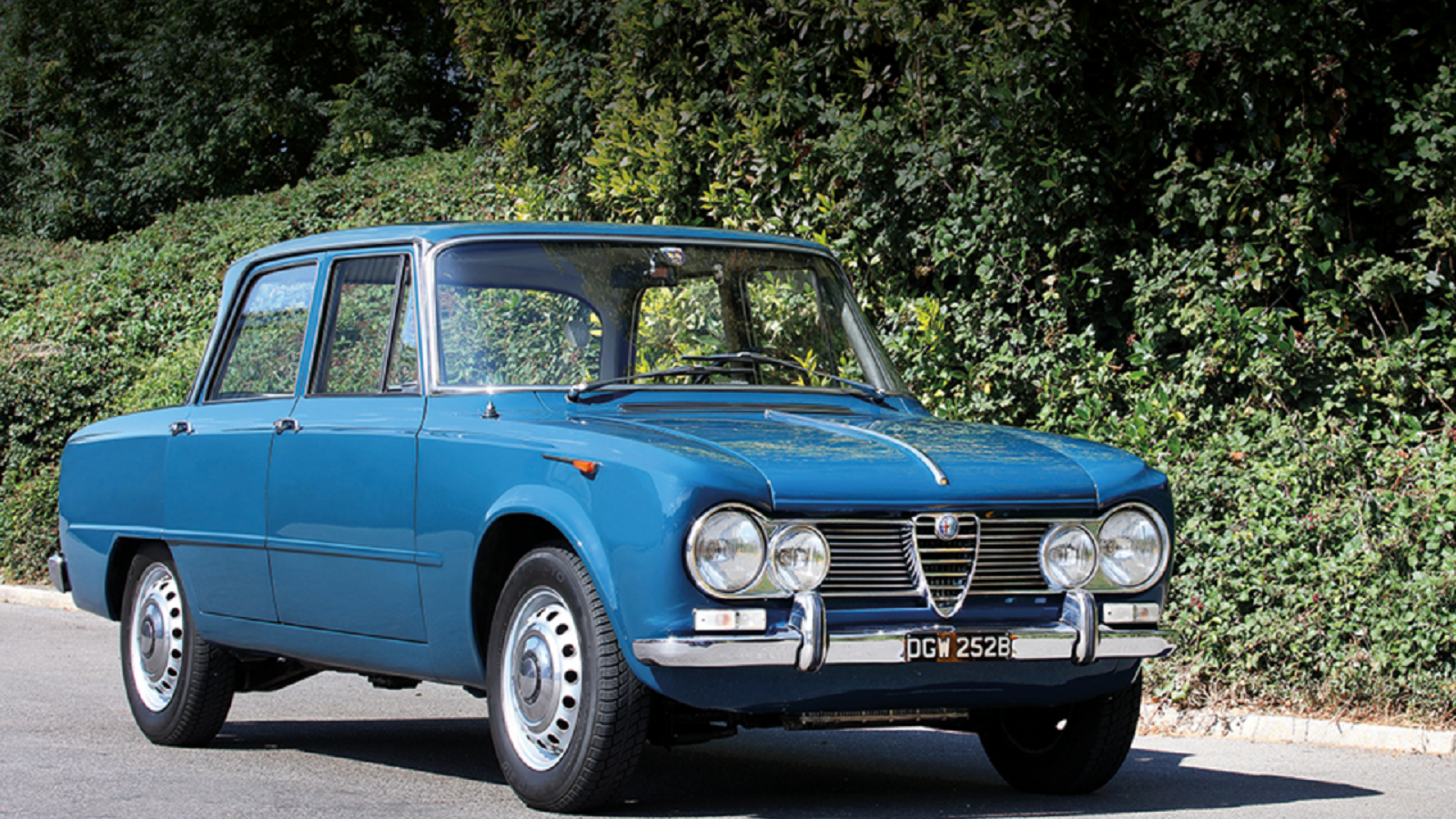
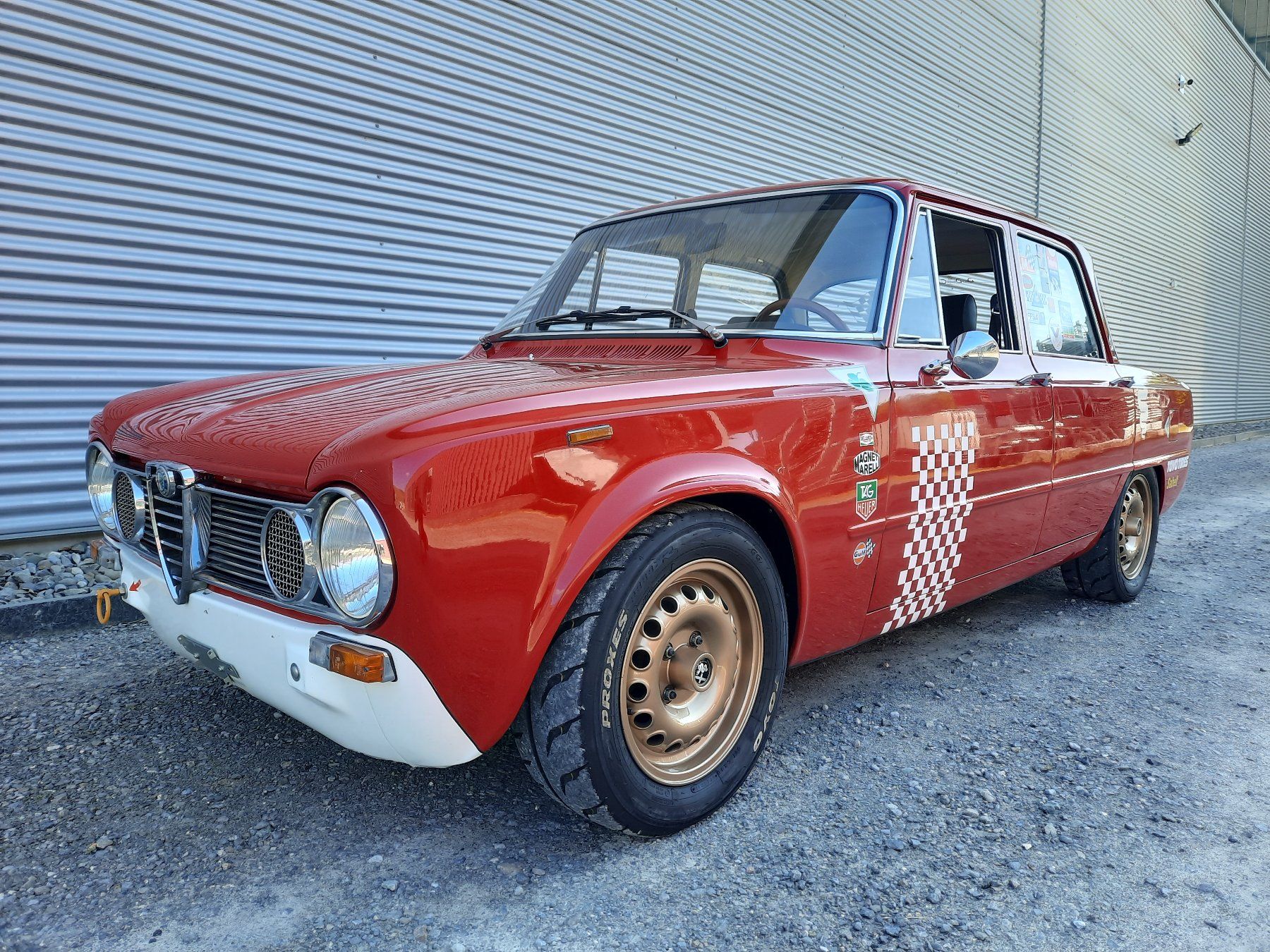
Beneath this deceptive skin lay the car’s soul: the magnificent Alfa Romeo “Nord” twin-cam engine. This all-alloy, DOHC, four-cylinder unit was not a modified road engine; it was a detuned racing engine. With hemispherical combustion chambers and sodium-filled exhaust valves (in its hotter versions), it was a jewel of a powerplant that revved with a joyous, sonorous rasp. This engine was paired with a five-speed manual gearbox as standard—an almost unheard-of specification for a saloon in 1962—and Dunlop four-wheel disc brakes. The launch model was the Giulia Ti. Its 1570cc engine, fed by a single downdraught carburettor, produced 92 hp. It was lively, but its long, wand-like column gearchange hinted at a more touring-oriented nature. This was merely the opening act. In 1963, the legend was born: the Giulia Ti Super. This was a pure homologation special, built in a limited run of just 501 units to allow the Giulia to go racing. Instantly identifiable by the “Quadrifoglio” (four-leaf clover) on its front wings, it was a lightweight brawler. It featured Plexiglas side and rear windows, simplified (often deleted) interior trim, magnesium alloy wheels, and a 112 hp engine breathing through two enormous, side-draught Weber 45 DCOE carburettors. The Ti Super was the original super-saloon, a snarling, purposeful machine that immediately went out and started dominating the European Touring Car Championship.
Recognising the gap between the mild Ti and the wild Ti Super, Alfa Romeo released the definitive model in 1965: the Giulia Super. This was the car that perfected the formula. It took the 1570cc engine, fitted it with two more civilized Weber 40 DCOE carbs for 98 hp, and, crucially, mated it to a slick, floor-mounted five-speed shifter. It featured a more refined interior with a proper wood-rimmed wheel, sporty round-dial instrumentation, and the iconic quad-headlamp face. This was the car that cemented the Giulia’s reputation as the ultimate driver’s saloon. But Alfa Romeo was also a master of navigating Italy’s tax laws, which heavily penalised engines over 1.3 litres. In 1964, the Giulia 1300 was introduced, using a 1290cc version of the twin-cam with a single carburettor and 78 hp, paired with a four-speed box. It was a sales success, but the real star of the small-bore range arrived in 1965 as the Giulia 1300 Ti. This model combined the 1.3-litre engine with a five-speed gearbox and a more potent 82 hp tune, creating a high-revving, beautifully balanced package that many enthusiasts swore by. The 1300 range was completed in 1970 with the Giulia 1300 Super, which adopted the twin-carb setup of its bigger brother for a healthy 88 hp, creating a true “baby” super-saloon.
The Giulia’s handling was the final piece of the puzzle. While its independent front suspension was conventional for an Alfa, its rear setup was inspired. It used a solid rear axle—a configuration that could be crude in lesser cars—but it was located with a level of engineering obsessive-compulsiveness that defined the brand. With long trailing arms and a central A-arm (or “T-arm”), the axle was controlled with absolute precision, virtually eliminating axle tramp and allowing the driver to exploit the car’s perfect balance. The Giulia could be driven on the throttle, its steering light and communicative, its chassis adjustable and forgiving. It was a car that danced, that begged to be driven hard, and it communicated its intentions with a mechanical honesty that simply wasn’t found in its rivals. This dynamic brilliance is what made it the weapon of choice not just for racers, but for police forces across Italy. The dark green Polizia “Pantera” and blue Carabinieri “Gazzella” Giulias, often in Super 1600 form, became enduring cultural icons, their twin-cam wail and leaning-but-gripping chassis a familiar sight in high-speed chases through Rome and Milan.
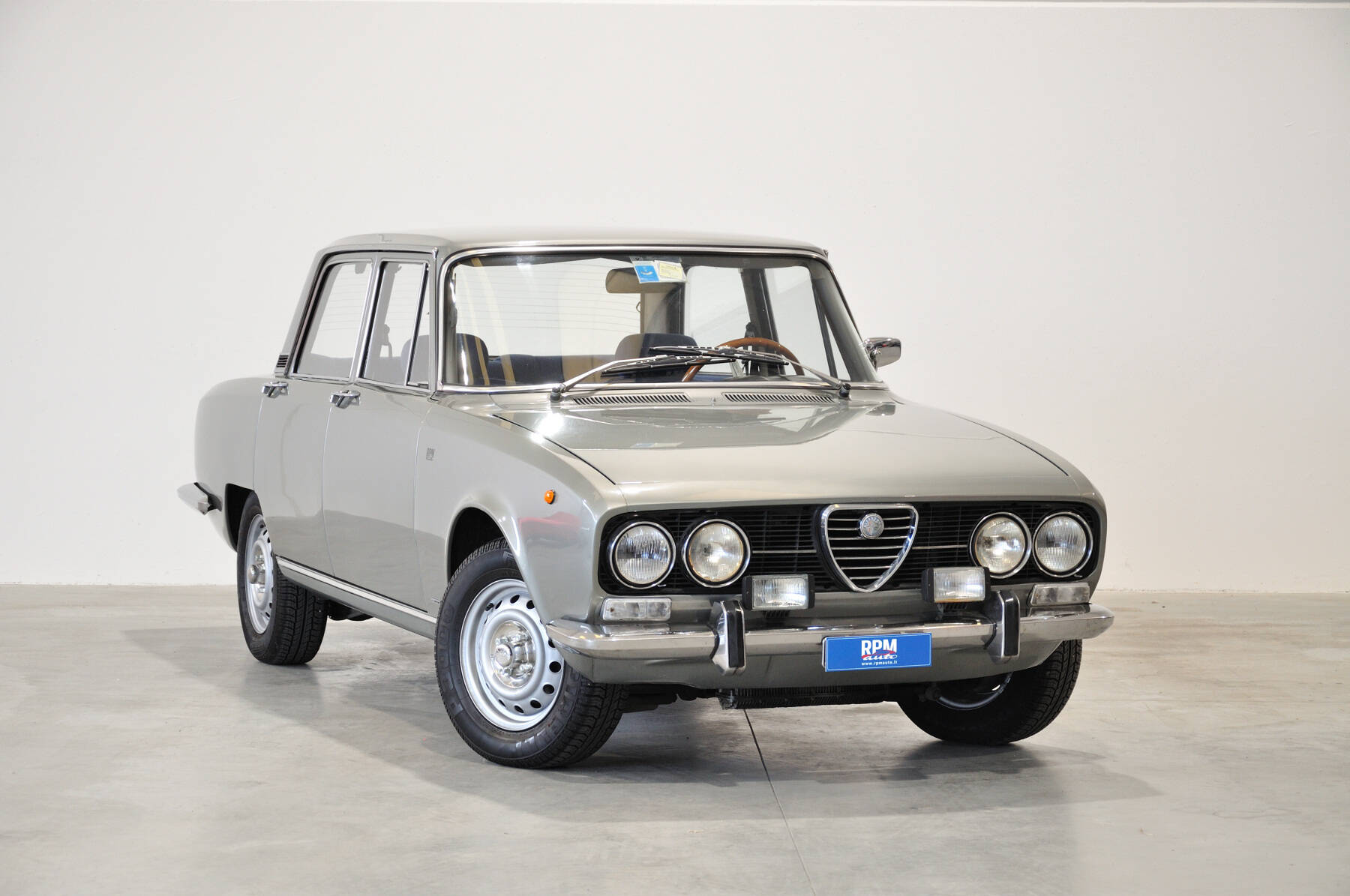
The Giulia’s production run was extraordinarily long. In 1974, with the design now 12 years old, it was given a major facelift and re-launched as the Nuova Super. This model featured a restyled, flatter nose with a new black grille, a smoother boot lid without the original’s characteristic spine, and a revised interior. The chassis and running gear remained largely unchanged, a testament to the original design’s rightness. The line-up consolidated around the Nuova Super 1300 and Nuova Super 1600, which kept the sporting heart of the original alive. The final, and most incongruous, chapter came in 1976 with the Giulia Super Diesel. In response to the 1973 oil crisis, this car was fitted with a 1.8-litre, 54 hp Perkins diesel engine. It was slow, noisy, and un-Alfa-like in every way, but it was the first diesel saloon in the company’s history and a sign of the changing times. When the last Giulia saloon rolled off the line in 1978, it was succeeded by the technically advanced Alfetta, which used a more sophisticated transaxle layout. Yet, many felt the Alfetta had lost the raw, mechanical, and soulful charm of the Giulia. The Giulia’s legacy is immeasurable. It set the template for the sports saloon for two decades, proving that practicality and performance were not mutually exclusive. It was the car that taught a generation how to drive.
Portal
Model line
Model generation
Predecessor
Sucessor
Brand
Produced from
Vehicle category
Portal
Model line
Model generation
Predecessor
Sucessor
About this model
In the annals of automotive history, few cars have so perfectly defined a genre as the Alfa Romeo Giulia. It was not the first fast saloon, but it was the first to so comprehensively democratise thoroughbred racing technology for the road-going family man. When it was unveiled to the world’s press at the Monza Autodrome in 1962, it represented a monumental task for Alfa Romeo: replacing the universally adored Giulietta. The Giulietta had been the car that saved post-war Alfa, a delicate, charming, and sprightly machine that captured the hearts of a generation. Its successor needed to be all that, but also bigger, more modern, safer, and faster, all while carrying the weight of Italy’s il boom—the economic miracle that saw families demanding more capable, aspirational transport. The Giulia Saloon, the Berlina, was the answer. It was a car of profound contradictions: a boxy, upright family saloon that was more aerodynamic than a Porsche of its day; a practical four-door that housed the heart of a racing car; a humble workhorse for the Carabinieri that could simultaneously win a championship on Sunday. It was, in short, the genesis of the modern sports saloon, and it threw down a gauntlet that rivals like BMW’s “Neue Klasse” and Lancia’s sophisticated Flavia would spend the next decade scrambling to pick up.
The Giulia’s styling was, and remains, a masterclass in functionalism. In an era of swooping curves and Jet Age fins, the Giulia was penned in-house by Giuseppe Scarnati and his team, who prioritized science over fleeting fashion. Unlike its impossibly beautiful Bertone-designed coupé sibling, the Berlina was tall, angular, and almost severe. It was immediately controversial. Critics and the public, accustomed to the flowing lines of the Giulietta, were perplexed. But the design was a triumph of the wind tunnel. The low, sloping nose, the subtly curved windscreen, and the high, sharp-cut vertical “Coda Tronca” (or Kamm tail) were all pure aerodynamic theory. This shape managed the airflow with incredible efficiency, terminating it cleanly rather than letting it drag. The result was a drag coefficient of just 0.34, a figure that was genuinely world-class and, famously, lower than that of the contemporary Porsche 911. This was a family saloon that sliced through the air with less resistance than most dedicated sports cars, a testament to Alfa Romeo’s engineering-first philosophy.
Beneath this deceptive skin lay the car’s soul: the magnificent Alfa Romeo “Nord” twin-cam engine. This all-alloy, DOHC, four-cylinder unit was not a modified road engine; it was a detuned racing engine. With hemispherical combustion chambers and sodium-filled exhaust valves (in its hotter versions), it was a jewel of a powerplant that revved with a joyous, sonorous rasp. This engine was paired with a five-speed manual gearbox as standard—an almost unheard-of specification for a saloon in 1962—and Dunlop four-wheel disc brakes. The launch model was the Giulia Ti. Its 1570cc engine, fed by a single downdraught carburettor, produced 92 hp. It was lively, but its long, wand-like column gearchange hinted at a more touring-oriented nature. This was merely the opening act. In 1963, the legend was born: the Giulia Ti Super. This was a pure homologation special, built in a limited run of just 501 units to allow the Giulia to go racing. Instantly identifiable by the “Quadrifoglio” (four-leaf clover) on its front wings, it was a lightweight brawler. It featured Plexiglas side and rear windows, simplified (often deleted) interior trim, magnesium alloy wheels, and a 112 hp engine breathing through two enormous, side-draught Weber 45 DCOE carburettors. The Ti Super was the original super-saloon, a snarling, purposeful machine that immediately went out and started dominating the European Touring Car Championship.
Recognising the gap between the mild Ti and the wild Ti Super, Alfa Romeo released the definitive model in 1965: the Giulia Super. This was the car that perfected the formula. It took the 1570cc engine, fitted it with two more civilized Weber 40 DCOE carbs for 98 hp, and, crucially, mated it to a slick, floor-mounted five-speed shifter. It featured a more refined interior with a proper wood-rimmed wheel, sporty round-dial instrumentation, and the iconic quad-headlamp face. This was the car that cemented the Giulia’s reputation as the ultimate driver’s saloon. But Alfa Romeo was also a master of navigating Italy’s tax laws, which heavily penalised engines over 1.3 litres. In 1964, the Giulia 1300 was introduced, using a 1290cc version of the twin-cam with a single carburettor and 78 hp, paired with a four-speed box. It was a sales success, but the real star of the small-bore range arrived in 1965 as the Giulia 1300 Ti. This model combined the 1.3-litre engine with a five-speed gearbox and a more potent 82 hp tune, creating a high-revving, beautifully balanced package that many enthusiasts swore by. The 1300 range was completed in 1970 with the Giulia 1300 Super, which adopted the twin-carb setup of its bigger brother for a healthy 88 hp, creating a true “baby” super-saloon.
The Giulia’s handling was the final piece of the puzzle. While its independent front suspension was conventional for an Alfa, its rear setup was inspired. It used a solid rear axle—a configuration that could be crude in lesser cars—but it was located with a level of engineering obsessive-compulsiveness that defined the brand. With long trailing arms and a central A-arm (or “T-arm”), the axle was controlled with absolute precision, virtually eliminating axle tramp and allowing the driver to exploit the car’s perfect balance. The Giulia could be driven on the throttle, its steering light and communicative, its chassis adjustable and forgiving. It was a car that danced, that begged to be driven hard, and it communicated its intentions with a mechanical honesty that simply wasn’t found in its rivals. This dynamic brilliance is what made it the weapon of choice not just for racers, but for police forces across Italy. The dark green Polizia “Pantera” and blue Carabinieri “Gazzella” Giulias, often in Super 1600 form, became enduring cultural icons, their twin-cam wail and leaning-but-gripping chassis a familiar sight in high-speed chases through Rome and Milan.
The Giulia’s production run was extraordinarily long. In 1974, with the design now 12 years old, it was given a major facelift and re-launched as the Nuova Super. This model featured a restyled, flatter nose with a new black grille, a smoother boot lid without the original’s characteristic spine, and a revised interior. The chassis and running gear remained largely unchanged, a testament to the original design’s rightness. The line-up consolidated around the Nuova Super 1300 and Nuova Super 1600, which kept the sporting heart of the original alive. The final, and most incongruous, chapter came in 1976 with the Giulia Super Diesel. In response to the 1973 oil crisis, this car was fitted with a 1.8-litre, 54 hp Perkins diesel engine. It was slow, noisy, and un-Alfa-like in every way, but it was the first diesel saloon in the company’s history and a sign of the changing times. When the last Giulia saloon rolled off the line in 1978, it was succeeded by the technically advanced Alfetta, which used a more sophisticated transaxle layout. Yet, many felt the Alfetta had lost the raw, mechanical, and soulful charm of the Giulia. The Giulia’s legacy is immeasurable. It set the template for the sports saloon for two decades, proving that practicality and performance were not mutually exclusive. It was the car that taught a generation how to drive.
Generations
Generations of this model
Generations
Generations of this model
Submodels
Discover all the variants of this model
Submodels
Discover all the variants of this model
Vehicles
Legendary Vehicles
Vehicles