

Alfa Romeo 8C

Brand
Produced from
Vehicle category
Portal
Model line
Model generation
Predecessor
Sucessor
About this model
The alphanumeric designation ‘8C’ does not merely signify an engine configuration within the historical archives of Alfa Romeo; it is a sacred incantation that conjures the absolute zenith of Italian automotive romance and motorsport dominance. To fully comprehend the gravity of the 8C model line, one must journey back to the early 1930s, an era when racing was a lethal, dust-choked pursuit of national pride. Alfa Romeo’s brilliant chief engineer, Vittorio Jano, had already established the marque’s reputation with the magnificent 6C series, but the landscape of Grand Prix and sports car racing was rapidly shifting. The lightweight agility of the 6C was beginning to face overwhelming brute force from the massive, supercharged Mercedes-Benz SSK engineered by Ferdinand Porsche, and the exquisite, twin-cam technical perfection of Ettore Bugatti’s Type 51. Jano recognized that to maintain Alfa Romeo’s absolute supremacy, a radical escalation was required. Thus, the 8C was born—a lineage that debuted in 1931 as the 8C 2300, evolved into the more muscular 8C 2600 by 1933, and then, after laying dormant for over seven decades, was spectacularly resurrected in 2007 as the 8C Competizione. This model line represents the alpha and omega of the brand’s halo vehicles, connecting the grease-stained, heroic days of Enzo Ferrari’s original Scuderia to the pristine, carbon-fiber realities of modern grand touring.
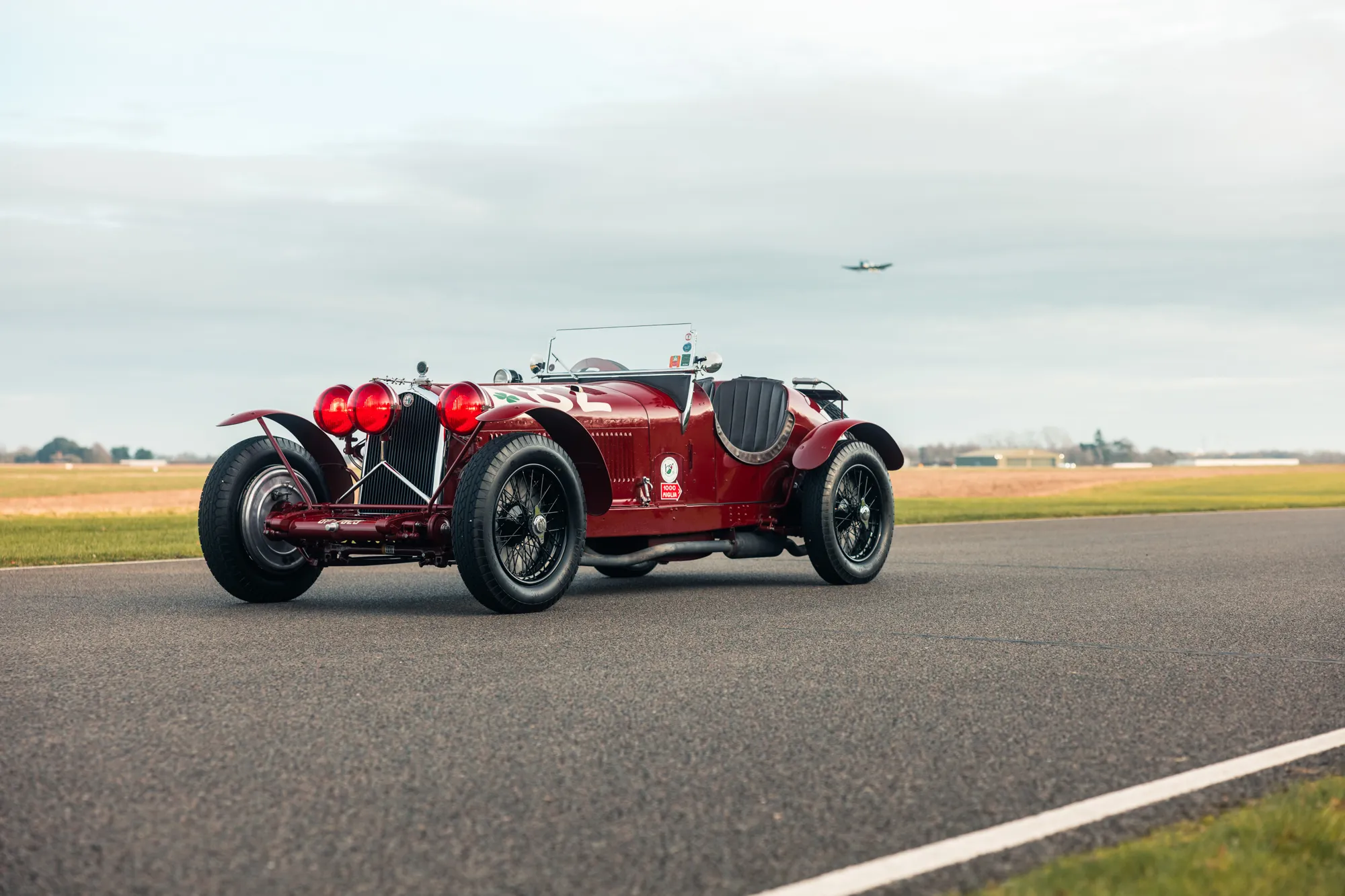
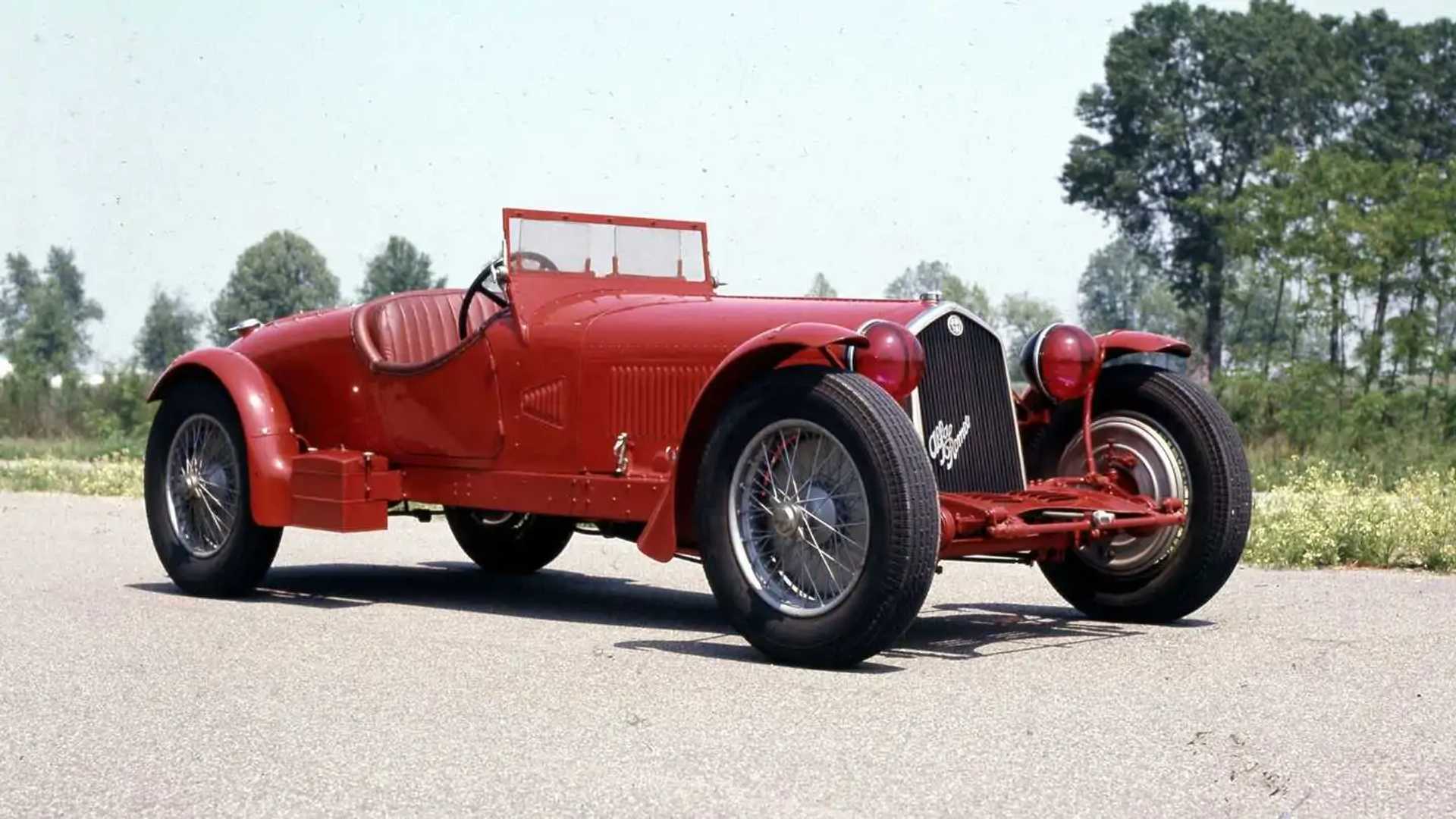
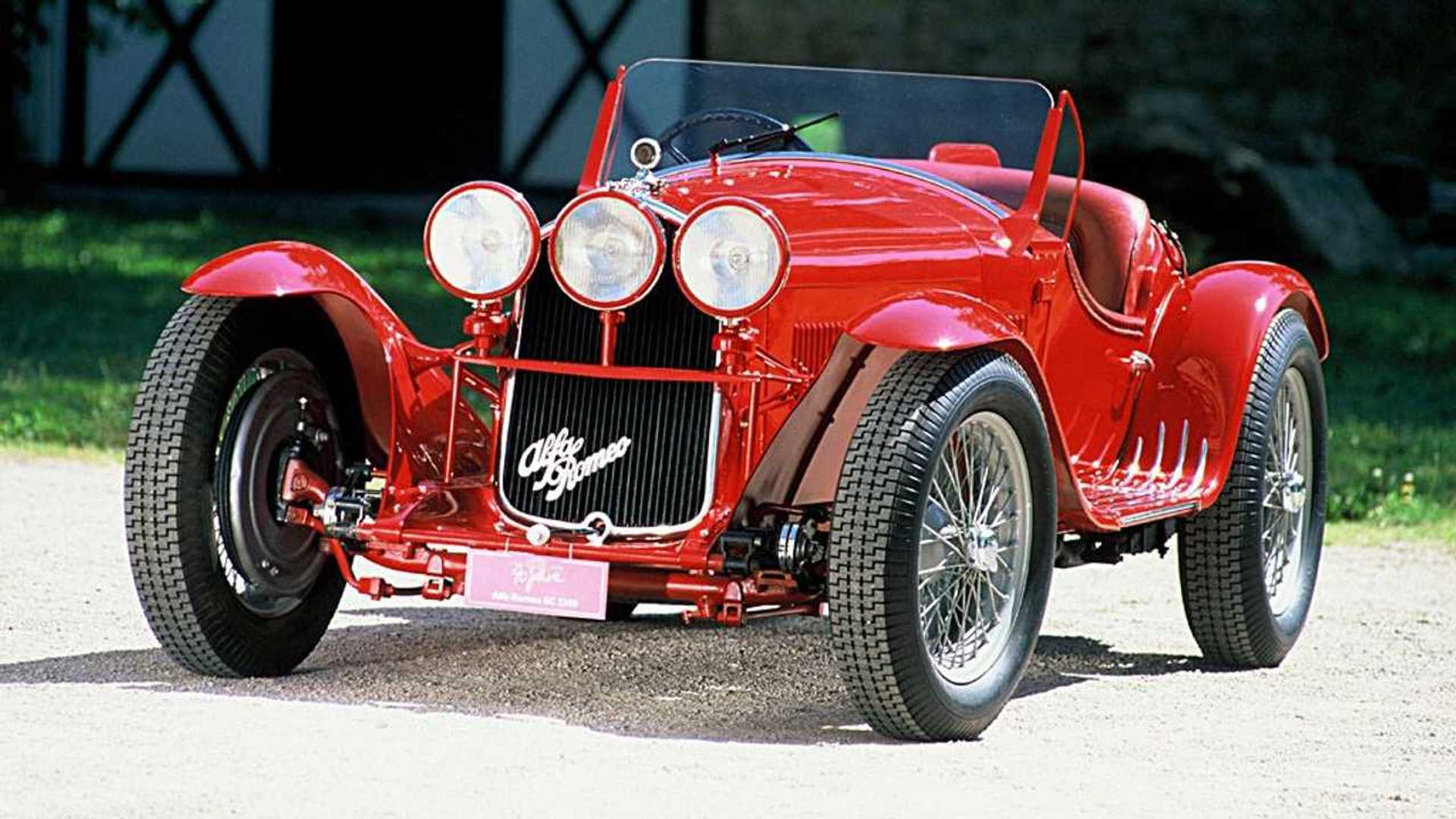
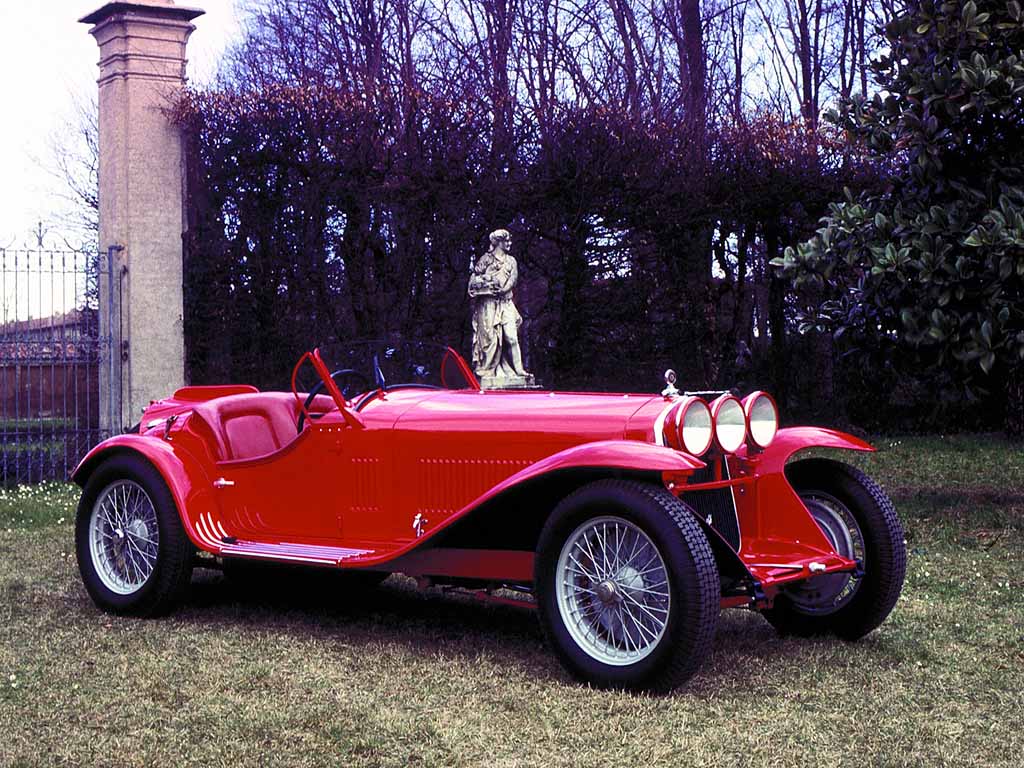
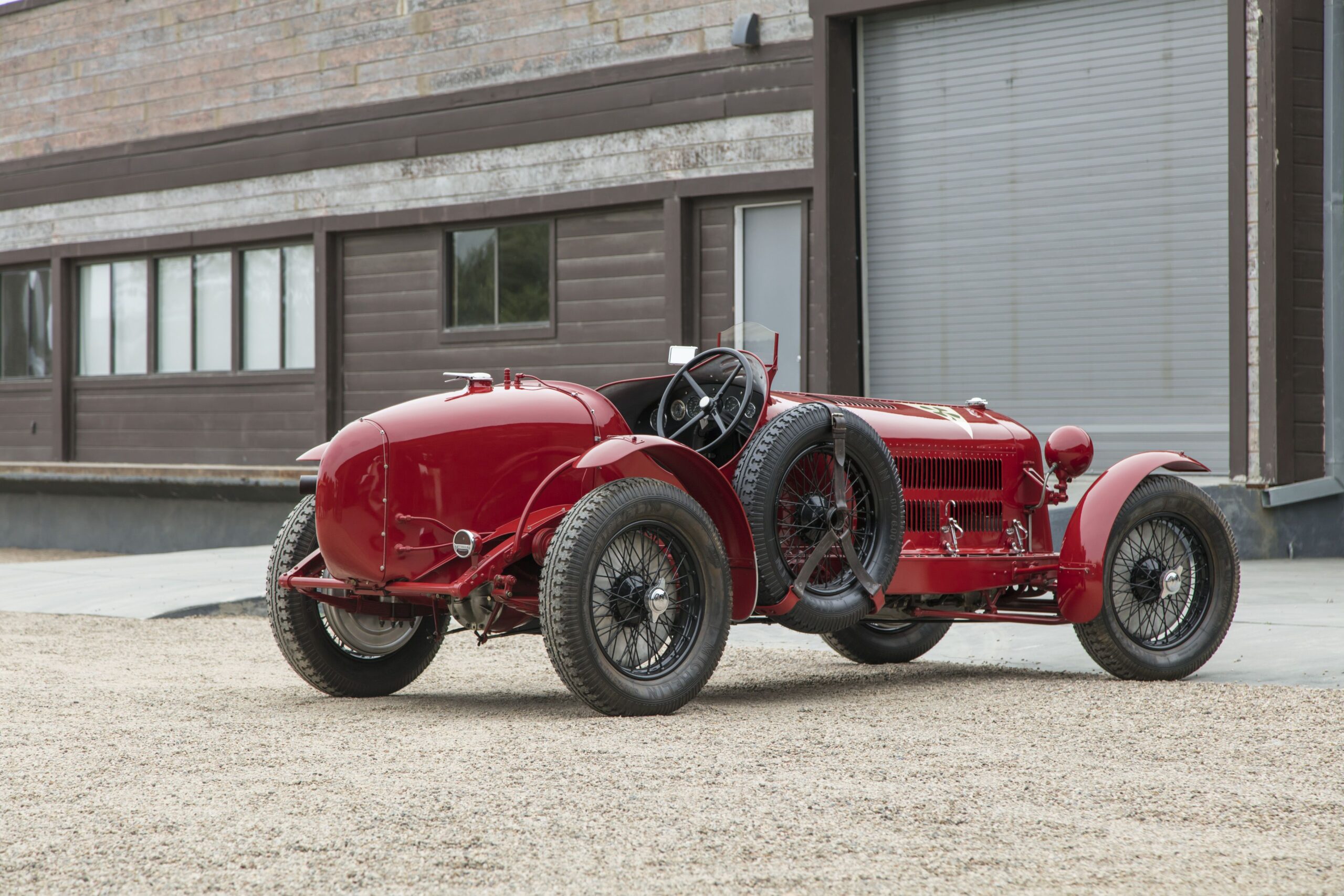
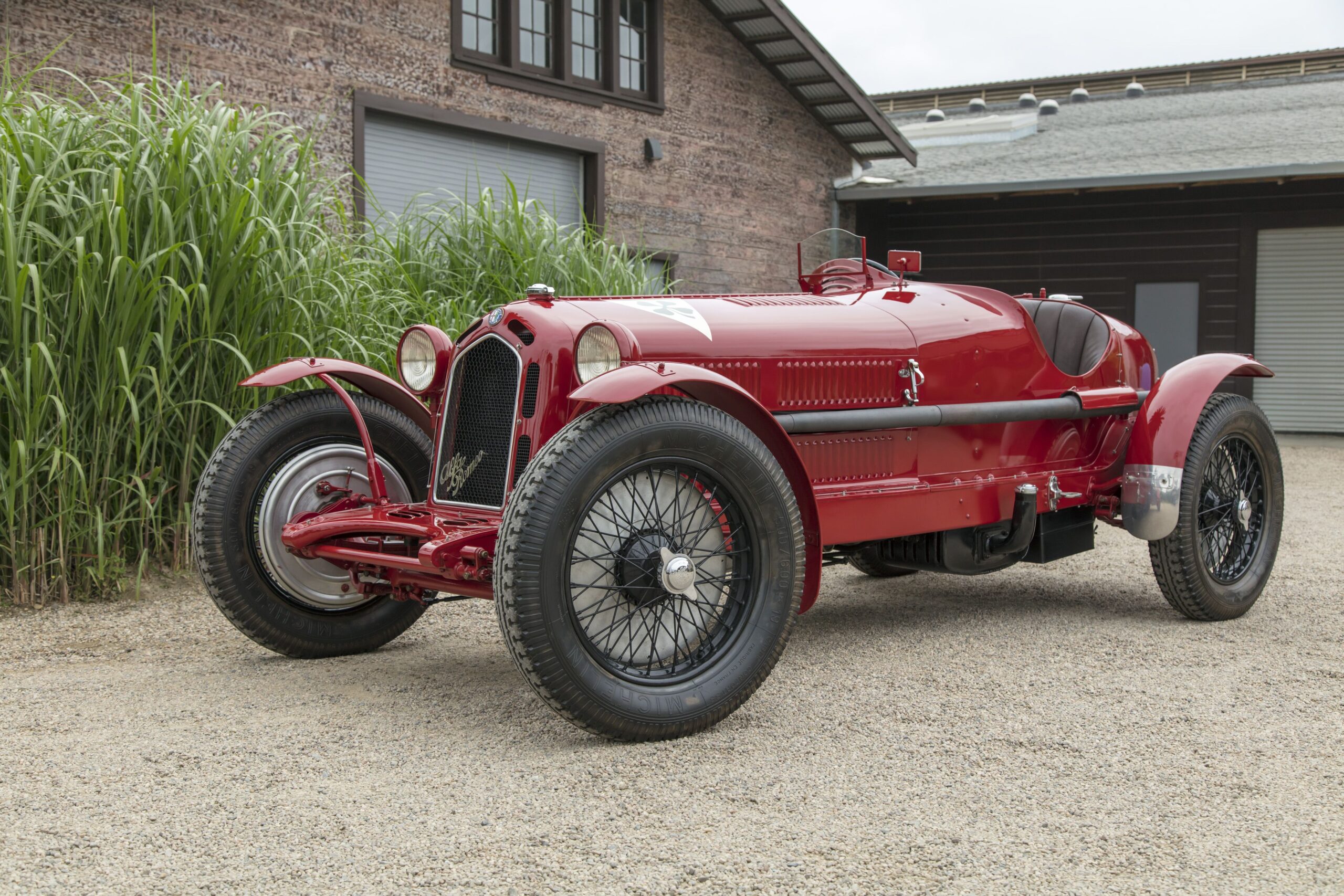
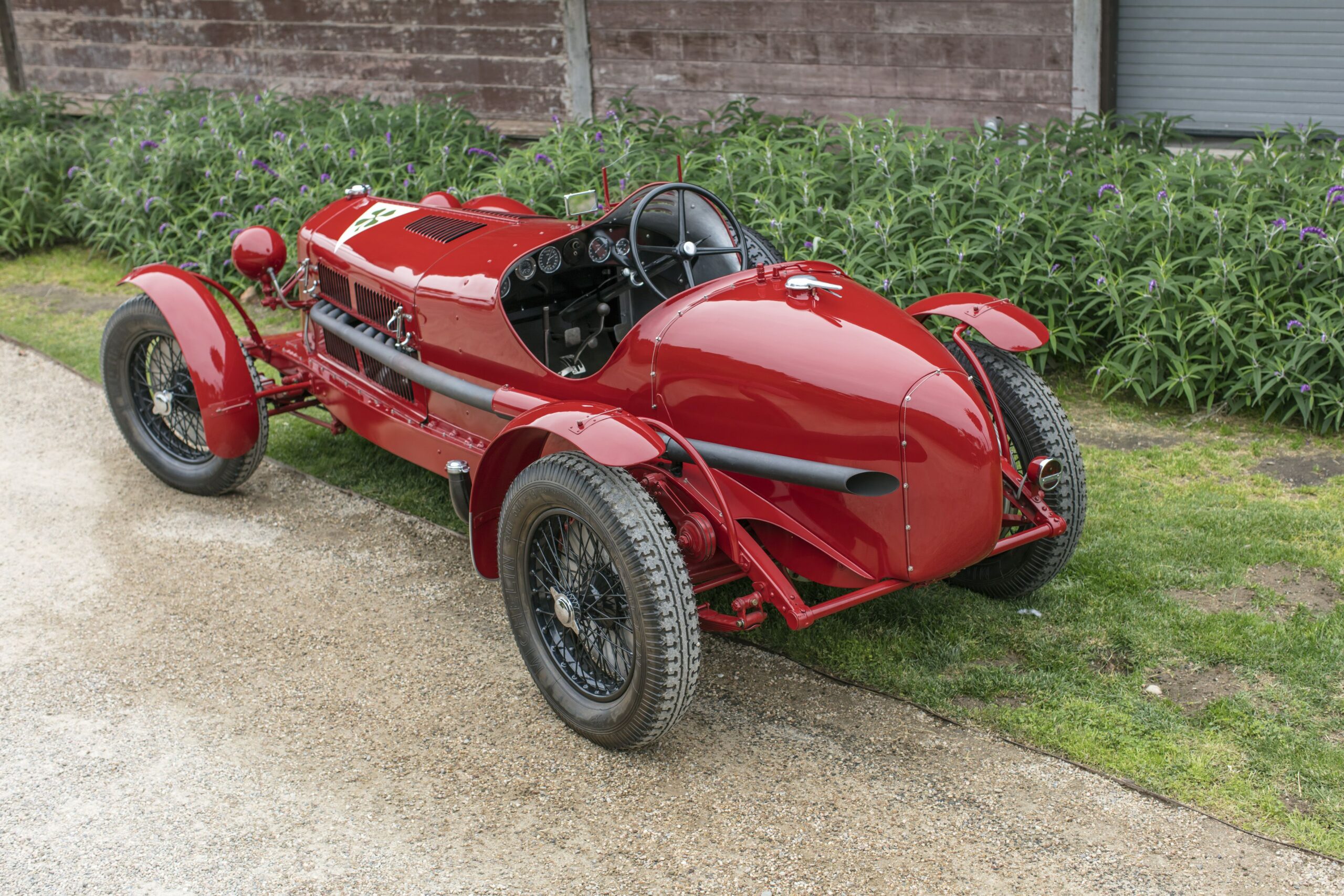
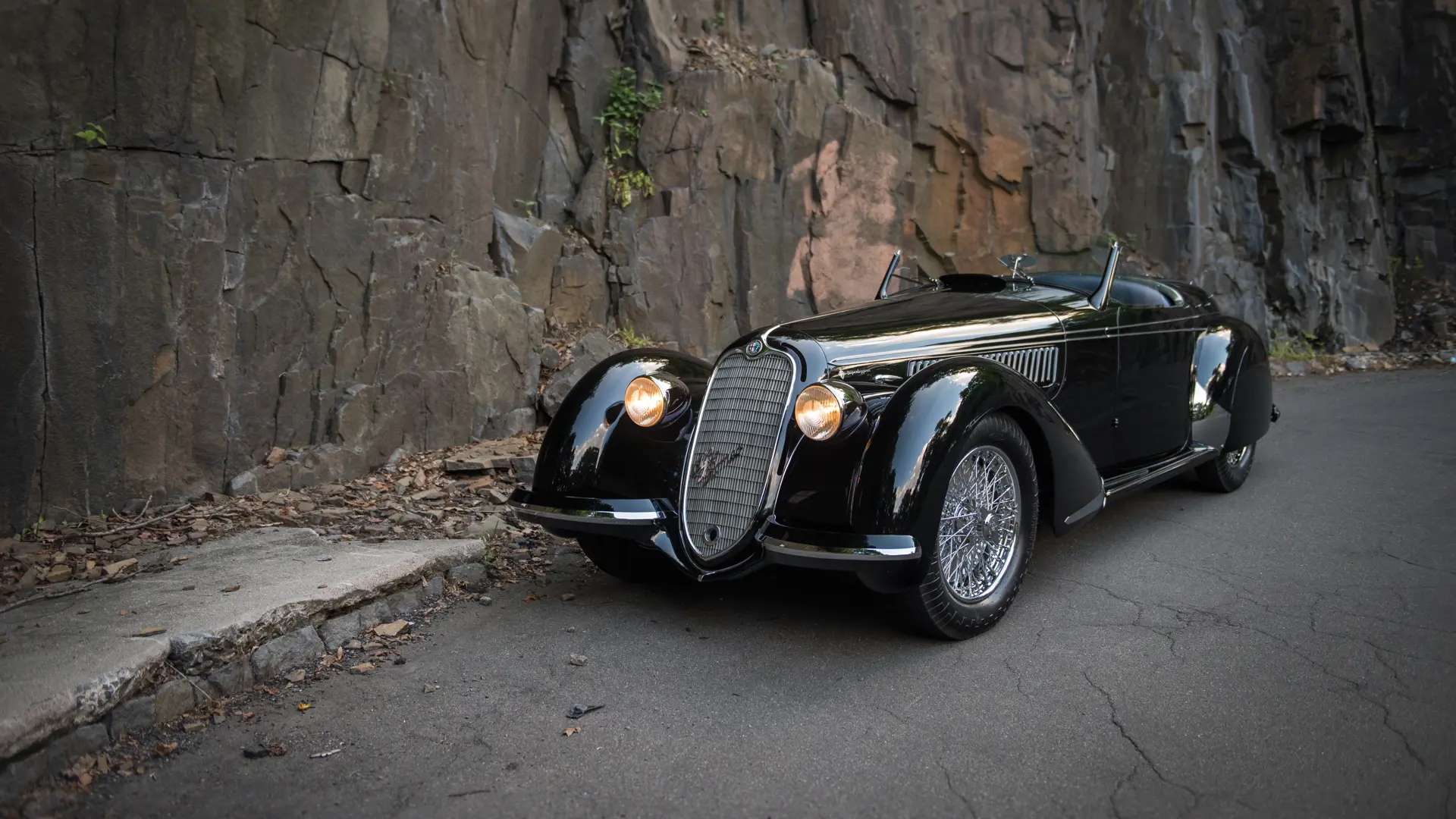
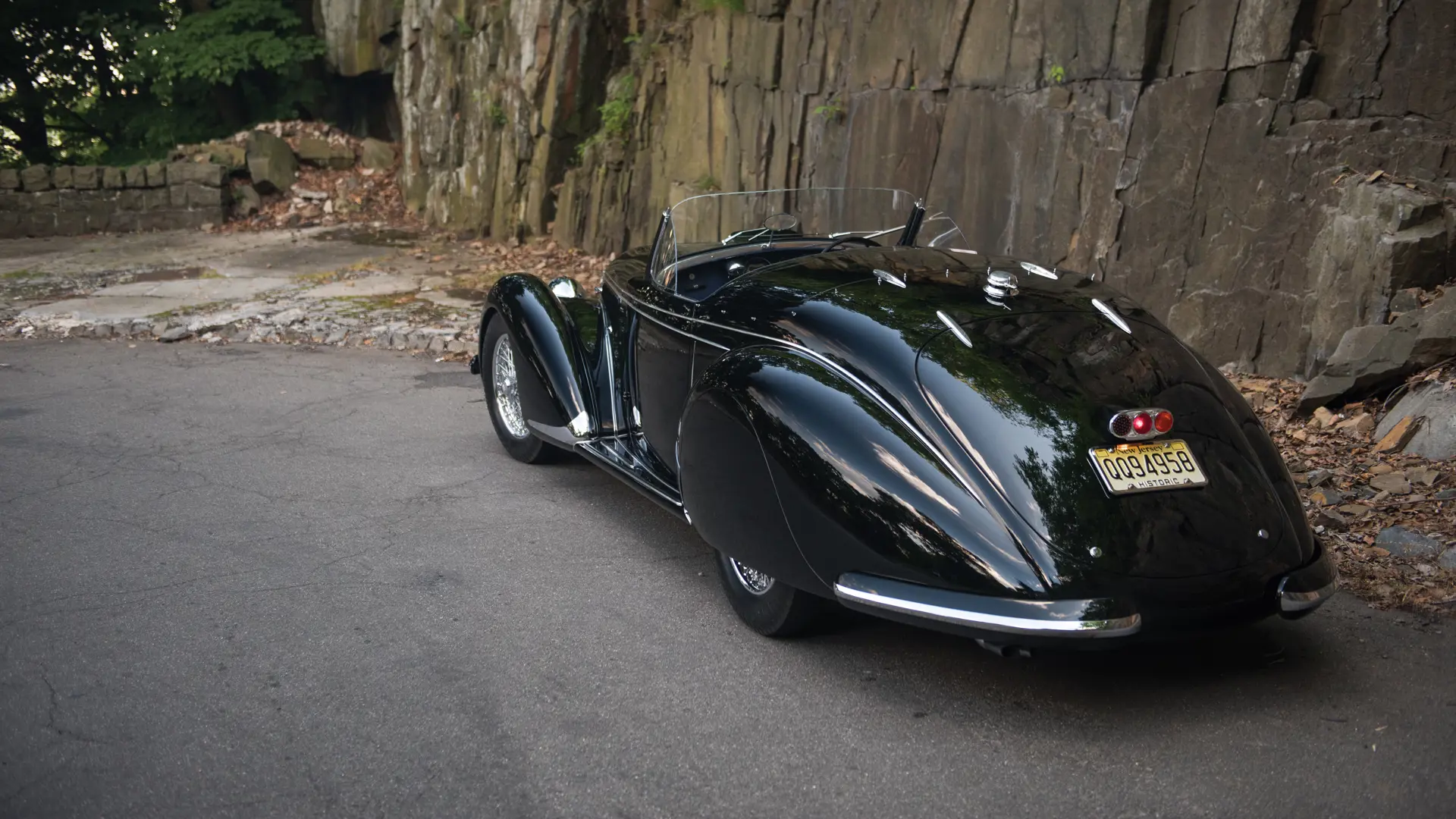
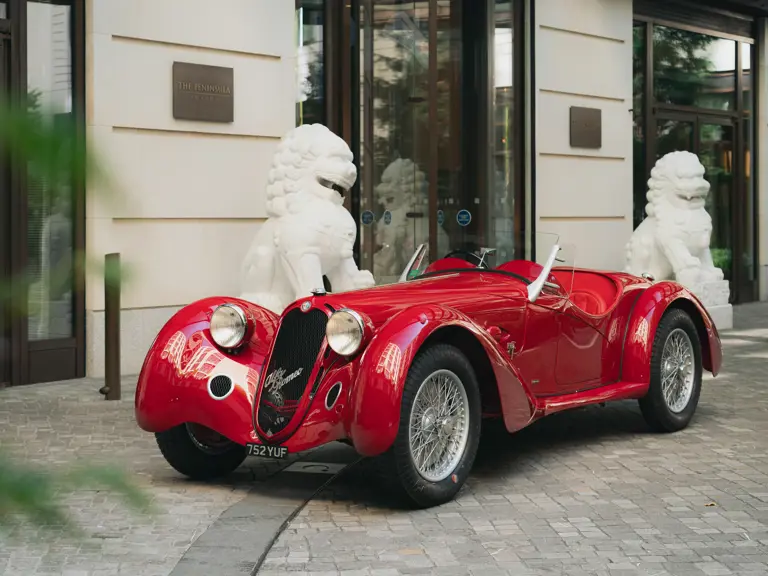
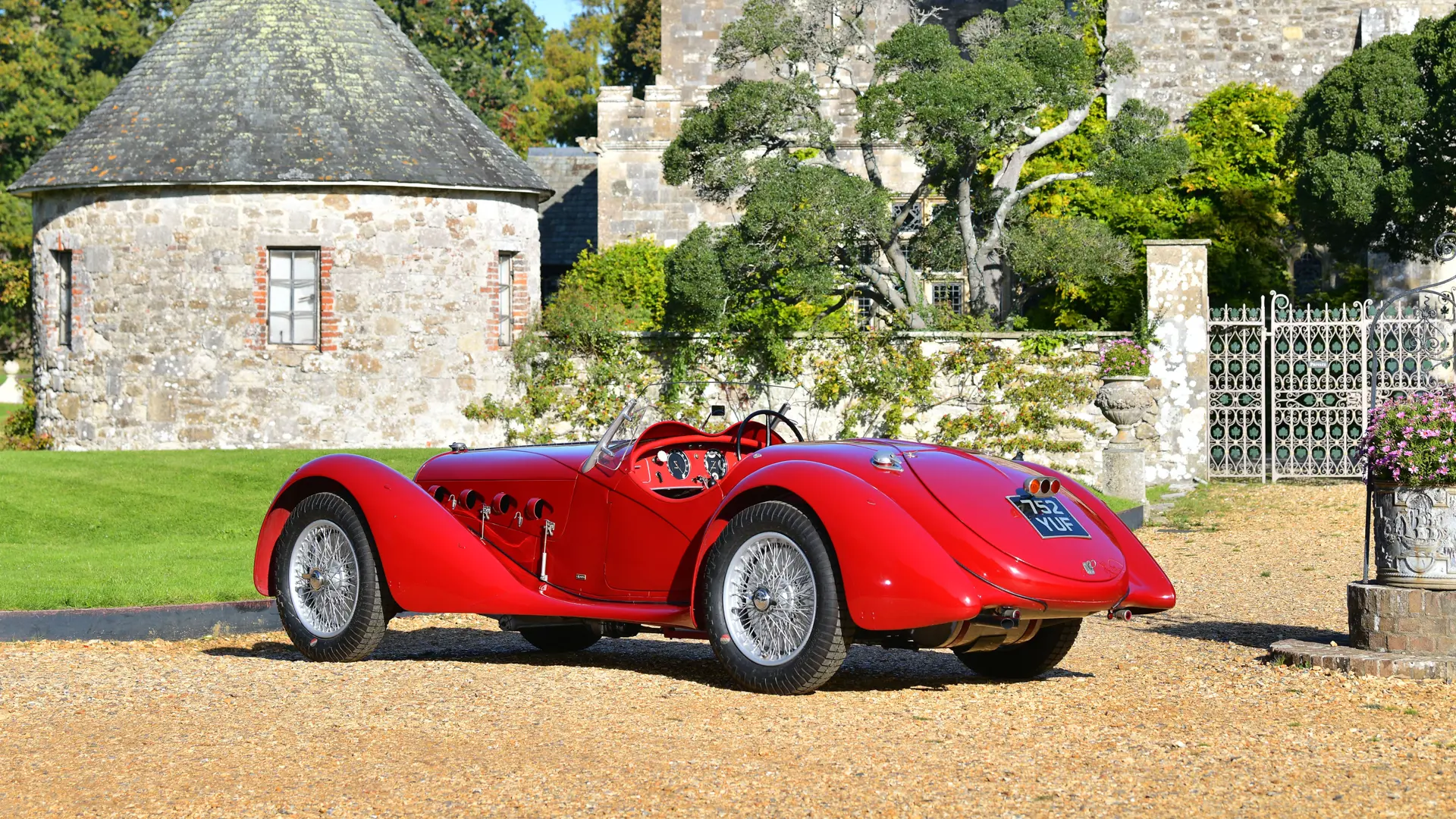
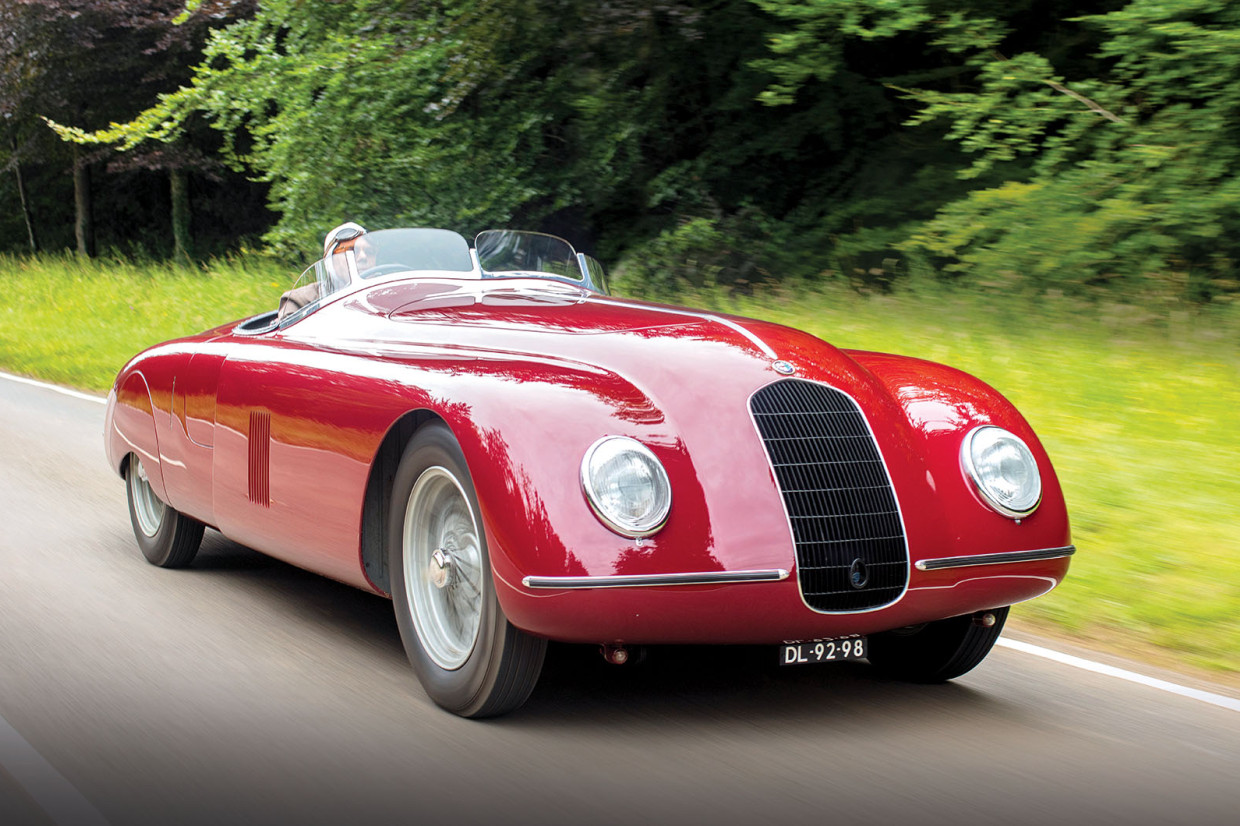
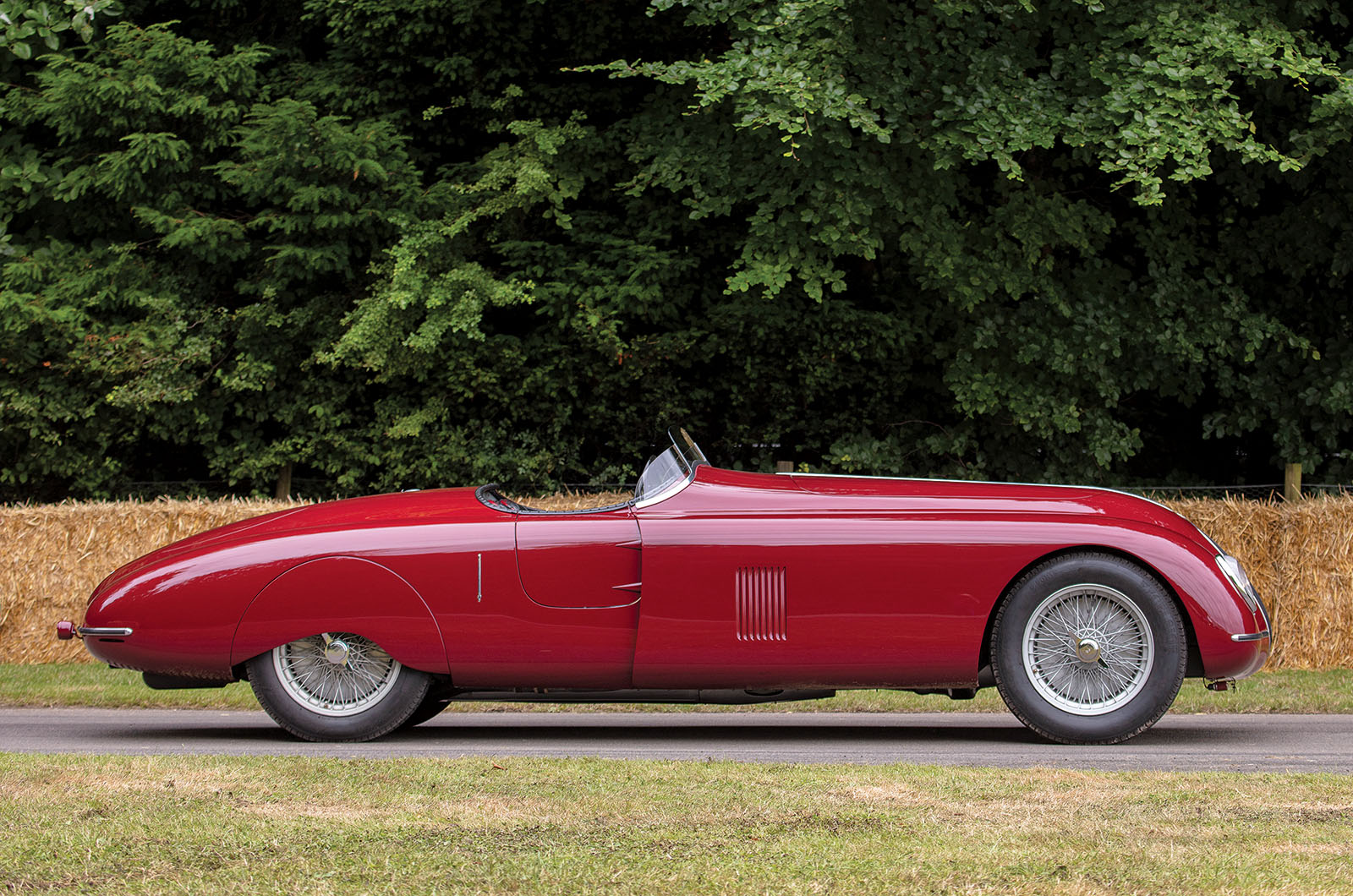
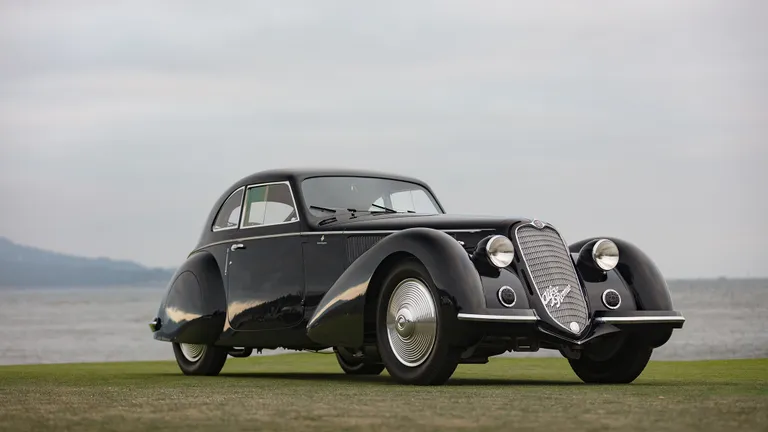
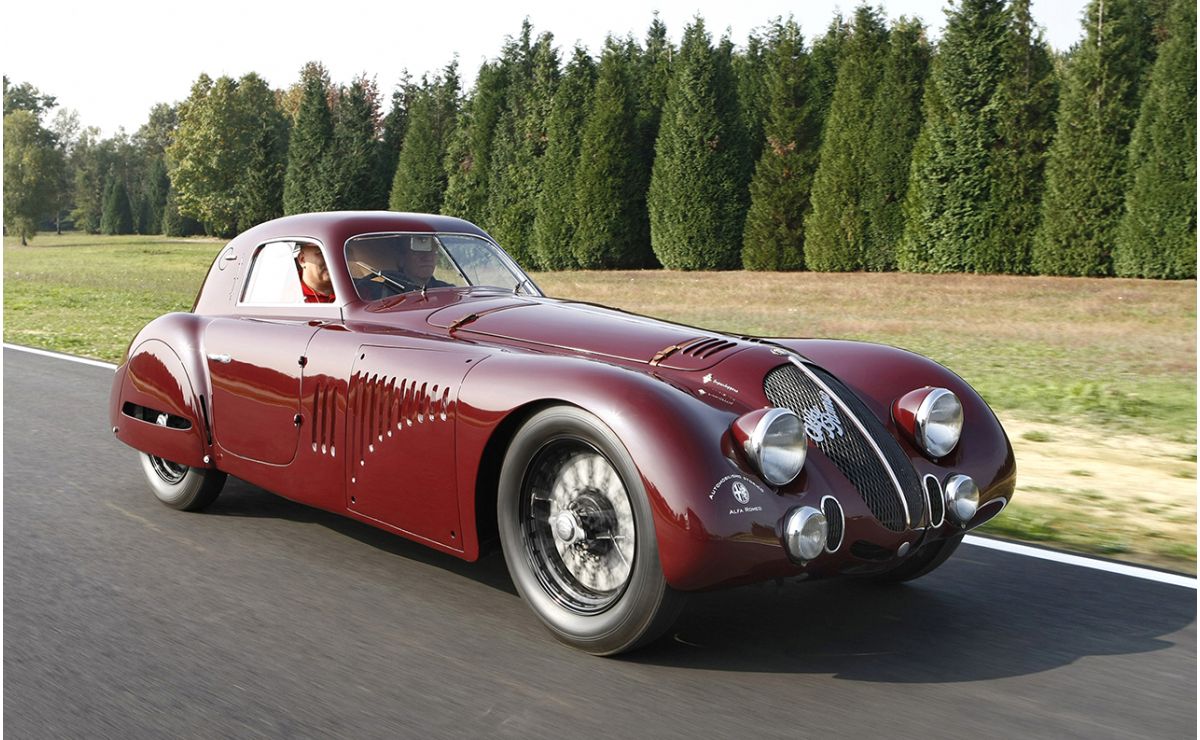
To examine the engineering architecture of the 1930s 8C is to look upon a masterpiece of pre-war metallurgy and pragmatic problem-solving. Jano did not simply elongate his existing six-cylinder engine to create a straight-eight; he knew that long crankshafts were notoriously prone to fatal torsional vibration at high RPMs. His solution was brilliant: he effectively bolted two four-cylinder alloy blocks together. Rather than taking the drive for the twin overhead camshafts and the Roots-type supercharger from the front of the engine, he placed the gear train dead in the center of the two blocks. This effectively split the crankshaft in half conceptually, ensuring immense strength and reliability. Initially displacing 2,336cc in the 8C 2300, this supercharged jewel produced around 140 brake horsepower in race trim, an astonishing figure for the era. By 1933, the engine was bored out to 2,556cc for the 8C 2600, unlocking even greater torque and top-end ferocity. The chassis supporting this magnificent powerplant was a traditional but highly refined steel ladder frame, utilizing semi-elliptic leaf springs and adjustable friction shock absorbers. Stopping power came from massive, heavily finned aluminium drum brakes that were mechanical works of art. The exterior aesthetics were dictated by the elite coachbuilders of the era. Carrozzeria Zagato crafted the functional, incredibly aggressive, and lightweight Spider bodies intended for the rigors of the Mille Miglia and Le Mans, while houses like Touring and Castagna draped the long-wheelbase chassis in breathtakingly elegant coupe and cabriolet forms, creating the ultimate status symbols for Europe’s pre-war aristocracy.
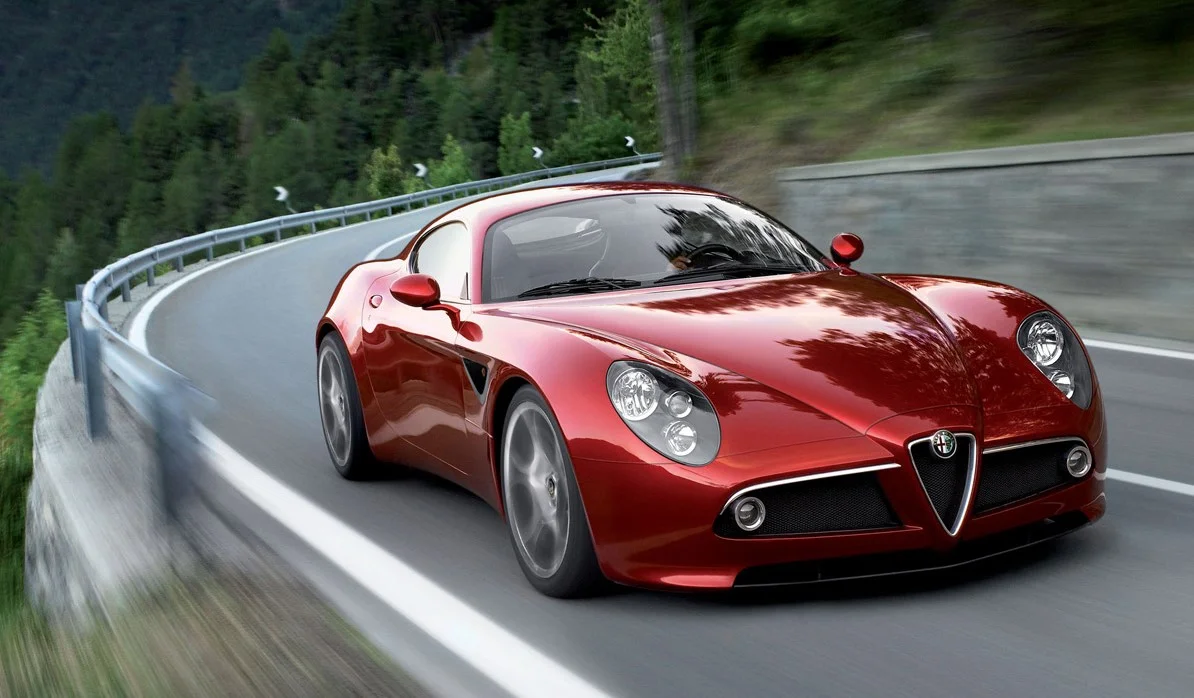
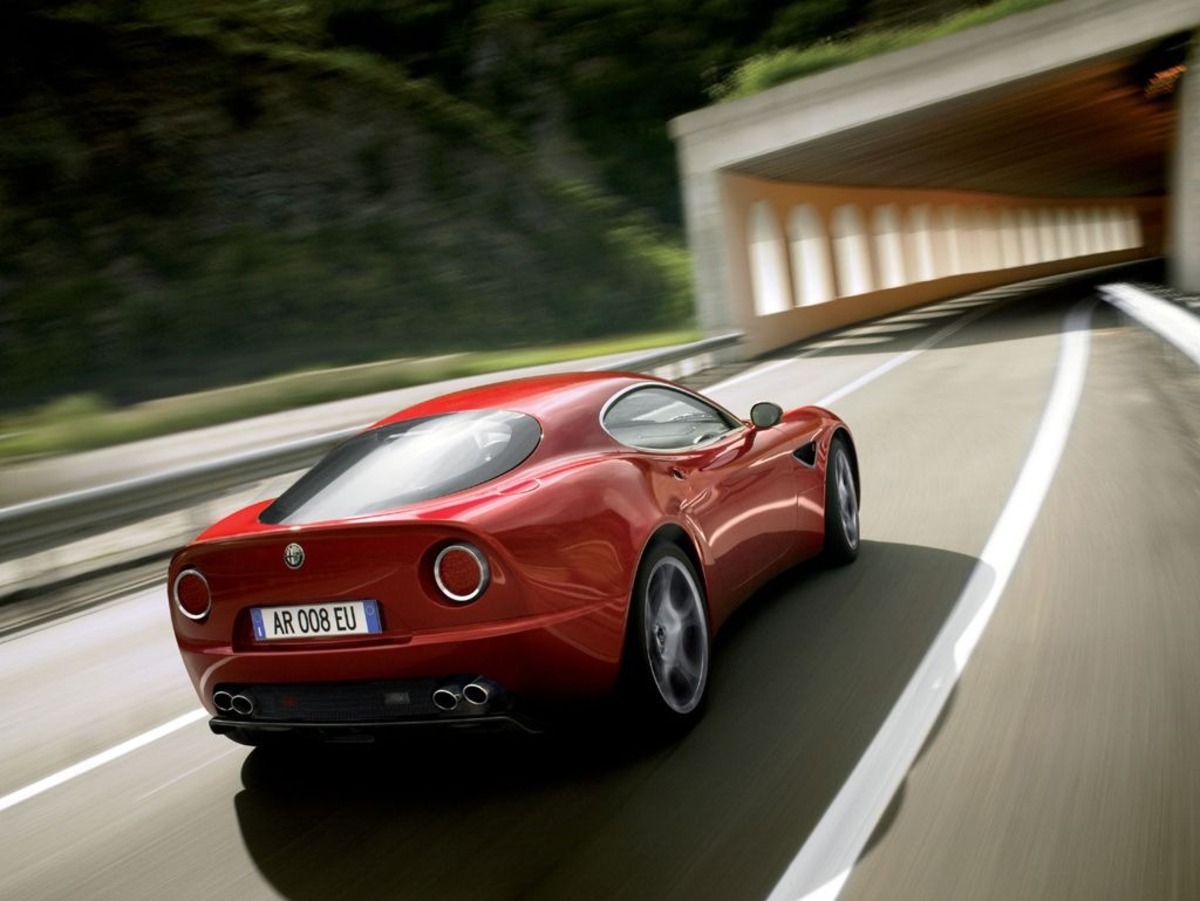
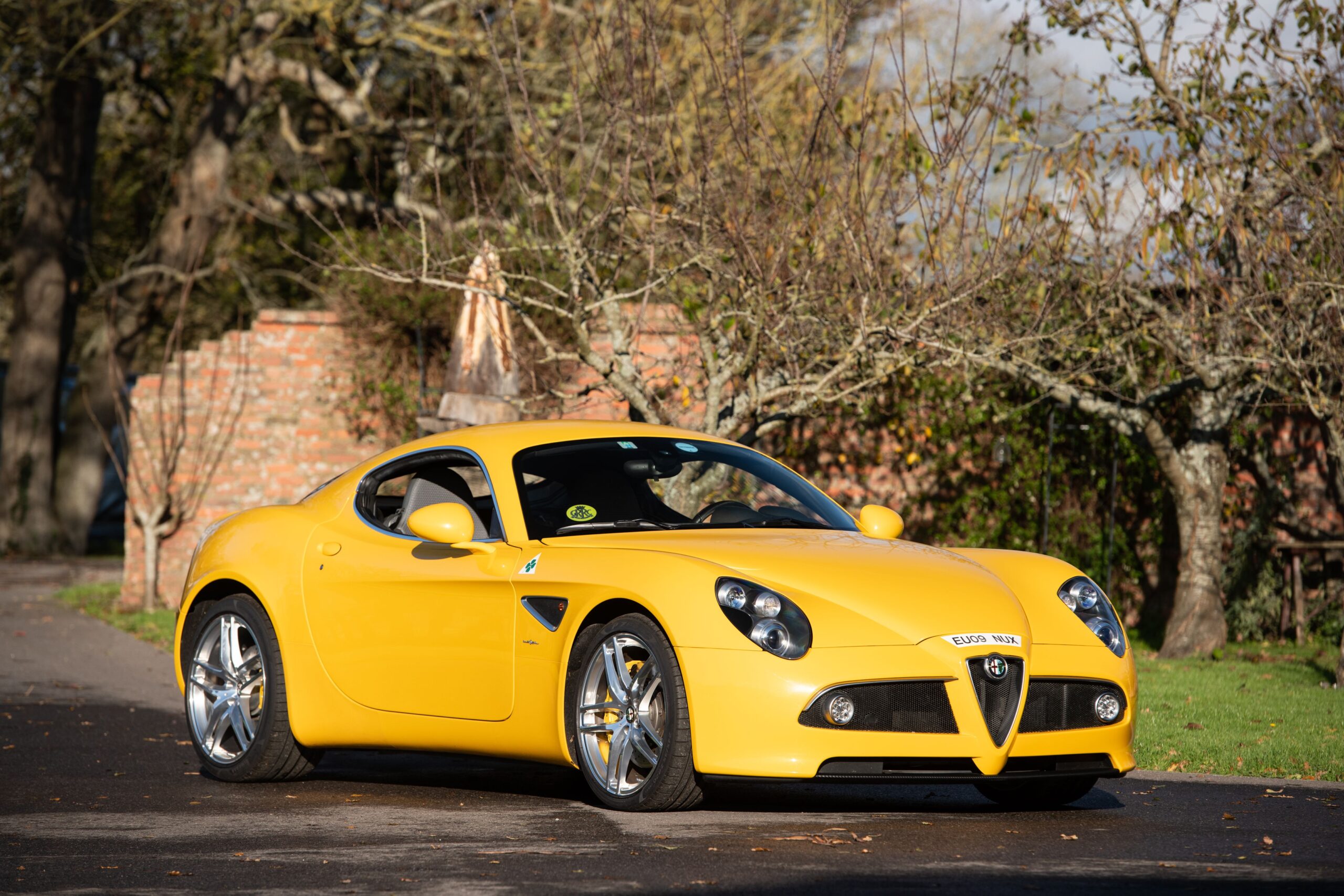
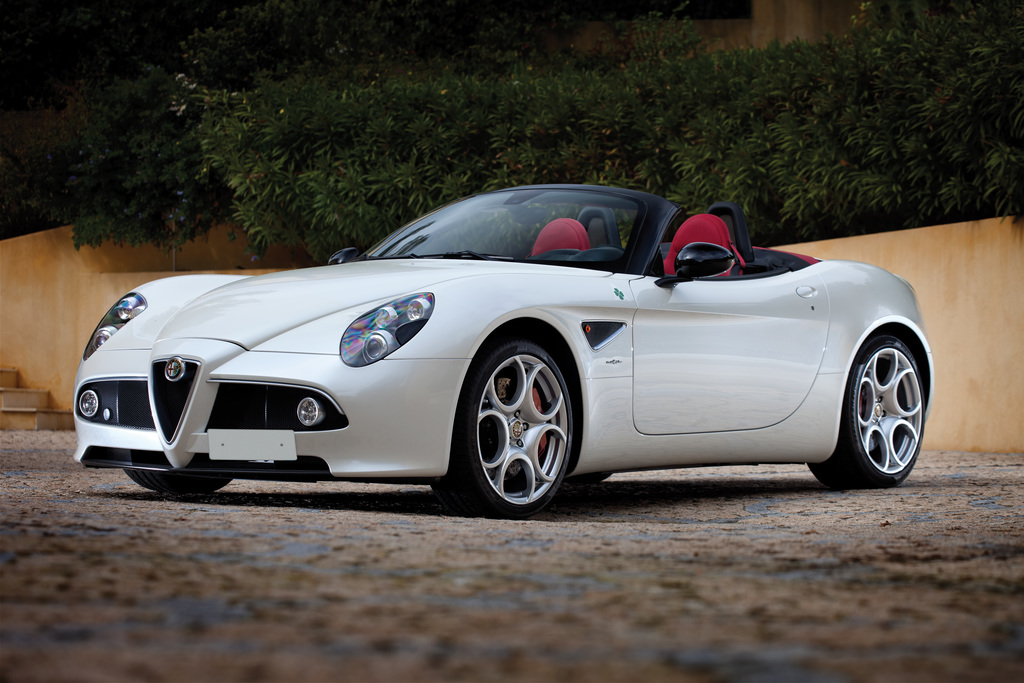
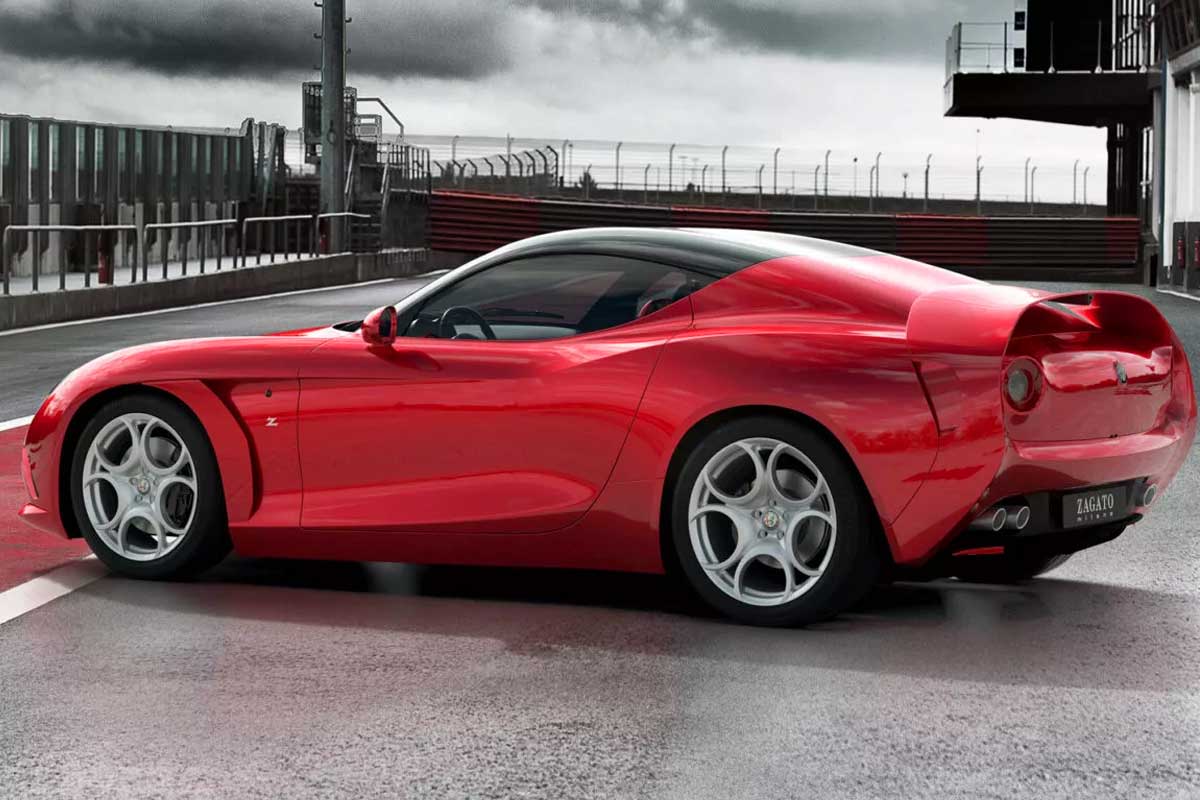
When the executives at Alfa Romeo decided to revive the legendary 8C moniker for the 2007 Competizione, the technical execution had to bear the immense historical weight of Jano’s original spirit while fully embracing 21st-century exotic architecture. The resulting car was a triumphant exercise in unfiltered automotive passion. Designed in-house at the Alfa Romeo Centro Stile under the visionary guidance of Wolfgang Egger, the 8C Competizione utilized a full carbon-fiber body. It was a sensual, retro-futuristic homage to the 1960s Alfa Romeo 33 Stradale and the Giulia TZ, featuring a flawless teardrop profile, a pronounced V-shaped scudetto grille, and muscular rear haunches that looked incredibly potent even at a standstill. Beneath this breathtaking carbon skin lay a shortened steel chassis heavily derived from Maserati. However, the true heartbeat of the modern 8C was a glorious 4.7-liter, cross-plane crankshaft, naturally aspirated V8 assembled by Ferrari in Maranello. Producing 450 horsepower and 347 lb-ft of torque, it was mated to a six-speed transaxle automated manual gearbox mounted at the rear, granting the coupe a near-perfect 49/51 weight distribution. Inside the cabin, the 8C Competizione was a bespoke Italian suit tailored exclusively for the driver. The interior was awash in rich Poltrona Frau leather, exposed woven carbon fiber, and machined billet aluminium. Yet, for all its visual and tactile beauty, the 2007 8C is perhaps most revered for its exhaust note. Unshackled by modern turbochargers, it emitted one of the greatest internal combustion symphonies ever orchestrated—a deep, resonant, crackling bellow that echoed off tunnel walls and instantly justified the vehicle’s exorbitant price tag.
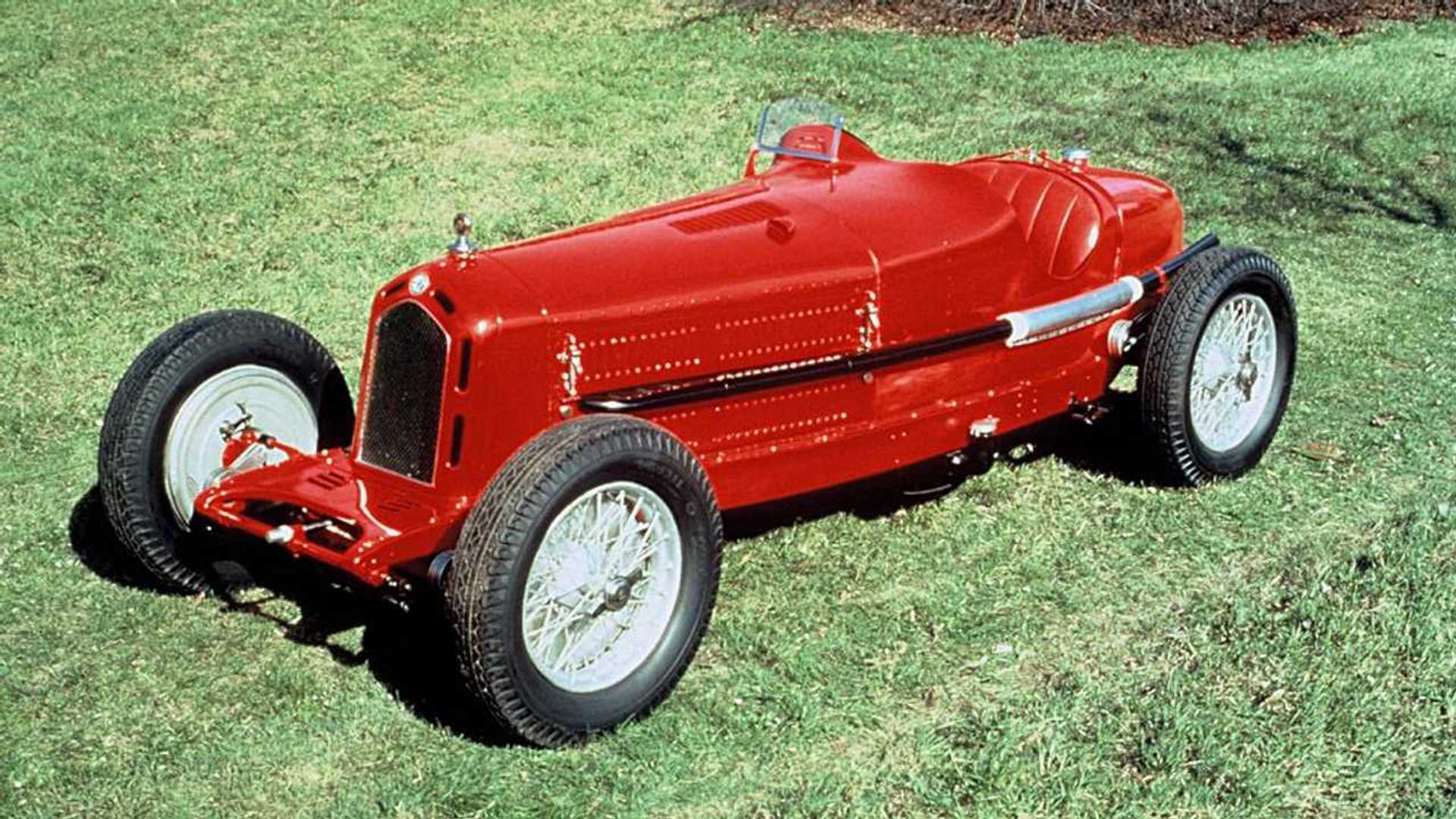
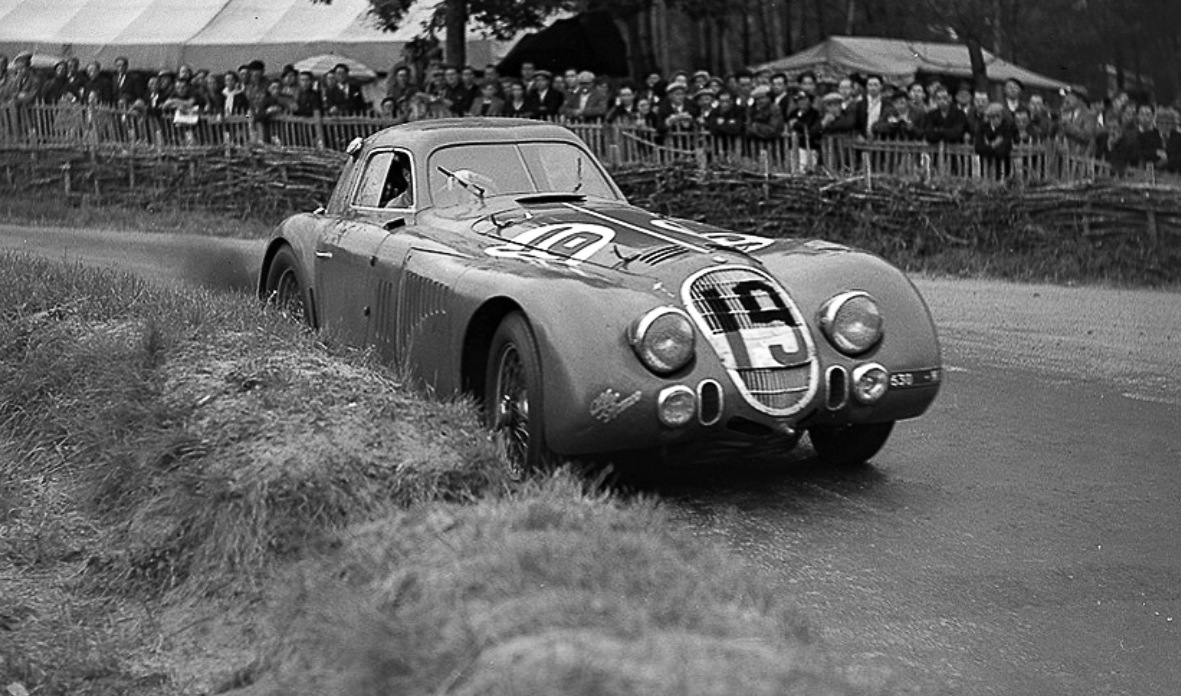
The competitive history of the original pre-war 8C models reads like a mythological epic, practically writing the foundational chapters of the Alfa Romeo racing legend. The 8C 2300 was, quite simply, the most formidable sports racing car on the planet during its tenure. It won the punishing Targa Florio on its 1931 debut, proving its unburstable reliability right out of the gate. It then proceeded to conquer the 24 Hours of Le Mans for four consecutive years, from 1931 to 1934, piloted by early endurance legends such as Raymond Sommer, Luigi Chinetti, and Tazio Nuvolari. Furthermore, Enzo Ferrari, acting as the manager of Alfa Romeo’s quasi-works racing team, utilized the 8C—specifically the short-wheelbase Monza and the later 8C 2600 iterations—to utterly dominate the Mille Miglia. One cannot discuss the legacy of the 8C without invoking the spirit of Nuvolari, the ‘Flying Mantuan’. His drives in the 8C 2300 Monza—a stripped-back, Grand Prix-focused variant without fenders or headlights—were the stuff of pure legend. His staggering victory at the 1932 Monaco Grand Prix, where he out-dueled the mighty Bugattis through the tight streets of the principality, remains one of the greatest drives in motorsport history. The 8C 2600 took this dominance a step further, eventually providing the vital developmental stepping stone to Vittorio Jano’s immortal Tipo B (P3) Monoposto Grand Prix car. Commercially, selling these rolling 8C chassis to wealthy aristocrats funded the racing division’s exploits, creating a beautiful, symbiotic relationship between the racetrack and the grand boulevards of Paris, London, and Milan.
Fast forward to the 21st century, and the impact of the 8C Competizione was distinctly cultural, emotional, and commercial, rather than strictly competitive. Limited to a strictly controlled production run of just 500 coupes and 500 spiders, it was never intended to conquer the Mulsanne Straight or set lap records at the Nürburgring. Instead, it served as a vital, highly effective halo car, single-handedly re-establishing Alfa Romeo’s prestige on the global stage and signaling the brand’s long-awaited, triumphant return to the United States market after a decades-long absence. It was an instant blue-chip collectible, a car purchased for its breathtaking aesthetic presence and operatic engine rather than absolute lateral grip.
Looking at the lineage as a cohesive whole, the 8C model line occupies a sovereign, untouchable place in the pantheon of automobilism. The pre-war 8C 2300 ,2600 and 2900 models are unquestionable royalty, representing the absolute apex of 1930s sports car engineering and rightfully commanding eight-figure sums at auction today. The 2007 Competizione, meanwhile, proved that a modern Alfa Romeo could still channel the unbridled passion, the sonic fury, and the aesthetic brilliance of its ancestors in an increasingly digitized world. The 8C nameplate distills the very essence of the Alfa Romeo mythos—a bloodline of magnificent, eight-cylinder masterpieces that prioritize soul, sound, and style above all else.
Portal
Model line
Model generation
Predecessor
Sucessor
Brand
Produced from
Vehicle category
Portal
Model line
Model generation
Predecessor
Sucessor
About this model
The alphanumeric designation ‘8C’ does not merely signify an engine configuration within the historical archives of Alfa Romeo; it is a sacred incantation that conjures the absolute zenith of Italian automotive romance and motorsport dominance. To fully comprehend the gravity of the 8C model line, one must journey back to the early 1930s, an era when racing was a lethal, dust-choked pursuit of national pride. Alfa Romeo’s brilliant chief engineer, Vittorio Jano, had already established the marque’s reputation with the magnificent 6C series, but the landscape of Grand Prix and sports car racing was rapidly shifting. The lightweight agility of the 6C was beginning to face overwhelming brute force from the massive, supercharged Mercedes-Benz SSK engineered by Ferdinand Porsche, and the exquisite, twin-cam technical perfection of Ettore Bugatti’s Type 51. Jano recognized that to maintain Alfa Romeo’s absolute supremacy, a radical escalation was required. Thus, the 8C was born—a lineage that debuted in 1931 as the 8C 2300, evolved into the more muscular 8C 2600 by 1933, and then, after laying dormant for over seven decades, was spectacularly resurrected in 2007 as the 8C Competizione. This model line represents the alpha and omega of the brand’s halo vehicles, connecting the grease-stained, heroic days of Enzo Ferrari’s original Scuderia to the pristine, carbon-fiber realities of modern grand touring.
To examine the engineering architecture of the 1930s 8C is to look upon a masterpiece of pre-war metallurgy and pragmatic problem-solving. Jano did not simply elongate his existing six-cylinder engine to create a straight-eight; he knew that long crankshafts were notoriously prone to fatal torsional vibration at high RPMs. His solution was brilliant: he effectively bolted two four-cylinder alloy blocks together. Rather than taking the drive for the twin overhead camshafts and the Roots-type supercharger from the front of the engine, he placed the gear train dead in the center of the two blocks. This effectively split the crankshaft in half conceptually, ensuring immense strength and reliability. Initially displacing 2,336cc in the 8C 2300, this supercharged jewel produced around 140 brake horsepower in race trim, an astonishing figure for the era. By 1933, the engine was bored out to 2,556cc for the 8C 2600, unlocking even greater torque and top-end ferocity. The chassis supporting this magnificent powerplant was a traditional but highly refined steel ladder frame, utilizing semi-elliptic leaf springs and adjustable friction shock absorbers. Stopping power came from massive, heavily finned aluminium drum brakes that were mechanical works of art. The exterior aesthetics were dictated by the elite coachbuilders of the era. Carrozzeria Zagato crafted the functional, incredibly aggressive, and lightweight Spider bodies intended for the rigors of the Mille Miglia and Le Mans, while houses like Touring and Castagna draped the long-wheelbase chassis in breathtakingly elegant coupe and cabriolet forms, creating the ultimate status symbols for Europe’s pre-war aristocracy.
When the executives at Alfa Romeo decided to revive the legendary 8C moniker for the 2007 Competizione, the technical execution had to bear the immense historical weight of Jano’s original spirit while fully embracing 21st-century exotic architecture. The resulting car was a triumphant exercise in unfiltered automotive passion. Designed in-house at the Alfa Romeo Centro Stile under the visionary guidance of Wolfgang Egger, the 8C Competizione utilized a full carbon-fiber body. It was a sensual, retro-futuristic homage to the 1960s Alfa Romeo 33 Stradale and the Giulia TZ, featuring a flawless teardrop profile, a pronounced V-shaped scudetto grille, and muscular rear haunches that looked incredibly potent even at a standstill. Beneath this breathtaking carbon skin lay a shortened steel chassis heavily derived from Maserati. However, the true heartbeat of the modern 8C was a glorious 4.7-liter, cross-plane crankshaft, naturally aspirated V8 assembled by Ferrari in Maranello. Producing 450 horsepower and 347 lb-ft of torque, it was mated to a six-speed transaxle automated manual gearbox mounted at the rear, granting the coupe a near-perfect 49/51 weight distribution. Inside the cabin, the 8C Competizione was a bespoke Italian suit tailored exclusively for the driver. The interior was awash in rich Poltrona Frau leather, exposed woven carbon fiber, and machined billet aluminium. Yet, for all its visual and tactile beauty, the 2007 8C is perhaps most revered for its exhaust note. Unshackled by modern turbochargers, it emitted one of the greatest internal combustion symphonies ever orchestrated—a deep, resonant, crackling bellow that echoed off tunnel walls and instantly justified the vehicle’s exorbitant price tag.
The competitive history of the original pre-war 8C models reads like a mythological epic, practically writing the foundational chapters of the Alfa Romeo racing legend. The 8C 2300 was, quite simply, the most formidable sports racing car on the planet during its tenure. It won the punishing Targa Florio on its 1931 debut, proving its unburstable reliability right out of the gate. It then proceeded to conquer the 24 Hours of Le Mans for four consecutive years, from 1931 to 1934, piloted by early endurance legends such as Raymond Sommer, Luigi Chinetti, and Tazio Nuvolari. Furthermore, Enzo Ferrari, acting as the manager of Alfa Romeo’s quasi-works racing team, utilized the 8C—specifically the short-wheelbase Monza and the later 8C 2600 iterations—to utterly dominate the Mille Miglia. One cannot discuss the legacy of the 8C without invoking the spirit of Nuvolari, the ‘Flying Mantuan’. His drives in the 8C 2300 Monza—a stripped-back, Grand Prix-focused variant without fenders or headlights—were the stuff of pure legend. His staggering victory at the 1932 Monaco Grand Prix, where he out-dueled the mighty Bugattis through the tight streets of the principality, remains one of the greatest drives in motorsport history. The 8C 2600 took this dominance a step further, eventually providing the vital developmental stepping stone to Vittorio Jano’s immortal Tipo B (P3) Monoposto Grand Prix car. Commercially, selling these rolling 8C chassis to wealthy aristocrats funded the racing division’s exploits, creating a beautiful, symbiotic relationship between the racetrack and the grand boulevards of Paris, London, and Milan.
Fast forward to the 21st century, and the impact of the 8C Competizione was distinctly cultural, emotional, and commercial, rather than strictly competitive. Limited to a strictly controlled production run of just 500 coupes and 500 spiders, it was never intended to conquer the Mulsanne Straight or set lap records at the Nürburgring. Instead, it served as a vital, highly effective halo car, single-handedly re-establishing Alfa Romeo’s prestige on the global stage and signaling the brand’s long-awaited, triumphant return to the United States market after a decades-long absence. It was an instant blue-chip collectible, a car purchased for its breathtaking aesthetic presence and operatic engine rather than absolute lateral grip.
Looking at the lineage as a cohesive whole, the 8C model line occupies a sovereign, untouchable place in the pantheon of automobilism. The pre-war 8C 2300 ,2600 and 2900 models are unquestionable royalty, representing the absolute apex of 1930s sports car engineering and rightfully commanding eight-figure sums at auction today. The 2007 Competizione, meanwhile, proved that a modern Alfa Romeo could still channel the unbridled passion, the sonic fury, and the aesthetic brilliance of its ancestors in an increasingly digitized world. The 8C nameplate distills the very essence of the Alfa Romeo mythos—a bloodline of magnificent, eight-cylinder masterpieces that prioritize soul, sound, and style above all else.
Generations
Generations of this Model Line
Submodels