Bentley Speed 8
Brand
Produced from
Vehicle category
Portal
Model line
Model generation
Predecessor
Sucessor
About this model
For 71 years, the name Bentley at Le Mans was not a reality, but a mythology. It was a sepia-toned legend of brawling, British-green giants, of “Bentley Boys” like Woolf Barnato and Tim Birkin, of a dynasty that had won the great race five times and then vanished, its sporting soul dormant since 1930. When the Volkswagen Group purchased the Crewe manufacturer in 1998, they inherited this powerful, sleeping legacy. To re-awaken it, to give credibility to the new generation of road cars, there was only one possible course of action: they had to go back to Le Mans. But this was 2001, the era of the all-conquering Audi R8, a sister car within the same VW Group. Bentley’s return would be a masterful piece of engineering, politics, and brand-building, culminating in one of the most perfect, surgical, and successful racing programs in modern history. The weapon for this assault was the Bentley Speed 8.
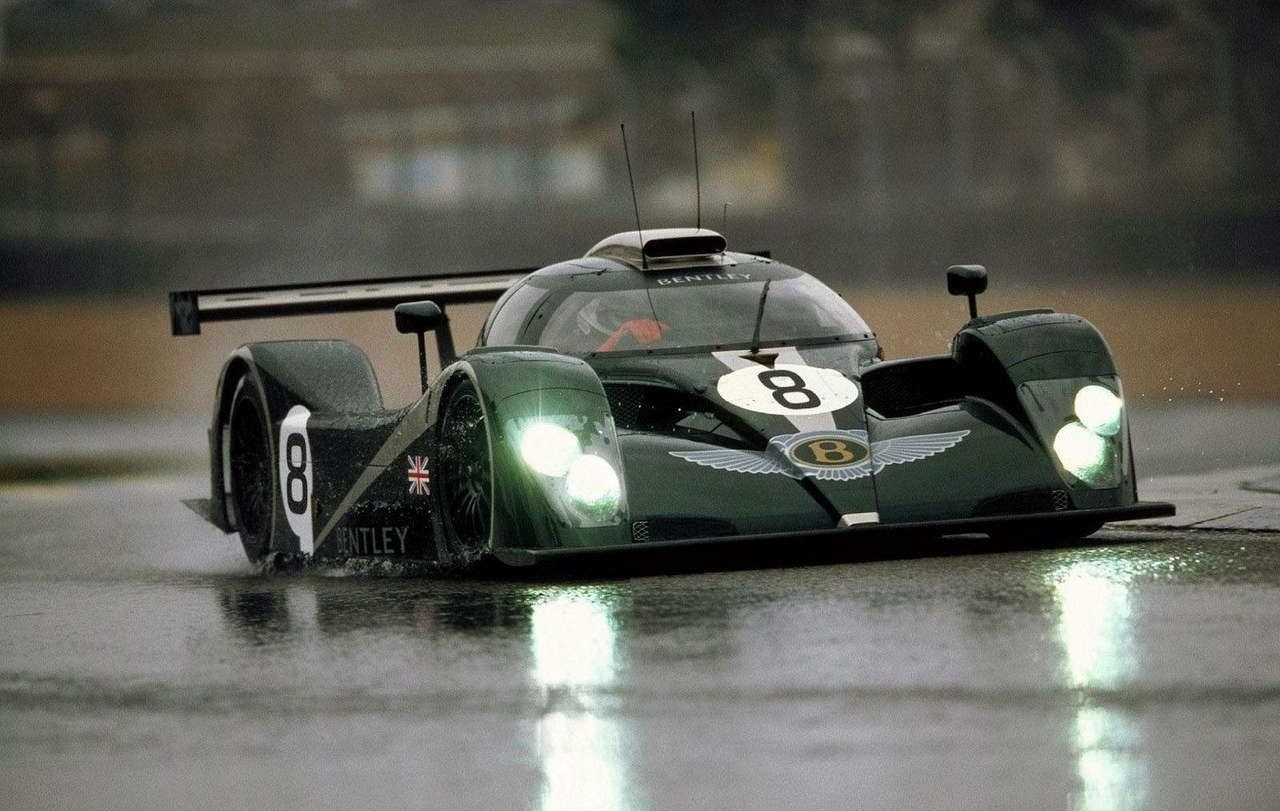
The project began not as the Speed 8, but as the EXP Speed 8. This was the car for the 2001 “exploratory” season, designed and run for Bentley by Racing Technology Norfolk (RTN). From the outset, its lineage was clear. The dominant car of the era was the Audi R8, and the EXP Speed 8 was its British cousin. It used the same magnificent, 3.6-litre, twin-turbocharged FSI V8 engine and was based on the same carbon-fibre monocoque chassis. But this was no mere re-badging. The Bentley was designed to compete in the LMGTP (Le Mans Grand Touring Prototype) class, which mandated a closed-roof, a key differentiator from the open-top LMP900 Audi. This required a completely different aerodynamic philosophy, penned by Peter Ellery. The closed cockpit, clad in iconic British Racing Green, was theoretically more efficient on the long Mulsanne straight, but it presented enormous cooling challenges. The chassis was heavily modified to accept the new roof structure and bespoke bodywork.
This was a “toe-in-the-water” exercise, but it was an immensely professional one. The driver lineup included original “Bentley Boy” descendants and established stars like Martin Brundle and Andy Wallace. At the 2001 24 Hours of Le Mans, two EXP Speed 8s entered. They ran against the factory Audi R8s. The result was a sensation. The #8 car finished 3rd overall, claiming the LMGTP class victory and putting a Bentley on the Le Mans podium for the first time in 71 years. The program returned in 2002, a one-car effort designed to further develop the concept. After a shakedown at the 12 Hours of Sebring (finishing 5th), the lone EXP Speed 8 finished a strong 4th overall at Le Mans, but it was clear that to beat the R8s, the Bentley would have to become its own, unique machine.
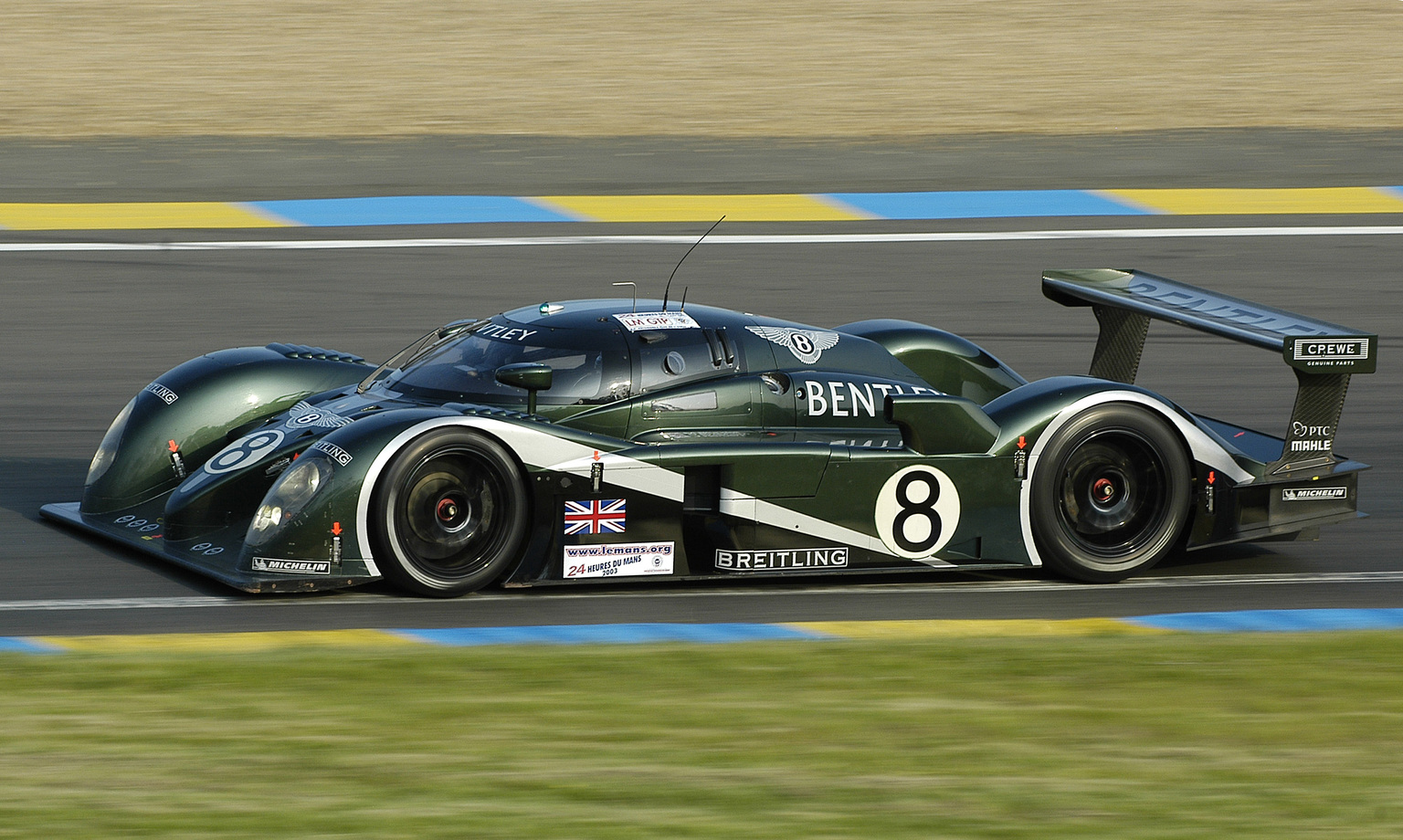
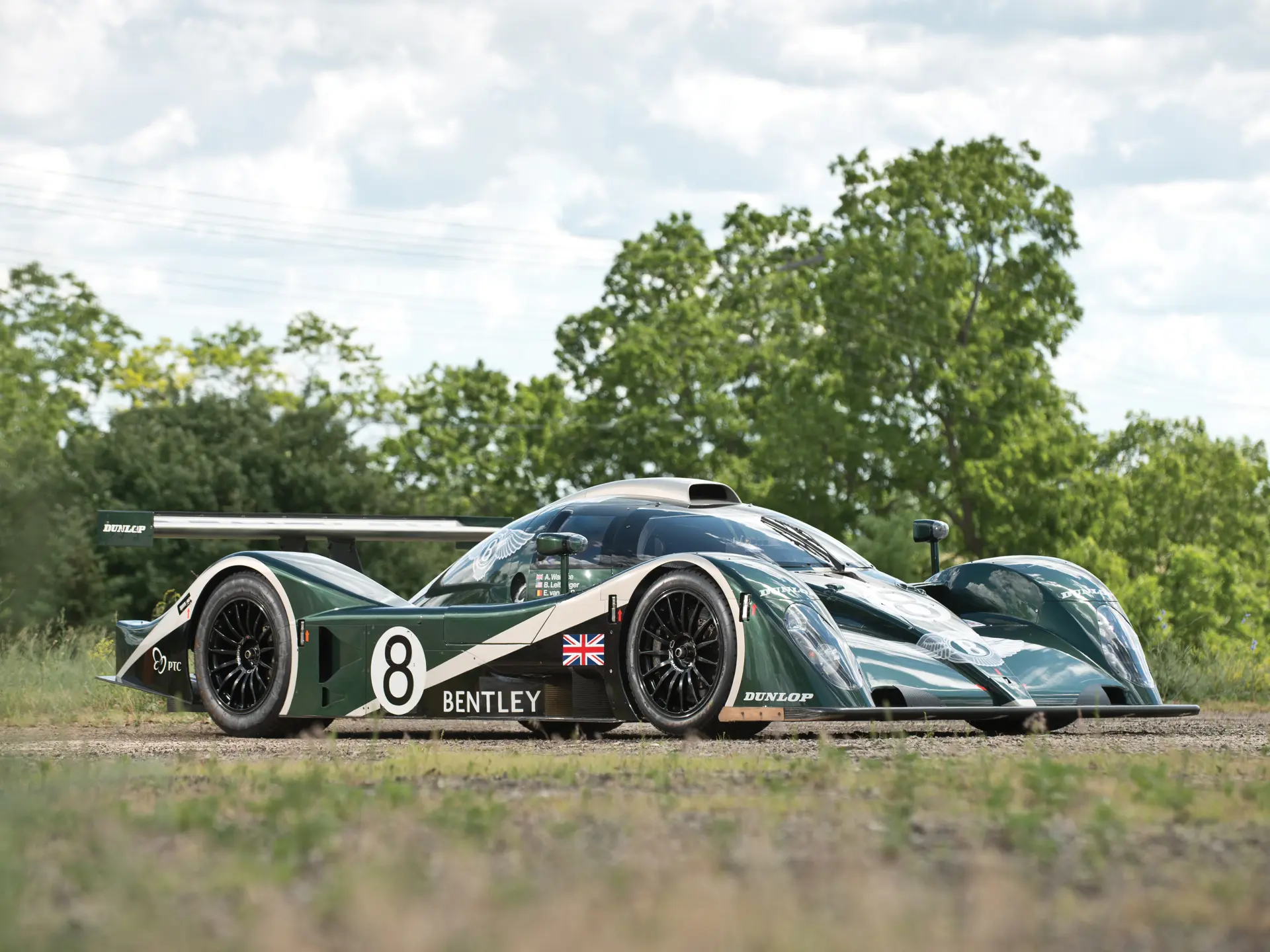
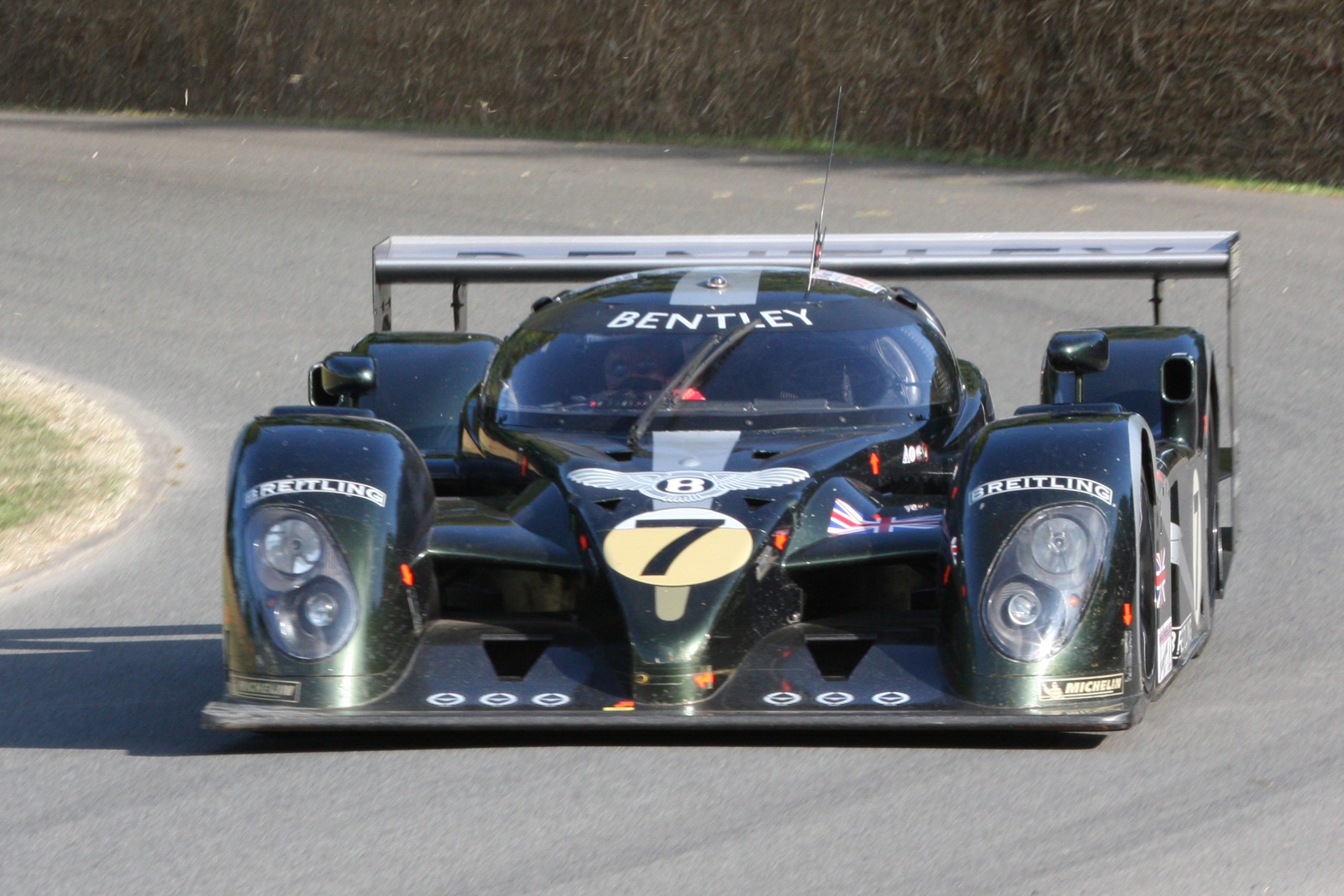
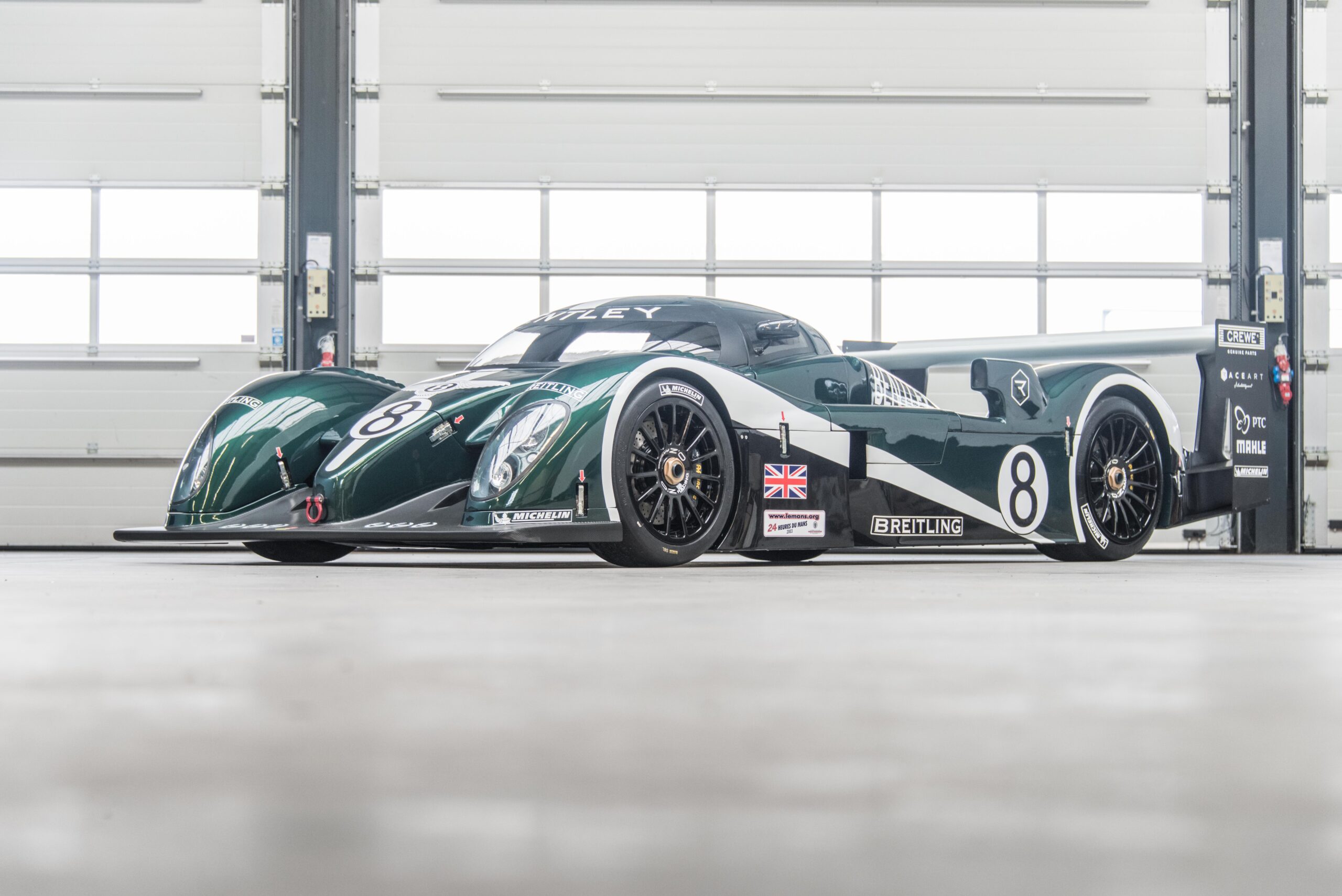
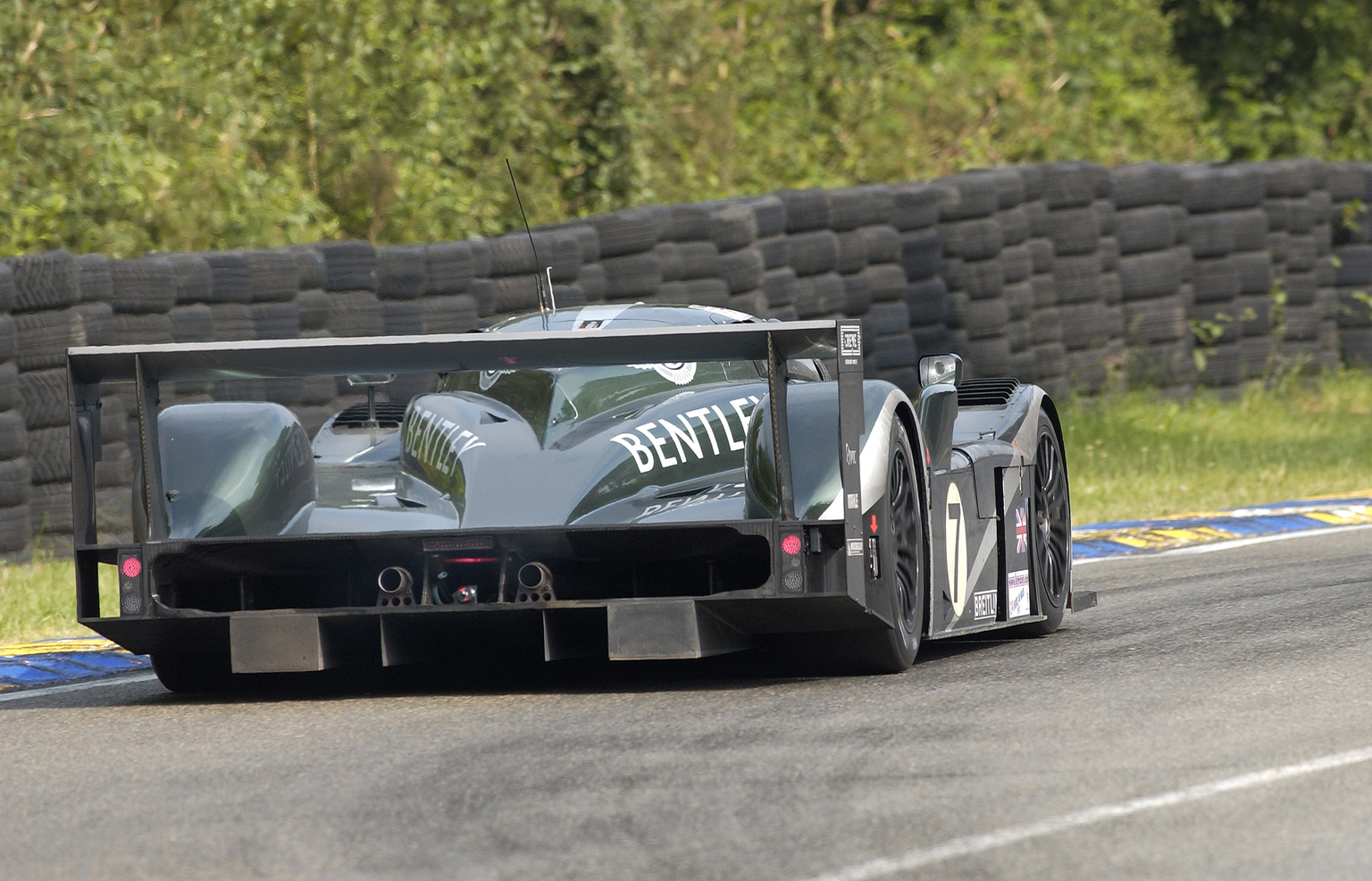
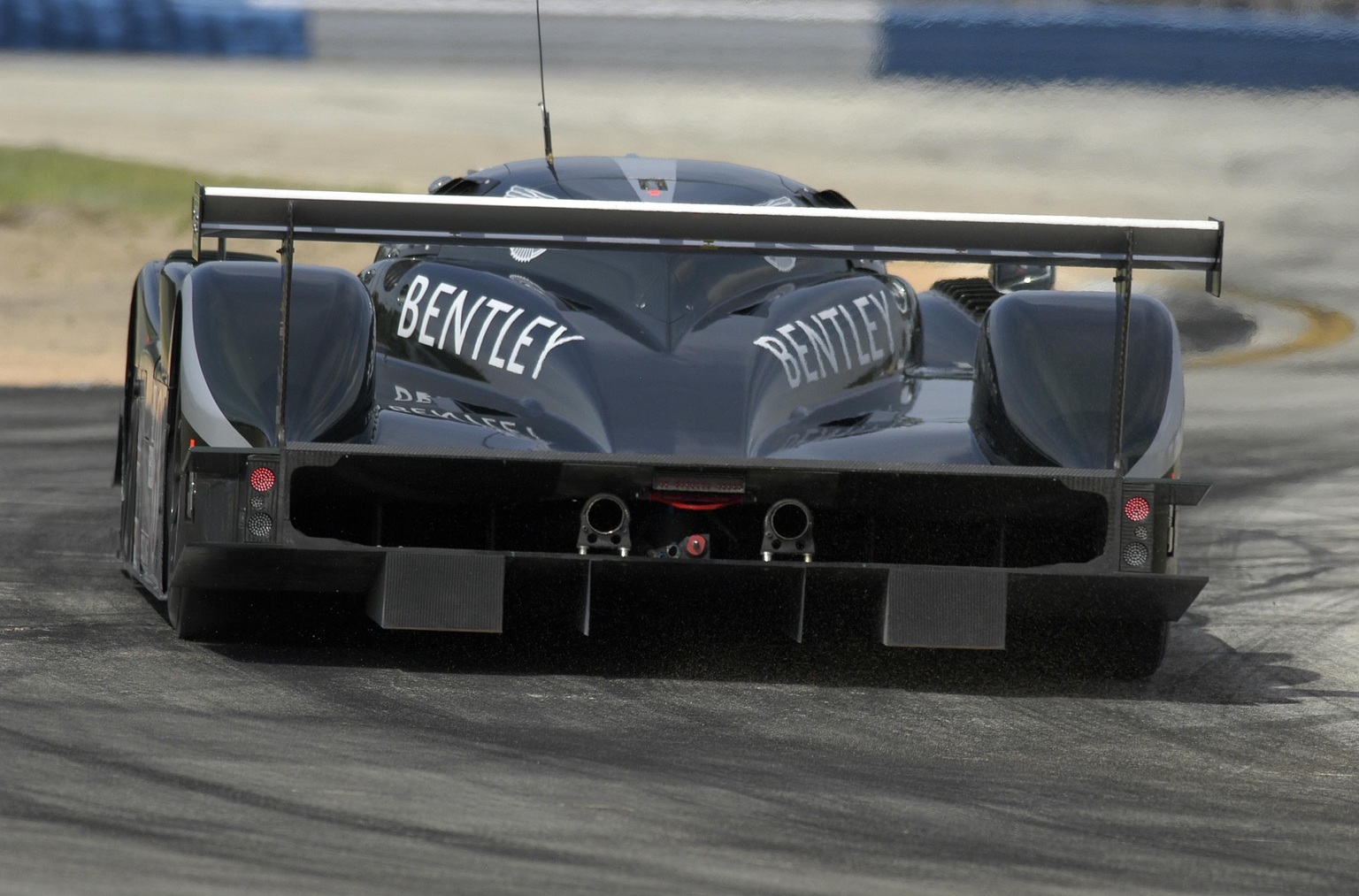
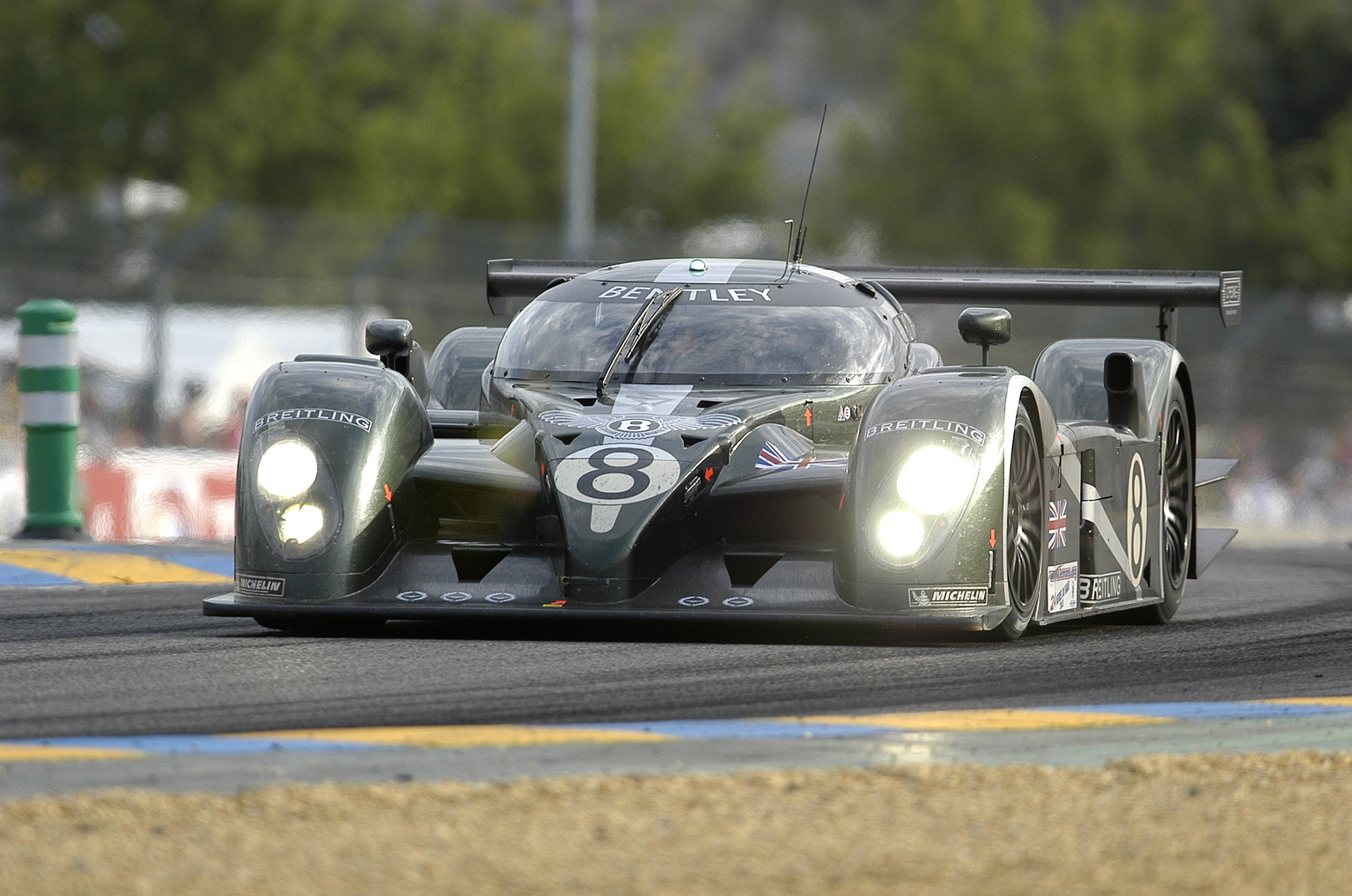
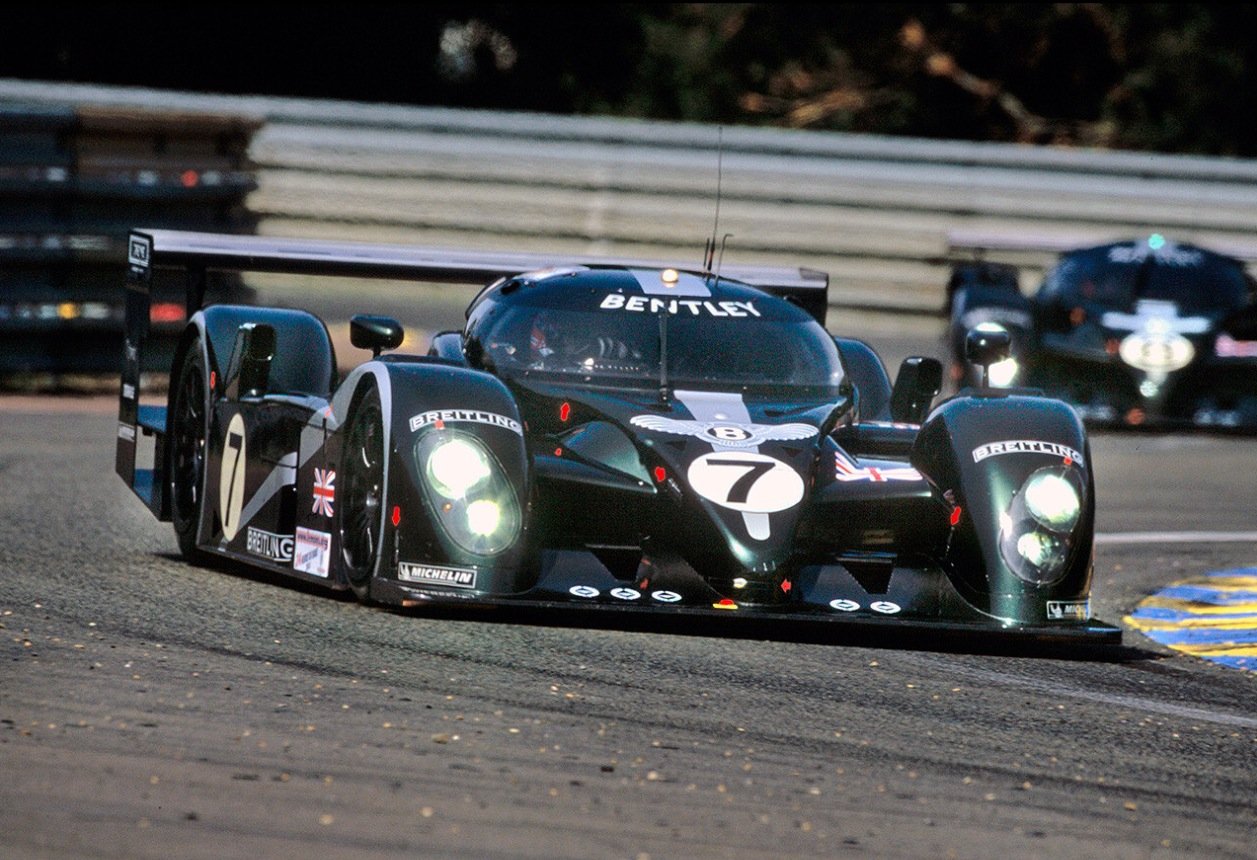
For 2003, the gloves were off. The VW Group made the internal call: this would be Bentley’s year. The “Works” Audi Joest team officially sat the race out, leaving only “customer” R8s to compete. Bentley, meanwhile, did not just return with the old car; they unveiled the Speed 8. This was a different beast entirely. It was the ultimate evolution of the concept, a new car that was lighter, stiffer, and aerodynamically superior. The chassis was a bespoke, new-from-the-ground-up carbon monocoque. The engine, the heart of the Audi, was given a Bentley-specific evolution: it was bored out to 4.0 litres, producing over 615 hp (with restrictors) and a fatter torque curve. The car’s visual profile was lower, sleeker, and more aggressive. This was no longer just an Audi cousin; it was a purebred contender, arguably the finest prototype of its generation.
The 2003 Le Mans assault was a display of utter dominance. Two cars were entered, and the driver lineups were a dream team. The #7 car featured “Mr. Le Mans” himself, Tom Kristensen (famously “loaned” from Audi), Dindo Capello, and Guy Smith. The #8 car had a trio of ex-F1 stars: Mark Blundell, David Brabham, and Johnny Herbert. The two green-and-white machines were in a class of their own. They qualified 1-2, with the #7 on pole. In the race, they were untouchable, running a fast, flawless, and perfectly orchestrated 24 hours. The only challenge came from the “customer” Audi R8s, but the Speed 8s were simply faster and more reliable. At 4 p.m. on Sunday, the #7 Speed 8, with Guy Smith at the wheel, crossed the line to win the 24 Hours of Le Mans. The sister #8 car was right behind it in second place. It was a perfect 1-2 finish, 73 years after Bentley’s last victory.
The program’s legacy is one of perfection. It achieved its goal in just three years: podium on debut, development, and a dominant 1-2 victory. Having unequivocally restored Bentley’s sporting credentials just as the all-important Continental GT road car was launching, the VW Group shut the program down immediately. The Speed 8 never raced again. It remains one of the most beautiful and, thanks to its V8 engine, one of the best-sounding prototypes of its era. It was not just a Le Mans winner; it was the car that bridged a 73-year gap, a machine that connected the mythology of the “Bentley Boys” to the 21st century and, in doing so, became a legend in its own right.
Portal
Model line
Model generation
Predecessor
Sucessor
Brand
Produced from
Vehicle category
Portal
Model line
Model generation
Predecessor
Sucessor
About this model
For 71 years, the name Bentley at Le Mans was not a reality, but a mythology. It was a sepia-toned legend of brawling, British-green giants, of “Bentley Boys” like Woolf Barnato and Tim Birkin, of a dynasty that had won the great race five times and then vanished, its sporting soul dormant since 1930. When the Volkswagen Group purchased the Crewe manufacturer in 1998, they inherited this powerful, sleeping legacy. To re-awaken it, to give credibility to the new generation of road cars, there was only one possible course of action: they had to go back to Le Mans. But this was 2001, the era of the all-conquering Audi R8, a sister car within the same VW Group. Bentley’s return would be a masterful piece of engineering, politics, and brand-building, culminating in one of the most perfect, surgical, and successful racing programs in modern history. The weapon for this assault was the Bentley Speed 8.
The project began not as the Speed 8, but as the EXP Speed 8. This was the car for the 2001 “exploratory” season, designed and run for Bentley by Racing Technology Norfolk (RTN). From the outset, its lineage was clear. The dominant car of the era was the Audi R8, and the EXP Speed 8 was its British cousin. It used the same magnificent, 3.6-litre, twin-turbocharged FSI V8 engine and was based on the same carbon-fibre monocoque chassis. But this was no mere re-badging. The Bentley was designed to compete in the LMGTP (Le Mans Grand Touring Prototype) class, which mandated a closed-roof, a key differentiator from the open-top LMP900 Audi. This required a completely different aerodynamic philosophy, penned by Peter Ellery. The closed cockpit, clad in iconic British Racing Green, was theoretically more efficient on the long Mulsanne straight, but it presented enormous cooling challenges. The chassis was heavily modified to accept the new roof structure and bespoke bodywork.
This was a “toe-in-the-water” exercise, but it was an immensely professional one. The driver lineup included original “Bentley Boy” descendants and established stars like Martin Brundle and Andy Wallace. At the 2001 24 Hours of Le Mans, two EXP Speed 8s entered. They ran against the factory Audi R8s. The result was a sensation. The #8 car finished 3rd overall, claiming the LMGTP class victory and putting a Bentley on the Le Mans podium for the first time in 71 years. The program returned in 2002, a one-car effort designed to further develop the concept. After a shakedown at the 12 Hours of Sebring (finishing 5th), the lone EXP Speed 8 finished a strong 4th overall at Le Mans, but it was clear that to beat the R8s, the Bentley would have to become its own, unique machine.
For 2003, the gloves were off. The VW Group made the internal call: this would be Bentley’s year. The “Works” Audi Joest team officially sat the race out, leaving only “customer” R8s to compete. Bentley, meanwhile, did not just return with the old car; they unveiled the Speed 8. This was a different beast entirely. It was the ultimate evolution of the concept, a new car that was lighter, stiffer, and aerodynamically superior. The chassis was a bespoke, new-from-the-ground-up carbon monocoque. The engine, the heart of the Audi, was given a Bentley-specific evolution: it was bored out to 4.0 litres, producing over 615 hp (with restrictors) and a fatter torque curve. The car’s visual profile was lower, sleeker, and more aggressive. This was no longer just an Audi cousin; it was a purebred contender, arguably the finest prototype of its generation.
The 2003 Le Mans assault was a display of utter dominance. Two cars were entered, and the driver lineups were a dream team. The #7 car featured “Mr. Le Mans” himself, Tom Kristensen (famously “loaned” from Audi), Dindo Capello, and Guy Smith. The #8 car had a trio of ex-F1 stars: Mark Blundell, David Brabham, and Johnny Herbert. The two green-and-white machines were in a class of their own. They qualified 1-2, with the #7 on pole. In the race, they were untouchable, running a fast, flawless, and perfectly orchestrated 24 hours. The only challenge came from the “customer” Audi R8s, but the Speed 8s were simply faster and more reliable. At 4 p.m. on Sunday, the #7 Speed 8, with Guy Smith at the wheel, crossed the line to win the 24 Hours of Le Mans. The sister #8 car was right behind it in second place. It was a perfect 1-2 finish, 73 years after Bentley’s last victory.
The program’s legacy is one of perfection. It achieved its goal in just three years: podium on debut, development, and a dominant 1-2 victory. Having unequivocally restored Bentley’s sporting credentials just as the all-important Continental GT road car was launching, the VW Group shut the program down immediately. The Speed 8 never raced again. It remains one of the most beautiful and, thanks to its V8 engine, one of the best-sounding prototypes of its era. It was not just a Le Mans winner; it was the car that bridged a 73-year gap, a machine that connected the mythology of the “Bentley Boys” to the 21st century and, in doing so, became a legend in its own right.
Generations
Generations of this model
Generations
Generations of this model
Submodels
Discover all the variants of this model
Submodels
Discover all the variants of this model
Vehicles
Legendary Vehicles
Vehicles