Chevron B16

Brand
Produced from
Vehicle category
Portal
Model line
Model generation
Predecessor
Sucessor
About this model
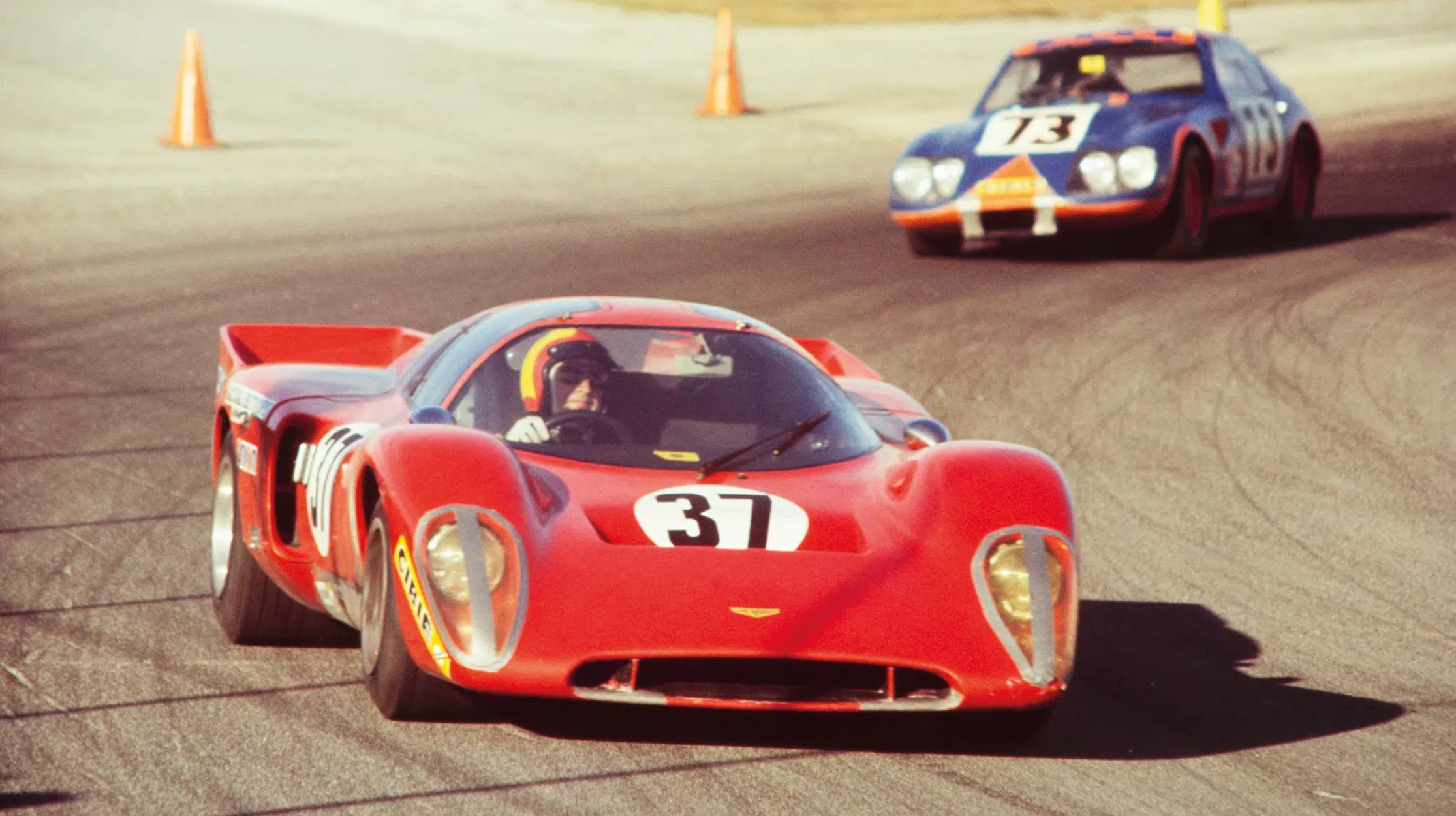
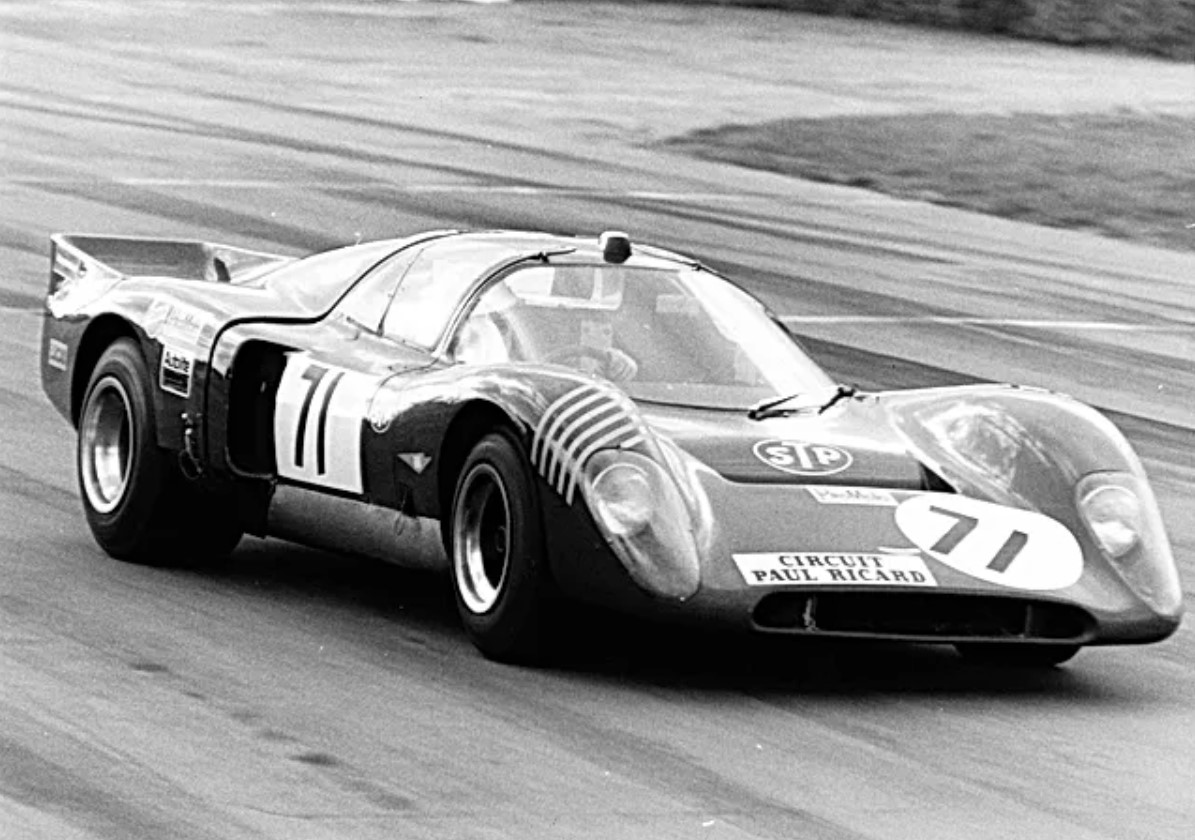
In the pantheon of automotive design, there are race cars that are effective, there are race cars that are successful, and then there are race cars that are so heartbreakingly beautiful that their speed seems almost secondary to their aesthetic. The Chevron B16 is the undisputed monarch of that third category. Unveiled in 1969, it arrived at the crescendo of the “Group 6” sports prototype era, a time when regulation loopholes and engineering freedom allowed for the creation of some of the most evocative shapes in history. While the 5.0-litre Porsche 917s and Ferrari 512s were battling for overall supremacy with brute force, a different, sharper war was being waged in the 2.0-litre class. This was the domain of the privateer, the artisan, and the garagiste. And the king of the artisans was Derek Bennett. His B16 was not merely a successor to the highly successful B8; it was a quantum leap in aerodynamic sophistication, a machine that combined the mechanical simplicity of a club racer with the visual drama of a Le Mans winner.
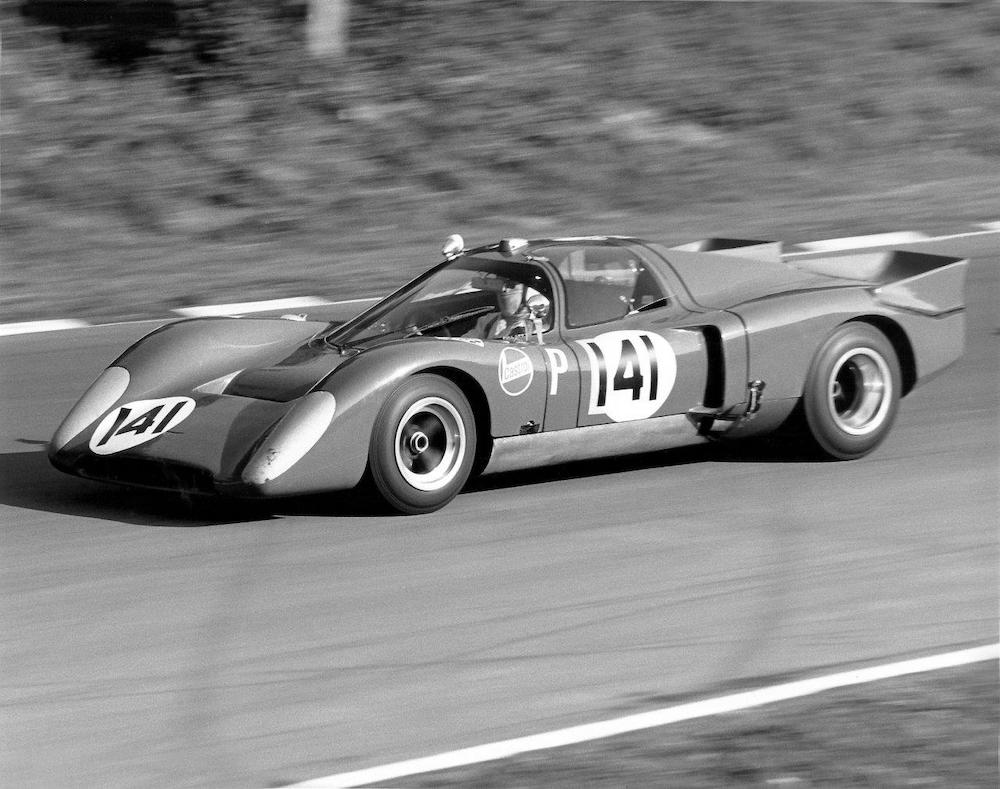
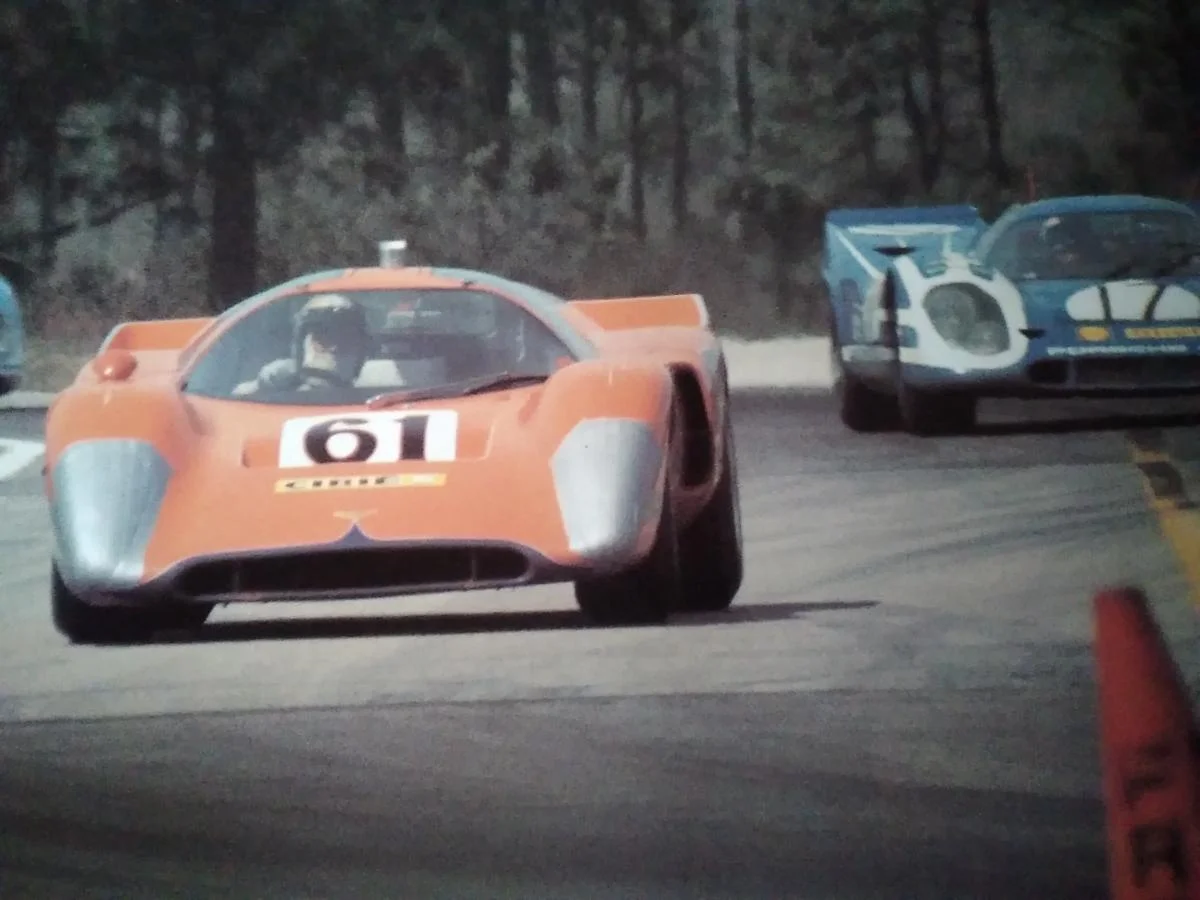
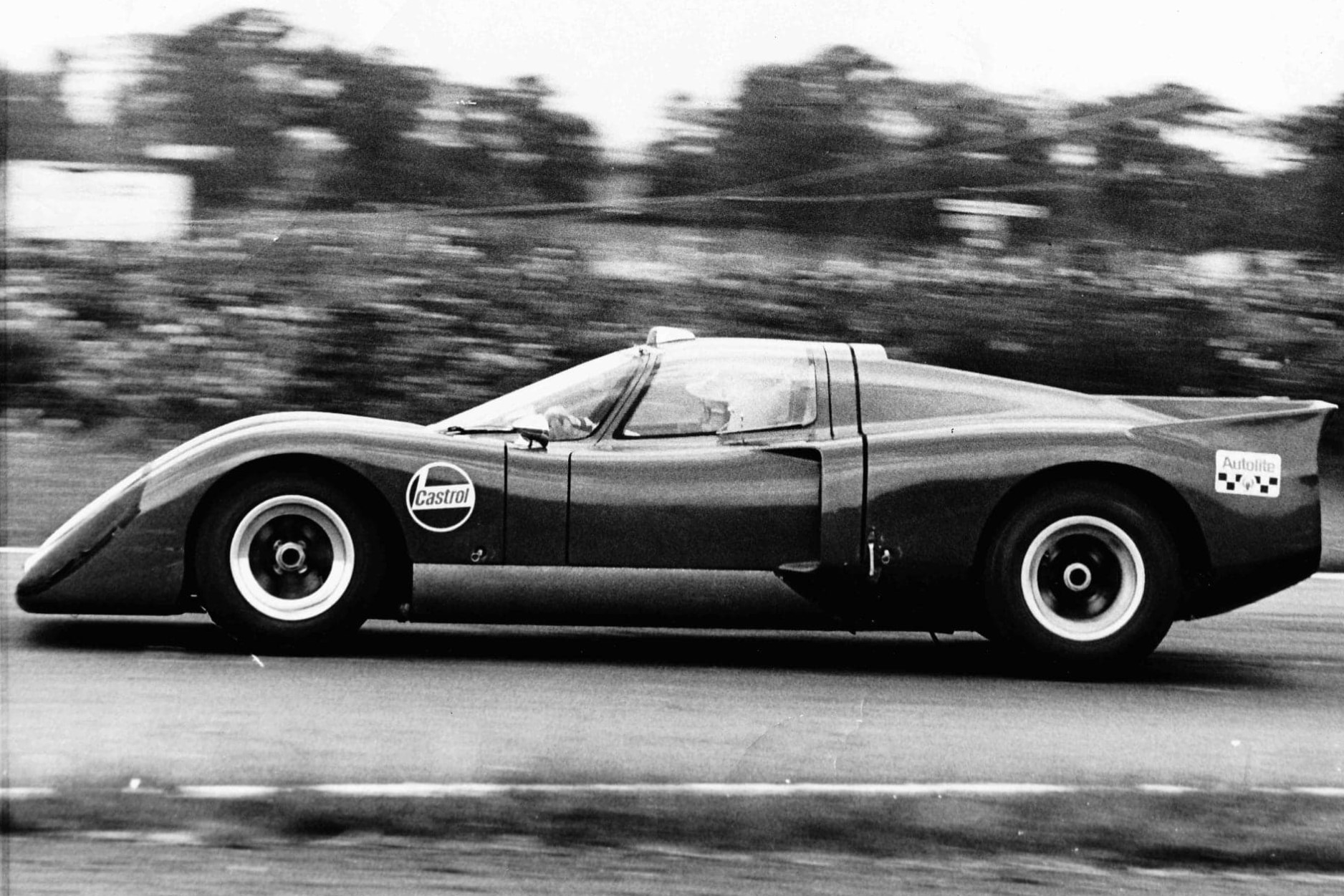
The B16 was born into a world where the distinction between a “GT” car and a “Prototype” was becoming increasingly blurred. Its predecessor, the B8, had been a rugged, handsome GT car that could punch above its weight. The B16, however, was a purebred prototype from the first pencil stroke. Bennett, a self-taught engineering genius with an intuitive grasp of fluid dynamics, penned a shape that is widely regarded as one of the most stunning ever to grace a circuit. It sat impossibly low, with a voluptuous, curvaceous cockpit canopy that seemed to melt into the rear deck. The bodywork, produced by Specialised Mouldings, was not just for show; it generated significant downforce while maintaining a low drag coefficient, essential for the high-speed circuits of Europe.
Underneath that seductive fibreglass skin lay Bennett’s signature: a tubular steel spaceframe chassis. By 1969, many top-tier manufacturers like Porsche and Lola were moving toward aluminium monocoques. Bennett, pragmatic to his core, stuck with steel. He believed that for the privateer racer—his target customer—a spaceframe was stiffer, easier to repair in a paddock, and more communicative at the limit. The suspension followed the Formula 2 trends of the day, with unequal-length wishbones and outboard coil-over dampers, providing handling that was razor-sharp yet forgiving enough for a gentleman driver to exploit.
The genius of the B16 “Model Line” lay in its engine bay. Bennett designed the rear subframe to be a modular cradle, capable of accepting a variety of four-cylinder (and occasionally rotary) powerplants. This versatility created distinct submodels with vastly different characters. The launch specification, the 1969 Chevron B16 Ford Cosworth FVA, was the “sprint” specialist. Powered by the 1.6-litre, 16-valve FVA engine derived from Formula 2, it was a high-revving screamer that produced around 220 hp at a frantic 9,000 rpm. It was this configuration that debuted at the Nürburgring 500km in 1969. Driven by Brian Redman—who famously had to slouch in the cockpit because the roofline was too low for his height—the B16 took pole position and won the race outright on its very first outing, humiliating the factory Abarths and Lolas. It was a debut that instantly cemented the car’s legend.
However, for the gruelling requirements of endurance racing, many teams opted for the Chevron B16 BMW M10. This version utilized the robust, 2.0-litre BMW block (often with an Apfelbeck or Schnitzer 16-valve head). While it lacked the frenetic top-end of the Cosworth, the BMW unit offered a mountain of torque and bombproof reliability, making it the weapon of choice for 1000km races or the 24 Hours of Le Mans. As the 2.0-litre class rules evolved, the definitive version emerged: the Chevron B16 Ford Cosworth FVC. The FVC was an enlarged 1.8-litre (and later 1.9L) version of the FVA, offering a perfect balance of power and torque. This became the standard-bearer for the European 2-Litre Sports Car Championship, allowing privateers to battle factory teams on equal footing.
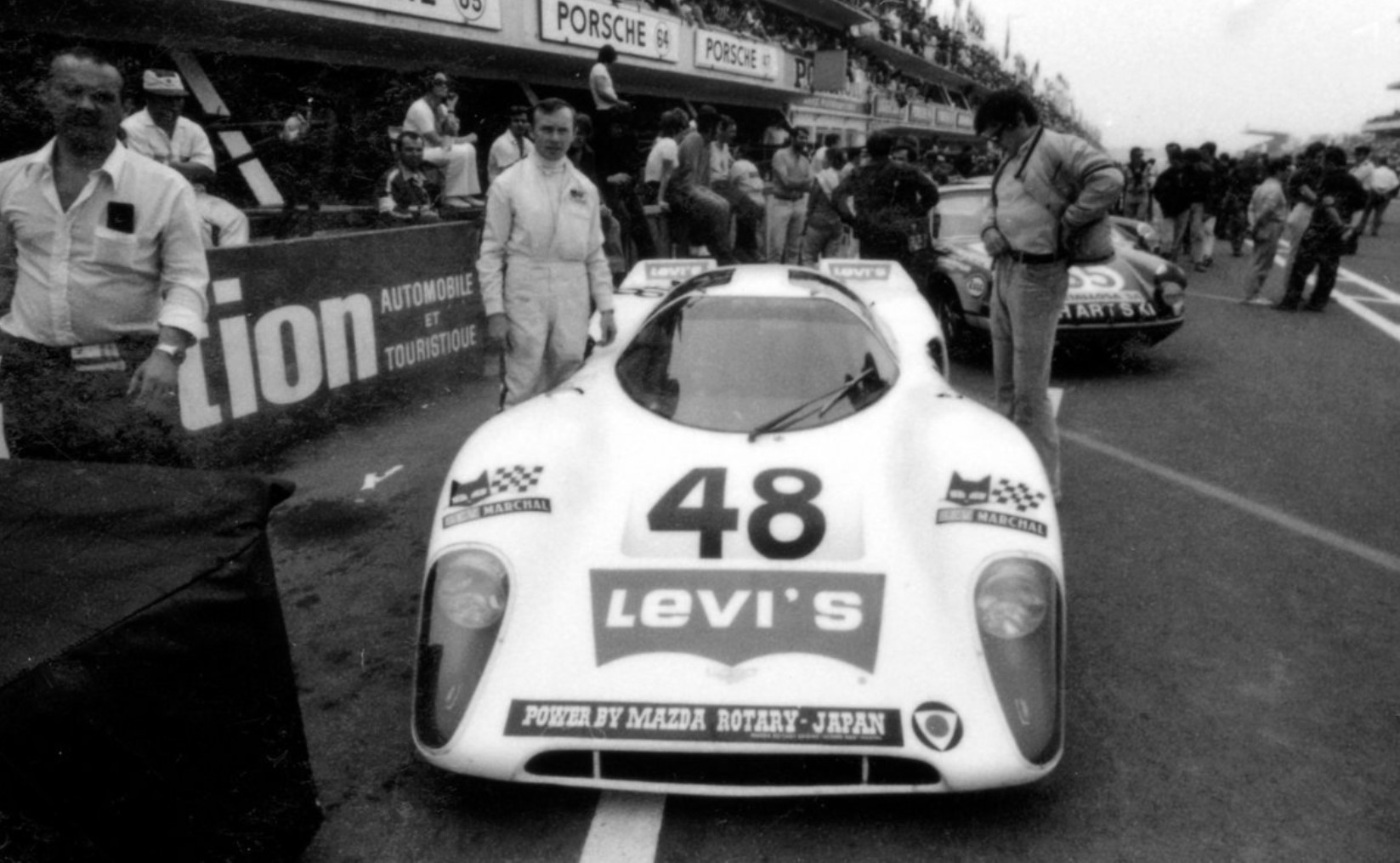
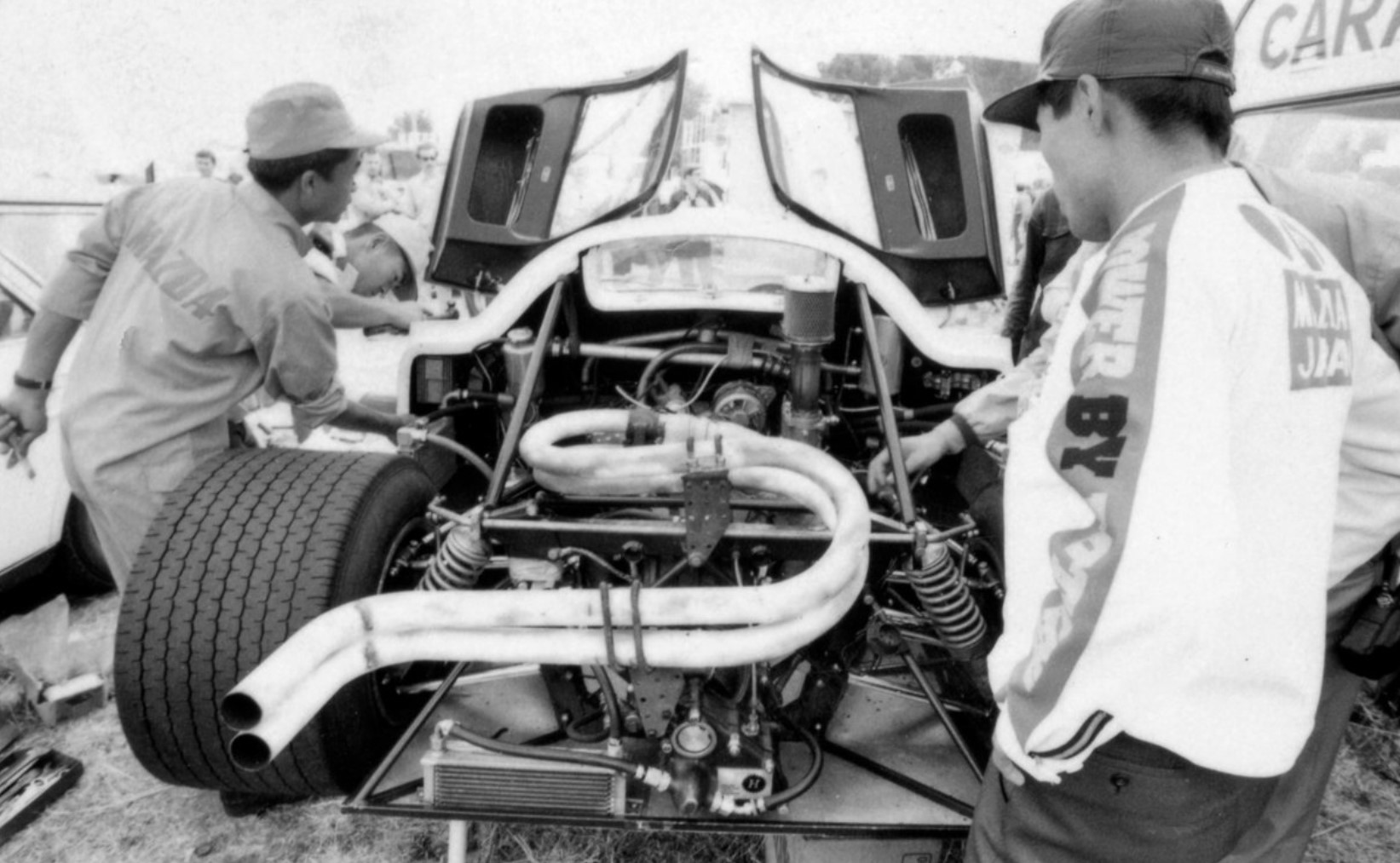
Perhaps the most exotic and fascinating chapter in the B16’s life was the Chevron B16 Mazda. In a bid to prove their rotary technology in Europe, Mazda (specifically the erratic but enthusiastic Levi’s Jeans-sponsored team) fitted a 10A dual-rotor Wankel engine into the back of a B16. These cars, often running in the 1970 Spa 24 Hours and Nürburgring events, were distinctive not just for their denim-liveried paint jobs, but for the ear-splitting, buzz-saw shriek of the rotary engine. While they suffered from reliability issues, the B16 Mazda remains a cult icon, a symbol of the “anything goes” spirit of the era.
The B16’s competition life was intense but surprisingly short as a coupé. By 1970, the regulations and the physics of racing were shifting towards open-top “Spyder” cars, which were lighter and offered better visibility. Bennett responded by cutting the roof off the B16 to create the B16 Spyder, which eventually evolved into the dominant B19. Consequently, the B16 Coupé was effectively obsolete as a pro-level chassis by 1971. Yet, in its brief window of dominance, it achieved remarkable things. It won its class at the 24 Hours of Daytona, it terrorized the European 2-Litre Championship, and it became a staple of the Springbok Series in South Africa.
The legacy of the Chevron B16 is unique. It is not defined solely by a long list of championships, but by its enduring emotional impact. It represents the zenith of the “beautiful prototype” era, a time before aerodynamics dictated ugly, squared-off wings and ground effects. It was the ultimate expression of Derek Bennett’s philosophy: a car built by a racer, for racers, that just happened to look like a masterpiece. Today, the B16 is arguably more popular in historic racing than it was in period, with continuation models and restored originals filling grids worldwide. It remains the defining image of the privateer prototype, a rolling testament to the idea that a small team from Bolton could take on the giants of the automotive world and, whilst looking absolutely spectacular, beat them.
Portal
Model line
Model generation
Predecessor
Sucessor
Brand
Produced from
Vehicle category
Portal
Model line
Model generation
Predecessor
Sucessor
About this model
In the pantheon of automotive design, there are race cars that are effective, there are race cars that are successful, and then there are race cars that are so heartbreakingly beautiful that their speed seems almost secondary to their aesthetic. The Chevron B16 is the undisputed monarch of that third category. Unveiled in 1969, it arrived at the crescendo of the “Group 6” sports prototype era, a time when regulation loopholes and engineering freedom allowed for the creation of some of the most evocative shapes in history. While the 5.0-litre Porsche 917s and Ferrari 512s were battling for overall supremacy with brute force, a different, sharper war was being waged in the 2.0-litre class. This was the domain of the privateer, the artisan, and the garagiste. And the king of the artisans was Derek Bennett. His B16 was not merely a successor to the highly successful B8; it was a quantum leap in aerodynamic sophistication, a machine that combined the mechanical simplicity of a club racer with the visual drama of a Le Mans winner.
The B16 was born into a world where the distinction between a “GT” car and a “Prototype” was becoming increasingly blurred. Its predecessor, the B8, had been a rugged, handsome GT car that could punch above its weight. The B16, however, was a purebred prototype from the first pencil stroke. Bennett, a self-taught engineering genius with an intuitive grasp of fluid dynamics, penned a shape that is widely regarded as one of the most stunning ever to grace a circuit. It sat impossibly low, with a voluptuous, curvaceous cockpit canopy that seemed to melt into the rear deck. The bodywork, produced by Specialised Mouldings, was not just for show; it generated significant downforce while maintaining a low drag coefficient, essential for the high-speed circuits of Europe.
Underneath that seductive fibreglass skin lay Bennett’s signature: a tubular steel spaceframe chassis. By 1969, many top-tier manufacturers like Porsche and Lola were moving toward aluminium monocoques. Bennett, pragmatic to his core, stuck with steel. He believed that for the privateer racer—his target customer—a spaceframe was stiffer, easier to repair in a paddock, and more communicative at the limit. The suspension followed the Formula 2 trends of the day, with unequal-length wishbones and outboard coil-over dampers, providing handling that was razor-sharp yet forgiving enough for a gentleman driver to exploit.
The genius of the B16 “Model Line” lay in its engine bay. Bennett designed the rear subframe to be a modular cradle, capable of accepting a variety of four-cylinder (and occasionally rotary) powerplants. This versatility created distinct submodels with vastly different characters. The launch specification, the 1969 Chevron B16 Ford Cosworth FVA, was the “sprint” specialist. Powered by the 1.6-litre, 16-valve FVA engine derived from Formula 2, it was a high-revving screamer that produced around 220 hp at a frantic 9,000 rpm. It was this configuration that debuted at the Nürburgring 500km in 1969. Driven by Brian Redman—who famously had to slouch in the cockpit because the roofline was too low for his height—the B16 took pole position and won the race outright on its very first outing, humiliating the factory Abarths and Lolas. It was a debut that instantly cemented the car’s legend.
However, for the gruelling requirements of endurance racing, many teams opted for the Chevron B16 BMW M10. This version utilized the robust, 2.0-litre BMW block (often with an Apfelbeck or Schnitzer 16-valve head). While it lacked the frenetic top-end of the Cosworth, the BMW unit offered a mountain of torque and bombproof reliability, making it the weapon of choice for 1000km races or the 24 Hours of Le Mans. As the 2.0-litre class rules evolved, the definitive version emerged: the Chevron B16 Ford Cosworth FVC. The FVC was an enlarged 1.8-litre (and later 1.9L) version of the FVA, offering a perfect balance of power and torque. This became the standard-bearer for the European 2-Litre Sports Car Championship, allowing privateers to battle factory teams on equal footing.
Perhaps the most exotic and fascinating chapter in the B16’s life was the Chevron B16 Mazda. In a bid to prove their rotary technology in Europe, Mazda (specifically the erratic but enthusiastic Levi’s Jeans-sponsored team) fitted a 10A dual-rotor Wankel engine into the back of a B16. These cars, often running in the 1970 Spa 24 Hours and Nürburgring events, were distinctive not just for their denim-liveried paint jobs, but for the ear-splitting, buzz-saw shriek of the rotary engine. While they suffered from reliability issues, the B16 Mazda remains a cult icon, a symbol of the “anything goes” spirit of the era.
The B16’s competition life was intense but surprisingly short as a coupé. By 1970, the regulations and the physics of racing were shifting towards open-top “Spyder” cars, which were lighter and offered better visibility. Bennett responded by cutting the roof off the B16 to create the B16 Spyder, which eventually evolved into the dominant B19. Consequently, the B16 Coupé was effectively obsolete as a pro-level chassis by 1971. Yet, in its brief window of dominance, it achieved remarkable things. It won its class at the 24 Hours of Daytona, it terrorized the European 2-Litre Championship, and it became a staple of the Springbok Series in South Africa.
The legacy of the Chevron B16 is unique. It is not defined solely by a long list of championships, but by its enduring emotional impact. It represents the zenith of the “beautiful prototype” era, a time before aerodynamics dictated ugly, squared-off wings and ground effects. It was the ultimate expression of Derek Bennett’s philosophy: a car built by a racer, for racers, that just happened to look like a masterpiece. Today, the B16 is arguably more popular in historic racing than it was in period, with continuation models and restored originals filling grids worldwide. It remains the defining image of the privateer prototype, a rolling testament to the idea that a small team from Bolton could take on the giants of the automotive world and, whilst looking absolutely spectacular, beat them.
Generations
Generations of this model
Generations
Generations of this model
Submodels
Discover all the variants of this model
Submodels
Discover all the variants of this model
Vehicles
Legendary Vehicles
Vehicles