Ferrari F12
Brand
Produced from
Vehicle category
Portal
Model line
Model generation
Predecessor
Sucessor
About this model
The unveiling of the Ferrari F12berlinetta at the 2012 Geneva Motor Show was not merely the launch of a new car; it was a defiant, screaming statement of intent from Maranello. In an automotive landscape that was increasingly turning toward forced induction, hybridization, and the pursuit of clinically efficient lap times, Ferrari chose to double down on its most sacred religion: the naturally aspirated V12. The F12 was the successor to the 599 GTB Fiorano, a car of immense capability and dramatic flying-buttress styling, but one that felt physically large, almost intimidatingly so. The F12 was designed to be a different animal entirely. It was smaller, lighter, lower, and vastly more powerful. It arrived to reclaim the throne of the “Super GT” from the jaws of the Lamborghini Aventador—a mid-engined bull that offered visual shock and awe—and the Aston Martin Vanquish, which offered gentlemanly grace. The F12, however, offered something else: a level of performance that rendered the term “Grand Tourer” woefully inadequate. It was a comfortable continental cruiser that could lap the Fiorano test track faster than an Enzo or a 599 GTO. It was the moment Ferrari perfected the front-mid-engine architecture, creating a machine that felt pivotal the moment the silk sheet was pulled away.
Technically, the F12berlinetta was a tour de force of aerodynamic sculpting and mechanical violence. Its heart, the F140 FC engine, is widely regarded as one of the greatest internal combustion engines ever produced. This 6.3-litre, 65-degree V12 was a masterpiece of high-revving capability, producing a staggering 730 bhp (740 cv) at 8,250 rpm, with a redline that soared to 8,700 rpm. Unlike the torque-fill of a turbo engine, the F12’s power delivery was a linear, unending rush, a crescendo of noise and thrust that pinned the driver into the Poltrona Frau leather with increasing intensity as the needle swept clockwise. The engine was mated to a seven-speed dual-clutch transaxle that fired shifts with the immediacy of a rifle bolt, banishing the clunky low-speed manners of the old single-clutch automated manuals forever.
The chassis was equally revolutionary. Scaglietti, Ferrari’s aluminium foundry, developed an all-new spaceframe using twelve different aluminium alloys, some of which were debuted in the aviation industry. This resulted in a 20% increase in structural rigidity while shedding 70kg compared to the 599. But the genius of the F12 lay in its packaging. The engine was mounted so far back in the chassis that it was effectively a front-mid-engine car, achieving a weight distribution of 46% front and 54% rear—a balance most mid-engine cars would kill for.
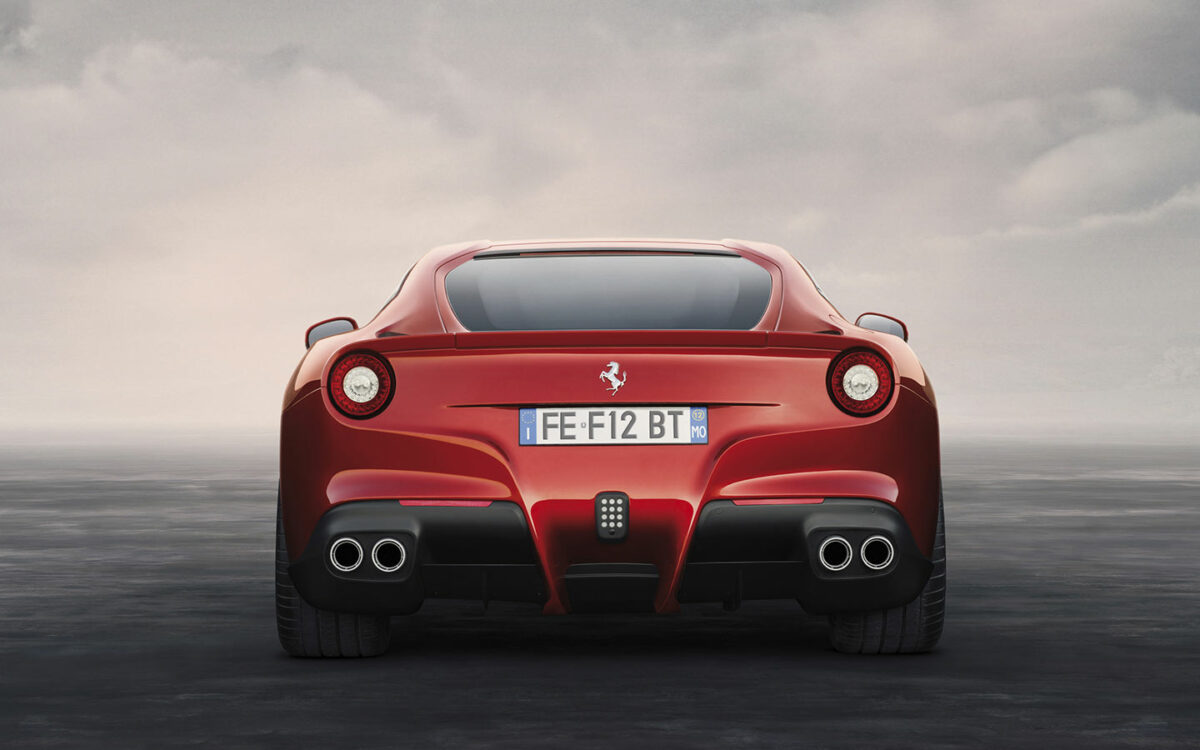
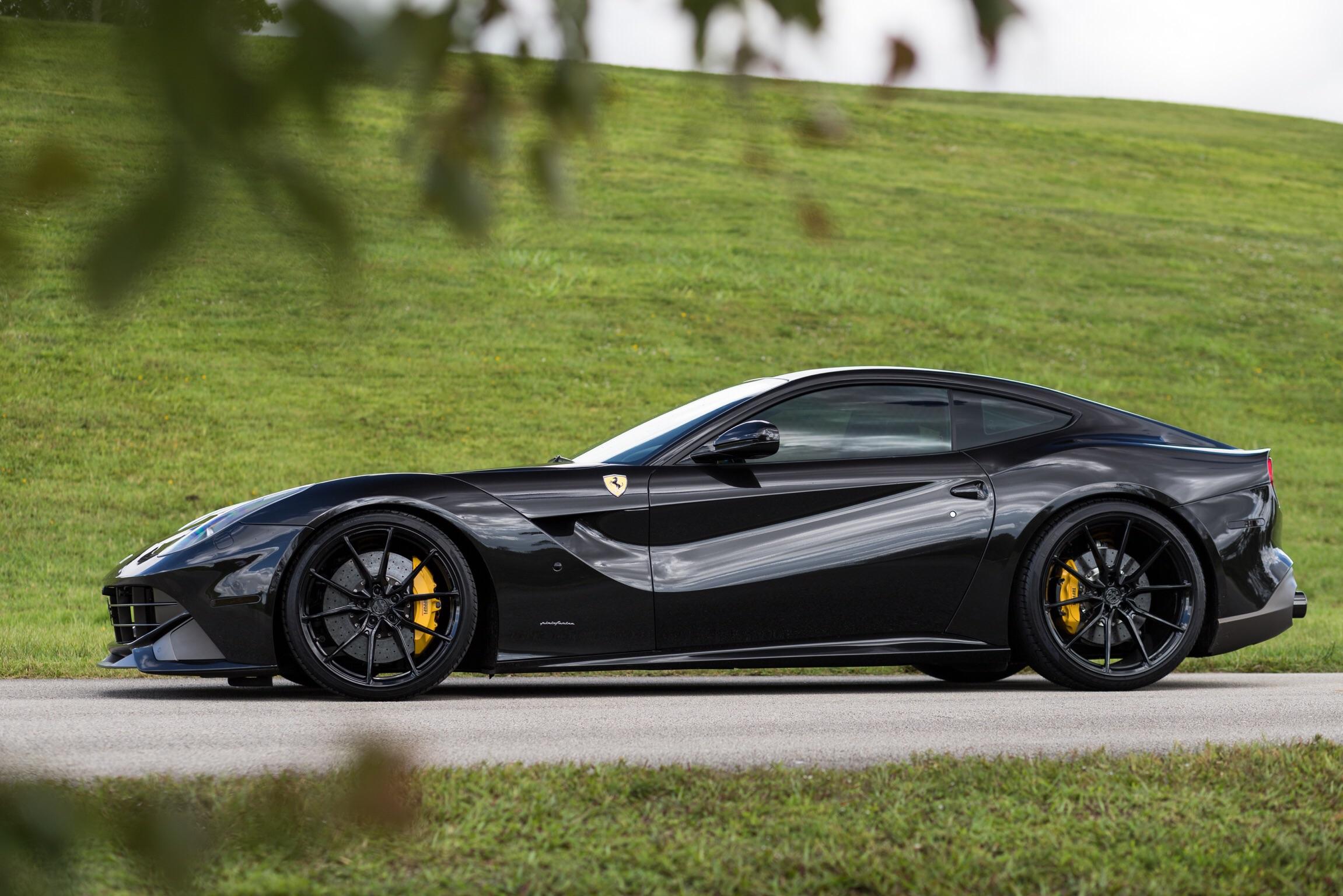
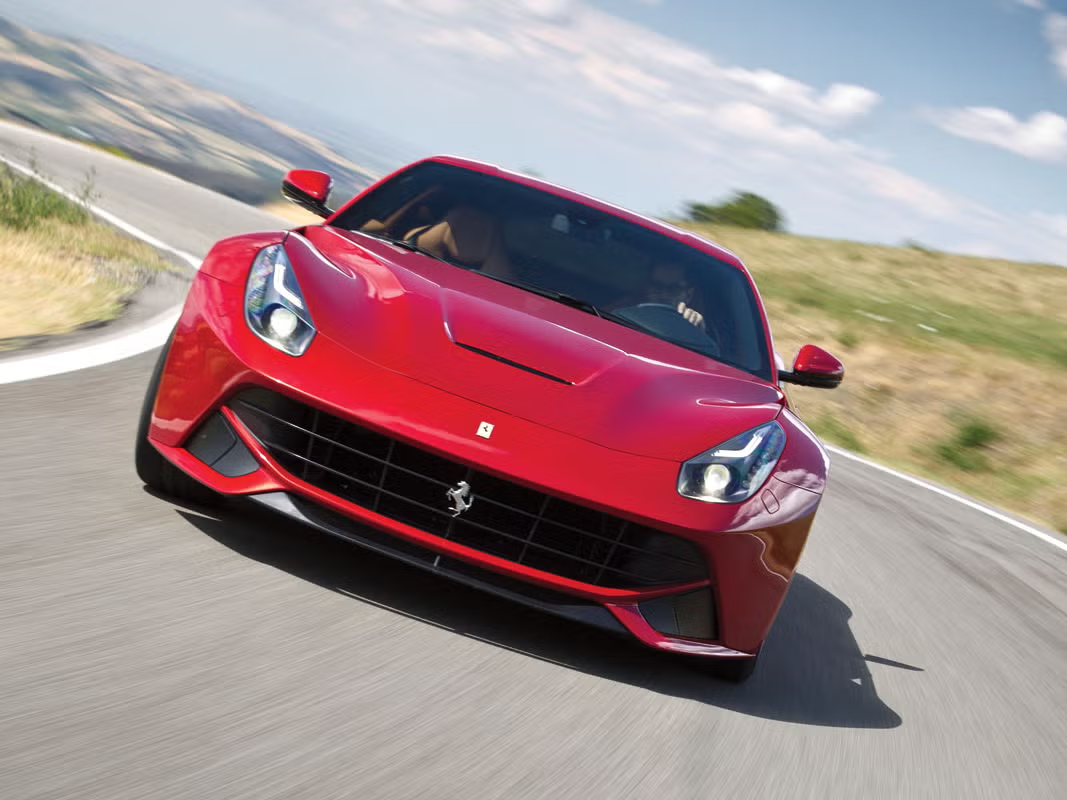
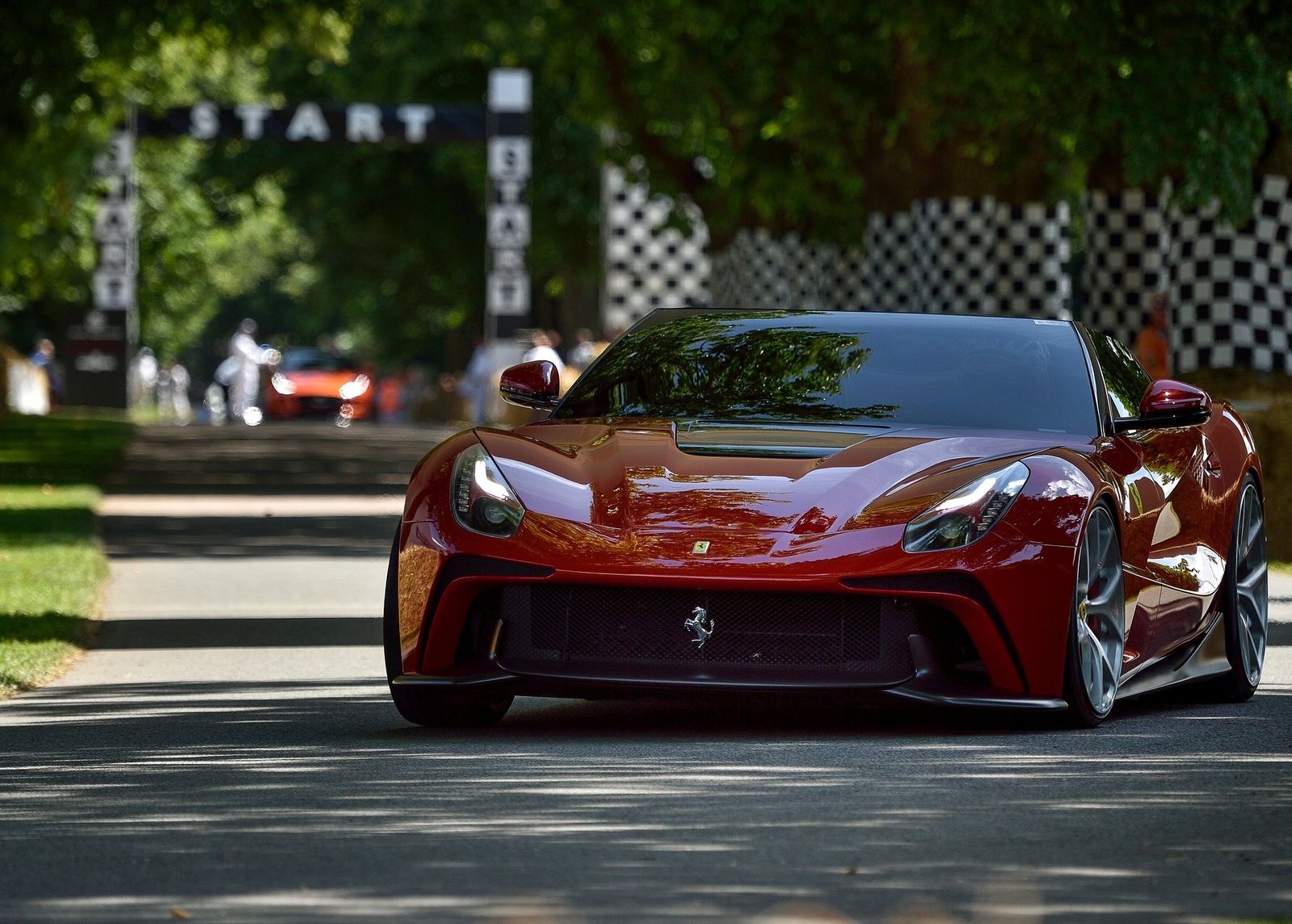
Visually, the F12 was a collaboration between the Ferrari Styling Centre and Pininfarina, and it stands as one of the last great Ferraris to bear the Pininfarina badge. The design was dictated by airflow. The defining feature was the “Aero Bridge,” a channel carved into the bonnet that directed air from the front of the car, down the flanks, and along the doors to reduce drag and generate downforce without the need for vulgar, fixed rear wings. At the rear, the Kamm tail aesthetic was modernized with a T-shape profile, incorporating active brake cooling ducts that opened only when the carbon-ceramic discs were glowing hot. Inside, the cabin was a masterclass in driver-centric minimalism. The steering wheel housed the Manettino dial, turn signals, and wipers, stripping the column of stalks and ensuring the driver’s hands never needed to leave the wheel.
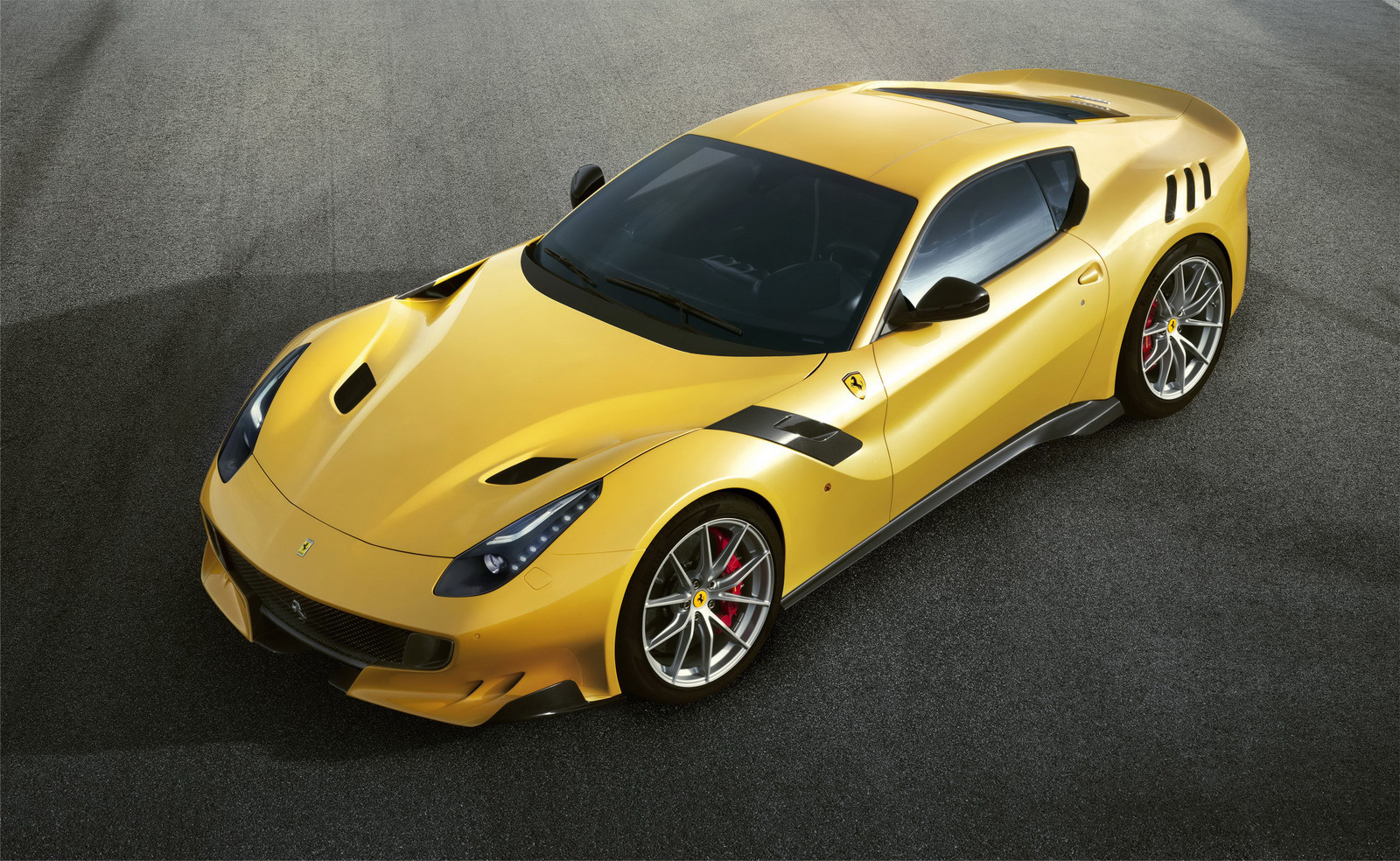
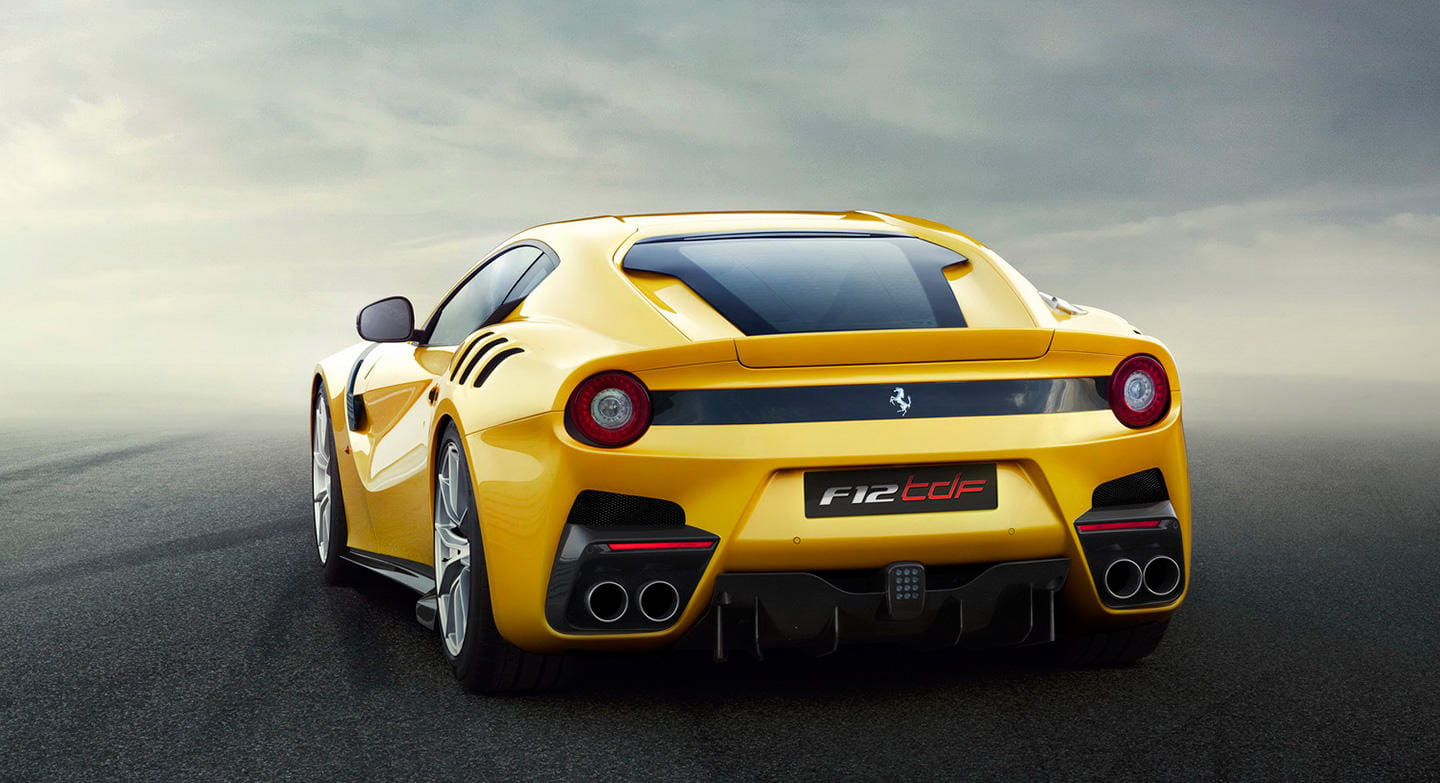
While the F12berlinetta was the core of the model line, the lineage reached its zenith with the Ferrari F12tdf (Tour de France). Launched in 2015, the tdf was to the F12 what the GTO was to the 599: a hardcore, track-focused evolution that bordered on the psychotic. Named in honor of the Tour de France Automobile—the endurance road race dominated by the 250 GTs in the 1950s—the F12tdf was a monster. The engine was tuned to produce 769 bhp (780 cv), the redline was pushed to 8,900 rpm, and the car went on a ruthless diet, shedding 110kg through the extensive use of carbon fiber inside and out. However, the tdf’s defining characteristic was its handling. To combat the inherent tendency of a front-engine car to understeer at the limit, Ferrari fitted wider front tires (275 section) and introduced the Passo Corto Virtuale (Virtual Short Wheelbase), a four-wheel steering system. This allowed the rear wheels to pivot, effectively shortening the wheelbase for agility or lengthening it for stability. The result was a car with a turn-in so sharp it felt telepathic, and a rear end so lively it demanded total respect. Driving an F12tdf at the limit was a wrestling match with a hurricane, a reminder that Ferrari still knew how to build cars that could scare you.
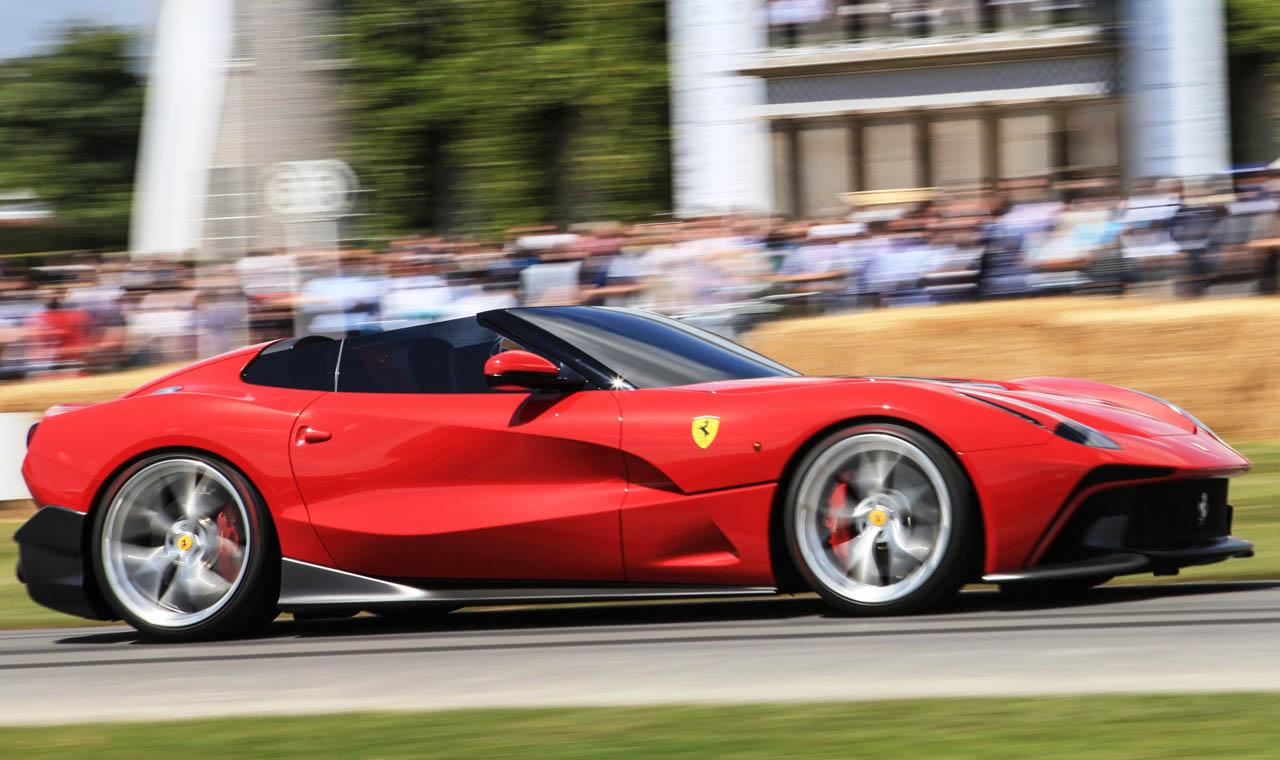
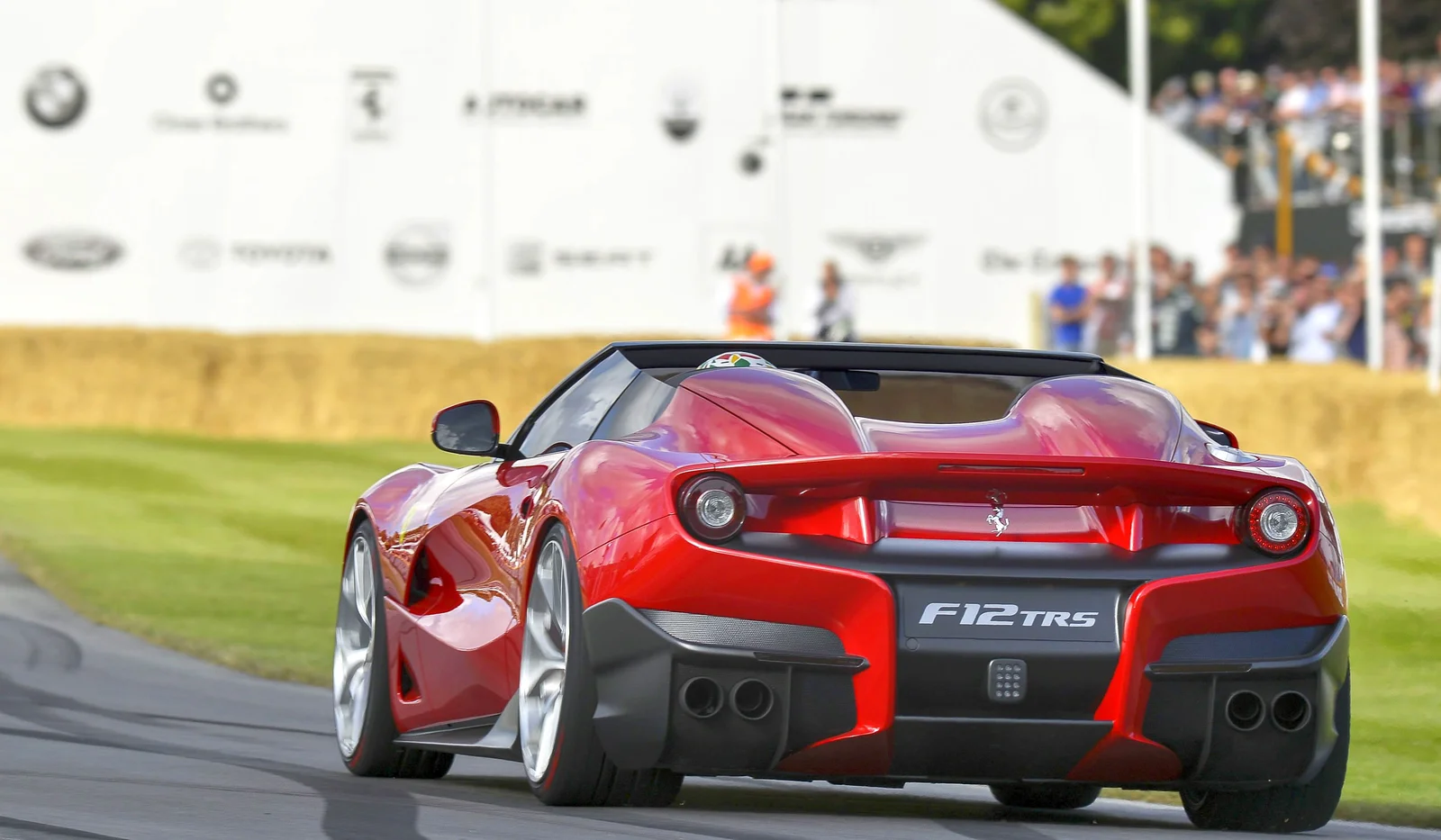
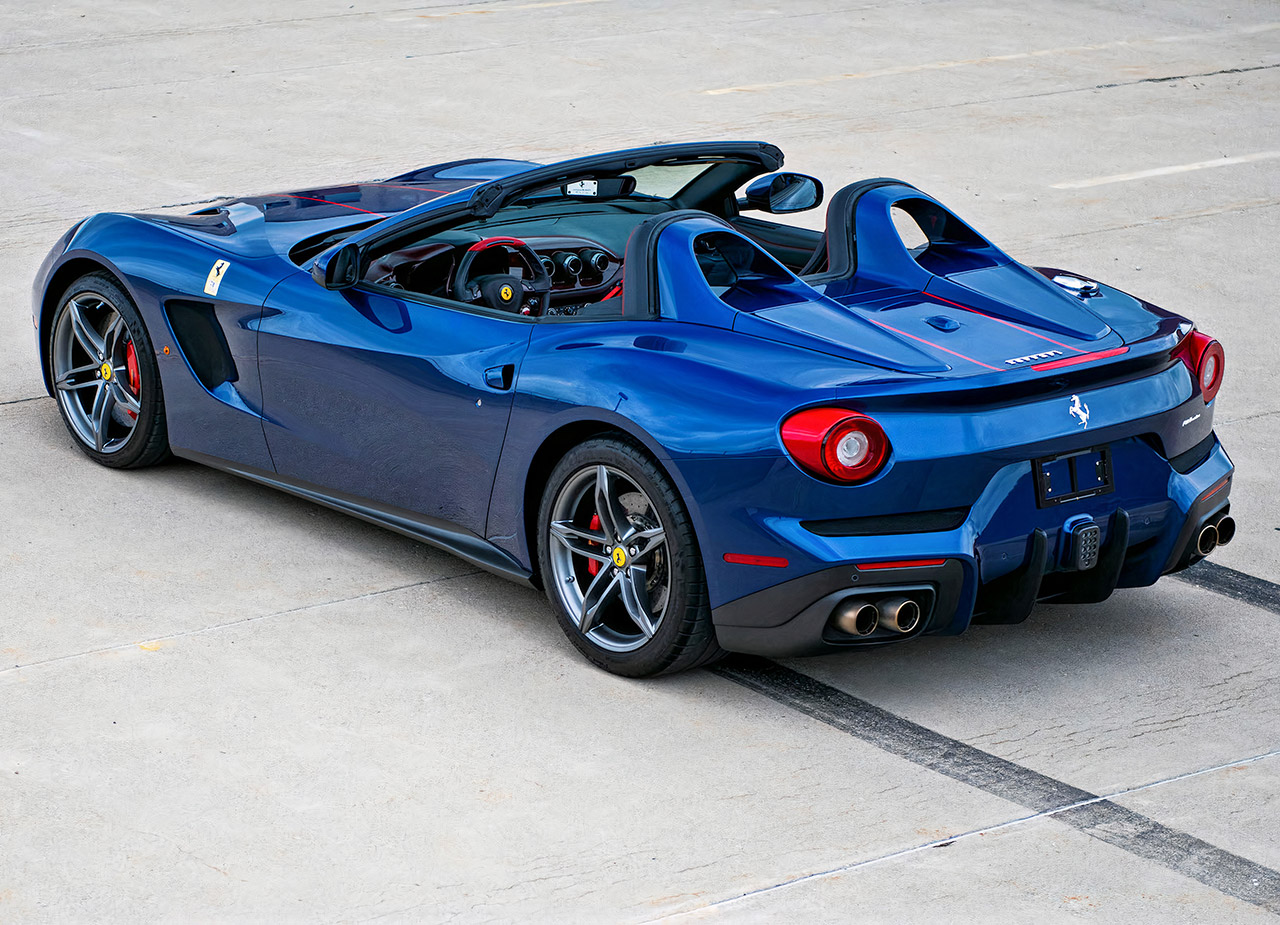
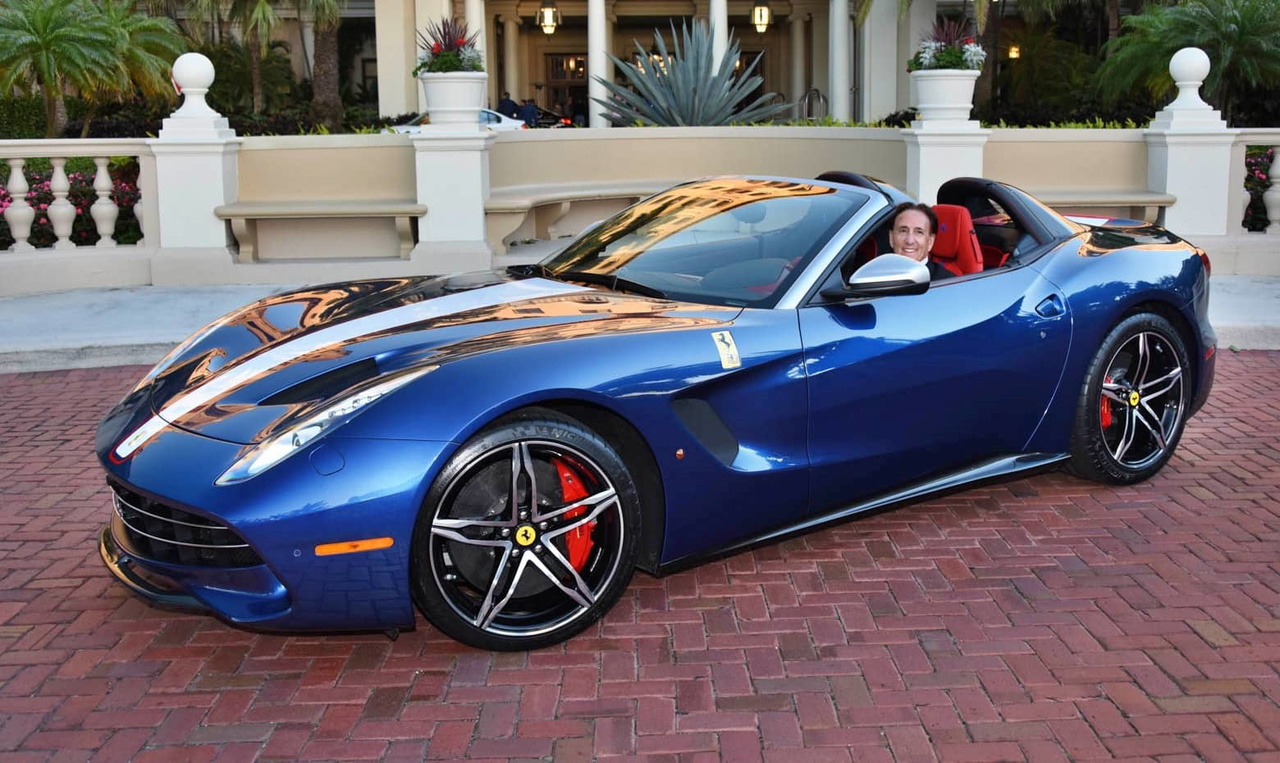
The F12 platform also served as the canvas for some of the most exquisite coachbuilt specials of the modern era. The F60 America, built to celebrate 60 years of Ferrari in North America, was an open-top roadster limited to just ten units. The F12 TRS, a bespoke “One-Off” (though three were reportedly made), was a Barchetta inspired by the 250 Testa Rossa, featuring a window into the engine bay on the bonnet. Then came the Pininfarina Sergio, a concept-turned-production car honoring the late Sergio Pininfarina, and the SP America, a more muscular take on the GT theme. These cars proved that the F12 chassis was versatile enough to support the wildest dreams of the world’s wealthiest collectors.
The impact of the F12 model line on automotive culture was profound. It re-established the front-engine V12 Berlinetta as the flagship of the range, a position that had been threatened by the mid-engine hypercars. It proved that 730 horsepower was manageable on the street, provided the electronics were smart enough. The F12berlinetta was a commercial success, lauded by journalists as arguably the best all-around car Ferrari had ever built—civilized enough to drive to the opera, yet fast enough to humiliate track specials. It appeared in high-profile films and became a fixture in the garages of F1 drivers, who appreciated its balance. The F12tdf, meanwhile, became an instant collectible, with values skyrocketing the moment production ceased, cementing its status as one of the modern “greats” alongside the 599 GTO and 458 Speciale.
Historically, the F12 sits in a very sweet spot. It occupies the space between the raw, sometimes clunky analog nature of the 599 and the hyper-aggressive, four-wheel-steering standard of the 812 Superfast. The F12berlinetta, in particular, has aged with incredible grace; its lines are cleaner and less busy than its successor, the 812, leading many purists to regard it as the more beautiful car. It represents the pinnacle of the Pininfarina era before Ferrari moved design entirely in-house.
The legacy of the Ferrari F12 is one of purity and power. It was a celebration of the V12 engine at a time when the world was beginning to turn away from such excesses. It showed that a front-engine car could offer the turn-in and agility of a mid-engine car through clever engineering and aerodynamics. When the F12 was eventually replaced by the 812 Superfast in 2017, the new car was faster, yes, but it stood on the shoulders of the giant technological leap that the F12 represented. The F12tdf, in particular, will be remembered as one of the most visceral driving experiences of the 21st century, a car that vibrated with the soul of the 1950s racers while utilizing the technology of the space age. In the pantheon of the Prancing Horse, the F12 is not just a model; it is a cathedral dedicated to the worship of the naturally aspirated twelve-cylinder engine, a monument that will likely never be built quite the same way again.
Portal
Model line
Model generation
Predecessor
Sucessor
Brand
Produced from
Vehicle category
Portal
Model line
Model generation
Predecessor
Sucessor
About this model
The unveiling of the Ferrari F12berlinetta at the 2012 Geneva Motor Show was not merely the launch of a new car; it was a defiant, screaming statement of intent from Maranello. In an automotive landscape that was increasingly turning toward forced induction, hybridization, and the pursuit of clinically efficient lap times, Ferrari chose to double down on its most sacred religion: the naturally aspirated V12. The F12 was the successor to the 599 GTB Fiorano, a car of immense capability and dramatic flying-buttress styling, but one that felt physically large, almost intimidatingly so. The F12 was designed to be a different animal entirely. It was smaller, lighter, lower, and vastly more powerful. It arrived to reclaim the throne of the “Super GT” from the jaws of the Lamborghini Aventador—a mid-engined bull that offered visual shock and awe—and the Aston Martin Vanquish, which offered gentlemanly grace. The F12, however, offered something else: a level of performance that rendered the term “Grand Tourer” woefully inadequate. It was a comfortable continental cruiser that could lap the Fiorano test track faster than an Enzo or a 599 GTO. It was the moment Ferrari perfected the front-mid-engine architecture, creating a machine that felt pivotal the moment the silk sheet was pulled away.
Technically, the F12berlinetta was a tour de force of aerodynamic sculpting and mechanical violence. Its heart, the F140 FC engine, is widely regarded as one of the greatest internal combustion engines ever produced. This 6.3-litre, 65-degree V12 was a masterpiece of high-revving capability, producing a staggering 730 bhp (740 cv) at 8,250 rpm, with a redline that soared to 8,700 rpm. Unlike the torque-fill of a turbo engine, the F12’s power delivery was a linear, unending rush, a crescendo of noise and thrust that pinned the driver into the Poltrona Frau leather with increasing intensity as the needle swept clockwise. The engine was mated to a seven-speed dual-clutch transaxle that fired shifts with the immediacy of a rifle bolt, banishing the clunky low-speed manners of the old single-clutch automated manuals forever.
The chassis was equally revolutionary. Scaglietti, Ferrari’s aluminium foundry, developed an all-new spaceframe using twelve different aluminium alloys, some of which were debuted in the aviation industry. This resulted in a 20% increase in structural rigidity while shedding 70kg compared to the 599. But the genius of the F12 lay in its packaging. The engine was mounted so far back in the chassis that it was effectively a front-mid-engine car, achieving a weight distribution of 46% front and 54% rear—a balance most mid-engine cars would kill for.
Visually, the F12 was a collaboration between the Ferrari Styling Centre and Pininfarina, and it stands as one of the last great Ferraris to bear the Pininfarina badge. The design was dictated by airflow. The defining feature was the “Aero Bridge,” a channel carved into the bonnet that directed air from the front of the car, down the flanks, and along the doors to reduce drag and generate downforce without the need for vulgar, fixed rear wings. At the rear, the Kamm tail aesthetic was modernized with a T-shape profile, incorporating active brake cooling ducts that opened only when the carbon-ceramic discs were glowing hot. Inside, the cabin was a masterclass in driver-centric minimalism. The steering wheel housed the Manettino dial, turn signals, and wipers, stripping the column of stalks and ensuring the driver’s hands never needed to leave the wheel.
While the F12berlinetta was the core of the model line, the lineage reached its zenith with the Ferrari F12tdf (Tour de France). Launched in 2015, the tdf was to the F12 what the GTO was to the 599: a hardcore, track-focused evolution that bordered on the psychotic. Named in honor of the Tour de France Automobile—the endurance road race dominated by the 250 GTs in the 1950s—the F12tdf was a monster. The engine was tuned to produce 769 bhp (780 cv), the redline was pushed to 8,900 rpm, and the car went on a ruthless diet, shedding 110kg through the extensive use of carbon fiber inside and out. However, the tdf’s defining characteristic was its handling. To combat the inherent tendency of a front-engine car to understeer at the limit, Ferrari fitted wider front tires (275 section) and introduced the Passo Corto Virtuale (Virtual Short Wheelbase), a four-wheel steering system. This allowed the rear wheels to pivot, effectively shortening the wheelbase for agility or lengthening it for stability. The result was a car with a turn-in so sharp it felt telepathic, and a rear end so lively it demanded total respect. Driving an F12tdf at the limit was a wrestling match with a hurricane, a reminder that Ferrari still knew how to build cars that could scare you.
The F12 platform also served as the canvas for some of the most exquisite coachbuilt specials of the modern era. The F60 America, built to celebrate 60 years of Ferrari in North America, was an open-top roadster limited to just ten units. The F12 TRS, a bespoke “One-Off” (though three were reportedly made), was a Barchetta inspired by the 250 Testa Rossa, featuring a window into the engine bay on the bonnet. Then came the Pininfarina Sergio, a concept-turned-production car honoring the late Sergio Pininfarina, and the SP America, a more muscular take on the GT theme. These cars proved that the F12 chassis was versatile enough to support the wildest dreams of the world’s wealthiest collectors.
The impact of the F12 model line on automotive culture was profound. It re-established the front-engine V12 Berlinetta as the flagship of the range, a position that had been threatened by the mid-engine hypercars. It proved that 730 horsepower was manageable on the street, provided the electronics were smart enough. The F12berlinetta was a commercial success, lauded by journalists as arguably the best all-around car Ferrari had ever built—civilized enough to drive to the opera, yet fast enough to humiliate track specials. It appeared in high-profile films and became a fixture in the garages of F1 drivers, who appreciated its balance. The F12tdf, meanwhile, became an instant collectible, with values skyrocketing the moment production ceased, cementing its status as one of the modern “greats” alongside the 599 GTO and 458 Speciale.
Historically, the F12 sits in a very sweet spot. It occupies the space between the raw, sometimes clunky analog nature of the 599 and the hyper-aggressive, four-wheel-steering standard of the 812 Superfast. The F12berlinetta, in particular, has aged with incredible grace; its lines are cleaner and less busy than its successor, the 812, leading many purists to regard it as the more beautiful car. It represents the pinnacle of the Pininfarina era before Ferrari moved design entirely in-house.
The legacy of the Ferrari F12 is one of purity and power. It was a celebration of the V12 engine at a time when the world was beginning to turn away from such excesses. It showed that a front-engine car could offer the turn-in and agility of a mid-engine car through clever engineering and aerodynamics. When the F12 was eventually replaced by the 812 Superfast in 2017, the new car was faster, yes, but it stood on the shoulders of the giant technological leap that the F12 represented. The F12tdf, in particular, will be remembered as one of the most visceral driving experiences of the 21st century, a car that vibrated with the soul of the 1950s racers while utilizing the technology of the space age. In the pantheon of the Prancing Horse, the F12 is not just a model; it is a cathedral dedicated to the worship of the naturally aspirated twelve-cylinder engine, a monument that will likely never be built quite the same way again.
Generations
Generations of this model
Generations
Generations of this model
Submodels
Discover all the variants of this model
Submodels
Discover all the variants of this model
Vehicles
Legendary Vehicles
Vehicles