Lister Knobbly
Brand
Produced from
Vehicle category
Portal
Model line
Model generation
Predecessor
Sucessor
About this model
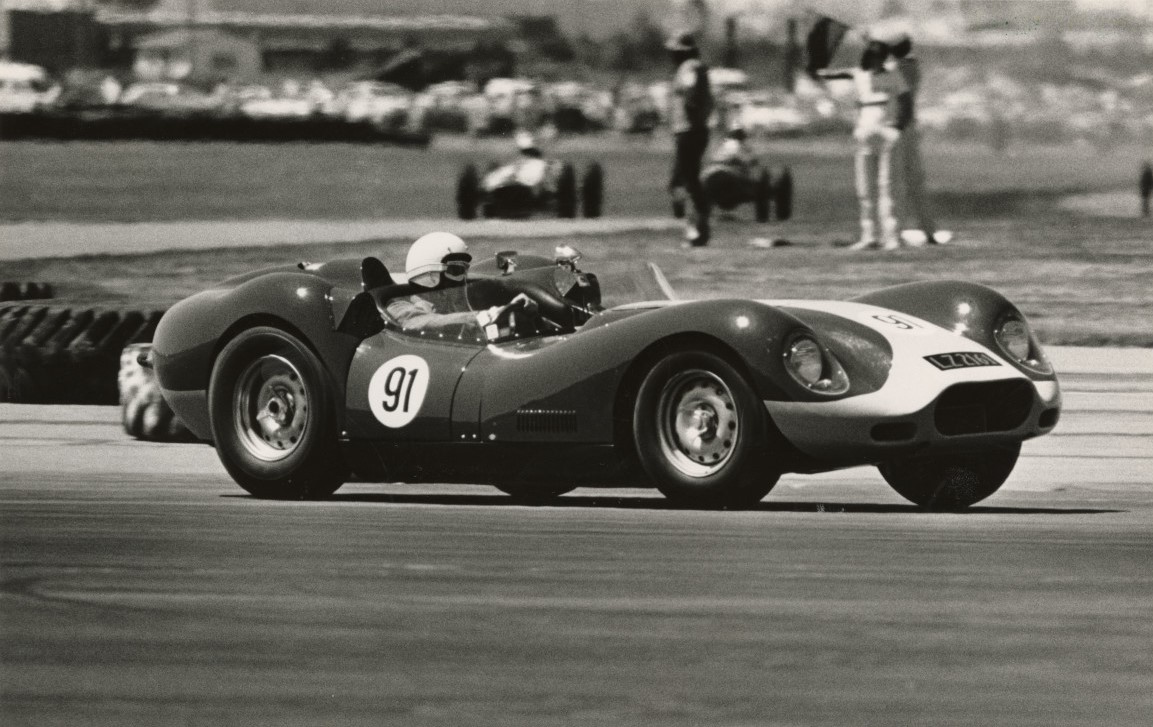
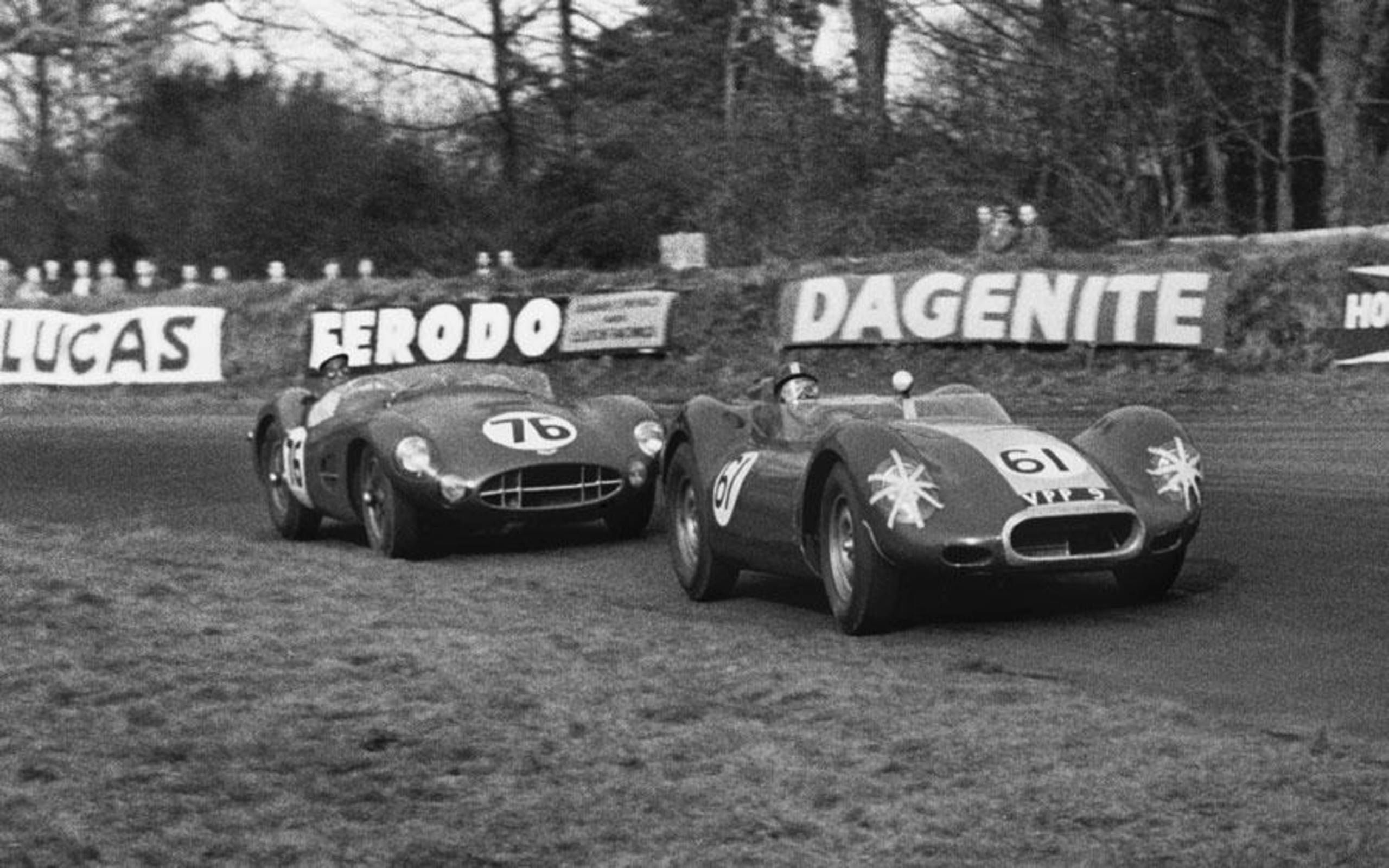
In the pantheon of British motorsport engineering, there exists a specific, golden hour in the late 1950s—a twilight period between the dominance of the heavy, factory-backed endurance racers and the imminent revolution of the mid-engined garagistas. In this fleeting moment, brilliance was not measured by wind tunnel hours or corporate budgets, but by the intuitive genius of men working in shed-like structures with welding torches and English wheels. The Lister Knobbly is the undisputed sovereign of this era. Born in a Cambridge ironworks and forged in the heat of a tragic but beautiful friendship between engineer Brian Lister and driver Archie Scott Brown, the Knobbly was the privateer’s weapon of choice, a car that took the mechanical heart of a Jaguar D-Type and wrapped it in a skin so rudimentary, yet so effective, that it embarrassed the establishment. It was the successor to the flat-sided “Flat Iron” Lister, arriving in 1958 to do battle against the might of the Aston Martin DBR1 and the Ferrari 250 Testa Rossa. It was a machine that didn’t just look fast; it looked organic, a crouching animal composed of aluminum curves and raw intent.
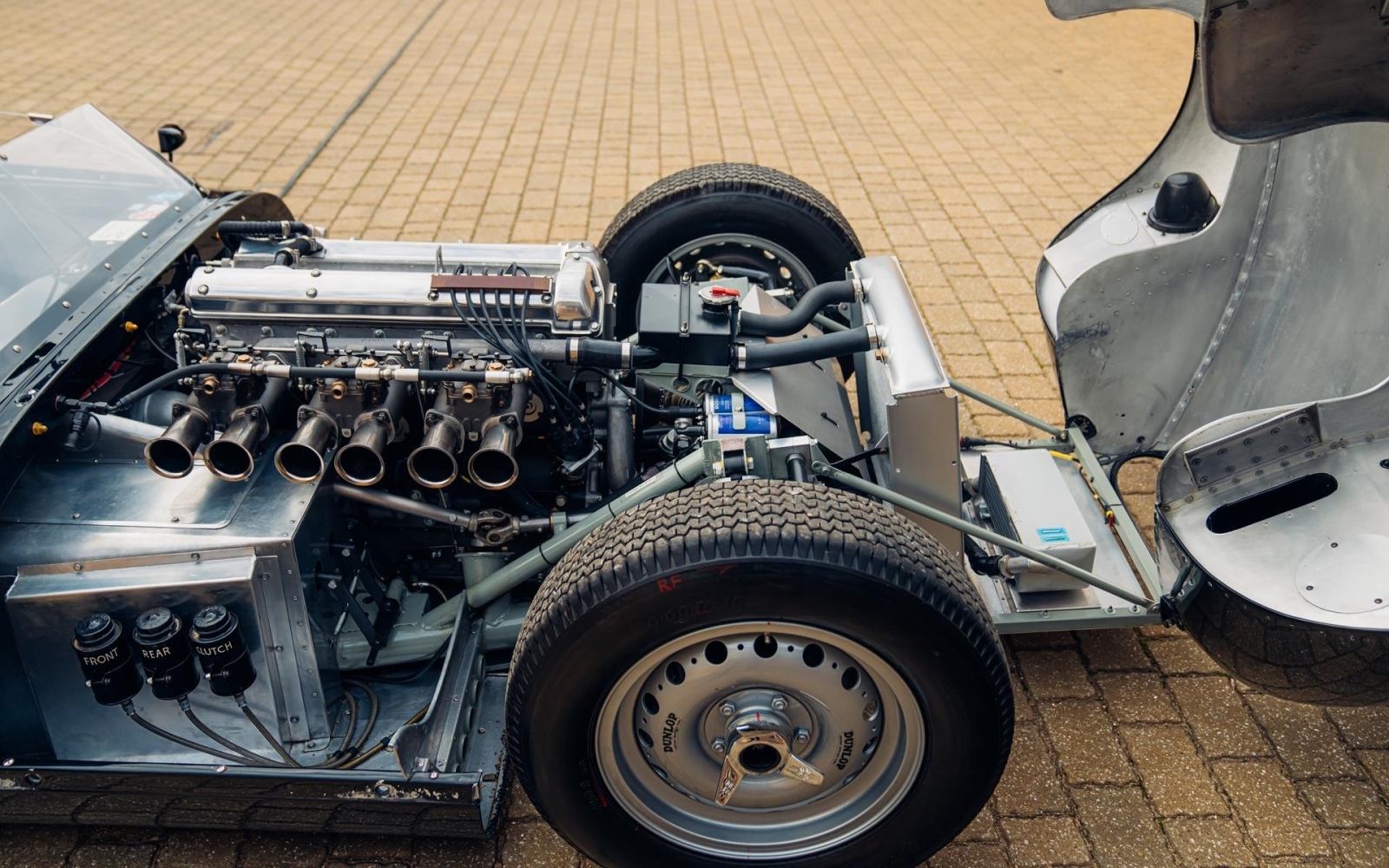
To analyze the Lister Knobbly technically is to look at a masterclass in reductive engineering. Brian Lister’s philosophy was antithetical to the complexity of the Europeans. The chassis was a marvel of simplicity: a twin-tube ladder frame constructed from 3-inch, 14-gauge steel tubes. It was incredibly stiff, lightweight, and provided a low center of gravity. Crucially, Lister utilized a De Dion rear axle setup, which kept the rear wheels perpendicular to the road surface, maximizing the contact patch of the Dunlop racing tires—a significant advantage over the live axles found in many American specials of the time. The front suspension used unequal length wishbones from the MG parts bin, heavily modified to cope with racing loads. The braking was handled by Girling discs all around, with the rear units mounted inboard to reduce unsprung weight, a detail that highlighted the sophistication hiding beneath the brute force.
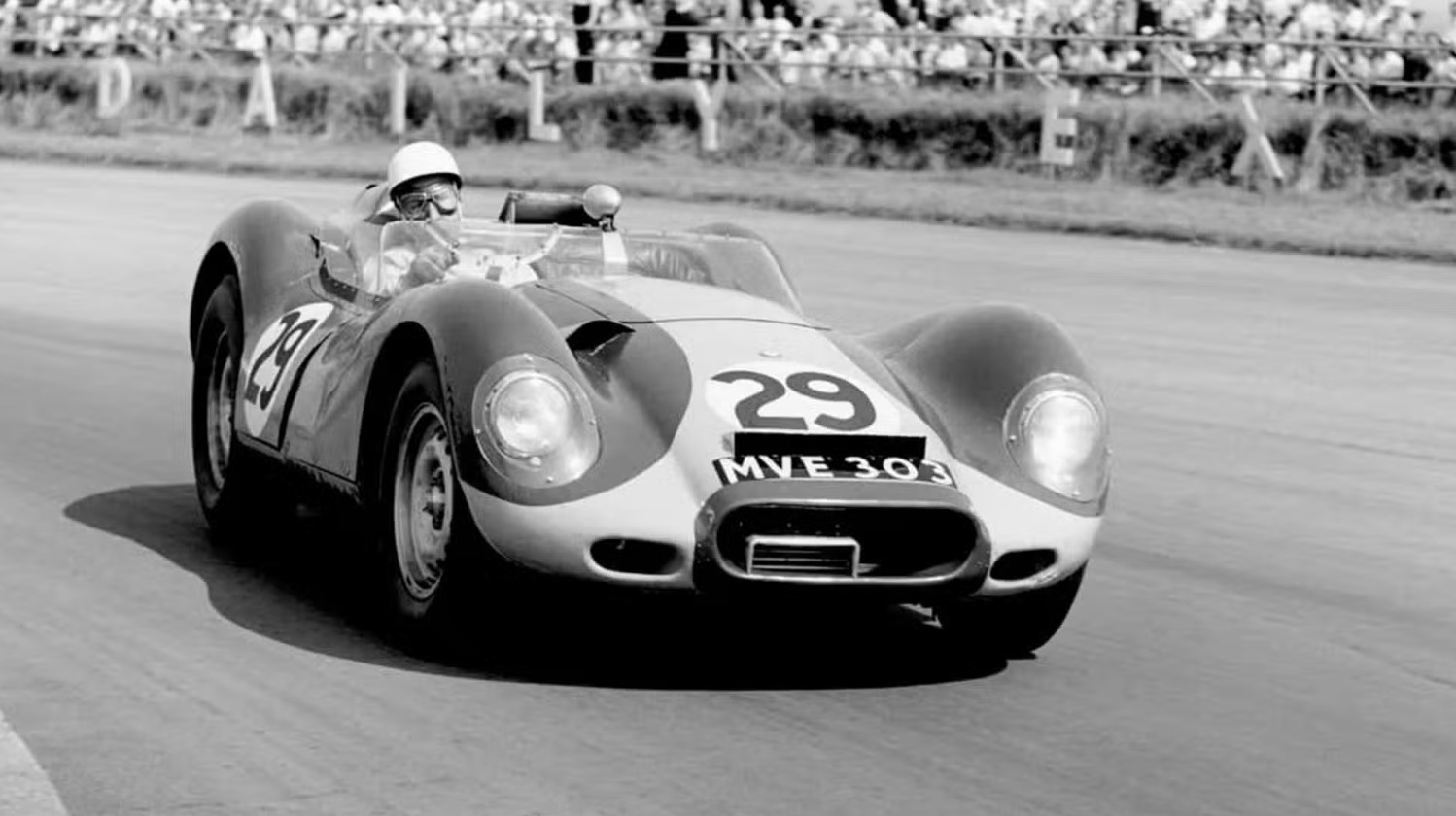
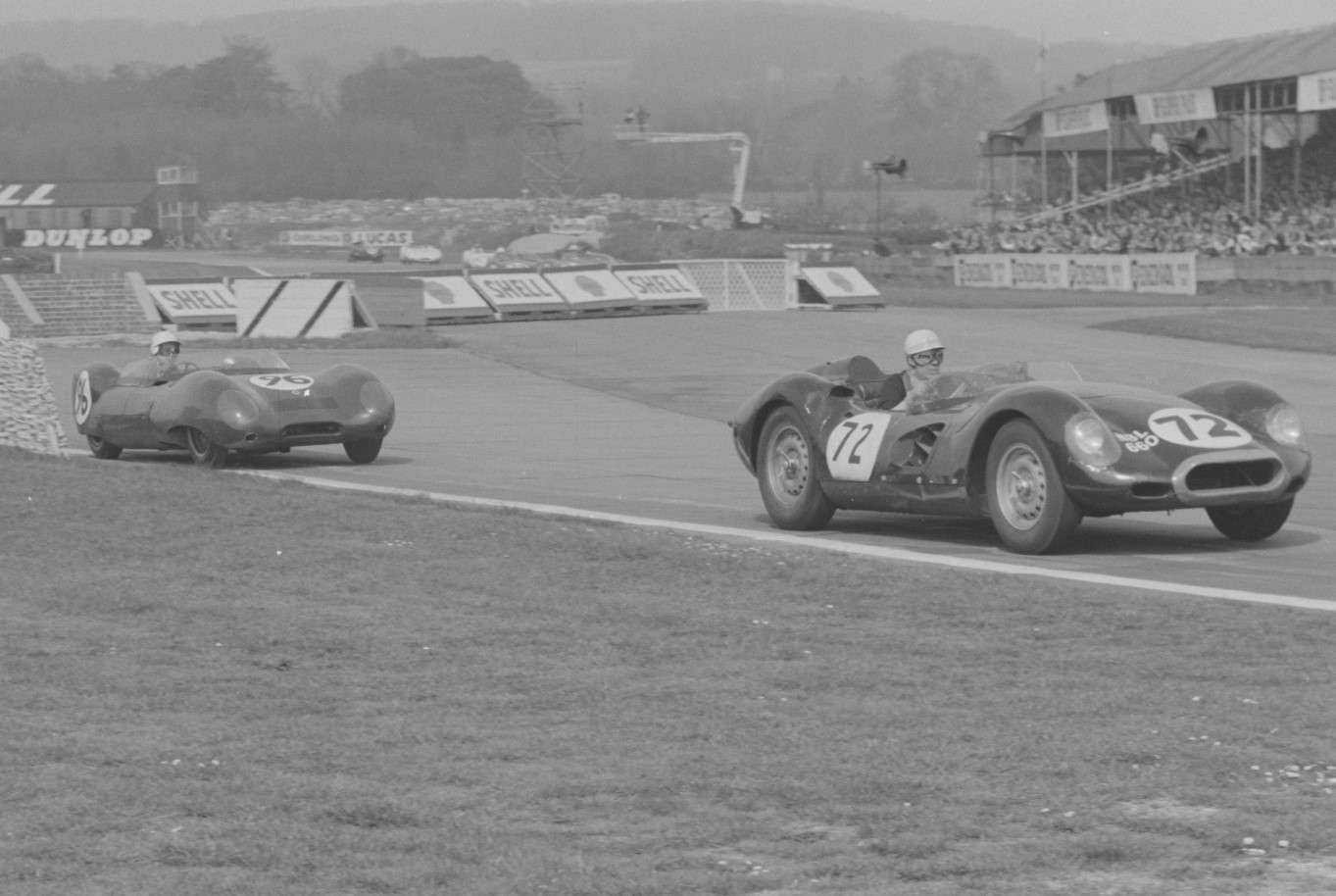
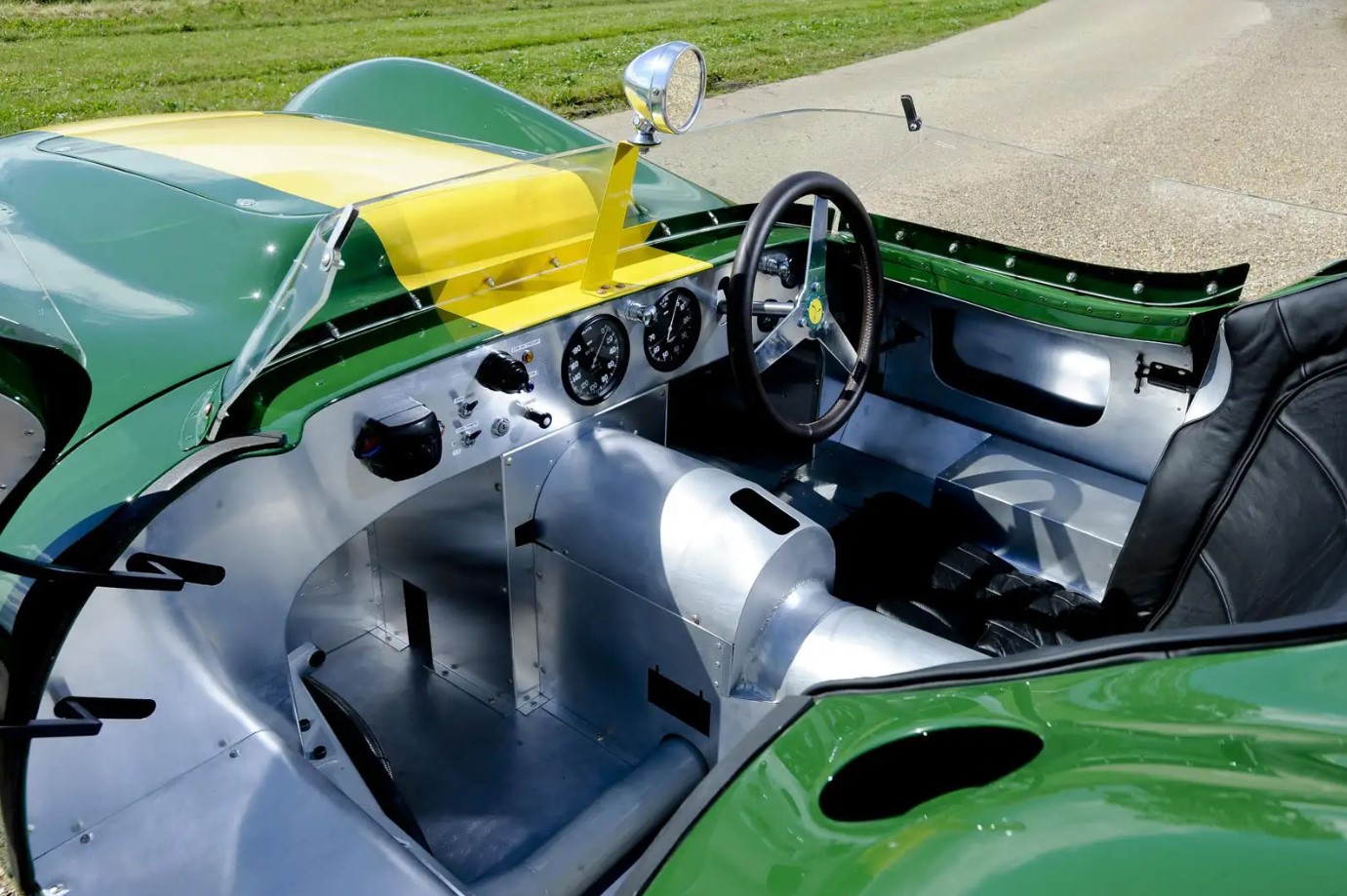
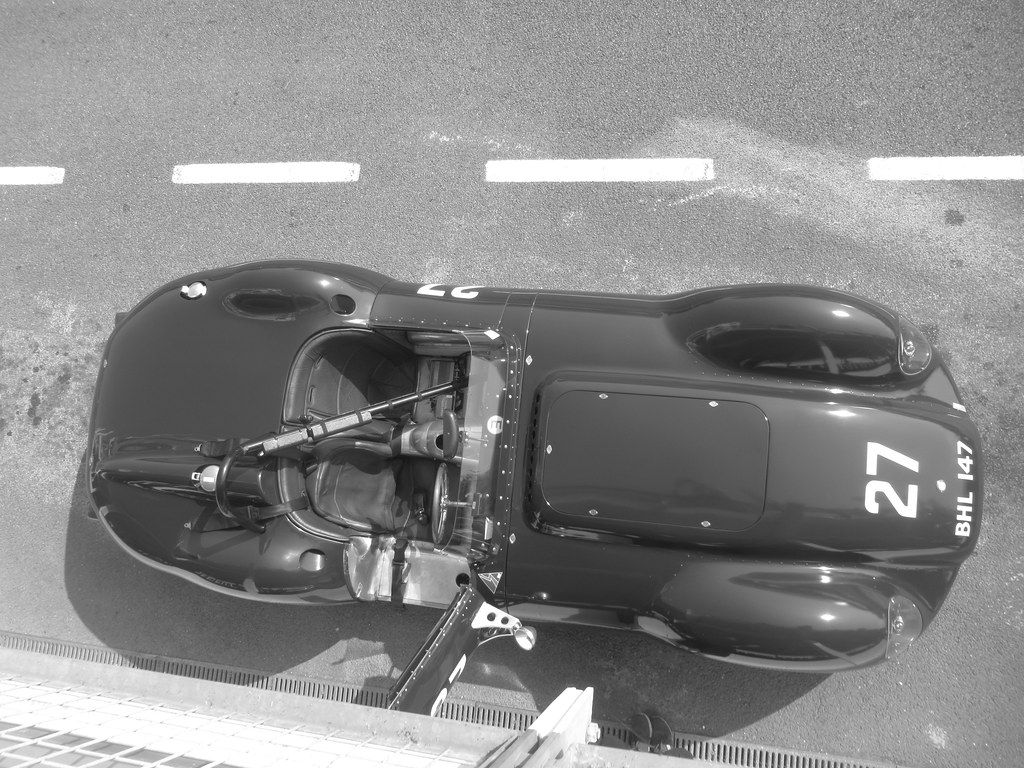
However, the defining characteristic of the vehicle, and the source of its affectionate nickname, was its bodywork. The “Knobbly” shape was not styled; it was shrunk-wrapped. To minimize the frontal area while accommodating the tall Jaguar XK inline-six engine, the aluminium skin had to undulate wildly. It hugged the wheels, dipped low for the cockpit, and rose again over the rear haunches. The bonnet featured a prominent bulge to clear the cam covers and carburetors, creating a silhouette that looked like a series of knuckles or knobs. Under that bonnet usually sat the 3.8-litre, dry-sump Jaguar D-Type engine, breathing through triple Weber 45 DCOE carburetors. Producing upwards of 300 bhp and a mountain of torque, this engine, when mated to the featherweight Lister chassis (the whole car weighed barely 780 kg), resulted in a power-to-weight ratio that was terrifying. While Jaguar engines were the standard, the chassis was versatile enough to accept the Chevrolet small-block V8 for American customers, creating the monstrous Lister-Chevy, a car that combined British handling with Detroit horsepower to devastating effect.
The history of the Lister Knobbly is inextricably linked to the brilliance and tragedy of Archie Scott Brown. A driver born with severe physical disabilities—malformed legs and a right arm that ended in a stump—Scott Brown possessed a car control talent that rivaled Stirling Moss and Juan Manuel Fangio. He didn’t just drive the Knobbly; he danced with it. Throughout the 1958 season, the Works Knobbly (registered VVP 241) was the scourge of British circuits. It decimated the competition at Oulton Park, Goodwood, and Silverstone, frequently beating the factory Aston Martins. The car’s handling, described by Moss as “fantastic” and “entirely forgiving,” allowed drivers to drift the car at severe angles, steering with the throttle.
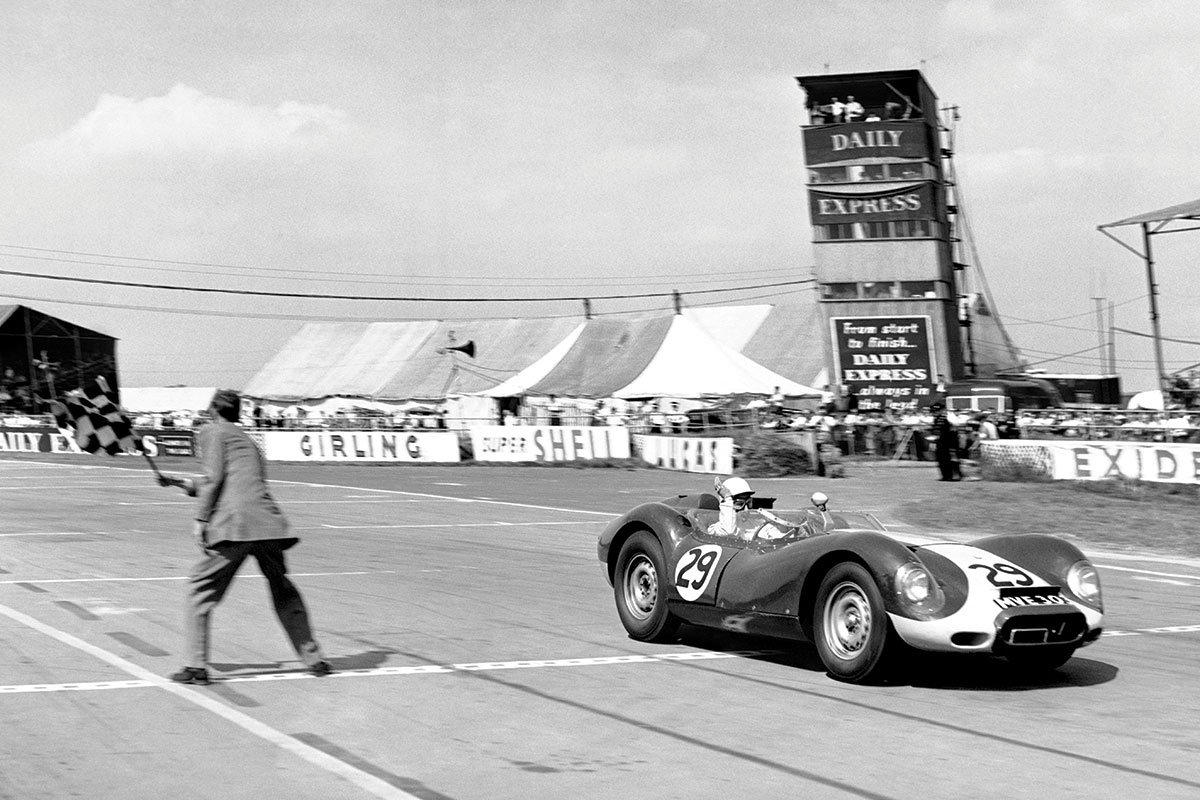
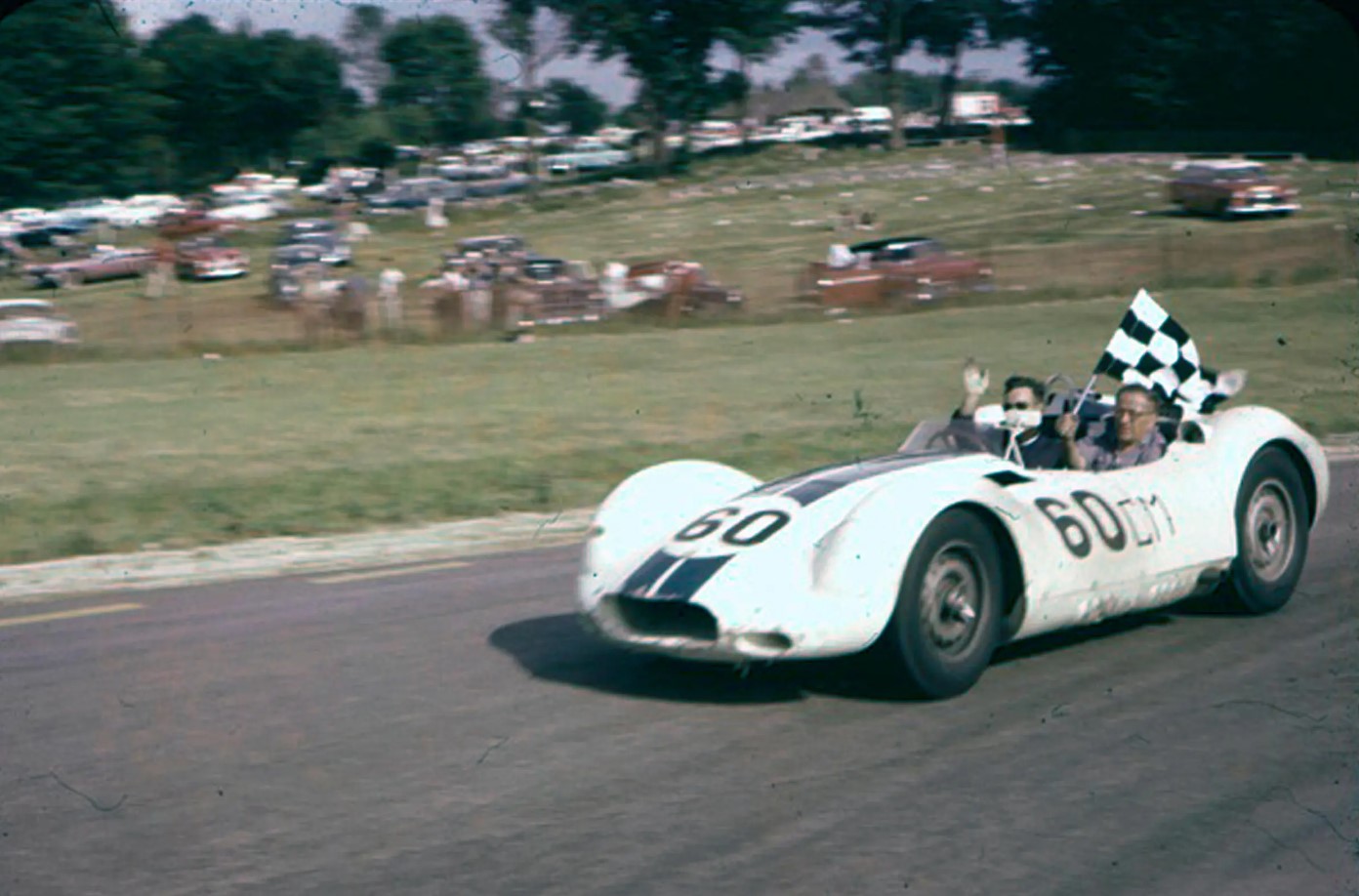
However, the story took a dark turn at Spa-Francorchamps in May 1958. While battling for the lead against Masten Gregory’s Ferrari, Scott Brown crashed in the rain; the magnesium-bodied car caught fire, and the beloved driver succumbed to his injuries the following day. Brian Lister was devastated. Although the team continued—with Stirling Moss famously winning the British Grand Prix support race in a Knobbly just weeks later to honor Archie—the heart had gone out of the operation. Brian Lister eventually withdrew from racing, but not before the Knobbly had cemented its reputation. across the Atlantic, the car found a second life. Briggs Cunningham, the American sportsman, campaigned the Lister-Jaguars and Lister-Chevys in the SCCA championships with Walt Hansgen, dominating the C-Modified class and proving that the chassis was robust enough to handle the rougher American circuits.
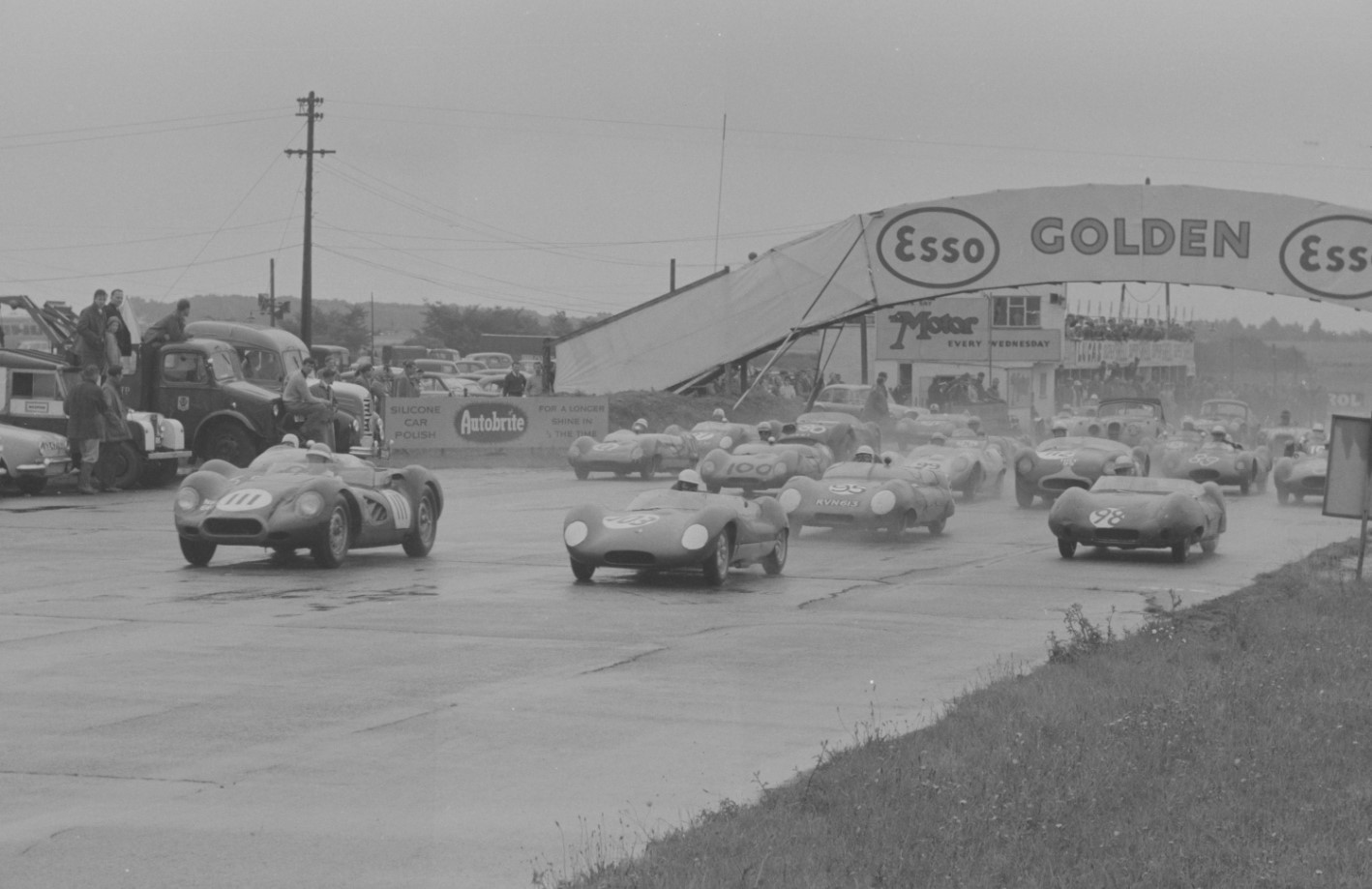
The commercial success of the Lister was remarkable for such a small outfit. Unlike Ferrari or Jaguar, who built cars to promote road models, Lister built race cars to race. They sold chassis to privateers like Ecurie Ecosse and national racing teams who wanted a turn-key winner. The Knobbly’s repercussion in car culture is that of the ultimate “Garagiste” victory. It proved that a small team in Cambridge could build a car faster than the combined might of Modena and Newport Pagnell. It remains one of the most physically demanding cars to drive fast; the cockpit is a furnace, the transmission tunnel runs hot enough to melt race boots, and the steering is heavy, yet it communicates every granule of asphalt to the driver’s palms.
The legacy of the Lister Knobbly is enduring. It was replaced in 1959 by the Frank Costin-designed aerodynamic body (the “Costin Lister”), which was technically faster in a straight line but arguably uglier and less charismatic. The Knobbly remains the zenith of the front-engined sports racer. Its importance is such that in recent years, the Lister Motor Company has been resurrected to build “continuation” cars—brand new Knobblys built using the original jigs and tooling, eligible for historic racing. This is not merely a replica; it is a resumption of history, acknowledging that the design was perfect in 1958 and remains perfect today. In the pantheon of motorsport, the Lister Knobbly sits at the right hand of the Jaguar D-Type—a rougher, wilder, and more aggressive cousin that represents the final, glorious shout of the 1950s before the mid-engine revolution silenced the front-row thunder forever.
Portal
Model line
Model generation
Predecessor
Sucessor
Brand
Produced from
Vehicle category
Portal
Model line
Model generation
Predecessor
Sucessor
About this model
In the pantheon of British motorsport engineering, there exists a specific, golden hour in the late 1950s—a twilight period between the dominance of the heavy, factory-backed endurance racers and the imminent revolution of the mid-engined garagistas. In this fleeting moment, brilliance was not measured by wind tunnel hours or corporate budgets, but by the intuitive genius of men working in shed-like structures with welding torches and English wheels. The Lister Knobbly is the undisputed sovereign of this era. Born in a Cambridge ironworks and forged in the heat of a tragic but beautiful friendship between engineer Brian Lister and driver Archie Scott Brown, the Knobbly was the privateer’s weapon of choice, a car that took the mechanical heart of a Jaguar D-Type and wrapped it in a skin so rudimentary, yet so effective, that it embarrassed the establishment. It was the successor to the flat-sided “Flat Iron” Lister, arriving in 1958 to do battle against the might of the Aston Martin DBR1 and the Ferrari 250 Testa Rossa. It was a machine that didn’t just look fast; it looked organic, a crouching animal composed of aluminum curves and raw intent.
To analyze the Lister Knobbly technically is to look at a masterclass in reductive engineering. Brian Lister’s philosophy was antithetical to the complexity of the Europeans. The chassis was a marvel of simplicity: a twin-tube ladder frame constructed from 3-inch, 14-gauge steel tubes. It was incredibly stiff, lightweight, and provided a low center of gravity. Crucially, Lister utilized a De Dion rear axle setup, which kept the rear wheels perpendicular to the road surface, maximizing the contact patch of the Dunlop racing tires—a significant advantage over the live axles found in many American specials of the time. The front suspension used unequal length wishbones from the MG parts bin, heavily modified to cope with racing loads. The braking was handled by Girling discs all around, with the rear units mounted inboard to reduce unsprung weight, a detail that highlighted the sophistication hiding beneath the brute force.
However, the defining characteristic of the vehicle, and the source of its affectionate nickname, was its bodywork. The “Knobbly” shape was not styled; it was shrunk-wrapped. To minimize the frontal area while accommodating the tall Jaguar XK inline-six engine, the aluminium skin had to undulate wildly. It hugged the wheels, dipped low for the cockpit, and rose again over the rear haunches. The bonnet featured a prominent bulge to clear the cam covers and carburetors, creating a silhouette that looked like a series of knuckles or knobs. Under that bonnet usually sat the 3.8-litre, dry-sump Jaguar D-Type engine, breathing through triple Weber 45 DCOE carburetors. Producing upwards of 300 bhp and a mountain of torque, this engine, when mated to the featherweight Lister chassis (the whole car weighed barely 780 kg), resulted in a power-to-weight ratio that was terrifying. While Jaguar engines were the standard, the chassis was versatile enough to accept the Chevrolet small-block V8 for American customers, creating the monstrous Lister-Chevy, a car that combined British handling with Detroit horsepower to devastating effect.
The history of the Lister Knobbly is inextricably linked to the brilliance and tragedy of Archie Scott Brown. A driver born with severe physical disabilities—malformed legs and a right arm that ended in a stump—Scott Brown possessed a car control talent that rivaled Stirling Moss and Juan Manuel Fangio. He didn’t just drive the Knobbly; he danced with it. Throughout the 1958 season, the Works Knobbly (registered VVP 241) was the scourge of British circuits. It decimated the competition at Oulton Park, Goodwood, and Silverstone, frequently beating the factory Aston Martins. The car’s handling, described by Moss as “fantastic” and “entirely forgiving,” allowed drivers to drift the car at severe angles, steering with the throttle.
However, the story took a dark turn at Spa-Francorchamps in May 1958. While battling for the lead against Masten Gregory’s Ferrari, Scott Brown crashed in the rain; the magnesium-bodied car caught fire, and the beloved driver succumbed to his injuries the following day. Brian Lister was devastated. Although the team continued—with Stirling Moss famously winning the British Grand Prix support race in a Knobbly just weeks later to honor Archie—the heart had gone out of the operation. Brian Lister eventually withdrew from racing, but not before the Knobbly had cemented its reputation. across the Atlantic, the car found a second life. Briggs Cunningham, the American sportsman, campaigned the Lister-Jaguars and Lister-Chevys in the SCCA championships with Walt Hansgen, dominating the C-Modified class and proving that the chassis was robust enough to handle the rougher American circuits.
The commercial success of the Lister was remarkable for such a small outfit. Unlike Ferrari or Jaguar, who built cars to promote road models, Lister built race cars to race. They sold chassis to privateers like Ecurie Ecosse and national racing teams who wanted a turn-key winner. The Knobbly’s repercussion in car culture is that of the ultimate “Garagiste” victory. It proved that a small team in Cambridge could build a car faster than the combined might of Modena and Newport Pagnell. It remains one of the most physically demanding cars to drive fast; the cockpit is a furnace, the transmission tunnel runs hot enough to melt race boots, and the steering is heavy, yet it communicates every granule of asphalt to the driver’s palms.
The legacy of the Lister Knobbly is enduring. It was replaced in 1959 by the Frank Costin-designed aerodynamic body (the “Costin Lister”), which was technically faster in a straight line but arguably uglier and less charismatic. The Knobbly remains the zenith of the front-engined sports racer. Its importance is such that in recent years, the Lister Motor Company has been resurrected to build “continuation” cars—brand new Knobblys built using the original jigs and tooling, eligible for historic racing. This is not merely a replica; it is a resumption of history, acknowledging that the design was perfect in 1958 and remains perfect today. In the pantheon of motorsport, the Lister Knobbly sits at the right hand of the Jaguar D-Type—a rougher, wilder, and more aggressive cousin that represents the final, glorious shout of the 1950s before the mid-engine revolution silenced the front-row thunder forever.
Generations
Generations of this model
Generations
Generations of this model
Submodels
Discover all the variants of this model
Submodels
Discover all the variants of this model
Vehicles
Legendary Vehicles
Vehicles