Lola T290


Brand
Produced from
Vehicle category
Portal
Model line
Model generation
Predecessor
Sucessor
About this model
The year 1972 was a pivotal juncture in the timeline of sports car racing, a moment when the tectonic plates of regulation shifted, creating new continents of opportunity for the specialist manufacturer. While the headline news was the 3.0-litre limit imposed on the World Sportscar Championship—giving birth to the Ferrari 312PB and Matra MS670—a arguably more ferocious and commercially vital war was brewing in the tier below: the European 2-Litre Sports Car Championship. This was the domain of the privateer, the proving ground for future Formula 1 drivers, and the financial lifeblood of the British racing industry. Into this coliseum stepped the Lola T290. It was Eric Broadley’s definitive answer to a question that was being shouted by racing teams across the continent: “How do we go fast, reliably, without a factory budget?” Replacing the successful but aging T212, the T290 was the genesis of a dynasty, the first of the “T29-series” that would effectively monopolize the class for a decade. Its arrival marked the moment Lola moved away from the curvaceous aesthetics of the 1960s and embraced the brutal, functionalist wedge era.
The T290 entered a market that was becoming a fierce duopoly. Its primary antagonist was the Chevron B21, a tubular-framed masterpiece from Bolton penned by the genius Derek Bennett. The rivalry between Lola and Chevron in the early 1970s was the motorsport equivalent of the Beatles vs. the Rolling Stones; you were either a Lola team or a Chevron team, and the choice defined your philosophy. The Chevron was supple, forgiving, and artful; the Lola T290 was stiff, aggressive, and industrial. It was a tool built for a specific job: to harness the screaming horsepower of the Cosworth FVC engine and transmit it to the tarmac with zero loss.
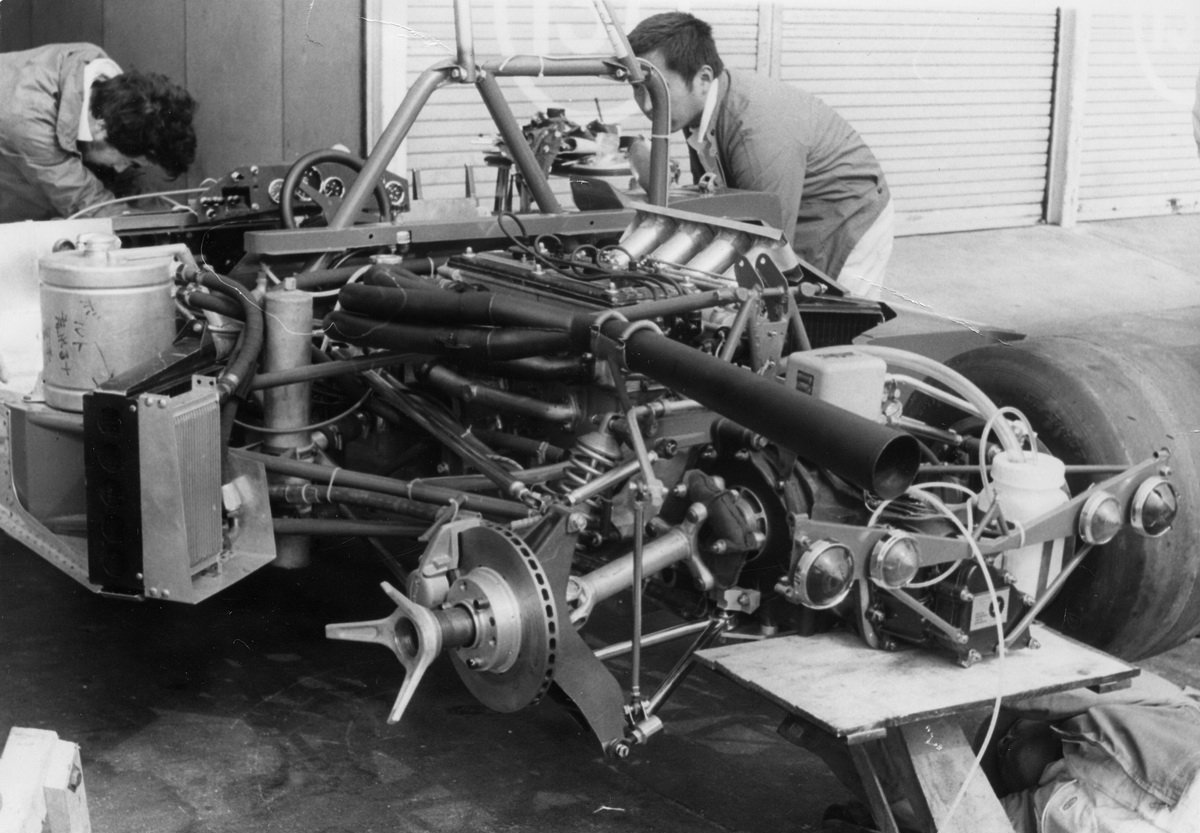
Technically, the T290 was a significant evolution of Broadley’s engineering ethos. Unlike the spaceframe Chevron, the Lola utilized a full aluminium monocoque chassis. This “bathtub” construction, riveted and bonded, was derived from Lola’s single-seater expertise. It offered superior torsional rigidity compared to its tubular rivals, providing a more stable platform for the suspension geometry to do its work. However, it also made the car harder to repair in the event of a heavy shunt—a trade-off many teams were willing to accept for the sheer mechanical grip it offered. The suspension was classic Formula 1 thinking: double wishbones at the front with coil-over dampers, and a multi-link setup at the rear with top links, lower wishbones, and radius rods.
The heart of the T290—and indeed the heart of the entire 2-litre class in 1972—was the engine. The chassis was designed as a “mule,” capable of accepting various powerplants, but the overwhelming majority were fitted with the Ford-Cosworth FVC (Four Valve C-series). This 1.8-litre or 1.9-litre inline-four was a jewel of engineering. Producing around 275 brake horsepower at a piercing 9,000 rpm, it was a vibration-heavy, high-maintenance grenade that offered spectacular performance. The T290 was also the testbed for the Chevrolet Vega-based Cosworth EA engine, an all-alloy unit that promised more torque but delivered reliability headaches. A handful of chassis were even fitted with the nascent BMW M12 engines or the Abarth inline-fours, highlighting the T290’s modularity. Power was sent to the rear wheels via a Hewland FT200 or FG400 five-speed transaxle, a gearbox that required a deliberate, precise hand.
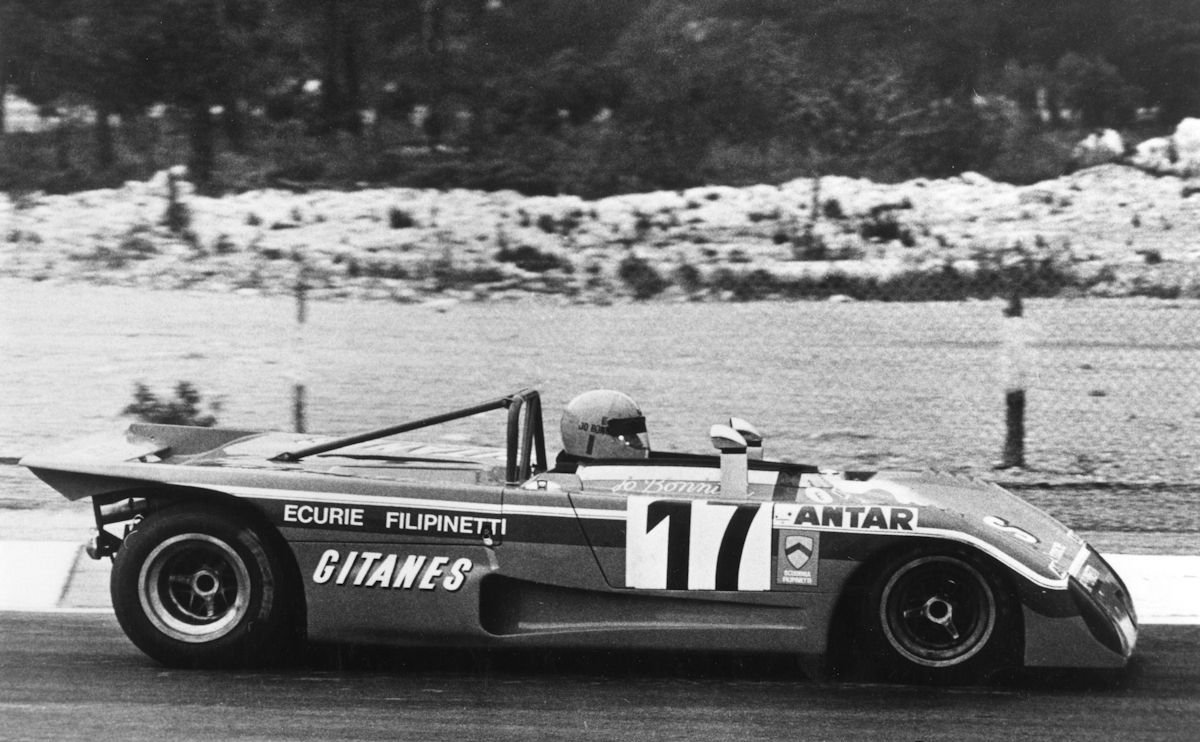
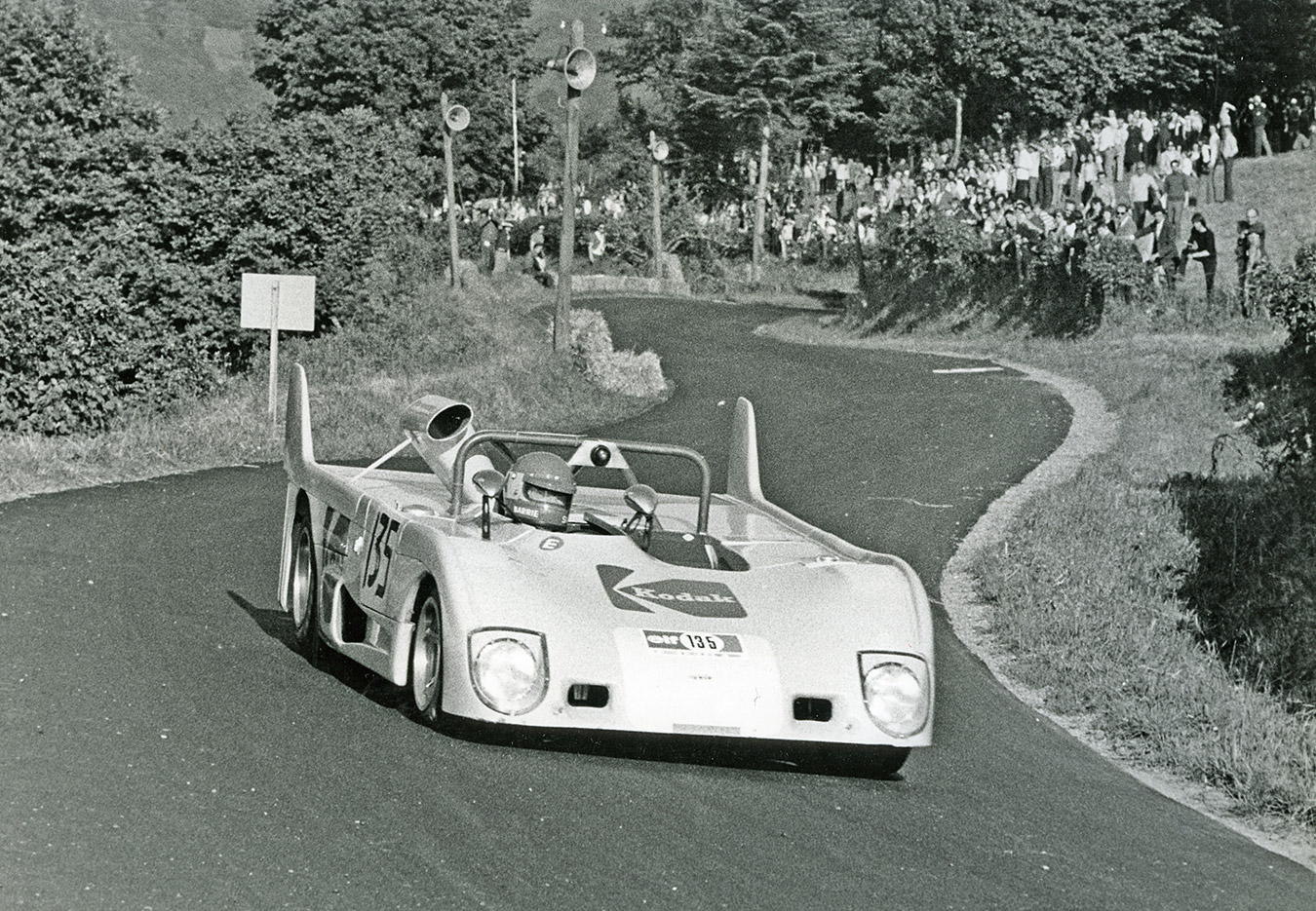
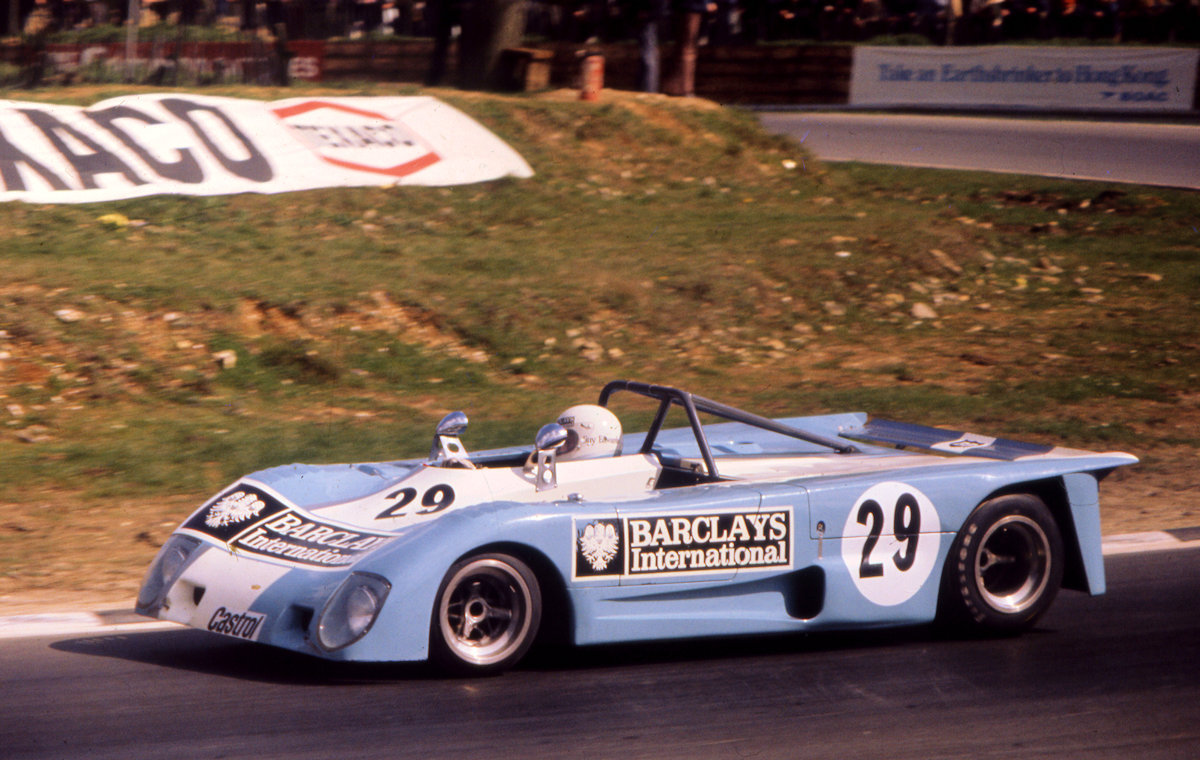
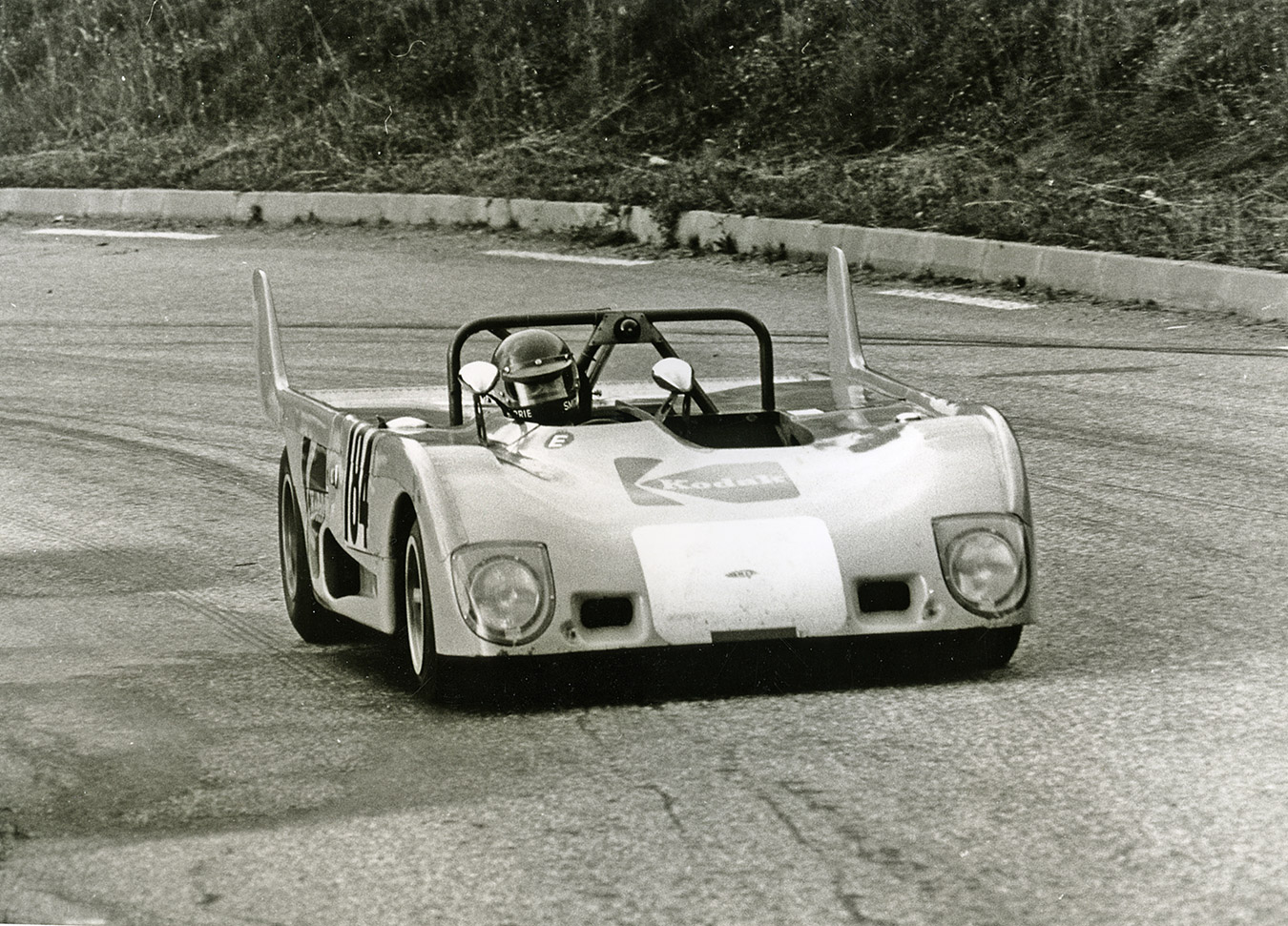
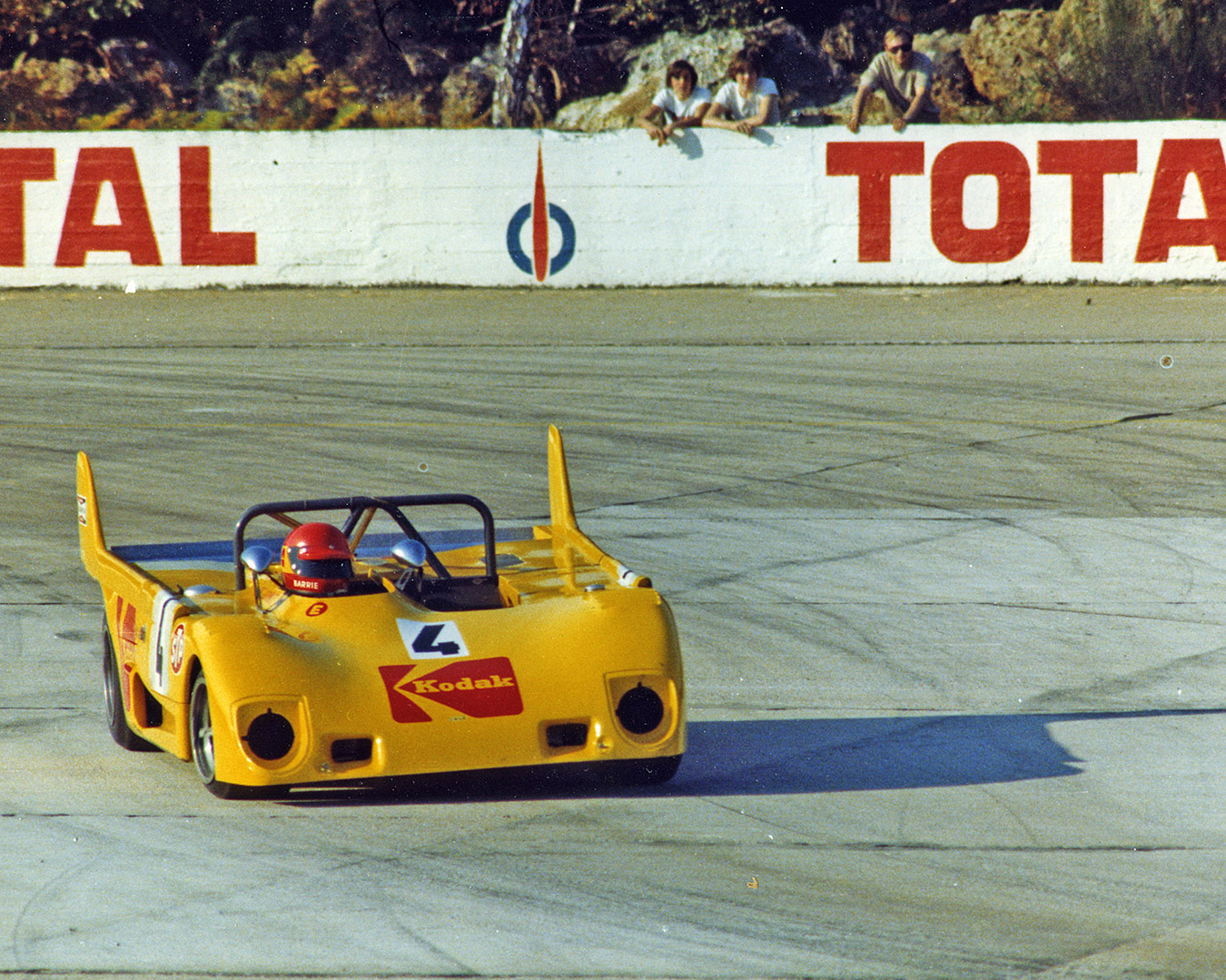
Visually, the T290 established the template for the 1970s sports racer. Gone was the integrated rear bodywork of the T212. The T290 featured a distinct “shovel” nose to generate front downforce, wide sidepods housing the fuel cells and radiators, and a separate, adjustable rear wing mounted on struts above the transmission. This separation of the wing from the bodywork was a crucial aerodynamic development, allowing the wing to work in “cleaner” air and generate genuine downforce rather than just reducing lift. The bodywork was fiberglass, thin and flimsy, serving only to cheat the wind.
The competitive history of the T290 is a story of ubiquity and speed. Upon its launch in 1972, it flooded the grids of the European 2-Litre Championship. Drivers like Chris Craft, driving for the Ecurie Bonnier outfit, and Guy Edwards showcased the car’s potential immediately. The season was a constant dogfight between the Lola T290s, the Chevron B21s, and the Abarth-Osellas. While Abarth took the manufacturer’s title in 1972, the T290 proved it was the faster customer car. It won races at prestigious venues like the Nürburgring and Vallelunga. Its stiff monocoque made it particularly lethal on high-speed circuits where precision was paramount.
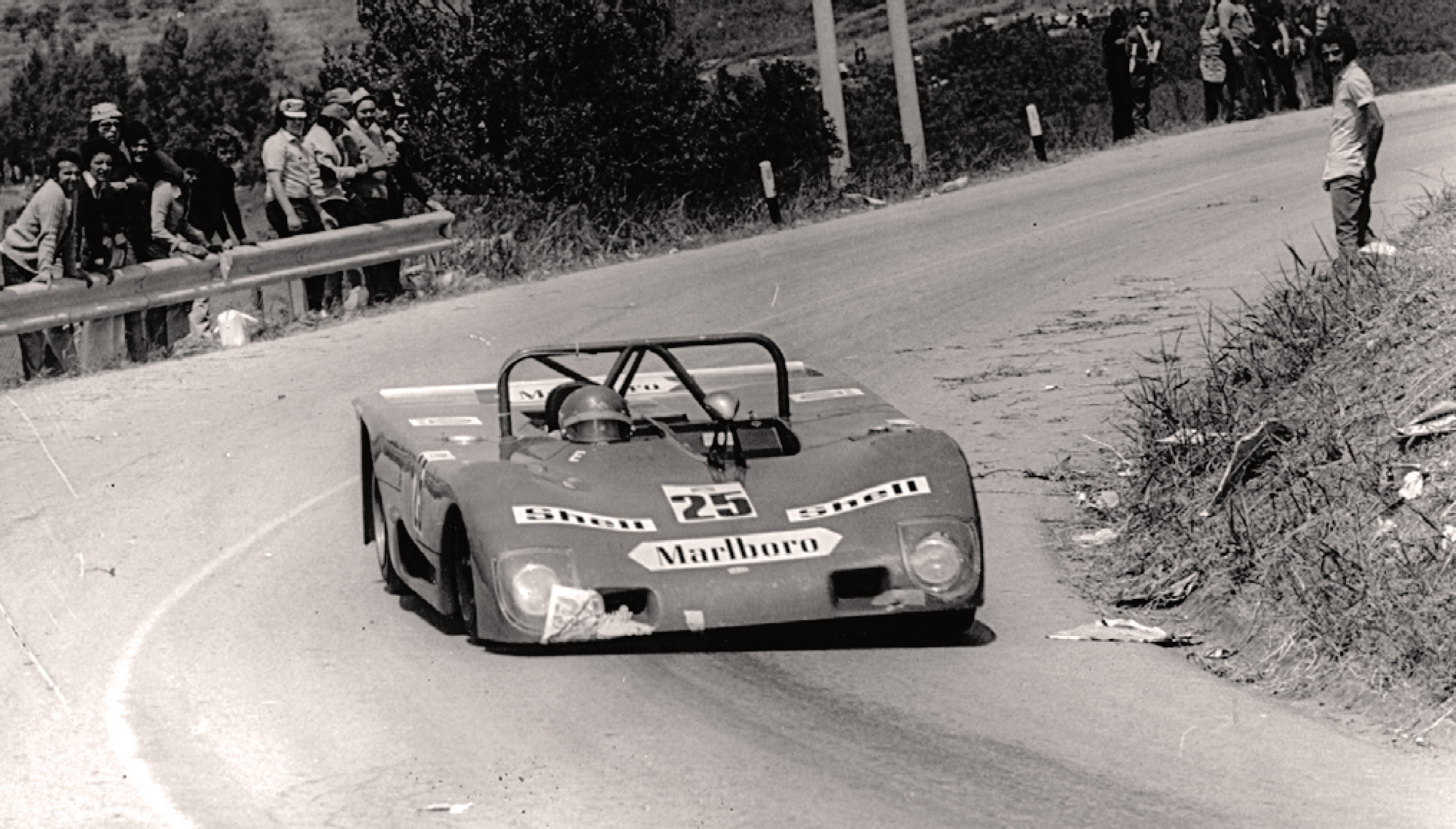
However, the T290’s impact extended far beyond the circuit. Due to its lightweight construction (barely tipping the scales at 550 kg) and immense mechanical grip, the T290 became the weapon of choice for the European Hill Climb Championship. In the hands of privateers, the T290 terrorized the mountain passes of France, Italy, and Switzerland. Its short wheelbase and explosive power delivery made it perfect for the hairpin-laden ascents, and many T290s spent their later lives being modified with monstrous wings and wider tires to compete in the Bergrennen scene well into the 1980s.
The car also found success across the Atlantic. In North America and Japan (in the Fuji Grand Champion series), the T290 was imported and often modified with larger engines or different bodywork. It was a truly global race car, adaptable to almost any regulation set that allowed for two seats and open wheels. The sheer volume of chassis produced—over 30 in the first year alone—meant that if you went to a sports car race in 1972 or 1973, you were guaranteed to see, and hear, a T290.
The legacy of the Lola T290 is monumental, not necessarily because of the trophies it won, but because of what it started. It was the “Series 1” of Lola’s 2-litre dominance. The lessons learned with the T290—specifically regarding aerodynamics and engine mounting—led directly to the T292 of 1973, which smoothed out the bodywork, and the T294 of 1974, which fully integrated the BMW engine. The T290 proved that the monocoque construction was superior to the spaceframe for sports prototypes, forcing rival Chevron to eventually adapt. It cemented the relationship between Lola and the privateer racer, a bond that would sustain the company through the lean years of the late 70s.
In the pantheon of automobilia, the Lola T290 sits as the definitive “working class” hero of the sportscar world. It wasn’t a Ferrari 312PB built for aces like Jacky Ickx; it was a car built for the wealthy dentist, the aspiring F1 driver, and the garage team owner. It was a machine that required physical strength to drive, vibrating with the manic energy of a solid-mounted Cosworth engine, smelling of unburnt fuel and hot fiberglass. It represents a golden era of customer racing, a time when you could buy a world-class prototype from a catalogue and, with enough bravery, put it on the front row of the grid.
Portal
Model line
Model generation
Predecessor
Sucessor
Brand
Produced from
Vehicle category
Portal
Model line
Model generation
Predecessor
Sucessor
About this model
The year 1972 was a pivotal juncture in the timeline of sports car racing, a moment when the tectonic plates of regulation shifted, creating new continents of opportunity for the specialist manufacturer. While the headline news was the 3.0-litre limit imposed on the World Sportscar Championship—giving birth to the Ferrari 312PB and Matra MS670—a arguably more ferocious and commercially vital war was brewing in the tier below: the European 2-Litre Sports Car Championship. This was the domain of the privateer, the proving ground for future Formula 1 drivers, and the financial lifeblood of the British racing industry. Into this coliseum stepped the Lola T290. It was Eric Broadley’s definitive answer to a question that was being shouted by racing teams across the continent: “How do we go fast, reliably, without a factory budget?” Replacing the successful but aging T212, the T290 was the genesis of a dynasty, the first of the “T29-series” that would effectively monopolize the class for a decade. Its arrival marked the moment Lola moved away from the curvaceous aesthetics of the 1960s and embraced the brutal, functionalist wedge era.
The T290 entered a market that was becoming a fierce duopoly. Its primary antagonist was the Chevron B21, a tubular-framed masterpiece from Bolton penned by the genius Derek Bennett. The rivalry between Lola and Chevron in the early 1970s was the motorsport equivalent of the Beatles vs. the Rolling Stones; you were either a Lola team or a Chevron team, and the choice defined your philosophy. The Chevron was supple, forgiving, and artful; the Lola T290 was stiff, aggressive, and industrial. It was a tool built for a specific job: to harness the screaming horsepower of the Cosworth FVC engine and transmit it to the tarmac with zero loss.
Technically, the T290 was a significant evolution of Broadley’s engineering ethos. Unlike the spaceframe Chevron, the Lola utilized a full aluminium monocoque chassis. This “bathtub” construction, riveted and bonded, was derived from Lola’s single-seater expertise. It offered superior torsional rigidity compared to its tubular rivals, providing a more stable platform for the suspension geometry to do its work. However, it also made the car harder to repair in the event of a heavy shunt—a trade-off many teams were willing to accept for the sheer mechanical grip it offered. The suspension was classic Formula 1 thinking: double wishbones at the front with coil-over dampers, and a multi-link setup at the rear with top links, lower wishbones, and radius rods.
The heart of the T290—and indeed the heart of the entire 2-litre class in 1972—was the engine. The chassis was designed as a “mule,” capable of accepting various powerplants, but the overwhelming majority were fitted with the Ford-Cosworth FVC (Four Valve C-series). This 1.8-litre or 1.9-litre inline-four was a jewel of engineering. Producing around 275 brake horsepower at a piercing 9,000 rpm, it was a vibration-heavy, high-maintenance grenade that offered spectacular performance. The T290 was also the testbed for the Chevrolet Vega-based Cosworth EA engine, an all-alloy unit that promised more torque but delivered reliability headaches. A handful of chassis were even fitted with the nascent BMW M12 engines or the Abarth inline-fours, highlighting the T290’s modularity. Power was sent to the rear wheels via a Hewland FT200 or FG400 five-speed transaxle, a gearbox that required a deliberate, precise hand.
Visually, the T290 established the template for the 1970s sports racer. Gone was the integrated rear bodywork of the T212. The T290 featured a distinct “shovel” nose to generate front downforce, wide sidepods housing the fuel cells and radiators, and a separate, adjustable rear wing mounted on struts above the transmission. This separation of the wing from the bodywork was a crucial aerodynamic development, allowing the wing to work in “cleaner” air and generate genuine downforce rather than just reducing lift. The bodywork was fiberglass, thin and flimsy, serving only to cheat the wind.
The competitive history of the T290 is a story of ubiquity and speed. Upon its launch in 1972, it flooded the grids of the European 2-Litre Championship. Drivers like Chris Craft, driving for the Ecurie Bonnier outfit, and Guy Edwards showcased the car’s potential immediately. The season was a constant dogfight between the Lola T290s, the Chevron B21s, and the Abarth-Osellas. While Abarth took the manufacturer’s title in 1972, the T290 proved it was the faster customer car. It won races at prestigious venues like the Nürburgring and Vallelunga. Its stiff monocoque made it particularly lethal on high-speed circuits where precision was paramount.
However, the T290’s impact extended far beyond the circuit. Due to its lightweight construction (barely tipping the scales at 550 kg) and immense mechanical grip, the T290 became the weapon of choice for the European Hill Climb Championship. In the hands of privateers, the T290 terrorized the mountain passes of France, Italy, and Switzerland. Its short wheelbase and explosive power delivery made it perfect for the hairpin-laden ascents, and many T290s spent their later lives being modified with monstrous wings and wider tires to compete in the Bergrennen scene well into the 1980s.
The car also found success across the Atlantic. In North America and Japan (in the Fuji Grand Champion series), the T290 was imported and often modified with larger engines or different bodywork. It was a truly global race car, adaptable to almost any regulation set that allowed for two seats and open wheels. The sheer volume of chassis produced—over 30 in the first year alone—meant that if you went to a sports car race in 1972 or 1973, you were guaranteed to see, and hear, a T290.
The legacy of the Lola T290 is monumental, not necessarily because of the trophies it won, but because of what it started. It was the “Series 1” of Lola’s 2-litre dominance. The lessons learned with the T290—specifically regarding aerodynamics and engine mounting—led directly to the T292 of 1973, which smoothed out the bodywork, and the T294 of 1974, which fully integrated the BMW engine. The T290 proved that the monocoque construction was superior to the spaceframe for sports prototypes, forcing rival Chevron to eventually adapt. It cemented the relationship between Lola and the privateer racer, a bond that would sustain the company through the lean years of the late 70s.
In the pantheon of automobilia, the Lola T290 sits as the definitive “working class” hero of the sportscar world. It wasn’t a Ferrari 312PB built for aces like Jacky Ickx; it was a car built for the wealthy dentist, the aspiring F1 driver, and the garage team owner. It was a machine that required physical strength to drive, vibrating with the manic energy of a solid-mounted Cosworth engine, smelling of unburnt fuel and hot fiberglass. It represents a golden era of customer racing, a time when you could buy a world-class prototype from a catalogue and, with enough bravery, put it on the front row of the grid.
Generations
Generations of this model
Generations
Generations of this model
Submodels
Discover all the variants of this model
Submodels
Discover all the variants of this model
Vehicles
Legendary Vehicles
Vehicles