Lola T298



Brand
Produced from
Vehicle category
Portal
Model line
Model generation
Predecessor
Sucessor
About this model
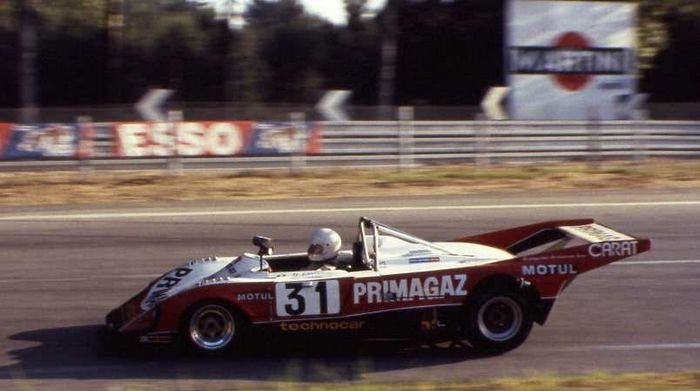
By the late 1970s, the European 2-Litre Sports Car Championship had matured from a chaotic skirmish of privateers into a sophisticated, high-stakes theater of war. The era of the “garagiste” welding tubes in a shed was fading, replaced by an age of aerodynamic refinement and Formula 2-derived engine technology. Standing at the very summit of this evolutionary mountain was the Lola T298. Launched in 1978, the T298 was not a revolutionary blank-sheet design; rather, it was the apotheosis of a bloodline that began with the T290 in 1972. It was the final, most polished syllable in Eric Broadley’s decade-long sentence on how to build a winning customer sports prototype. While its predecessors had fought against the tubular-framed Chevrons and the early Abarths, the T298 entered a world dominated by the Italian flair of the Osella PA6 and PA7. It was the definitive British answer to the trans-alpine challenge, a machine that traded the raw, nervous energy of the early 70s for a sleek, planted, and devastatingly effective efficiency that would see it conquering everything from the Mulsanne Straight to the hairpins of the French Alps.
Technically, the T298 represented the zenith of the “bathtub” monocoque philosophy. Like its ancestors, it was constructed from riveted and bonded aluminium alloy, but the crude angles of 1972 had been smoothed into a structure of immense torsional rigidity and lightness. The chassis was engineered to cope with the grip levels of the latest Goodyear and Dunlop slicks, which had grown significantly in width and compound sophistication over the decade. The suspension followed Broadley’s preferred orthodoxy—double wishbones at the front and a multi-link rear setup—but the geometry was revised to reduce geometry changes under heavy braking and acceleration, offering a more stable platform for the driver. A signature trait remained the inboard rear brakes, mounted tight against the transaxle to minimize unsprung mass, though by 1978, the cooling ducts feeding them had become aerodynamic artworks in their own right, seamlessly integrated into the rear bodywork.
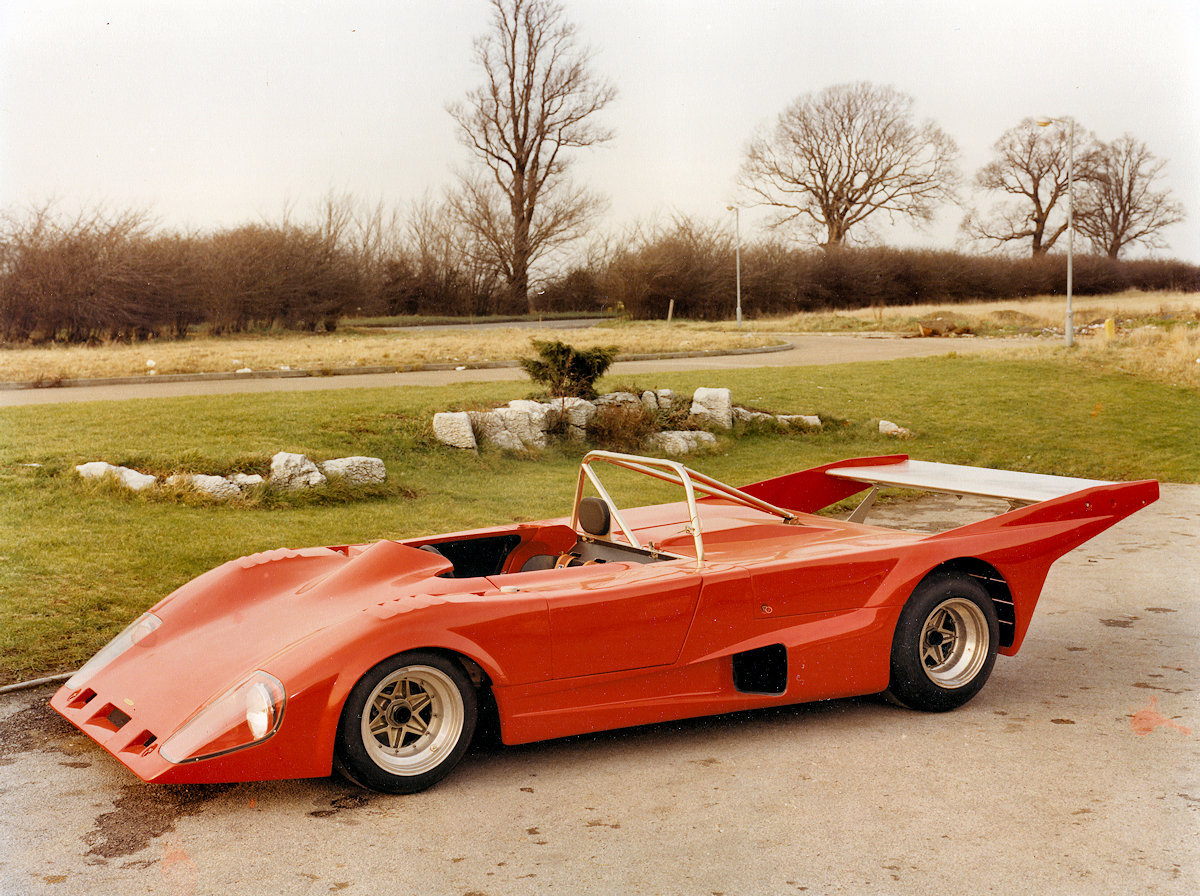
The exterior design of the T298 was arguably the most beautiful of the entire T-series lineage. It sat lower and wider than the T292, with a front cowling that featured a refined, chisel-like profile designed to pierce the air rather than just shovel it. The rear deck was extended—a nod to the increasing importance of reducing drag for higher top speeds—and the rear wing was mounted on a streamlined central support or twin struts, positioned high in the clean airflow. It was a shape that looked fast even when parked in the paddock, a cohesive wedge that had shed the “kit car” aesthetic for the purposeful look of a miniature Group C racer.
However, the T298’s true claim to fame was its engine bay, which served as the ultimate throne for the BMW M12/7. While the chassis could technically accept the venerable Ford Cosworth BDG (the 2.0-litre evolution of the FVC), the vast majority of competitive T298s were fitted with the Munich masterpiece. Paul Rosche’s engine was a jewel: a 2.0-litre, 16-valve, mechanically fuel-injected inline-four that produced over 300 brake horsepower. Unlike the vibrating, frenetic Cosworths of the early 70s, the BMW M12 was smoother, torquier, and possessed a durability that made it suited for endurance racing. The combination of the rigid Lola tub and the grunt of the BMW engine created a package that was incredibly hard to beat. Power was transmitted via the ubiquitous Hewland FG400 five-speed transaxle, a gearbox that had become the industry standard for its reliability and ease of ratio changes. In Japan, the T298 chassis even housed rotary Mazda engines for the Fuji Grand Champion series, proving the adaptability of Broadley’s design, but in Europe, the distinct induction roar of the BMW M12 was the T298’s signature soundtrack.
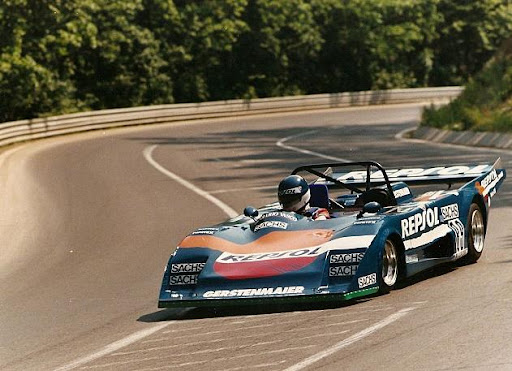
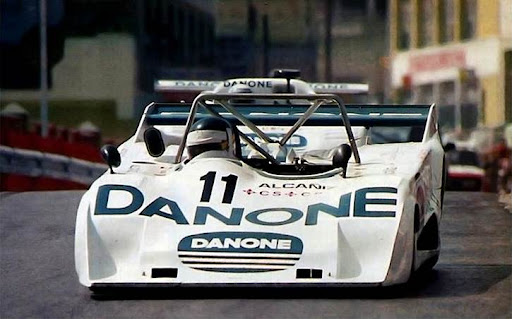
The competitive history of the T298 is a sprawling saga of dominance across multiple disciplines. In the European Sports Car Championship, it engaged in a fierce, season-long vendetta against the Osella squad. While the Italians often had the edge on tight, twisting circuits due to their slightly shorter wheelbase and softer chassis dynamics, the Lola T298 was the king of the high-speed tracks. It was a stability monster. In the hands of French aces like Xavier Lapeyre and Patrick Perrier, the T298 racked up victories at Paul Ricard and Magny-Cours. But it was at the 24 Hours of Le Mans where the T298 truly cemented its legend. In the Group 6 (Under 2.0 Litre) class, the T298 was the weapon of choice. In 1979 and 1980, privateer teams used the T298 to dominate the class, using the reliability of the BMW engine to outlast the competition. The car proved that a “sprint” chassis could survive the brutality of a 24-hour race if prepared correctly, often finishing well up the overall order ahead of much larger, more powerful prototypes that had succumbed to mechanical attrition.
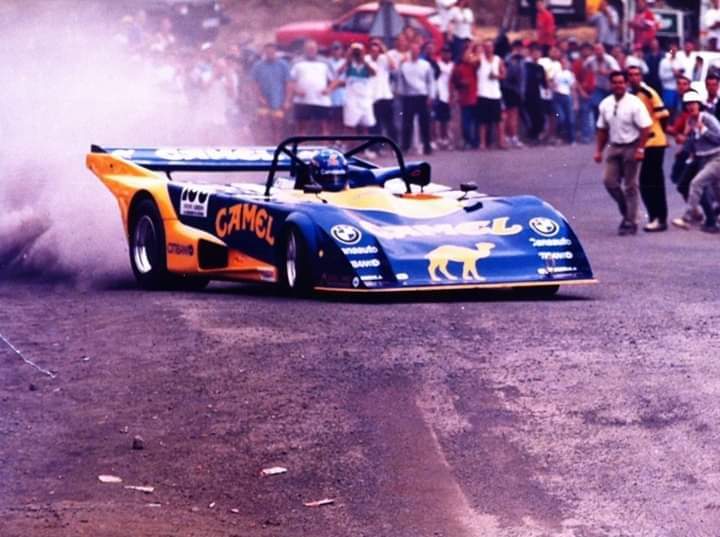
Yet, there is a second, wilder chapter to the T298’s life: the European Hill Climb Championship. As the chassis aged and was replaced in circuit racing by the ground-effect Lola T600, the T298 found a new lease on life in the mountains. Its lightweight construction (hovering around 600kg) and explosive power-to-weight ratio made it perfect for the discipline. In the hands of mountain legends like Jean-Louis Bos and Mauro Nesti (who switched between Osella and Lola), the T298 was mutated. Teams fitted massive, cantilevered rear wings that extended feet beyond the rear bodywork, widened the track to comical proportions, and tuned the engines for instantaneous torque. These “Bergrennen” monsters kept the T298 relevant well into the mid-1980s, screaming up the passes of Mont-Dore and Saint-Ursanne, their engines echoing off the canyon walls.
The commercial success of the T298 was the financial bedrock that allowed Lola to survive the late 70s. It was the default choice for the wealthy amateur; if you wanted to win, you bought a Lola-BMW. This ubiquity means that the T298 played a crucial role in the culture of motorsport, serving as the finishing school for a generation of drivers who would go on to race in Group C or Formula 1. It taught them the importance of downforce, the discipline of managing a high-strung racing engine, and the finesse required to drive a stiff monocoque car at the limit.
The legacy of the Lola T298 is that of the “final frontier.” It represents the end of the flat-bottom era. The car that replaced it, the T600, introduced Venturi tunnels and ground effect aerodynamics, fundamentally changing the way cars were driven and set up. The T298, therefore, stands as the ultimate expression of traditional suspension and aerodynamic engineering. It is the peak of the analog era—a car where mechanical grip and suspension geometry were just as important as the air flowing over the body. Today, in historic racing series like CER (Classic Endurance Racing), the T298 is a highly prized asset. It is faster than a T292, more reliable than a T290, and arguably better looking than both. When a T298 is unleashed on a modern track, spitting flames on the overrun and howling its BMW intake noise down the straight, it serves as a vivid, visceral reminder of a time when the 2-litre class was not a stepping stone, but a destination in itself.
Portal
Model line
Model generation
Predecessor
Sucessor
Brand
Produced from
Vehicle category
Portal
Model line
Model generation
Predecessor
Sucessor
About this model
By the late 1970s, the European 2-Litre Sports Car Championship had matured from a chaotic skirmish of privateers into a sophisticated, high-stakes theater of war. The era of the “garagiste” welding tubes in a shed was fading, replaced by an age of aerodynamic refinement and Formula 2-derived engine technology. Standing at the very summit of this evolutionary mountain was the Lola T298. Launched in 1978, the T298 was not a revolutionary blank-sheet design; rather, it was the apotheosis of a bloodline that began with the T290 in 1972. It was the final, most polished syllable in Eric Broadley’s decade-long sentence on how to build a winning customer sports prototype. While its predecessors had fought against the tubular-framed Chevrons and the early Abarths, the T298 entered a world dominated by the Italian flair of the Osella PA6 and PA7. It was the definitive British answer to the trans-alpine challenge, a machine that traded the raw, nervous energy of the early 70s for a sleek, planted, and devastatingly effective efficiency that would see it conquering everything from the Mulsanne Straight to the hairpins of the French Alps.
Technically, the T298 represented the zenith of the “bathtub” monocoque philosophy. Like its ancestors, it was constructed from riveted and bonded aluminium alloy, but the crude angles of 1972 had been smoothed into a structure of immense torsional rigidity and lightness. The chassis was engineered to cope with the grip levels of the latest Goodyear and Dunlop slicks, which had grown significantly in width and compound sophistication over the decade. The suspension followed Broadley’s preferred orthodoxy—double wishbones at the front and a multi-link rear setup—but the geometry was revised to reduce geometry changes under heavy braking and acceleration, offering a more stable platform for the driver. A signature trait remained the inboard rear brakes, mounted tight against the transaxle to minimize unsprung mass, though by 1978, the cooling ducts feeding them had become aerodynamic artworks in their own right, seamlessly integrated into the rear bodywork.
The exterior design of the T298 was arguably the most beautiful of the entire T-series lineage. It sat lower and wider than the T292, with a front cowling that featured a refined, chisel-like profile designed to pierce the air rather than just shovel it. The rear deck was extended—a nod to the increasing importance of reducing drag for higher top speeds—and the rear wing was mounted on a streamlined central support or twin struts, positioned high in the clean airflow. It was a shape that looked fast even when parked in the paddock, a cohesive wedge that had shed the “kit car” aesthetic for the purposeful look of a miniature Group C racer.
However, the T298’s true claim to fame was its engine bay, which served as the ultimate throne for the BMW M12/7. While the chassis could technically accept the venerable Ford Cosworth BDG (the 2.0-litre evolution of the FVC), the vast majority of competitive T298s were fitted with the Munich masterpiece. Paul Rosche’s engine was a jewel: a 2.0-litre, 16-valve, mechanically fuel-injected inline-four that produced over 300 brake horsepower. Unlike the vibrating, frenetic Cosworths of the early 70s, the BMW M12 was smoother, torquier, and possessed a durability that made it suited for endurance racing. The combination of the rigid Lola tub and the grunt of the BMW engine created a package that was incredibly hard to beat. Power was transmitted via the ubiquitous Hewland FG400 five-speed transaxle, a gearbox that had become the industry standard for its reliability and ease of ratio changes. In Japan, the T298 chassis even housed rotary Mazda engines for the Fuji Grand Champion series, proving the adaptability of Broadley’s design, but in Europe, the distinct induction roar of the BMW M12 was the T298’s signature soundtrack.
The competitive history of the T298 is a sprawling saga of dominance across multiple disciplines. In the European Sports Car Championship, it engaged in a fierce, season-long vendetta against the Osella squad. While the Italians often had the edge on tight, twisting circuits due to their slightly shorter wheelbase and softer chassis dynamics, the Lola T298 was the king of the high-speed tracks. It was a stability monster. In the hands of French aces like Xavier Lapeyre and Patrick Perrier, the T298 racked up victories at Paul Ricard and Magny-Cours. But it was at the 24 Hours of Le Mans where the T298 truly cemented its legend. In the Group 6 (Under 2.0 Litre) class, the T298 was the weapon of choice. In 1979 and 1980, privateer teams used the T298 to dominate the class, using the reliability of the BMW engine to outlast the competition. The car proved that a “sprint” chassis could survive the brutality of a 24-hour race if prepared correctly, often finishing well up the overall order ahead of much larger, more powerful prototypes that had succumbed to mechanical attrition.
Yet, there is a second, wilder chapter to the T298’s life: the European Hill Climb Championship. As the chassis aged and was replaced in circuit racing by the ground-effect Lola T600, the T298 found a new lease on life in the mountains. Its lightweight construction (hovering around 600kg) and explosive power-to-weight ratio made it perfect for the discipline. In the hands of mountain legends like Jean-Louis Bos and Mauro Nesti (who switched between Osella and Lola), the T298 was mutated. Teams fitted massive, cantilevered rear wings that extended feet beyond the rear bodywork, widened the track to comical proportions, and tuned the engines for instantaneous torque. These “Bergrennen” monsters kept the T298 relevant well into the mid-1980s, screaming up the passes of Mont-Dore and Saint-Ursanne, their engines echoing off the canyon walls.
The commercial success of the T298 was the financial bedrock that allowed Lola to survive the late 70s. It was the default choice for the wealthy amateur; if you wanted to win, you bought a Lola-BMW. This ubiquity means that the T298 played a crucial role in the culture of motorsport, serving as the finishing school for a generation of drivers who would go on to race in Group C or Formula 1. It taught them the importance of downforce, the discipline of managing a high-strung racing engine, and the finesse required to drive a stiff monocoque car at the limit.
The legacy of the Lola T298 is that of the “final frontier.” It represents the end of the flat-bottom era. The car that replaced it, the T600, introduced Venturi tunnels and ground effect aerodynamics, fundamentally changing the way cars were driven and set up. The T298, therefore, stands as the ultimate expression of traditional suspension and aerodynamic engineering. It is the peak of the analog era—a car where mechanical grip and suspension geometry were just as important as the air flowing over the body. Today, in historic racing series like CER (Classic Endurance Racing), the T298 is a highly prized asset. It is faster than a T292, more reliable than a T290, and arguably better looking than both. When a T298 is unleashed on a modern track, spitting flames on the overrun and howling its BMW intake noise down the straight, it serves as a vivid, visceral reminder of a time when the 2-litre class was not a stepping stone, but a destination in itself.
Generations
Generations of this model
Generations
Generations of this model
Submodels
Discover all the variants of this model
Submodels
Discover all the variants of this model
Vehicles
Legendary Vehicles
Vehicles