Lola T600

Brand
Produced from
Vehicle category
Portal
Model line
Model generation
Predecessor
Sucessor
About this model
The turn of the 1980s marked a period of technological stagnation in American sports car racing, a time when the grid of the IMSA GT Championship was suffocating under the heavy, turbocharged hegemony of the Porsche 935. While the German “Moby Dicks” were spectacular, spitting flame and possessing immense horsepower, they were fundamentally antiquated—production-based silhouettes relying on brute force to overcome the air. The revolution, when it arrived in 1981, did not come from Stuttgart, nor did it come from a major manufacturer’s skunkworks. It arrived in the form of a strange, alien wedge from Huntingdon, England, commissioned by a gentleman driver and a former Formula 5000 champion who simply wanted to win. The Lola T600 was more than just a new race car; it was a paradigm shift, the asteroid that wiped out the dinosaurs of the Group 5 era. It was the first sports prototype to successfully harness the “Ground Effect” aerodynamic principles that Colin Chapman had pioneered in Formula 1 with the Lotus 79, bringing the science of suction to the endurance racing world and birthing the golden age of the GTP class.
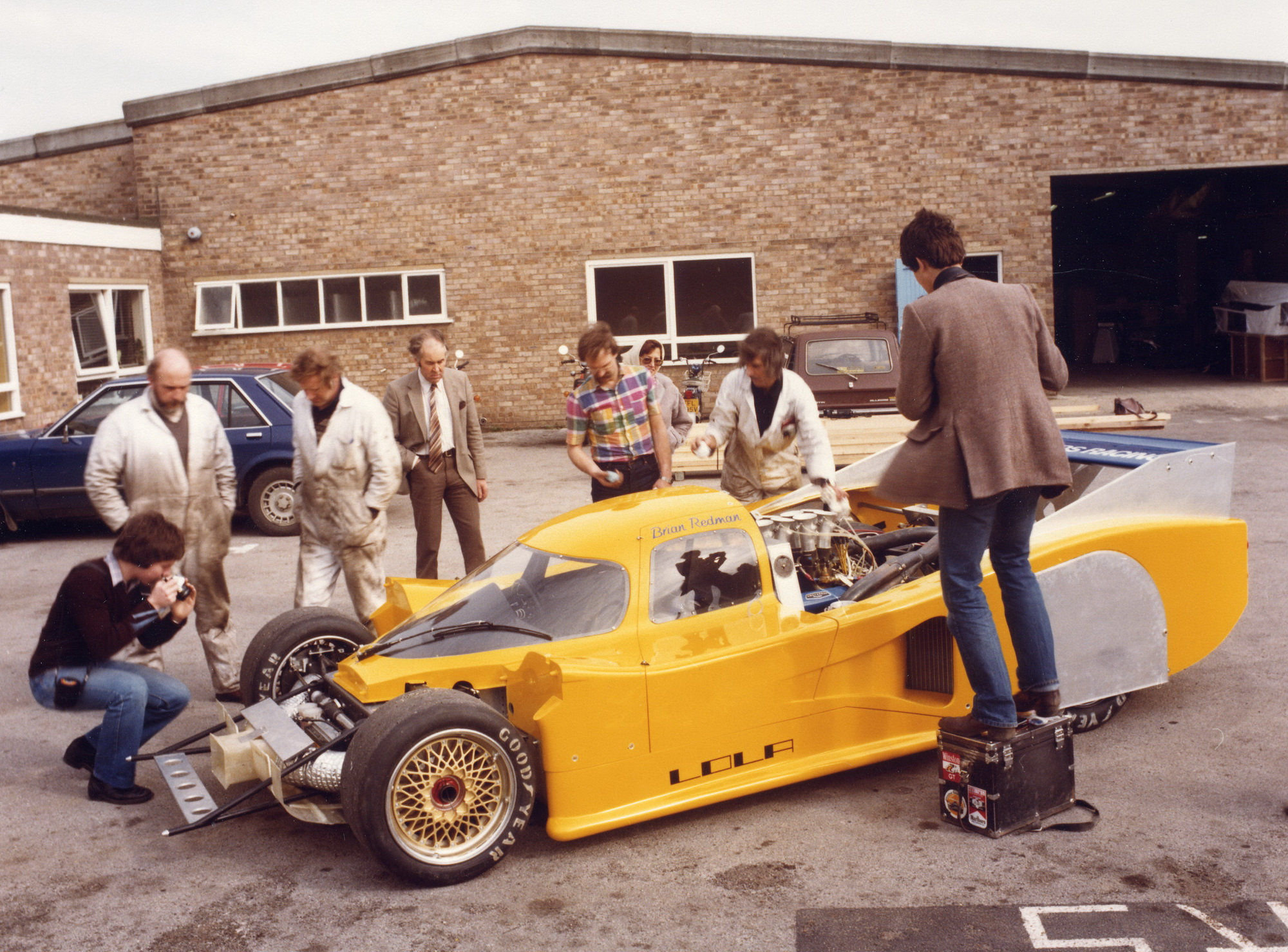
The genesis of the T600 is a story of vision and desperation. Brian Redman, the legendary British ace, and Ralph Kent-Cooke, a wealthy amateur racer, approached Eric Broadley at Lola with a request to build a closed-cockpit version of the successful T333CS Can-Am car to challenge the Porsches. Broadley, ever the innovator, refused to look backward. He proposed something radical: a clean-sheet design utilizing full-length venturi tunnels to generate downforce, a concept that had yet to be effectively applied to a full-fendered sports car. To execute this, Broadley enlisted the help of French aerodynamicist Dr. Max Sardou.
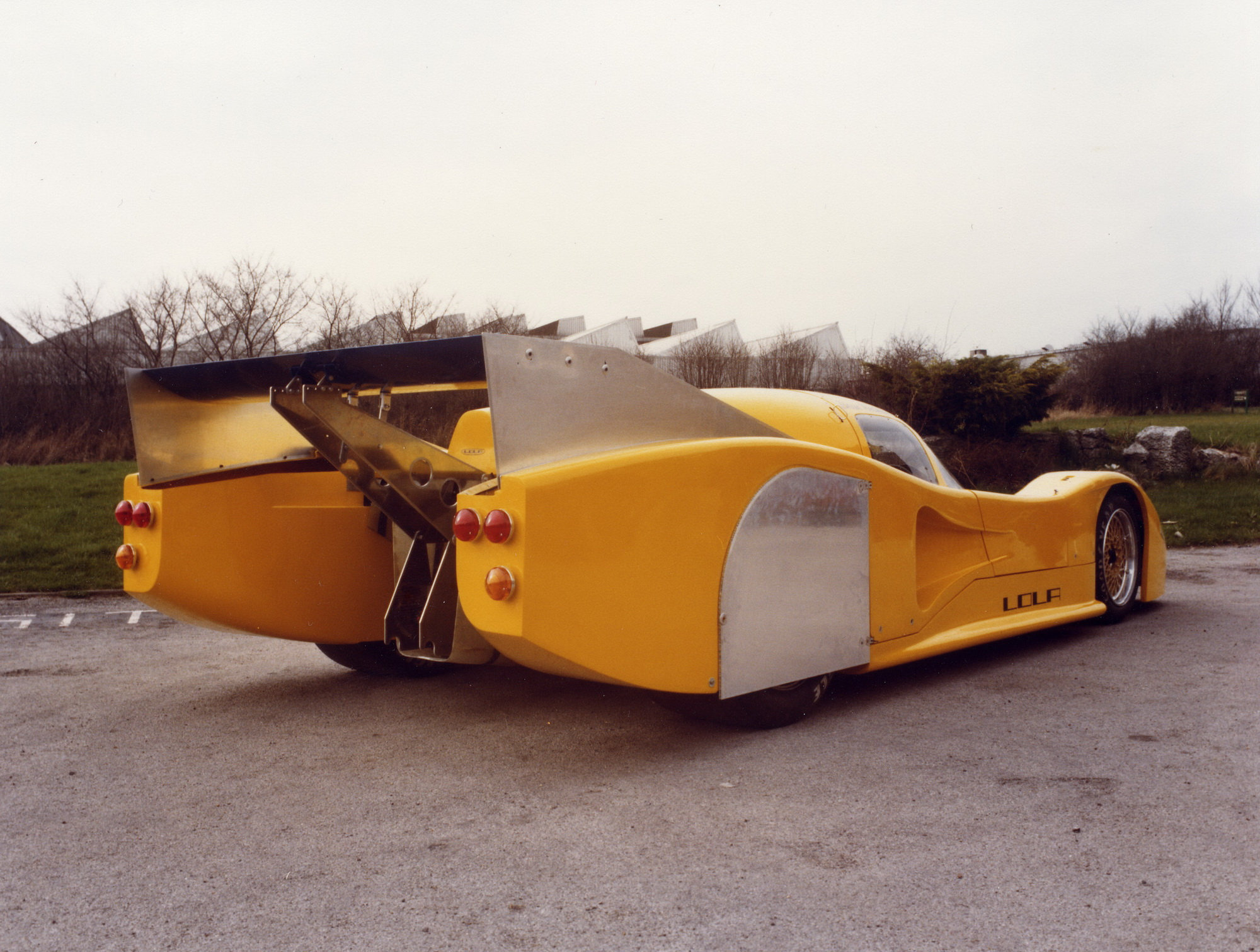
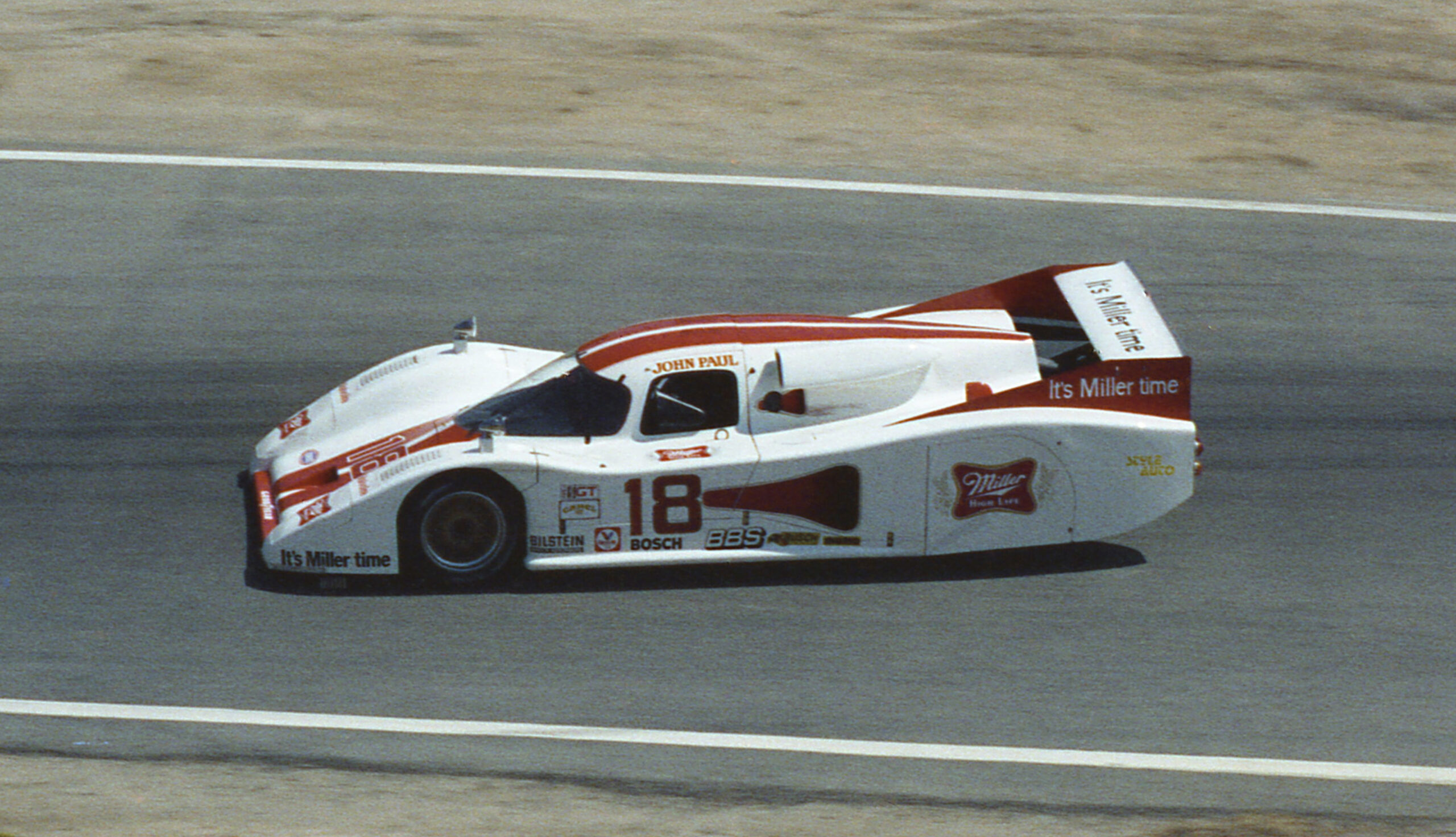
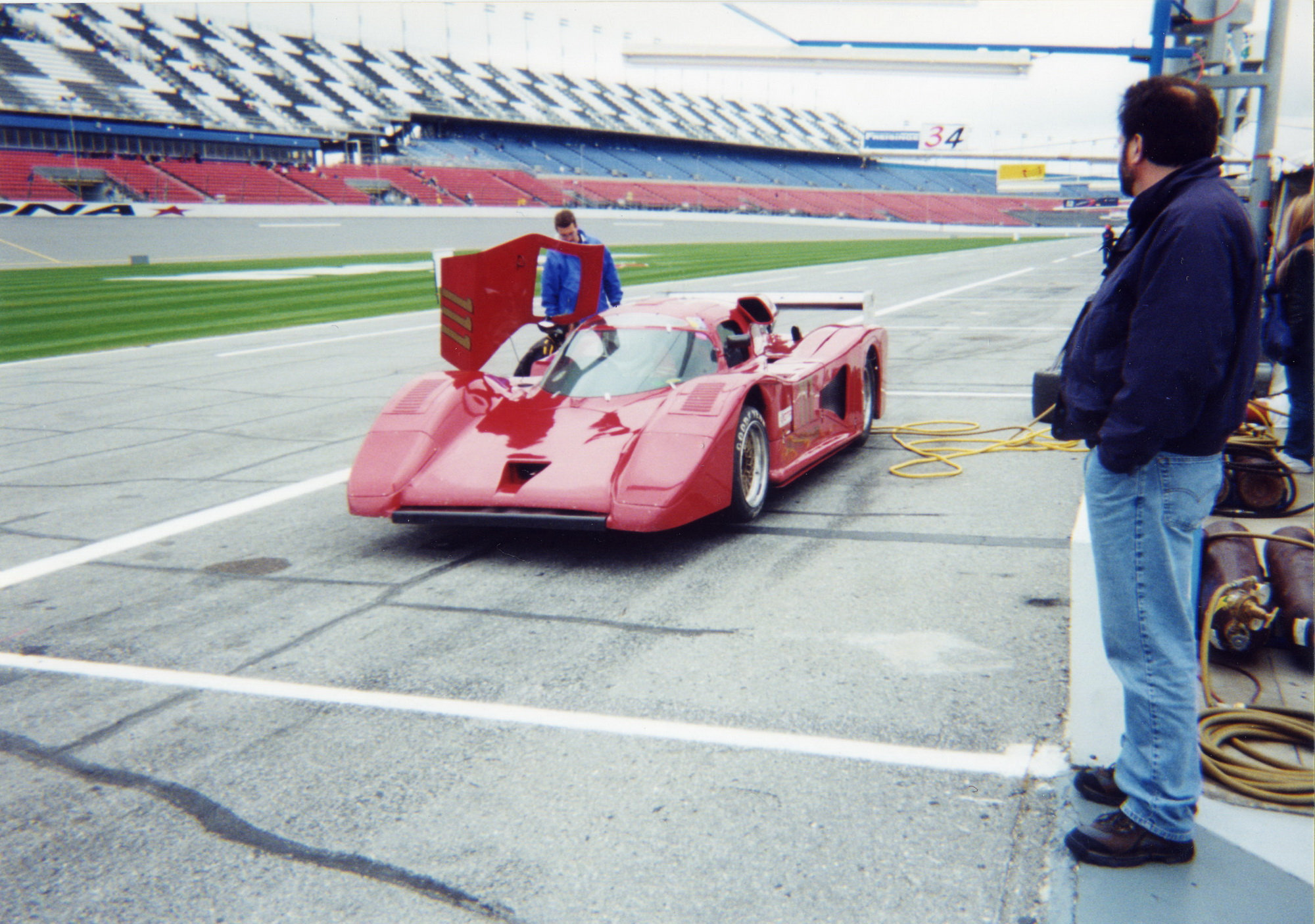
Technically, the T600 was a revelation, a machine that turned the atmosphere into a mechanical component. The exterior design was shocking to contemporary eyes; it lacked the spoilers and wings of the 935s. Instead, the bodywork was incredibly smooth and low, featuring a distinctive “lobster claw” front nose section that channeled air around the cockpit and into the massive intakes for the rear radiators. But the magic was happening underneath. The chassis floor was shaped like an inverted airplane wing, creating two massive tunnels that ran from the front axle line all the way to the rear diffuser. As the car accelerated, the air rushing through these tunnels accelerated, creating a low-pressure area that sucked the car down onto the track. To maintain this seal, the T600 utilized sliding skirts along its flanks—technology that was being banned in F1 but remained legal in IMSA—effectively turning the car into a vacuum cleaner.
The chassis itself was a honeycomb aluminium monocoque, offering immense stiffness. This rigidity was mandatory because, for the ground effects to work, the ride height had to be kept constant. Consequently, the suspension—inboard rockers with coil-over dampers—was sprung so stiffly that it had almost no travel. Driving a T600 was a physically punishing experience; it didn’t absorb bumps, it hammered over them, vibrating the driver’s vision and jarring their spine. But the grip it generated was astronomical. While the Porsche 935s had to brake early and wrestle through corners, the T600 could carry speeds previously thought impossible, glued to the tarmac by invisible hands.
The engine bay of the T600 was designed with Lola’s typical mercenary adaptability, but the definitive powerplant for the chassis became the Chevrolet V8. Specifically, a 6.0-litre (366 cubic inch) small-block prepared by Chaparral or Franz Weis. This pushrod iron lump was heavy and technologically crude compared to a Porsche flat-six, but it was compact enough to fit between the venturi tunnels without disturbing the airflow. Producing around 600 brake horsepower and a mountain of torque, it was reliable, cheap to run, and sounded like thunder.
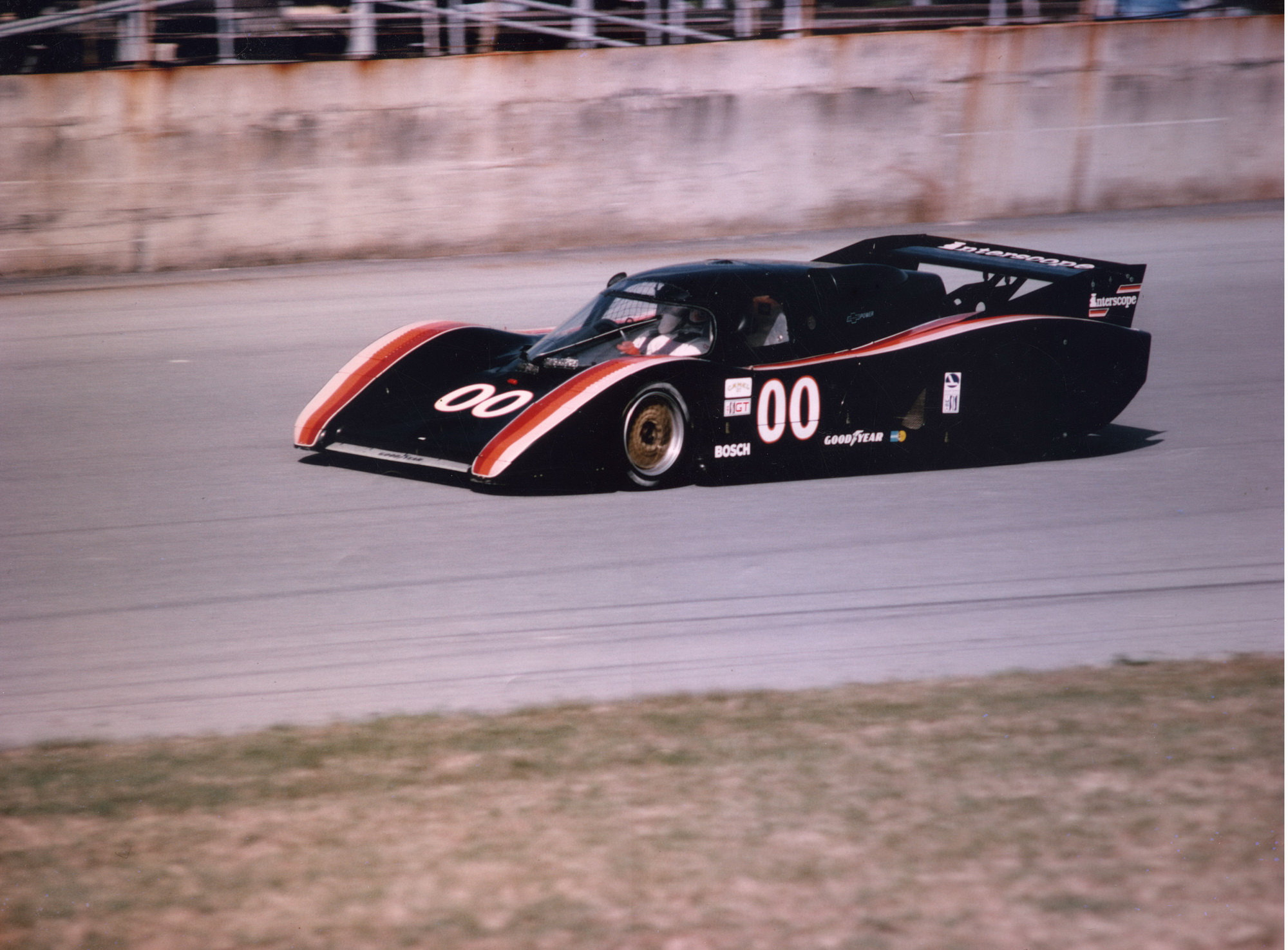
However, the T600 was not a one-trick pony. In Europe, where the car competed in the new Group C category, teams like Ford France fitted the Cosworth DFL (a 3.3 or 3.9-litre endurance version of the DFV). While lighter, the DFL was a vibration nightmare that plagued the European cars with reliability issues. Perhaps the most exotic variant was the chassis campaigned by Ted Field’s Interscope Racing, which was fitted with a Porsche Type 935 3.0L Turbo engine. This “hybrid” promised the best of both worlds—German power and British aero—but cooling issues and the sheer complexity of the packaging meant it never quite dominated as expected, eventually leading Interscope to switch back to Chevy power.
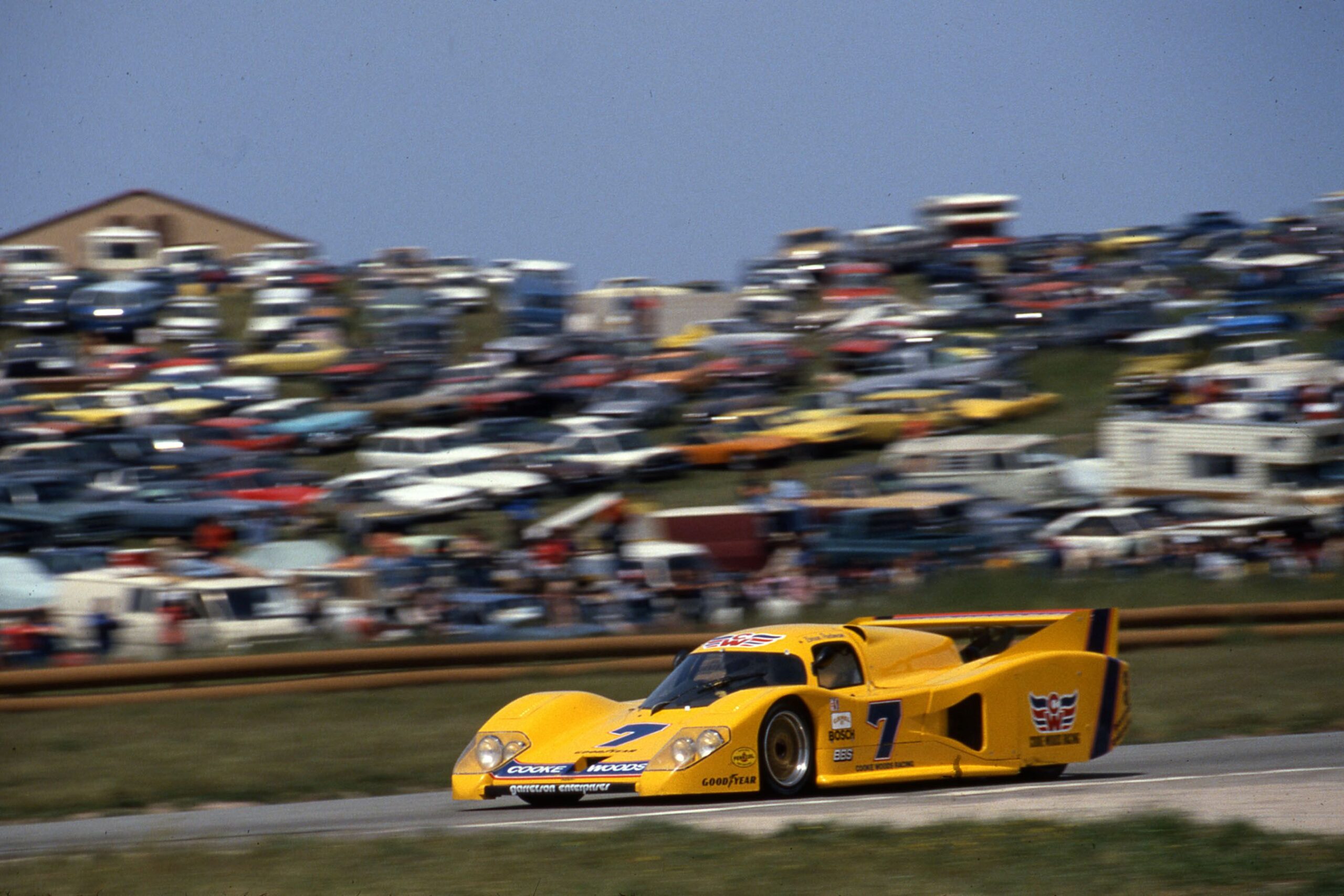
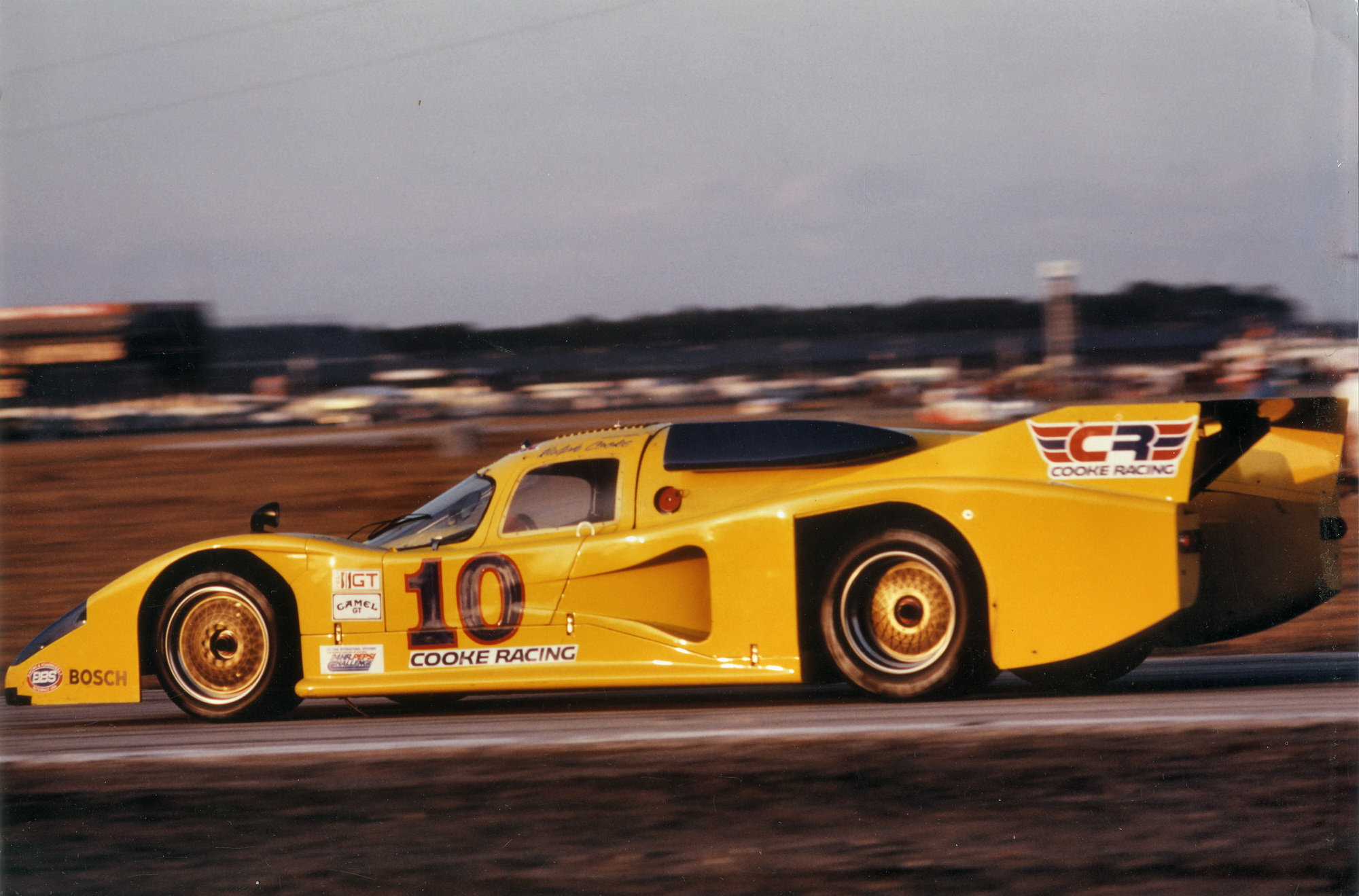
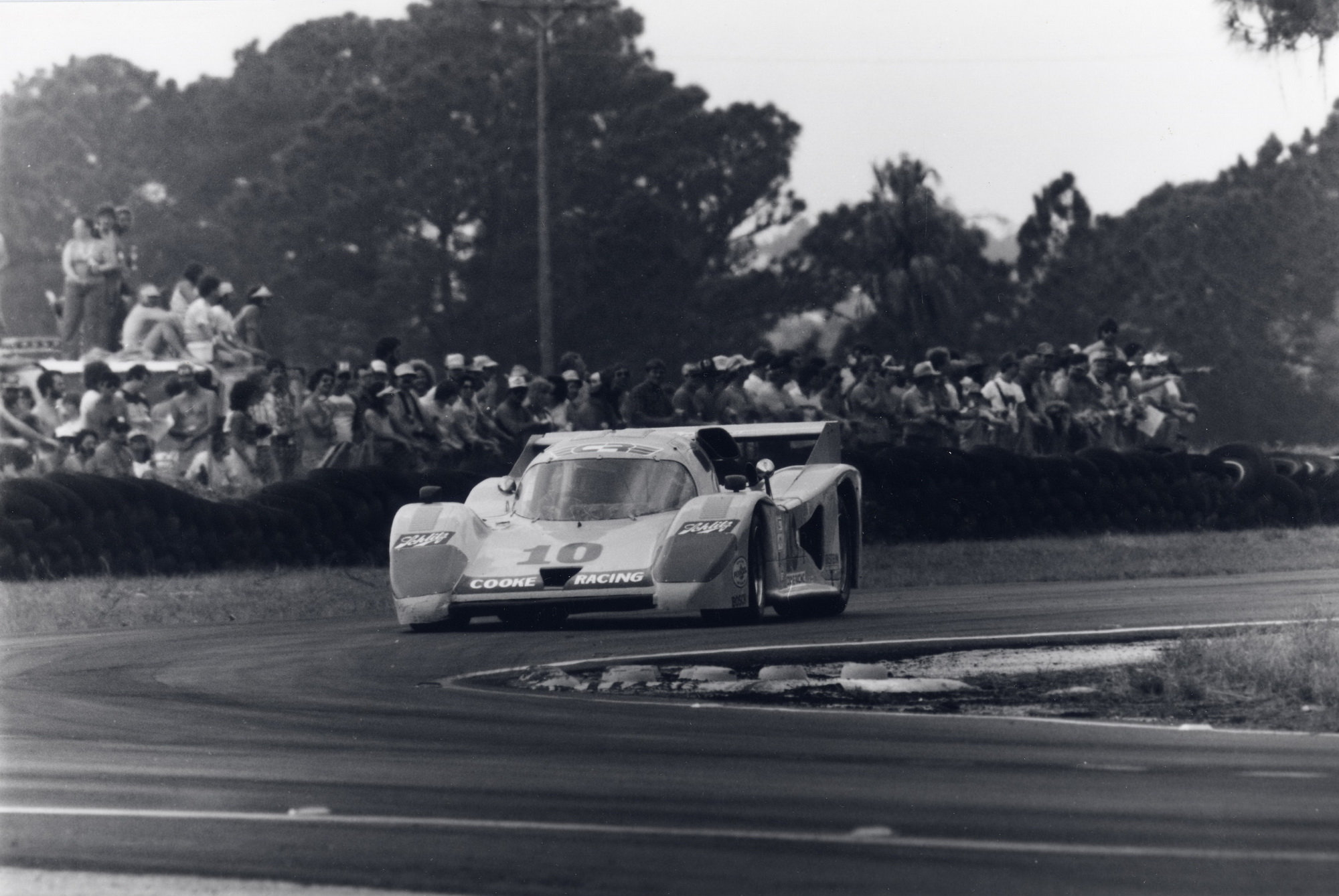
The impact of the Lola T600 on the 1981 IMSA season was immediate and devastating. It debuted at Laguna Seca in May 1981, months into the season. In the hands of Brian Redman, the Cooke-Woods Racing T600 didn’t just win; it made the competition look like they were racing in slow motion. Redman drove the car to victory in its first outing, utilizing the high-downforce nature of the track to run circles around the turbo Porsches. The car went on to win five races that season, securing the IMSA GTP Championship for Brian Redman despite missing the early rounds. It was a victory of science over brute force. The sight of the blue-and-yellow T600 cornering flat while the 935s leaned and slid became the defining image of the changing of the guard.
The T600’s success forced every other manufacturer to respond. March Engineering hurriedly developed the 82G, Jaguar accelerated the XJR-5 program, and even Porsche realized the 935’s days were numbered, fast-tracking the development of the 956. The T600 effectively birthed the GTP era, proving that the future lay in purpose-built prototypes, not modified road cars.
In Europe, the car’s history was more muted but still significant. Racing against the burgeoning might of the factory Porsche 956 and the Lancia LC1, the T600s (mostly Cosworth-powered) struggled with the fuel consumption rules of Group C and the frailty of the DFL engine. However, they secured class wins and proved that the ground-effect concept was valid even on the high-speed straights of Le Mans, although the “porpoising”—the violent aerodynamic bouncing caused when the underfloor airflow stalled—was a terrifying characteristic that European teams struggled to tame on the bumpy Mulsanne.
Culturally, the T600 holds a special place as the “poster car” for the transition into the 1980s. It was the first car to truly look like a spaceship, abandoning the recognizable headlights and grilles of the 70s for a pure, wind-tunnel-derived shape. It was a commercial success for Lola, with over a dozen chassis sold to privateers like John Paul Jr., who famously won with it, and Chris Cord. It kept Lola financially solvent and relevant at a time when their open-wheel fortunes were fluctuating.
The legacy of the Lola T600 is monumental. It is the grandfather of every modern sports prototype. It proved that ground effect was not just an F1 gimmick but the fundamental future of sports car performance. While it was eventually superseded by the Porsche 962 and the Jaguar XJR series—cars that refined the concepts the Lola pioneered—the T600 was the trailblazer. It was the machine that forced the racing world to look underneath the car, rather than just over it. It was crude, uncomfortable, and physically demanding, but for one glorious summer in 1981, it was the deadliest weapon on the American continent, a Chevy-powered vacuum cleaner that sucked the trophies right out of Stuttgart’s hands. Today, seeing a T600 thunder through the Corkscrew at Laguna Seca is to witness the moment motorsport turned the page from the analog past to the aerodynamic future.
Portal
Model line
Model generation
Predecessor
Sucessor
Brand
Produced from
Vehicle category
Portal
Model line
Model generation
Predecessor
Sucessor
About this model
The turn of the 1980s marked a period of technological stagnation in American sports car racing, a time when the grid of the IMSA GT Championship was suffocating under the heavy, turbocharged hegemony of the Porsche 935. While the German “Moby Dicks” were spectacular, spitting flame and possessing immense horsepower, they were fundamentally antiquated—production-based silhouettes relying on brute force to overcome the air. The revolution, when it arrived in 1981, did not come from Stuttgart, nor did it come from a major manufacturer’s skunkworks. It arrived in the form of a strange, alien wedge from Huntingdon, England, commissioned by a gentleman driver and a former Formula 5000 champion who simply wanted to win. The Lola T600 was more than just a new race car; it was a paradigm shift, the asteroid that wiped out the dinosaurs of the Group 5 era. It was the first sports prototype to successfully harness the “Ground Effect” aerodynamic principles that Colin Chapman had pioneered in Formula 1 with the Lotus 79, bringing the science of suction to the endurance racing world and birthing the golden age of the GTP class.
The genesis of the T600 is a story of vision and desperation. Brian Redman, the legendary British ace, and Ralph Kent-Cooke, a wealthy amateur racer, approached Eric Broadley at Lola with a request to build a closed-cockpit version of the successful T333CS Can-Am car to challenge the Porsches. Broadley, ever the innovator, refused to look backward. He proposed something radical: a clean-sheet design utilizing full-length venturi tunnels to generate downforce, a concept that had yet to be effectively applied to a full-fendered sports car. To execute this, Broadley enlisted the help of French aerodynamicist Dr. Max Sardou.
Technically, the T600 was a revelation, a machine that turned the atmosphere into a mechanical component. The exterior design was shocking to contemporary eyes; it lacked the spoilers and wings of the 935s. Instead, the bodywork was incredibly smooth and low, featuring a distinctive “lobster claw” front nose section that channeled air around the cockpit and into the massive intakes for the rear radiators. But the magic was happening underneath. The chassis floor was shaped like an inverted airplane wing, creating two massive tunnels that ran from the front axle line all the way to the rear diffuser. As the car accelerated, the air rushing through these tunnels accelerated, creating a low-pressure area that sucked the car down onto the track. To maintain this seal, the T600 utilized sliding skirts along its flanks—technology that was being banned in F1 but remained legal in IMSA—effectively turning the car into a vacuum cleaner.
The chassis itself was a honeycomb aluminium monocoque, offering immense stiffness. This rigidity was mandatory because, for the ground effects to work, the ride height had to be kept constant. Consequently, the suspension—inboard rockers with coil-over dampers—was sprung so stiffly that it had almost no travel. Driving a T600 was a physically punishing experience; it didn’t absorb bumps, it hammered over them, vibrating the driver’s vision and jarring their spine. But the grip it generated was astronomical. While the Porsche 935s had to brake early and wrestle through corners, the T600 could carry speeds previously thought impossible, glued to the tarmac by invisible hands.
The engine bay of the T600 was designed with Lola’s typical mercenary adaptability, but the definitive powerplant for the chassis became the Chevrolet V8. Specifically, a 6.0-litre (366 cubic inch) small-block prepared by Chaparral or Franz Weis. This pushrod iron lump was heavy and technologically crude compared to a Porsche flat-six, but it was compact enough to fit between the venturi tunnels without disturbing the airflow. Producing around 600 brake horsepower and a mountain of torque, it was reliable, cheap to run, and sounded like thunder.
However, the T600 was not a one-trick pony. In Europe, where the car competed in the new Group C category, teams like Ford France fitted the Cosworth DFL (a 3.3 or 3.9-litre endurance version of the DFV). While lighter, the DFL was a vibration nightmare that plagued the European cars with reliability issues. Perhaps the most exotic variant was the chassis campaigned by Ted Field’s Interscope Racing, which was fitted with a Porsche Type 935 3.0L Turbo engine. This “hybrid” promised the best of both worlds—German power and British aero—but cooling issues and the sheer complexity of the packaging meant it never quite dominated as expected, eventually leading Interscope to switch back to Chevy power.
The impact of the Lola T600 on the 1981 IMSA season was immediate and devastating. It debuted at Laguna Seca in May 1981, months into the season. In the hands of Brian Redman, the Cooke-Woods Racing T600 didn’t just win; it made the competition look like they were racing in slow motion. Redman drove the car to victory in its first outing, utilizing the high-downforce nature of the track to run circles around the turbo Porsches. The car went on to win five races that season, securing the IMSA GTP Championship for Brian Redman despite missing the early rounds. It was a victory of science over brute force. The sight of the blue-and-yellow T600 cornering flat while the 935s leaned and slid became the defining image of the changing of the guard.
The T600’s success forced every other manufacturer to respond. March Engineering hurriedly developed the 82G, Jaguar accelerated the XJR-5 program, and even Porsche realized the 935’s days were numbered, fast-tracking the development of the 956. The T600 effectively birthed the GTP era, proving that the future lay in purpose-built prototypes, not modified road cars.
In Europe, the car’s history was more muted but still significant. Racing against the burgeoning might of the factory Porsche 956 and the Lancia LC1, the T600s (mostly Cosworth-powered) struggled with the fuel consumption rules of Group C and the frailty of the DFL engine. However, they secured class wins and proved that the ground-effect concept was valid even on the high-speed straights of Le Mans, although the “porpoising”—the violent aerodynamic bouncing caused when the underfloor airflow stalled—was a terrifying characteristic that European teams struggled to tame on the bumpy Mulsanne.
Culturally, the T600 holds a special place as the “poster car” for the transition into the 1980s. It was the first car to truly look like a spaceship, abandoning the recognizable headlights and grilles of the 70s for a pure, wind-tunnel-derived shape. It was a commercial success for Lola, with over a dozen chassis sold to privateers like John Paul Jr., who famously won with it, and Chris Cord. It kept Lola financially solvent and relevant at a time when their open-wheel fortunes were fluctuating.
The legacy of the Lola T600 is monumental. It is the grandfather of every modern sports prototype. It proved that ground effect was not just an F1 gimmick but the fundamental future of sports car performance. While it was eventually superseded by the Porsche 962 and the Jaguar XJR series—cars that refined the concepts the Lola pioneered—the T600 was the trailblazer. It was the machine that forced the racing world to look underneath the car, rather than just over it. It was crude, uncomfortable, and physically demanding, but for one glorious summer in 1981, it was the deadliest weapon on the American continent, a Chevy-powered vacuum cleaner that sucked the trophies right out of Stuttgart’s hands. Today, seeing a T600 thunder through the Corkscrew at Laguna Seca is to witness the moment motorsport turned the page from the analog past to the aerodynamic future.
Generations
Generations of this model
Generations
Generations of this model
Submodels
Discover all the variants of this model
Submodels
Discover all the variants of this model
Vehicles
Legendary Vehicles
Vehicles