
Aston Martin
Type
Foundation Year
Founder/s
Country
Headquarters
Brand Overview
The air thick with the scent of high-octane fuel and vaporised rubber, a howling inline-six engine tearing through the suffocating darkness of the Mulsanne Straight—this is the crucible that forged Aston Martin. To pilot one of these majestic British bruisers is to command a gentleman with an iron fist. Unlike the highly strung, neurotic sports cars of Italy, Gaydon’s creations have eternally mated sculptural, jaw-dropping elegance with terrifying brute force, offering a chassis behaviour that demands absolute respect rather than mere participation. Yet, the true miracle of this marque is its mere existence. Despite crafting some of the most achingly beautiful and fiercely coveted machines on the planet, the company has historically been an unmitigated financial disaster. It has only survived through the sheer willpower and immense capital injections of impassioned custodians who point-blank refused to let the dream die.
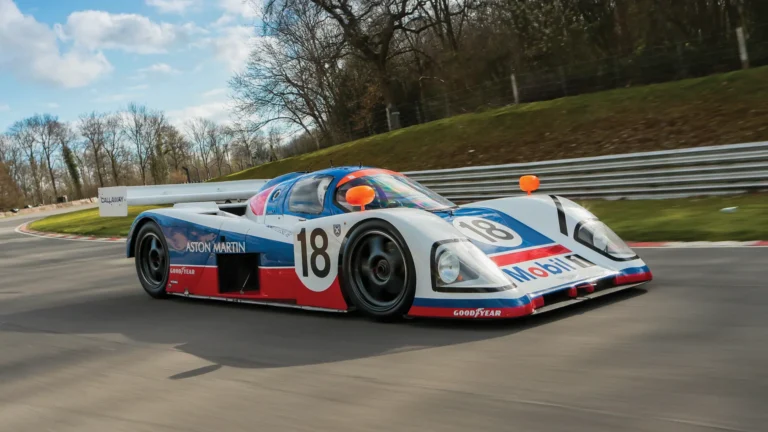
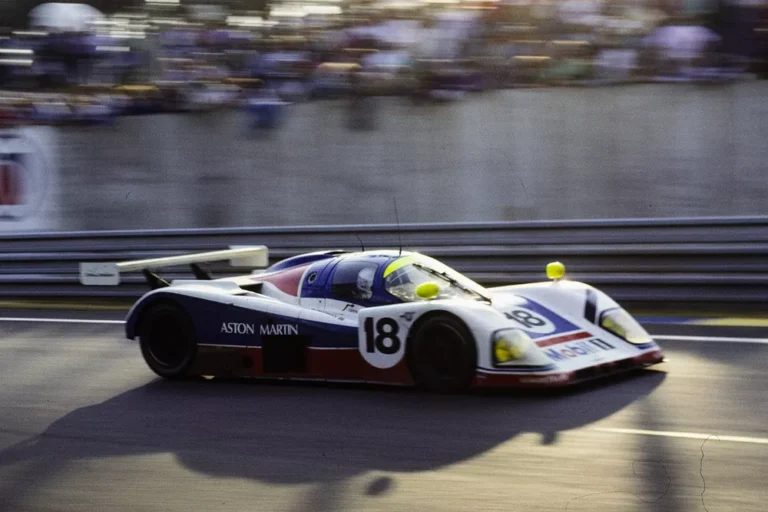
The intoxicating narrative traces back to 1913, when Lionel Martin and Robert Bamford formed Bamford & Martin Ltd. Following Martin’s decisive, tyre-scorching victory thundering up the treacherous Aston Hill climb, the duo rebranded, committing themselves to producing bespoke sporting machines. Their very first creation, affectionately nicknamed the “Coal Scuttle”, was registered in 1915. However, the interwar years proved violently tumultuous, setting a grim financial precedent. The company endured crippling bankruptcies in 1924 and 1925, only finding a semblance of stability when Augustus Bertelli seized the reins in 1926. Under his stewardship, the brand earned a fearsome competitive pedigree. Lithe, purposeful 1.5-litre (91 cu in) racers like the “Ulster” became a dominant force at the 24 Hours of Le Mans throughout the 1930s, proving that lightweight agility could humble much larger foes, before the Second World War forced the factory to halt automobile assembly to manufacture aluminium aircraft components.
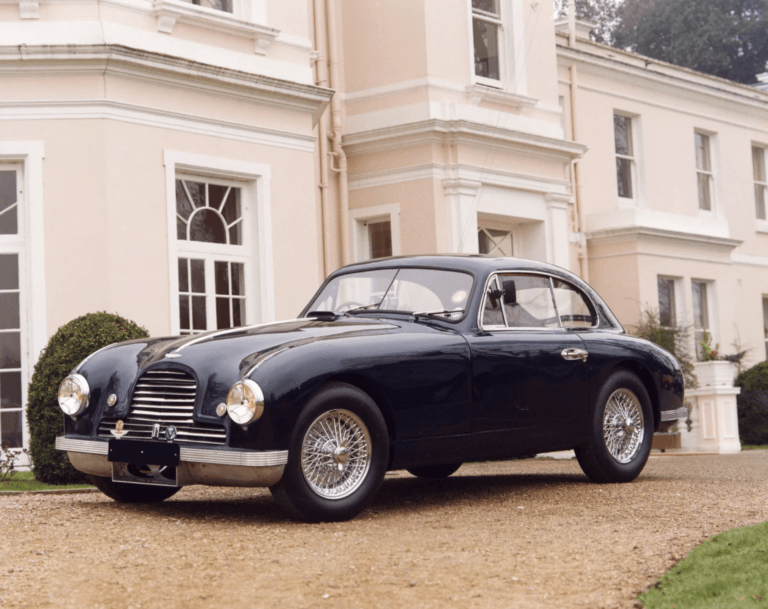
Salvation arrived in 1947 from the most unlikely of places: the classified pages of The Times newspaper. Wealthy tractor magnate David Brown purchased the beleaguered company, cementing a monumental turning point in automotive history. Brown shrewdly acquired the Lagonda marque simultaneously, predominantly to secure its brilliant 2.6-litre (158 cu in) inline-six engine, a masterpiece designed by W.O. Bentley. Thus, the legendary “DB” bloodline was born. The absolute zenith of their sporting prowess arrived in 1959. Driven to the ragged edge by Carroll Shelby and Roy Salvadori, the gorgeously sculpted DBR1 conquered Le Mans, its deafening exhaust note echoing through the French countryside. Commercially, the brand attained mythical status in 1963 with the DB5. Clad in hand-beaten aluminium bodywork by Carrozzeria Touring Superleggera, it was an aesthetic triumph. When this sleek grand tourer appeared bristling with hidden weaponry in the 1964 film Goldfinger, it cemented an inseparable union with James Bond, transforming a niche British carmaker into a global cultural titan.
Mounting debts ultimately forced Brown to relinquish control in 1972, plunging the marque back into perilous uncertainty. To survive the harsh economic climate, the design language turned undeniably brutal. Shunning the delicate curves of the swinging sixties, the firm embraced massive V8 powerplants and incredibly muscular stances. The Aston Martin V8 Vantage of 1977 was widely heralded as the first true British supercar, a 1700 kg (3747 lbs) leviathan that possessed the raw, tarmac-shredding acceleration to humiliate the contemporary offerings from Maranello. This era also birthed concepts of staggering audacity. The 1976 Lagonda saloon was a massive, sharp-edged wedge that looked like a spacecraft and featured the world’s first digital dashboard, initially powered exclusively by LED displays, with complex CRT screens not being introduced until the heavily revised Series 3 models in 1984. Soon after, the 1979 Aston Martin Bulldog arrived, a futuristic, gullwing prototype armed with twin-turbocharged fury, specifically engineered to shatter the 320 km/h (198 mph) barrier.
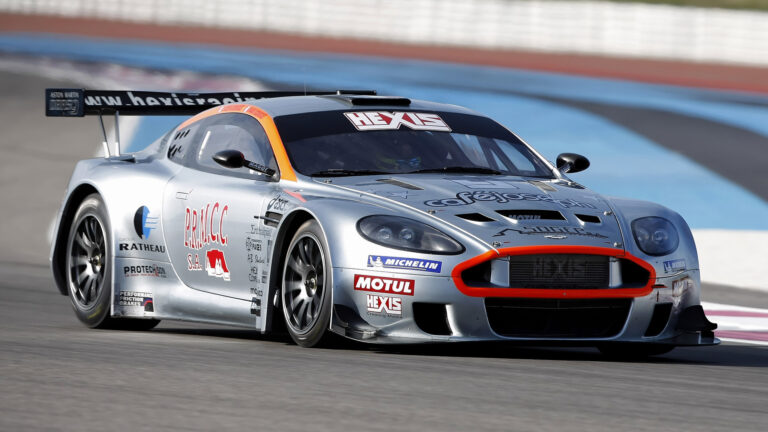
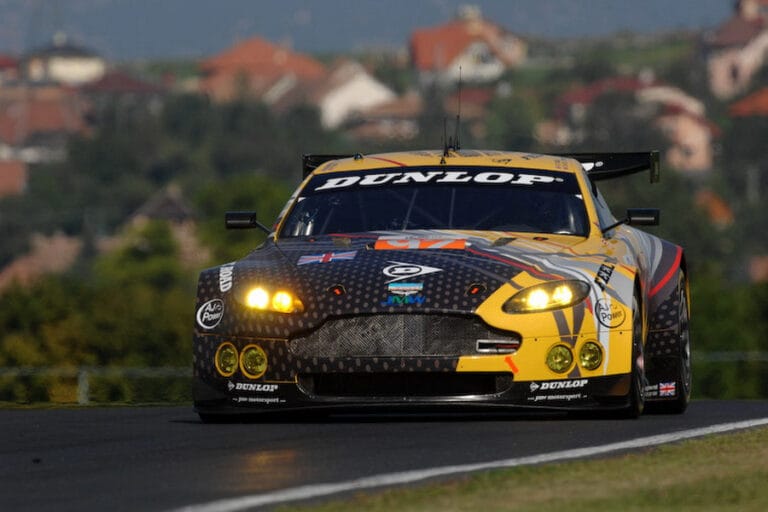
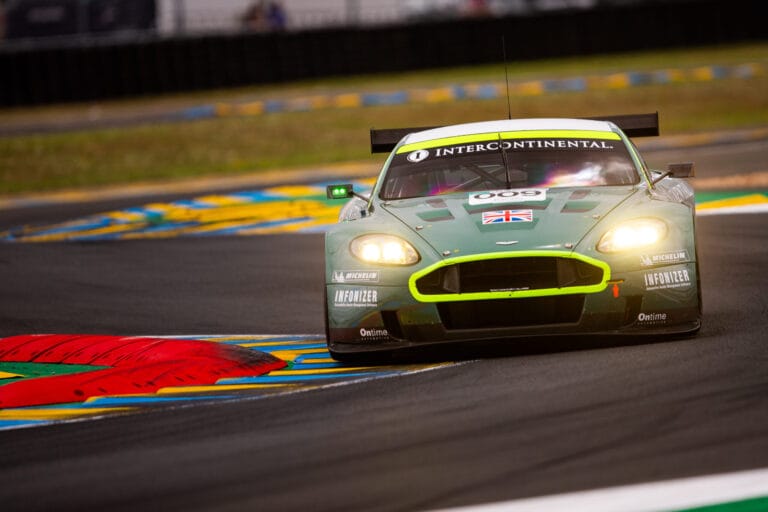
The looming threat of insolvency was banished when the American colossus Ford took full control in 1991, injecting crucial capital and strict engineering discipline. The absolute linchpin of this era was the DB7, launched in 1994. Penned by design maestro Ian Callum and cleverly built upon a heavily modified Jaguar platform, it became the highest-selling model in their history and unequivocally saved the firm from oblivion. As the new millennium dawned, operations shifted to a state-of-the-art facility in Gaydon, heralding the revolutionary VH bonded aluminium architecture. This immensely rigid skeleton gave rise to global V12-powered sensations like the DB9 and DBS, alongside the taut, fiercely agile V8 Vantage. Racing glory was reignited as the ferocious DBR9, spitting flames and shrieking through the night, utterly dominated the GT1 category at Le Mans.
The wheel turned again in 2007 when Ford sold the enterprise to a private consortium led by Prodrive chief David Richards. Bereft of the limitless research budgets of a major parent company, the marque forged a vital strategic alliance with Mercedes-AMG in 2013. The German powerhouse began supplying thunderous biturbo V8 engines and cutting-edge electrical architectures. This technological lifeline spawned a brilliant new generation of machinery, including the DB11, the razor-sharp Vantage, and the savage DBS Superleggera. Crucially, it also enabled the creation of the DBX, the marque’s inaugural high-performance SUV, which provided the financial bedrock desperately required for modern survival.
Never content to rest upon their grand touring laurels, the engineers in Gaydon embarked on a mind-bending hypercar revolution. The Aston Martin Valkyrie was conceived from an unprecedented collaboration with Red Bull Advanced Technologies, spearheaded by the pre-eminent aerodynamic genius of Formula 1, Adrian Newey. Their objective was absurdly ambitious: to create a road-legal Formula 1 car. Powered by a naturally aspirated 6.5-litre (397 cu in) Cosworth V12 engine capable of screaming past 11,000 rpm to produce 1014 CV (1000 hp), which is mated to a Rimac-developed KERS battery-electric system to push the total combined powertrain output to 1176 CV (1160 hp), the Valkyrie violently rewrites the laws of physics for a street-legal tyre. The aerodynamic underpinnings of this project subsequently birthed the Valhalla, signalling a seismic transition for the brand to actively hunt the mid-engined supercar elite alongside their traditional front-engined grand tourers.
Did the perennial financial struggles finally extinguish the flame? Absolutely not. Despite a severe liquidity crisis and plummeting share values in the late 2010s, a massive rescue package arrived in 2020 courtesy of the Yew Tree consortium, orchestrated by Canadian billionaire Lawrence Stroll. Stroll rapidly transformed his Racing Point outfit into the Aston Martin Aramco F1 Team, returning the hallowed wings to the pinnacle of motorsport as a works team after more than six decades. Operating from a colossal new campus in Silverstone, armed with the relentless talent of two-time world champion Fernando Alonso, and having secured the monumental signing of Adrian Newey for 2026 alongside a Honda works deal, this represents the most fiercely ambitious racing programme in modern sport. Commercially, the showroom is ablaze with a new breed of “Super Tourers”. The flawlessly executed DB12 has entirely eradicated the technological gremlins of the past, accompanied by a blisteringly aggressive new Vantage. At the pinnacle sits the brutal 2024 Vanquish, proudly keeping the majestic V12 biturbo engine alive. Having miraculously survived seven separate bankruptcies over a tumultuous century, the fragile gentleman has finally forged impenetrable armour, standing today in the most aggressive, stable, and technologically fearsome era of its entire existence.
Type
Foundation Year
Country
Founder/s
Headquarters

Type
Foundation Year
Country
Founder/s
Headquarters
About this brand
The air thick with the scent of high-octane fuel and vaporised rubber, a howling inline-six engine tearing through the suffocating darkness of the Mulsanne Straight—this is the crucible that forged Aston Martin. To pilot one of these majestic British bruisers is to command a gentleman with an iron fist. Unlike the highly strung, neurotic sports cars of Italy, Gaydon’s creations have eternally mated sculptural, jaw-dropping elegance with terrifying brute force, offering a chassis behaviour that demands absolute respect rather than mere participation. Yet, the true miracle of this marque is its mere existence. Despite crafting some of the most achingly beautiful and fiercely coveted machines on the planet, the company has historically been an unmitigated financial disaster. It has only survived through the sheer willpower and immense capital injections of impassioned custodians who point-blank refused to let the dream die.
The intoxicating narrative traces back to 1913, when Lionel Martin and Robert Bamford formed Bamford & Martin Ltd. Following Martin’s decisive, tyre-scorching victory thundering up the treacherous Aston Hill climb, the duo rebranded, committing themselves to producing bespoke sporting machines. Their very first creation, affectionately nicknamed the “Coal Scuttle”, was registered in 1915. However, the interwar years proved violently tumultuous, setting a grim financial precedent. The company endured crippling bankruptcies in 1924 and 1925, only finding a semblance of stability when Augustus Bertelli seized the reins in 1926. Under his stewardship, the brand earned a fearsome competitive pedigree. Lithe, purposeful 1.5-litre (91 cu in) racers like the “Ulster” became a dominant force at the 24 Hours of Le Mans throughout the 1930s, proving that lightweight agility could humble much larger foes, before the Second World War forced the factory to halt automobile assembly to manufacture aluminium aircraft components.
Salvation arrived in 1947 from the most unlikely of places: the classified pages of The Times newspaper. Wealthy tractor magnate David Brown purchased the beleaguered company, cementing a monumental turning point in automotive history. Brown shrewdly acquired the Lagonda marque simultaneously, predominantly to secure its brilliant 2.6-litre (158 cu in) inline-six engine, a masterpiece designed by W.O. Bentley. Thus, the legendary “DB” bloodline was born. The absolute zenith of their sporting prowess arrived in 1959. Driven to the ragged edge by Carroll Shelby and Roy Salvadori, the gorgeously sculpted DBR1 conquered Le Mans, its deafening exhaust note echoing through the French countryside. Commercially, the brand attained mythical status in 1963 with the DB5. Clad in hand-beaten aluminium bodywork by Carrozzeria Touring Superleggera, it was an aesthetic triumph. When this sleek grand tourer appeared bristling with hidden weaponry in the 1964 film Goldfinger, it cemented an inseparable union with James Bond, transforming a niche British carmaker into a global cultural titan.
Mounting debts ultimately forced Brown to relinquish control in 1972, plunging the marque back into perilous uncertainty. To survive the harsh economic climate, the design language turned undeniably brutal. Shunning the delicate curves of the swinging sixties, the firm embraced massive V8 powerplants and incredibly muscular stances. The Aston Martin V8 Vantage of 1977 was widely heralded as the first true British supercar, a 1700 kg (3747 lbs) leviathan that possessed the raw, tarmac-shredding acceleration to humiliate the contemporary offerings from Maranello. This era also birthed concepts of staggering audacity. The 1976 Lagonda saloon was a massive, sharp-edged wedge that looked like a spacecraft and featured the world’s first digital dashboard, initially powered exclusively by LED displays, with complex CRT screens not being introduced until the heavily revised Series 3 models in 1984. Soon after, the 1979 Aston Martin Bulldog arrived, a futuristic, gullwing prototype armed with twin-turbocharged fury, specifically engineered to shatter the 320 km/h (198 mph) barrier.
The looming threat of insolvency was banished when the American colossus Ford took full control in 1991, injecting crucial capital and strict engineering discipline. The absolute linchpin of this era was the DB7, launched in 1994. Penned by design maestro Ian Callum and cleverly built upon a heavily modified Jaguar platform, it became the highest-selling model in their history and unequivocally saved the firm from oblivion. As the new millennium dawned, operations shifted to a state-of-the-art facility in Gaydon, heralding the revolutionary VH bonded aluminium architecture. This immensely rigid skeleton gave rise to global V12-powered sensations like the DB9 and DBS, alongside the taut, fiercely agile V8 Vantage. Racing glory was reignited as the ferocious DBR9, spitting flames and shrieking through the night, utterly dominated the GT1 category at Le Mans.
The wheel turned again in 2007 when Ford sold the enterprise to a private consortium led by Prodrive chief David Richards. Bereft of the limitless research budgets of a major parent company, the marque forged a vital strategic alliance with Mercedes-AMG in 2013. The German powerhouse began supplying thunderous biturbo V8 engines and cutting-edge electrical architectures. This technological lifeline spawned a brilliant new generation of machinery, including the DB11, the razor-sharp Vantage, and the savage DBS Superleggera. Crucially, it also enabled the creation of the DBX, the marque’s inaugural high-performance SUV, which provided the financial bedrock desperately required for modern survival.
Never content to rest upon their grand touring laurels, the engineers in Gaydon embarked on a mind-bending hypercar revolution. The Aston Martin Valkyrie was conceived from an unprecedented collaboration with Red Bull Advanced Technologies, spearheaded by the pre-eminent aerodynamic genius of Formula 1, Adrian Newey. Their objective was absurdly ambitious: to create a road-legal Formula 1 car. Powered by a naturally aspirated 6.5-litre (397 cu in) Cosworth V12 engine capable of screaming past 11,000 rpm to produce 1014 CV (1000 hp), which is mated to a Rimac-developed KERS battery-electric system to push the total combined powertrain output to 1176 CV (1160 hp), the Valkyrie violently rewrites the laws of physics for a street-legal tyre. The aerodynamic underpinnings of this project subsequently birthed the Valhalla, signalling a seismic transition for the brand to actively hunt the mid-engined supercar elite alongside their traditional front-engined grand tourers.
Did the perennial financial struggles finally extinguish the flame? Absolutely not. Despite a severe liquidity crisis and plummeting share values in the late 2010s, a massive rescue package arrived in 2020 courtesy of the Yew Tree consortium, orchestrated by Canadian billionaire Lawrence Stroll. Stroll rapidly transformed his Racing Point outfit into the Aston Martin Aramco F1 Team, returning the hallowed wings to the pinnacle of motorsport as a works team after more than six decades. Operating from a colossal new campus in Silverstone, armed with the relentless talent of two-time world champion Fernando Alonso, and having secured the monumental signing of Adrian Newey for 2026 alongside a Honda works deal, this represents the most fiercely ambitious racing programme in modern sport. Commercially, the showroom is ablaze with a new breed of “Super Tourers”. The flawlessly executed DB12 has entirely eradicated the technological gremlins of the past, accompanied by a blisteringly aggressive new Vantage. At the pinnacle sits the brutal 2024 Vanquish, proudly keeping the majestic V12 biturbo engine alive. Having miraculously survived seven separate bankruptcies over a tumultuous century, the fragile gentleman has finally forged impenetrable armour, standing today in the most aggressive, stable, and technologically fearsome era of its entire existence.
Submodels
Latest Variants


Model Lines