
Spice Engineering
Type
Foundation Year
Founder/s
Country
Headquarters
Brand Overview
In the pantheon of endurance racing, particularly during the hallowed Group C era of the 1980s, the spotlight is almost exclusively hogged by the factory leviathans. The Rothmans Porsches, the Silk Cut Jaguars, the Silver Arrow Saubers. These were the poster boys, the money-no-object missiles that graced the bedroom walls of teenagers. But look closer at those grids. Look past the first five rows, into the teeming, chaotic, vibrant mid-field. There, you will find the true heartbeat of the World Sportscar Championship. You will find the class known as C2 (or C-Junior), and you will find its undisputed king: Spice Engineering. While Porsche provided the weapon for the wealthy privateer in the top class, Gordon Spice provided the weapon for the professional privateer in the junior class. Spice Engineering was not just a car builder; it was the gold standard for how to run a racing business on a budget, delivering cars that were fast, achingly beautiful in their functionality, and reliable enough to drive through a brick wall.
The genesis of the brand lies with the man himself, Gordon Spice. A successful British racing driver with a colorful history in Mini Coopers and Ford Capris, Gordon Spice was the quintessential gentleman racer—fast, shrewd, and immensely likeable. By the early 1980s, he had tasted success in the Rondeau M379 at Le Mans, but he wanted more. He wanted control. Partnering with fellow driver and financier Ray Bellm, they initially ran Tiga chassis in the new C2 class. But Gordon Spice and his chief engineer, the brilliant Graham Humphrys, looked at the Tiga and thought, “We can do better”. They established Spice Engineering based at the Silverstone circuit, a location that spiritually infused the cars with British motorsport DNA.
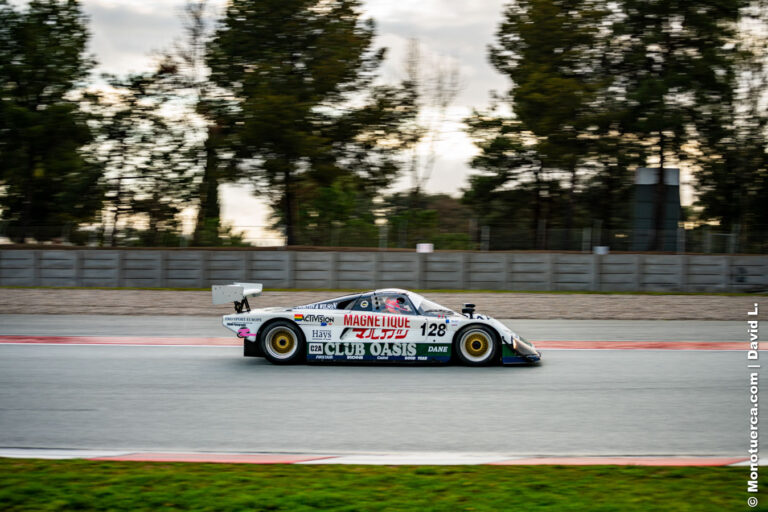
Their first creation, the Spice SE86C, debuted in 1986. It was a revelation. While the Italian competitors like Alba and the nimble Tigas were quick, the Spice was a complete package. Powered by the Cosworth DFL—a vibration-heavy, endurance version of the legendary DFV F1 engine—the SE86C was built like a tank but drove like a single-seater. It was stiff, aerodynamic, and crucially, it didn’t break. In endurance racing, to finish first, you must first finish. Spice understood this better than anyone. The SE86C won the C2 World Championship on its first attempt. It was the beginning of a dynasty.
The distinctively liveried cars—often black with striking pink and yellow highlights—became the benchmarks. If you wanted to win the C2 class at Le Mans, you bought a Spice. The factory team, led by Gordon himself and the fiery Spaniard Fermín Vélez, operated with a level of professionalism that shamed many C1 teams. They weren’t just “garagistas” having a go; they were a finely drilled military unit. The SE87C and SE88C followed, refining the concept. The chassis were honeycomb aluminium, incredibly strong and safe. The aerodynamics were tweaked in the wind tunnel to maximize the ground effect tunnels, allowing the cars to corner at speeds that defied their small engines.
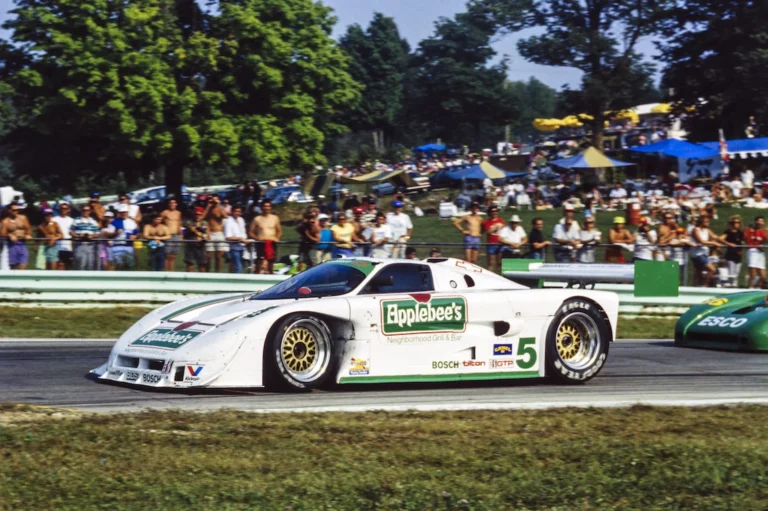
But Spice’s ambition was too large for the small pond of the World Championship. They looked across the Atlantic to the IMSA GT Championship. In America, the Camel Lights class was booming. Spice partnered with General Motors (specifically Pontiac) to create a silhouette racer. The result was the Spice-Pontiac Fiero GTP. It looked vaguely like the road-going Fiero, but underneath, it was a purebred Spice chassis powered by a screaming 3.0-liter “Super Duty” four-cylinder engine. It annihilated the competition. Spice cars won the IMSA Lights championship consecutively from 1985 to 1988. They were so dominant that at the 24 Hours of Daytona and the 12 Hours of Sebring, the Lights class was essentially a “Formula Spice.”
Buoyed by global success and an overflowing order book—Spice eventually built over 30 chassis, a staggering number for a small constructor—Gordon and Ray Bellm made the bold decision to step up to the big league: C1. They wanted to fight Jaguar and Mercedes for overall wins. In 1989, they launched the SE89C. It was a bigger, wider evolution of their proven design, fitted with a 3.5-liter Cosworth DFZ V8. It was a David vs. Goliath battle. The Spice was never going to beat the turbo monsters of Mercedes on raw power, but on tight circuits, its agility was terrifying. They won the C2 class at Le Mans (which was effectively a ‘Best of the Rest’ behind the factories) and consistently finished in the top 10 overall.
The zenith of Spice’s engineering prowess, however, is a story often untold. In the early 90s, when Ferrari decided to return to sports car racing with the 333 SP, they needed a chassis partner. They didn’t go to Dallara initially; they went to Spice. The early development mules and the chassis architecture of the legendary Ferrari 333 SP owe a massive debt to the engineering principles established by Graham Humphrys at Spice. The Ferrari bears more than a passing resemblance to the final generation of Spice prototypes.
Tragically, the end of Spice Engineering was brought about by the same regulatory storm that killed Group C. The FIA mandated 3.5-liter F1-derived engines for the 1991/1992 seasons. This caused costs to skyrocket, obliterating the privateer market overnight. A small constructor could simply not afford to run highly strung F1 engines for 24 hours. The market for customer cars evaporated, and despite having a brilliant design in the SE90C, the cash flow dried up. The company folded in 1993, a casualty of motorsport politics.
Spice Engineering was the ultimate expression of the 1980s privateer spirit: ambitious, colorful, and punching wildly above its weight.
Type
Foundation Year
Country
Founder/s
Headquarters
Type
Foundation Year
Country
Founder/s
Headquarters
About this brand
In the pantheon of endurance racing, particularly during the hallowed Group C era of the 1980s, the spotlight is almost exclusively hogged by the factory leviathans. The Rothmans Porsches, the Silk Cut Jaguars, the Silver Arrow Saubers. These were the poster boys, the money-no-object missiles that graced the bedroom walls of teenagers. But look closer at those grids. Look past the first five rows, into the teeming, chaotic, vibrant mid-field. There, you will find the true heartbeat of the World Sportscar Championship. You will find the class known as C2 (or C-Junior), and you will find its undisputed king: Spice Engineering. While Porsche provided the weapon for the wealthy privateer in the top class, Gordon Spice provided the weapon for the professional privateer in the junior class. Spice Engineering was not just a car builder; it was the gold standard for how to run a racing business on a budget, delivering cars that were fast, achingly beautiful in their functionality, and reliable enough to drive through a brick wall.
The genesis of the brand lies with the man himself, Gordon Spice. A successful British racing driver with a colorful history in Mini Coopers and Ford Capris, Gordon Spice was the quintessential gentleman racer—fast, shrewd, and immensely likeable. By the early 1980s, he had tasted success in the Rondeau M379 at Le Mans, but he wanted more. He wanted control. Partnering with fellow driver and financier Ray Bellm, they initially ran Tiga chassis in the new C2 class. But Gordon Spice and his chief engineer, the brilliant Graham Humphrys, looked at the Tiga and thought, “We can do better”. They established Spice Engineering based at the Silverstone circuit, a location that spiritually infused the cars with British motorsport DNA.
Their first creation, the Spice SE86C, debuted in 1986. It was a revelation. While the Italian competitors like Alba and the nimble Tigas were quick, the Spice was a complete package. Powered by the Cosworth DFL—a vibration-heavy, endurance version of the legendary DFV F1 engine—the SE86C was built like a tank but drove like a single-seater. It was stiff, aerodynamic, and crucially, it didn’t break. In endurance racing, to finish first, you must first finish. Spice understood this better than anyone. The SE86C won the C2 World Championship on its first attempt. It was the beginning of a dynasty.
The distinctively liveried cars—often black with striking pink and yellow highlights—became the benchmarks. If you wanted to win the C2 class at Le Mans, you bought a Spice. The factory team, led by Gordon himself and the fiery Spaniard Fermín Vélez, operated with a level of professionalism that shamed many C1 teams. They weren’t just “garagistas” having a go; they were a finely drilled military unit. The SE87C and SE88C followed, refining the concept. The chassis were honeycomb aluminium, incredibly strong and safe. The aerodynamics were tweaked in the wind tunnel to maximize the ground effect tunnels, allowing the cars to corner at speeds that defied their small engines.
But Spice’s ambition was too large for the small pond of the World Championship. They looked across the Atlantic to the IMSA GT Championship. In America, the Camel Lights class was booming. Spice partnered with General Motors (specifically Pontiac) to create a silhouette racer. The result was the Spice-Pontiac Fiero GTP. It looked vaguely like the road-going Fiero, but underneath, it was a purebred Spice chassis powered by a screaming 3.0-liter “Super Duty” four-cylinder engine. It annihilated the competition. Spice cars won the IMSA Lights championship consecutively from 1985 to 1988. They were so dominant that at the 24 Hours of Daytona and the 12 Hours of Sebring, the Lights class was essentially a “Formula Spice.”
Buoyed by global success and an overflowing order book—Spice eventually built over 30 chassis, a staggering number for a small constructor—Gordon and Ray Bellm made the bold decision to step up to the big league: C1. They wanted to fight Jaguar and Mercedes for overall wins. In 1989, they launched the SE89C. It was a bigger, wider evolution of their proven design, fitted with a 3.5-liter Cosworth DFZ V8. It was a David vs. Goliath battle. The Spice was never going to beat the turbo monsters of Mercedes on raw power, but on tight circuits, its agility was terrifying. They won the C2 class at Le Mans (which was effectively a ‘Best of the Rest’ behind the factories) and consistently finished in the top 10 overall.
The zenith of Spice’s engineering prowess, however, is a story often untold. In the early 90s, when Ferrari decided to return to sports car racing with the 333 SP, they needed a chassis partner. They didn’t go to Dallara initially; they went to Spice. The early development mules and the chassis architecture of the legendary Ferrari 333 SP owe a massive debt to the engineering principles established by Graham Humphrys at Spice. The Ferrari bears more than a passing resemblance to the final generation of Spice prototypes.
Tragically, the end of Spice Engineering was brought about by the same regulatory storm that killed Group C. The FIA mandated 3.5-liter F1-derived engines for the 1991/1992 seasons. This caused costs to skyrocket, obliterating the privateer market overnight. A small constructor could simply not afford to run highly strung F1 engines for 24 hours. The market for customer cars evaporated, and despite having a brilliant design in the SE90C, the cash flow dried up. The company folded in 1993, a casualty of motorsport politics.
Spice Engineering was the ultimate expression of the 1980s privateer spirit: ambitious, colorful, and punching wildly above its weight.
Submodels
Latest Variants
Model Lines