Alfa Romeo
Type
Foundation Year
Founder/s
Country
Headquarters
Brand Overview
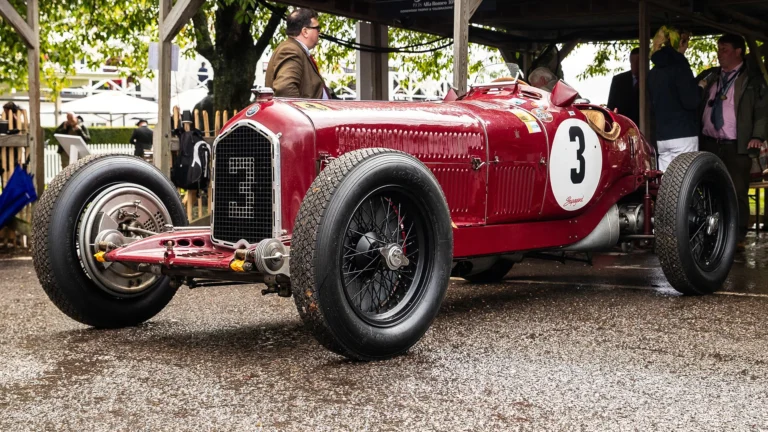
It is late July 1935 at the Nürburgring. The air in the Eifel Mountains is thick with the scent of damp pine needles, unburnt methanol, and scorched castor oil escaping from the louvred bonnet of a blood-red machine. Tazio Nuvolari, an intensely calculated driver possessing a supernatural understanding of slip angles and vehicle dynamics, wrestles his Alfa Romeo Tipo B—universally revered as the ‘P3’—through the recently paved, concrete plates of the Karussell. Against the overwhelming might of the state-funded German Silver Arrows, Nuvolari’s ageing car—entered by Scuderia Ferrari, which acted as Alfa Romeo’s de facto works team with heavy backdoor engineering support from Milan—is vastly outgunned, yet the Flying Mantuan outright refuses to concede. He dances violently with the large, cord-wrapped steering wheel, wringing every last ounce of mechanical sympathy from the supercharged inline-eight engine. When the chequered flag finally falls, the Italian maestro secures what motorsport historians will forever remember as the “Impossible Victory”, humiliating the host nation before an astounded crowd of 300,000 spectators and cementing Alfa Romeo as a purveyor of pure automotive mythology.
The genesis of this mythological status did not begin with immediate triumph, but arose from the ashes of a deeply flawed French venture. In April 1906, the pioneering industrialist Alexandre Darracq officially founded the Società Anonima Italiana Darracq in Naples, with backing from Italian investors. However, quickly realising that Naples was geographically too isolated from his French supply lines and lacked vital automotive industrial infrastructure, Darracq purchased land in the Portello district on the outskirts of Milan later that year and relocated the factory. His cars, lightweight and fragile, were hopelessly ill-suited to the atrocious, rutted Italian roads of the era and consequently languished in showrooms. By late 1909, the enterprise was staring into the abyss of ruin, prompting the company’s chairman, the aristocratic Cavaliere Ugo Stella, to take decisive action. Recognising that Italy required a domestic machine forged specifically for its own rugged topography, Stella and a consortium of anonymous investors acquired the failing Portello factory. On 24 June 1910, they founded the Anonima Lombarda Fabbrica Automobili, sensibly abbreviated to A.L.F.A. They swiftly hired Giuseppe Merosi to design a clean-sheet automobile, resulting in the 24 HP, a robust machine with a 4.1-litre (250 cu in) block capable of exceeding 100 km/h (62 mph). Following financial ruin during the First World War, the brilliant Neapolitan engineer Nicola Romeo took control, pivoting to wartime manufacturing. When civil automobile production resumed with the 20-30 HP Torpedo in 1920, the cars proudly bore a new badge, creating a name that would echo through the ages: Alfa Romeo.
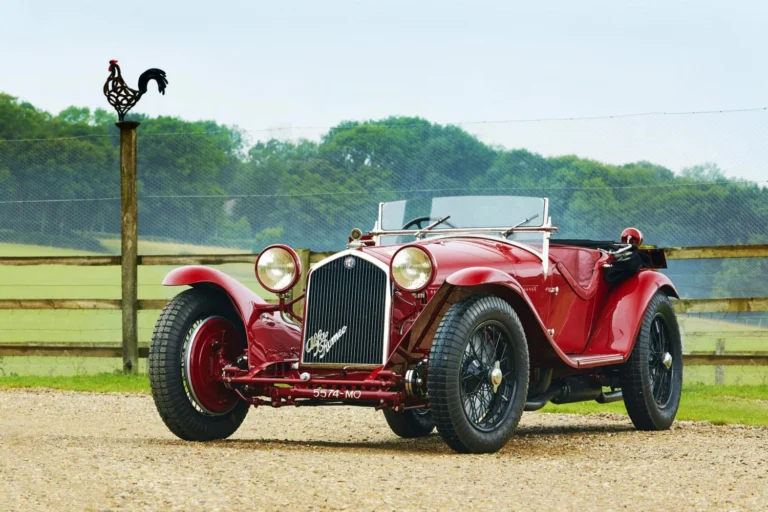
The roaring twenties and thirties transformed this domestic manufacturer into undisputed European motorsport aristocracy, largely thanks to the uncompromising engineer Vittorio Jano. He penned the formidable Tipo B, a featherweight monoposto weighing a mere 700 kg (1543 lbs) dry. The engine was an aluminium tour de force, a twin-overhead-camshaft inline-eight cylinder unit fed by twin Roots-type superchargers. In its legendary 1935 iteration, bored out to 3165 cc (193 cu in), it produced a savage 265 bhp. To hear a P3 at full cry is to experience a violent, mechanical symphony; the deep, resonant bellow of the straight-through exhaust overlaid with the piercing, frantic whine of the blowers. This visceral, tactile connection between man and machine became the defining ethos of the brand, an ethos that would survive the impending global conflict.
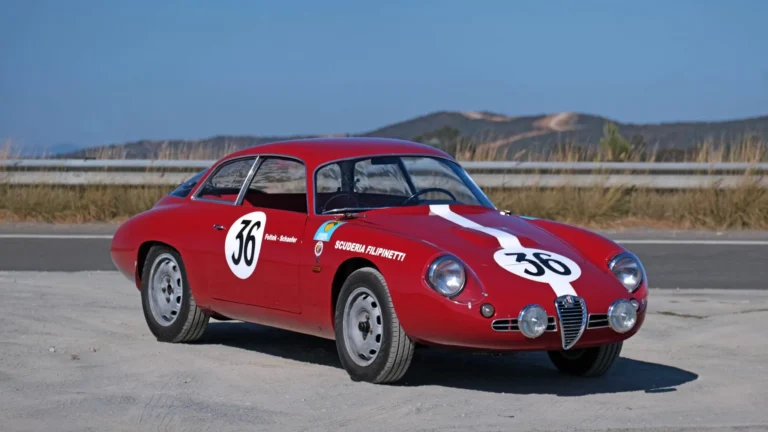
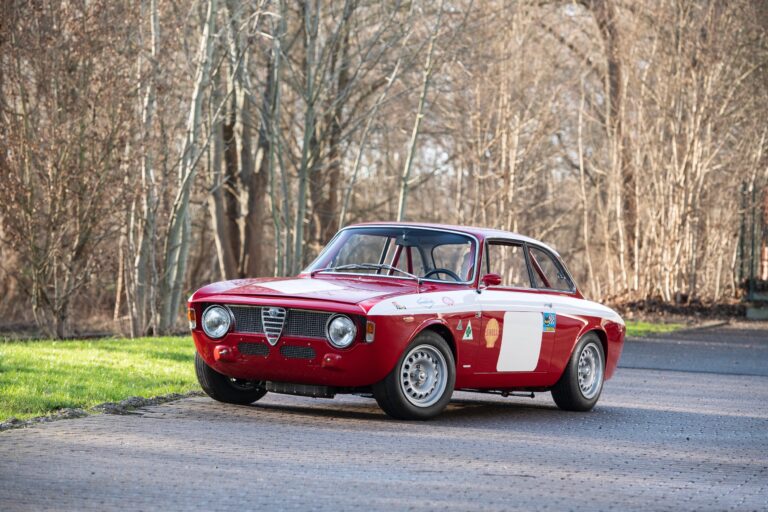
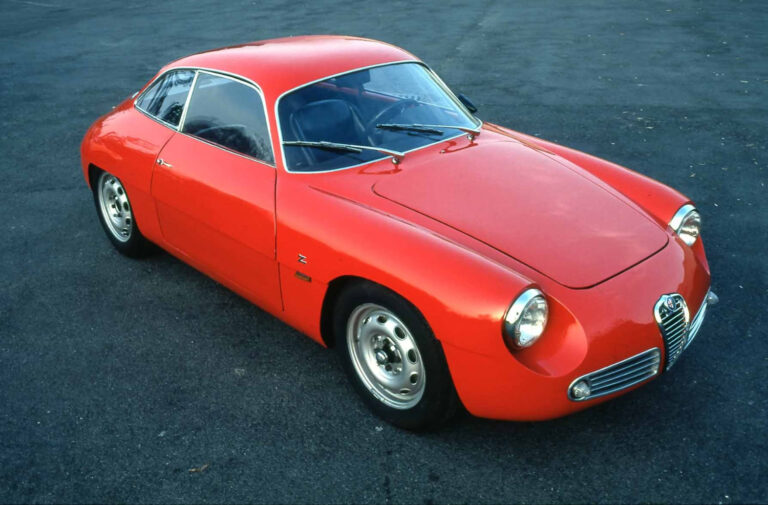
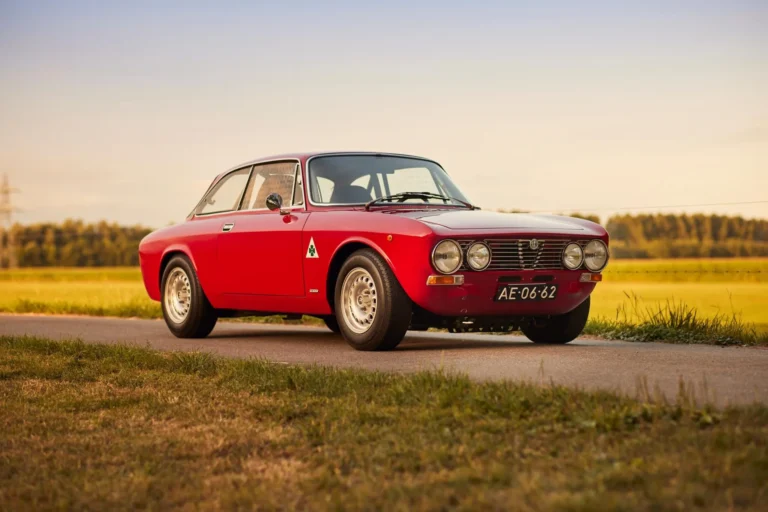
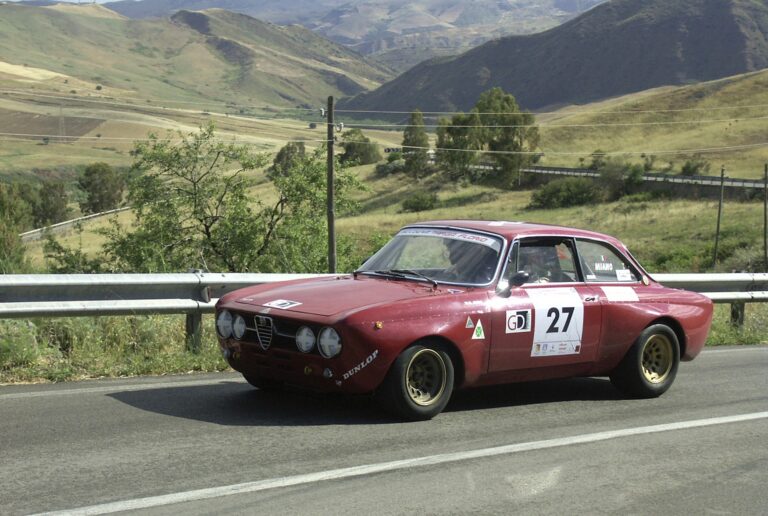
Following the devastation of the Second World War, Alfa Romeo emerged from the rubble of its heavily bombed Portello plant with a renewed focus. While their immortal 158 and 159 “Alfetta” Grand Prix cars utterly dominated the inaugural Formula One World Championships in 1950 and 1951, the company’s road car division underwent a radical democratisation. The era of bespoke, coachbuilt leviathans gave way to mass-produced unibody sports saloons and roadsters, spearheaded by the Giulietta and later the Giulia. Yet, they never lost their ferocious soul. The heart of this golden mid-century era was the legendary all-aluminium twin-cam engine, the “Bialbero”. Breathing heavily through twin twin-choke side-draught carburettors, a Giulia Sprint GTA charging up an alpine pass emitted a sharp, metallic bark that echoed off the ancient stone walls. The delicate, hyper-communicative unassisted steering and the predictable roll of the suspension reminded owners that they were piloting something profoundly alive.
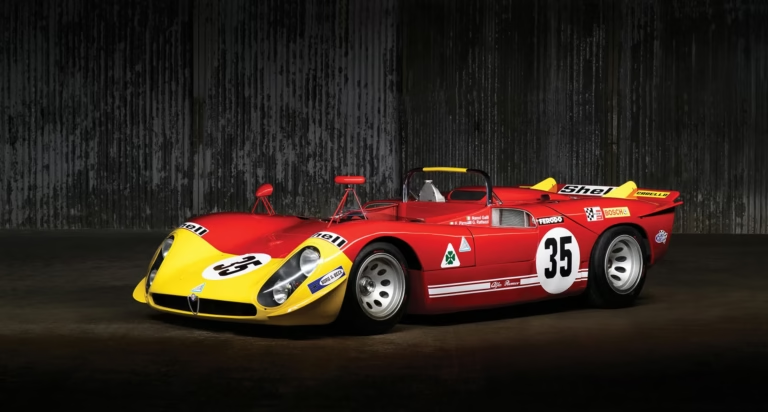
Yet, the Milanese engineers were incapable of ignoring their insatiable thirst for absolute performance, leading to the creation of what many consider the most beautiful automobile ever penned. In 1967, Alfa Romeo unleashed the Tipo 33 Stradale, a breathtaking mid-engined exotic derived directly from their prototype racing programme. Wrapped in voluptuous aluminium coachwork designed by Franco Scaglione, it was a masterpiece of ruthless engineering masquerading as rolling art. Tucked behind the driver was a minuscule 1995 cc (122 cu in) V8 engine. While the Autodelta racing prototypes utilised straight-cut, gear-driven camshafts, the street-legal Tipo 236.00 engine was specifically re-engineered with chain-driven dual overhead camshafts to reduce the deafening mechanical whine, alter the valve timing, and improve everyday drivability. Featuring SPICA fuel injection, it produced an astonishing 230 PS (227 bhp) at a shrieking 8800 rpm. Free of luxurious concessions, the 33 Stradale weighed a scant 700 kg (1543 lbs), granting it a terrifyingly raw power-to-weight ratio that could catapult the machine to a top speed of 260 km/h (162 mph). It was a loud, cramped, and fiercely uncompromising machine that completely blurred the line between the race track and the public highway.
As the decades progressed, the brand navigated through turbulent financial waters, sustained by the legendary, metallic howl of the Giuseppe Busso-designed V6 engines. Debuting in 1979 in the rear-wheel-drive Alfa 6 flagship, and achieving global legendary status in the rear-wheel-drive GTV6 and Alfa 75, this magnificent engine later powered a characterful generation of front-wheel-drive saloons. However, true purists yearned for a return to the brand’s rear-wheel-drive roots, a prayer answered violently in 2016 with the Giulia Quadrifoglio. Returning to a longitudinal rear-wheel-drive architecture, this modern super-saloon is propelled by a ferocious 2891 cc (176 cu in) bi-turbo V6 engine developed with Ferrari engineering expertise. Achieved via an 86.5 mm bore and 82.0 mm stroke, it is a bespoke Italian block completely unrelated to competing German platforms. Developing a colossal 510 PS (503 bhp), it propels the 1708 kg (3765 lbs) saloon to a staggering maximum speed of 307 km/h (191 mph). Through its lightning-fast steering rack and perfectly balanced chassis, the modern Quadrifoglio speaks the same dynamic language as its ancestors.
Alfa Romeo has never simply built tools for transportation. From the oil-stained heroics of pre-war Grand Prix grids to the brutal, carbon-fibre-clad precision of their modern super-saloons, the creators in Milan implicitly understand that an automobile must act as a mechanical conduit for human emotion, forever carrying the fiery, unapologetic bloodline of those early, supercharged warriors.
Type
Foundation Year
Country
Founder/s
Headquarters
Type
Foundation Year
Country
Founder/s
Headquarters
About this brand
It is late July 1935 at the Nürburgring. The air in the Eifel Mountains is thick with the scent of damp pine needles, unburnt methanol, and scorched castor oil escaping from the louvred bonnet of a blood-red machine. Tazio Nuvolari, an intensely calculated driver possessing a supernatural understanding of slip angles and vehicle dynamics, wrestles his Alfa Romeo Tipo B—universally revered as the ‘P3’—through the recently paved, concrete plates of the Karussell. Against the overwhelming might of the state-funded German Silver Arrows, Nuvolari’s ageing car—entered by Scuderia Ferrari, which acted as Alfa Romeo’s de facto works team with heavy backdoor engineering support from Milan—is vastly outgunned, yet the Flying Mantuan outright refuses to concede. He dances violently with the large, cord-wrapped steering wheel, wringing every last ounce of mechanical sympathy from the supercharged inline-eight engine. When the chequered flag finally falls, the Italian maestro secures what motorsport historians will forever remember as the “Impossible Victory”, humiliating the host nation before an astounded crowd of 300,000 spectators and cementing Alfa Romeo as a purveyor of pure automotive mythology.
The genesis of this mythological status did not begin with immediate triumph, but arose from the ashes of a deeply flawed French venture. In April 1906, the pioneering industrialist Alexandre Darracq officially founded the Società Anonima Italiana Darracq in Naples, with backing from Italian investors. However, quickly realising that Naples was geographically too isolated from his French supply lines and lacked vital automotive industrial infrastructure, Darracq purchased land in the Portello district on the outskirts of Milan later that year and relocated the factory. His cars, lightweight and fragile, were hopelessly ill-suited to the atrocious, rutted Italian roads of the era and consequently languished in showrooms. By late 1909, the enterprise was staring into the abyss of ruin, prompting the company’s chairman, the aristocratic Cavaliere Ugo Stella, to take decisive action. Recognising that Italy required a domestic machine forged specifically for its own rugged topography, Stella and a consortium of anonymous investors acquired the failing Portello factory. On 24 June 1910, they founded the Anonima Lombarda Fabbrica Automobili, sensibly abbreviated to A.L.F.A. They swiftly hired Giuseppe Merosi to design a clean-sheet automobile, resulting in the 24 HP, a robust machine with a 4.1-litre (250 cu in) block capable of exceeding 100 km/h (62 mph). Following financial ruin during the First World War, the brilliant Neapolitan engineer Nicola Romeo took control, pivoting to wartime manufacturing. When civil automobile production resumed with the 20-30 HP Torpedo in 1920, the cars proudly bore a new badge, creating a name that would echo through the ages: Alfa Romeo.
The roaring twenties and thirties transformed this domestic manufacturer into undisputed European motorsport aristocracy, largely thanks to the uncompromising engineer Vittorio Jano. He penned the formidable Tipo B, a featherweight monoposto weighing a mere 700 kg (1543 lbs) dry. The engine was an aluminium tour de force, a twin-overhead-camshaft inline-eight cylinder unit fed by twin Roots-type superchargers. In its legendary 1935 iteration, bored out to 3165 cc (193 cu in), it produced a savage 265 bhp. To hear a P3 at full cry is to experience a violent, mechanical symphony; the deep, resonant bellow of the straight-through exhaust overlaid with the piercing, frantic whine of the blowers. This visceral, tactile connection between man and machine became the defining ethos of the brand, an ethos that would survive the impending global conflict.
Following the devastation of the Second World War, Alfa Romeo emerged from the rubble of its heavily bombed Portello plant with a renewed focus. While their immortal 158 and 159 “Alfetta” Grand Prix cars utterly dominated the inaugural Formula One World Championships in 1950 and 1951, the company’s road car division underwent a radical democratisation. The era of bespoke, coachbuilt leviathans gave way to mass-produced unibody sports saloons and roadsters, spearheaded by the Giulietta and later the Giulia. Yet, they never lost their ferocious soul. The heart of this golden mid-century era was the legendary all-aluminium twin-cam engine, the “Bialbero”. Breathing heavily through twin twin-choke side-draught carburettors, a Giulia Sprint GTA charging up an alpine pass emitted a sharp, metallic bark that echoed off the ancient stone walls. The delicate, hyper-communicative unassisted steering and the predictable roll of the suspension reminded owners that they were piloting something profoundly alive.
Yet, the Milanese engineers were incapable of ignoring their insatiable thirst for absolute performance, leading to the creation of what many consider the most beautiful automobile ever penned. In 1967, Alfa Romeo unleashed the Tipo 33 Stradale, a breathtaking mid-engined exotic derived directly from their prototype racing programme. Wrapped in voluptuous aluminium coachwork designed by Franco Scaglione, it was a masterpiece of ruthless engineering masquerading as rolling art. Tucked behind the driver was a minuscule 1995 cc (122 cu in) V8 engine. While the Autodelta racing prototypes utilised straight-cut, gear-driven camshafts, the street-legal Tipo 236.00 engine was specifically re-engineered with chain-driven dual overhead camshafts to reduce the deafening mechanical whine, alter the valve timing, and improve everyday drivability. Featuring SPICA fuel injection, it produced an astonishing 230 PS (227 bhp) at a shrieking 8800 rpm. Free of luxurious concessions, the 33 Stradale weighed a scant 700 kg (1543 lbs), granting it a terrifyingly raw power-to-weight ratio that could catapult the machine to a top speed of 260 km/h (162 mph). It was a loud, cramped, and fiercely uncompromising machine that completely blurred the line between the race track and the public highway.
As the decades progressed, the brand navigated through turbulent financial waters, sustained by the legendary, metallic howl of the Giuseppe Busso-designed V6 engines. Debuting in 1979 in the rear-wheel-drive Alfa 6 flagship, and achieving global legendary status in the rear-wheel-drive GTV6 and Alfa 75, this magnificent engine later powered a characterful generation of front-wheel-drive saloons. However, true purists yearned for a return to the brand’s rear-wheel-drive roots, a prayer answered violently in 2016 with the Giulia Quadrifoglio. Returning to a longitudinal rear-wheel-drive architecture, this modern super-saloon is propelled by a ferocious 2891 cc (176 cu in) bi-turbo V6 engine developed with Ferrari engineering expertise. Achieved via an 86.5 mm bore and 82.0 mm stroke, it is a bespoke Italian block completely unrelated to competing German platforms. Developing a colossal 510 PS (503 bhp), it propels the 1708 kg (3765 lbs) saloon to a staggering maximum speed of 307 km/h (191 mph). Through its lightning-fast steering rack and perfectly balanced chassis, the modern Quadrifoglio speaks the same dynamic language as its ancestors.
Alfa Romeo has never simply built tools for transportation. From the oil-stained heroics of pre-war Grand Prix grids to the brutal, carbon-fibre-clad precision of their modern super-saloons, the creators in Milan implicitly understand that an automobile must act as a mechanical conduit for human emotion, forever carrying the fiery, unapologetic bloodline of those early, supercharged warriors.
Submodels
Latest Variants
Model Lines